Choosing the right face can shape an entire brand campaign. Some brands need broad reach across India’s many markets. Others need creators who speak to niche groups directly.
Celebrity endorsements use fame to build quick mass awareness. Influencer marketing uses creator trust to reach focused audiences. In fact, India’s influencer market grew 25% during 2025.
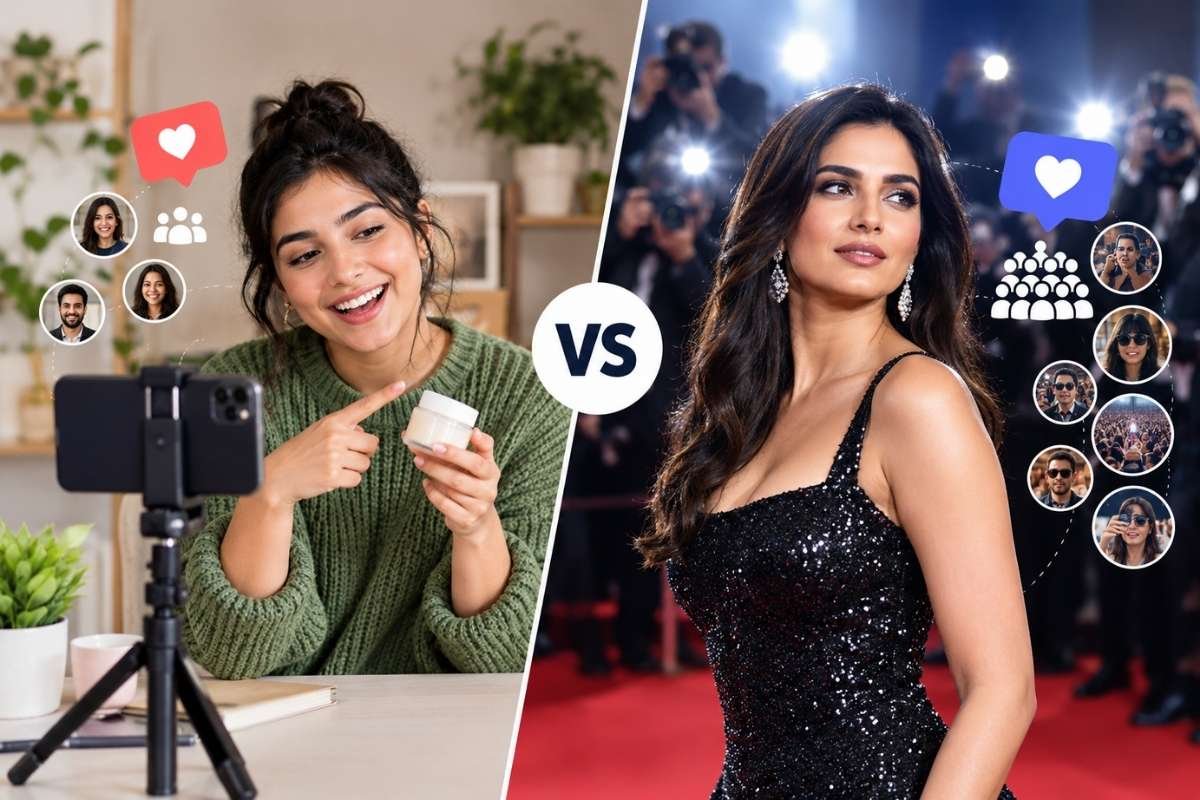
So, celebrity endorsement vs influencer marketing needs closer review. I would compare reach, trust, targeting, cost, control, and risk. I would also assess campaign goals, measurement, and expected ROI. The right choice depends on what your brand needs.
Celebrity endorsement vs influencer marketing: quick comparison
The best choice depends on what your campaign needs most. This table shows where each model tends to work best.
| Celebrity Endorsement | Factor | Influencer Marketing |
| Strong for mass awareness and broad recall | Audience size | Strong for focused communities and niche reach |
| Targets fame-led groups across wide markets | Audience targeting | Targets groups by niche, age, place, or interest |
| Works well when fame fits brand values | Trust and credibility | Often feels more personal and peer-like |
| Drives attention through fame and public interest | Engagement | Often drives deeper comments and direct replies |
| Usually costs more for major public figures | Campaign cost | Offers options across many budget levels |
| Brands often gain tighter campaign control | Content control | Creators often retain more control over content |
| Strong for launches needing rapid market visibility | Brand awareness | Better for sustained awareness within niche groups |
| Works well when fame reduces brand hesitation | Conversion potential | Works well when trust supports direct action |
| Brand lift and recall often matter most | Measurement | Clicks, sales, codes, and leads offer clear tracking |
| One public issue can affect wide audiences | Reputation risk | Smaller reach can limit some risks, but risks remain |
This makes celebrity endorsement vs influencer marketing context-dependent. Mass reach helps when brands need fast market-wide attention. Creator reach helps when brands need trust within niches. Neither model wins every campaign or every market.
What is celebrity endorsement?
Celebrity endorsement links a brand with someone people already recognize. Actors, athletes, musicians, and public figures often fill this role. Their fame can transfer attention, meaning, and cultural value. That makes celebrities useful for large national campaigns. They can also support launches and premium brand positioning.
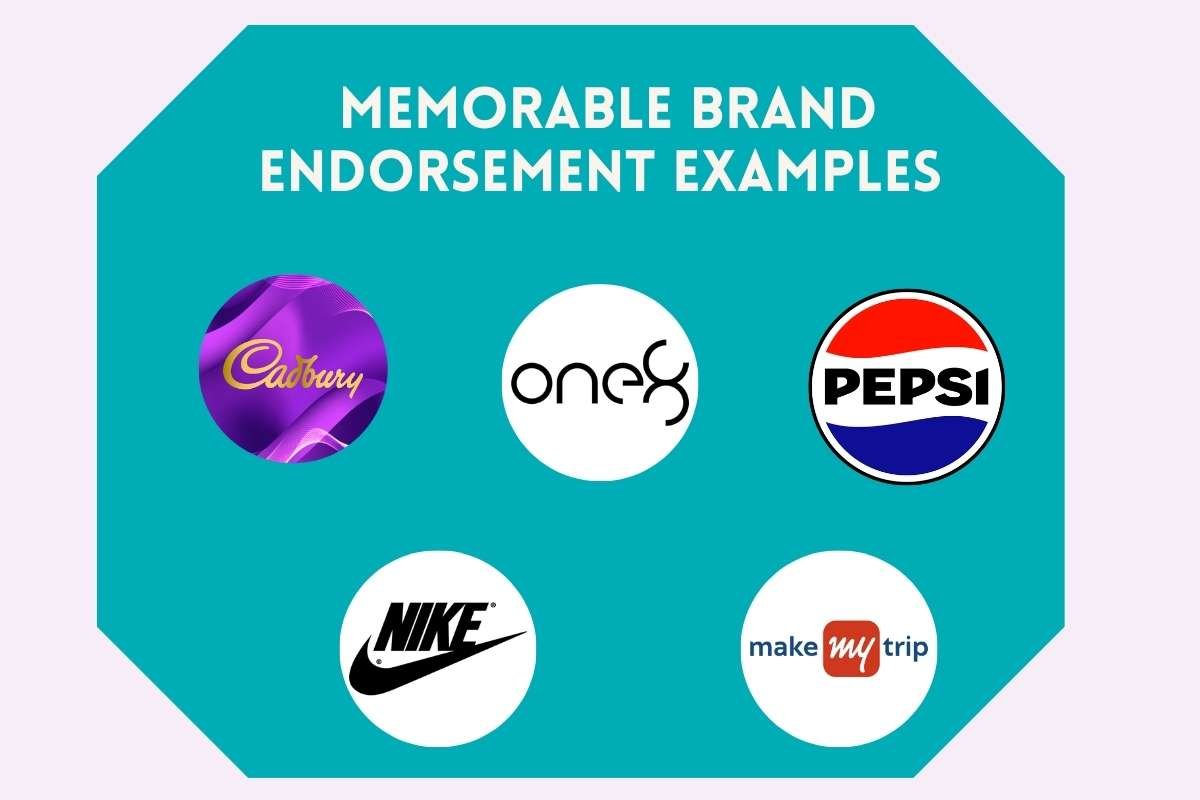
Consider Virat Kohli and his sportswear brand launch, One8. His role can help build broad awareness across India. It can also connect performance with youth and sports culture. Research shows credibility can shape attitudes and purchase intent. Yet fame alone cannot guarantee stronger campaign results for brands. The celebrity must still fit the brand and audience.
What is influencer marketing?
Influencer marketing builds brand reach through trusted online creators. These creators usually grow within one clear niche or community. Micro influencers often serve smaller groups with focused interests. Macro influencers reach larger audiences across wider interest groups. Mega influencers can approach celebrity-level scale and broad visibility.
Smaller creators may earn stronger engagement through closer audience ties. That closeness can make product advice feel more useful. Brands can also match creators with precise buyer groups.
India’s influencer marketing industry may reach ₹3,375 crore soon. That growth shows how fast creator-led campaigns now scale.
Celebrity endorsement vs influencer marketing: which one performs better?
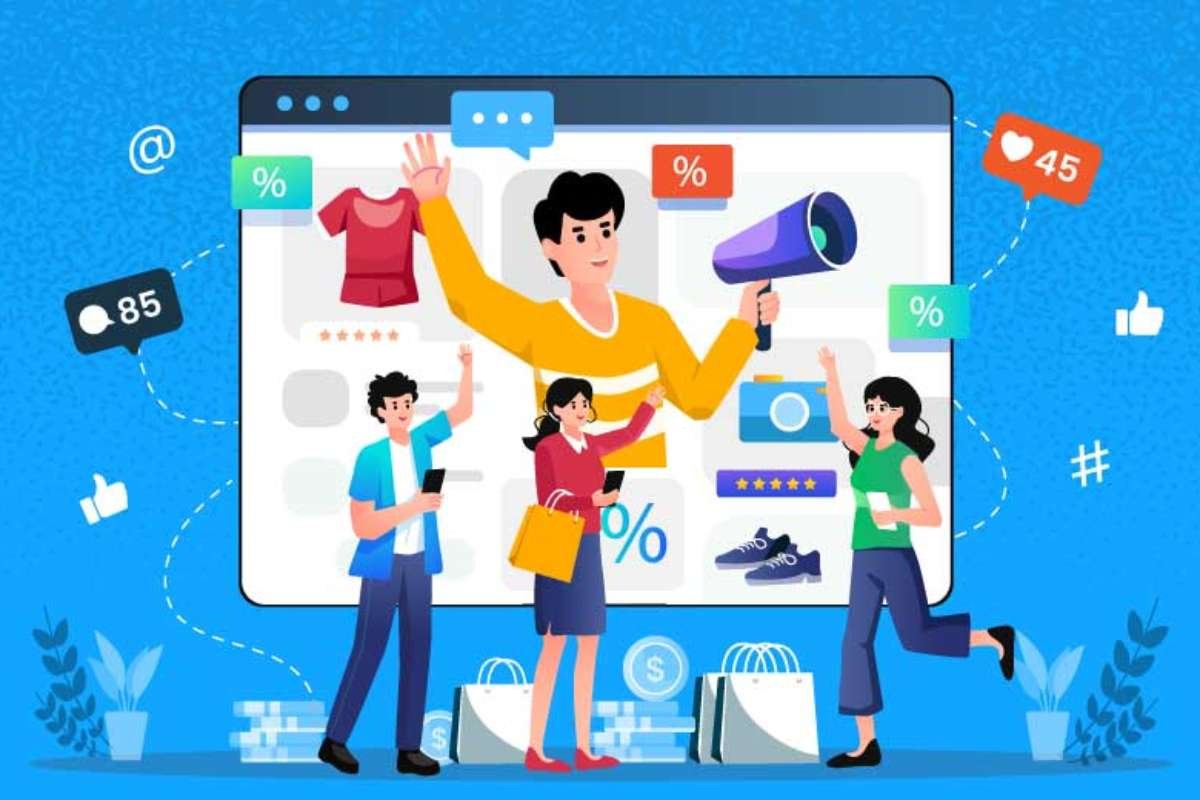
Neither option wins every campaign, because goals shape performance. Here is how I would judge each choice for brands.
1. Reach
Celebrities can spread one message across India’s mass market. That reach helps launches needing quick national awareness and recall. Influencers work better when brands need focused audience exposure.
2. Targeting
Influencers can target interests, age groups, regions, and buyer needs. This makes creator campaigns useful for niche products and markets.
3. Trust
Familiarity can make celebrity messages feel easy to remember. Yet creators often build trust through frequent, direct audience contact. Research links influencer credibility with stronger consumer purchase intentions.
4. Cost
Follower count alone cannot show true campaign value for brands. A smaller creator may drive more useful action per rupee. Brands should compare fees with reach, engagement, leads, and sales.
5. Content
Celebrity campaigns often use polished ads with clear brand control.
Creators can blend products into content audiences already choose voluntarily.
Research finds perceived authenticity can strengthen influencer marketing effectiveness.
6. Conversions
Niche relevance can matter more than raw audience size. A focused creator may reach buyers already seeking that product. Research also connects influencer credibility with stronger brand attitudes.
7. Risk
Celebrity scandals can spread quickly across large public audiences. Creators face disclosure, fake engagement, and brand-safety concerns too. Brands should review endorsement marketing risks before signing deals.
8. Measurement
Celebrities often need awareness, recall, reach, and brand-lift measures. Creators allow clicks, codes, leads, and sales to track results.
When should a brand choose each?
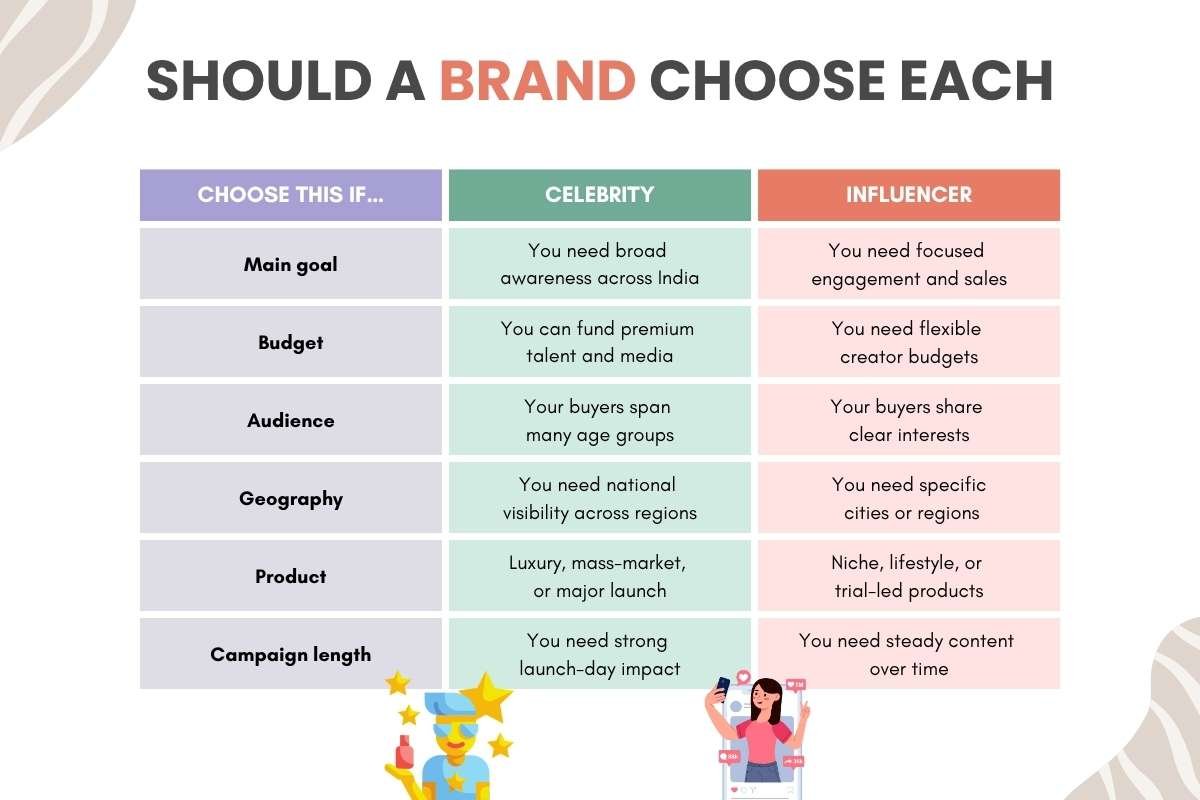
The right choice starts with your campaign goal, not follower count. I would also weigh budget, product, audience, location, and timing. A short campaign may favour fast celebrity-led awareness. Longer campaigns can benefit from steady creator-led audience trust.
According to experts, “Prioritizing celebrity ads may be more effective for influencing consumer behavior across both social media and traditional media channels, such as TV.”
| Choose this if… | Celebrity | Influencer |
| Main goal | You need broad awareness across India | You need focused engagement and sales |
| Budget | You can fund premium talent and media | You need flexible creator budgets |
| Audience | Your buyers span many age groups | Your buyers share clear interests |
| Geography | You need national visibility across regions | You need specific cities or regions |
| Product | Luxury, mass-market, or major launch | Niche, lifestyle, or trial-led products |
| Campaign length | You need strong launch-day impact | You need steady content over time |
A hybrid campaign can work when awareness and conversion matter. Use celebrities first, then creators to drive focused action. This approach can connect broad fame with deeper buyer trust.
How to measure the results
Measure ROI against the goal you set before campaign launch. Start with reach, impressions, engagement rate, and brand search volume. Then track website traffic, coupon codes, leads, and sales.
Customer acquisition cost can show how efficiently campaigns acquire buyers. ROAS and ROI help compare spend against returns more clearly.
Celebrity campaigns often need stronger brand-lift studies for measurement. Influencer campaigns can use links, codes, and sales data directly.
Google research supports lift studies for measuring campaign impact. The key is matching each metric with your campaign goal.
Conclusion:
Neither approach wins every campaign because brand goals vary. Celebrity endorsements suit broad reach, prestige, and national visibility. Influencer marketing suits niche audiences, engagement, and targeted conversions.
Budget and measurement needs should guide the final choice too. A hybrid model can work when both goals matter. Ultimately, Celebrity Endorsement vs Influencer Marketing depends on campaign fit. Choose the model that supports your goal most clearly.
Frequently asked questions
1. Is celebrity endorsement better than influencer marketing?
If we go down the celebrity endorsement vs influencer marketing route, neither model works best for every brand or goal. Celebrities suit mass reach, prestige, and national brand campaigns. Influencers suit focused groups, stronger interaction, and direct action. Your audience, budget, product, and goals should guide choice.
2. Are celebrity endorsements more expensive than influencer campaigns?
Major celebrities usually charge higher fees for campaigns. However, cost depends on fame, usage rights, and campaign length. Influencer campaigns offer more budget levels across creator tiers. Brands should compare cost against reach, action, and sales.
3. Do influencers have more trust than celebrities?
Influencers can feel more familiar within niche communities. Their frequent content can build closer audience relationships over time. However, trust still depends on creator credibility and product fit. Research links influencer credibility with stronger purchase intentions.
4. Which is better for sales, celebrities or influencers?
Influencers can work well when buyers need product guidance. Trackable links, codes, and affiliate sales make attribution easier. Celebrities can still drive sales through strong brand recall. The better choice depends on your product and sales path.
5. Can brands use celebrities and influencers together?
Yes, brands can combine both models within one campaign. Celebrities can create broad awareness across India’s large markets. Influencers can then explain products within focused communities. This hybrid approach can connect reach with measurable buyer action.