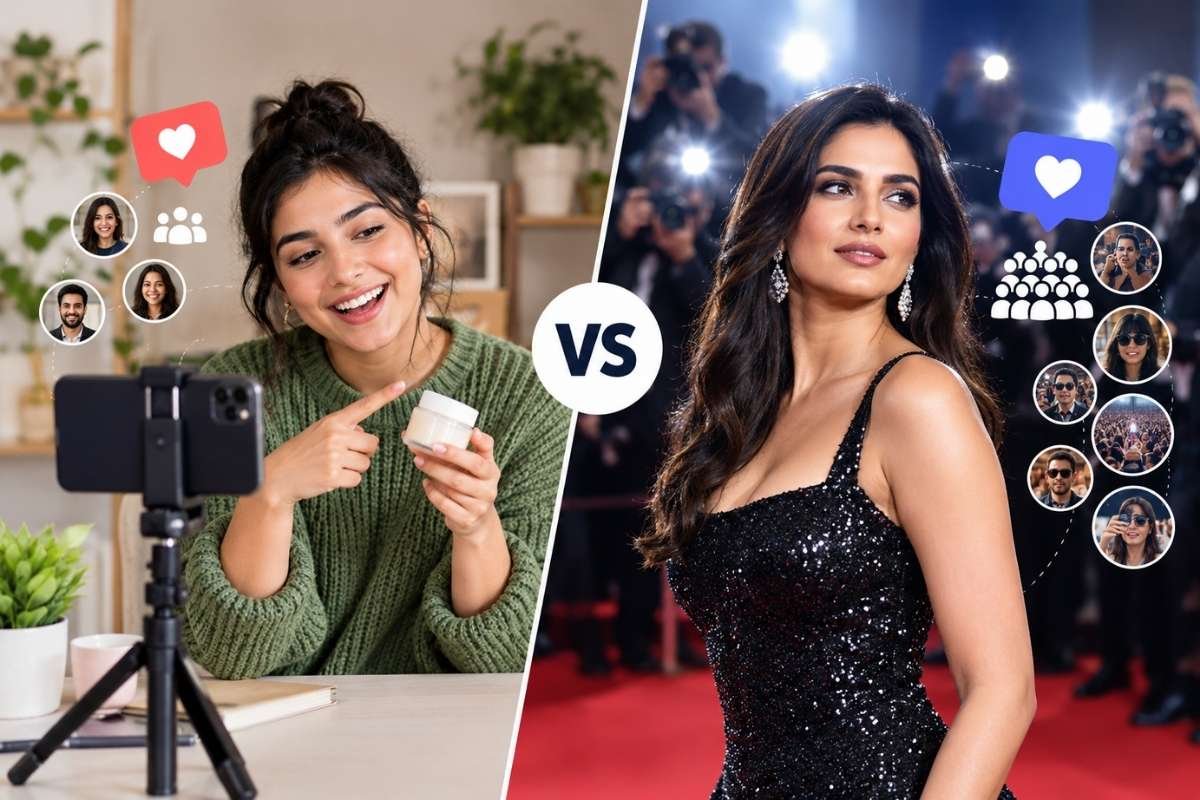

Brands now have more endorsement choices than ever before. A star can bring huge reach and instant public attention. A micro-influencer can build trust within a niche group. That choice matters more as Indian creator marketing grows. WPP Media and Kantar expect India’s market to grow 25%. So, which path should your brand take today?
Micro-Influencers vs. Mega-Celebrities need a closer look here. We should compare reach, trust, engagement, cost, and targeting first. Also weigh brand fit, campaign risk, and ROI. A famous face may win reach but miss niche trust. A smaller creator may win trust but limit broad reach.
The best choice depends on your goal, audience, and budget.
Micro-influencers vs. Mega-celebrities: what is the difference?
What are micro-influencers?
Micro-influencers build strong ties with smaller niche communities. Their follower ranges vary across platforms and research sources. So, follower count alone cannot define this group well. What matters more is trust, relevance, and close contact. They often thrive in beauty, fitness, food, and fashion. Gaming, local markets, and work niches also suit them. Their smaller reach can still drive strong audience action.
What are mega-celebrities?
Mega-celebrities command mass fame across large public audiences. They can help brands create broad awareness in less time. That makes them useful for national or global campaigns. Yet fame does not always mean strong audience relevance. A star may reach millions but miss niche buyer needs. Research also shows that influencer tiers lack one fixed standard.
Micro-influencers and mega-celebrities offer different strengths, so brands should match each option with their campaign goals, audience, and budget.
Brands can also compare different partnership models through types of brand endorsements before choosing the right spokesperson.
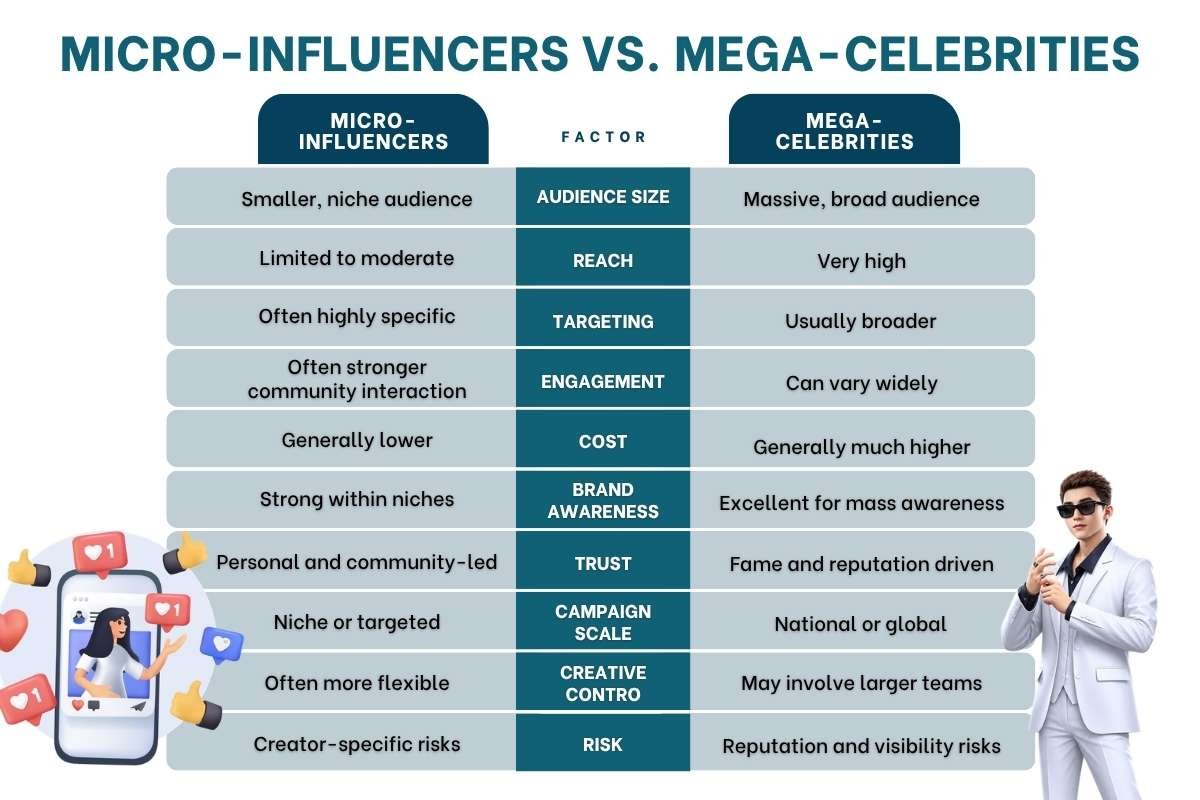
Micro-influencers vs. Mega-celebrities: key differences
| Factor | Micro-Influencers | Mega-Celebrities |
| Audience size | Smaller, niche audience | Massive, broad audience |
| Reach | Limited to moderate | Very high |
| Targeting | Often highly specific | Usually broader |
| Engagement | Often stronger community interaction | Can vary widely |
| Cost | Generally lower | Generally much higher |
| Brand awareness | Strong within niches | Excellent for mass awareness |
| Trust | Personal and community-led | Fame and reputation driven |
| Campaign scale | Niche or targeted | National or global |
| Creative control | Often more flexible | May involve larger teams |
| Risk | Creator-specific risks | Reputation and visibility risks |
The key difference starts with who you need to reach. Micro-creators can speak deeply to niche Indian groups today. Mega-celebrities can put your brand before millions fast. Neither option wins every campaign, despite common industry claims.
Engagement rate also cannot tell your whole campaign story. Reach shows exposure, while conversion shows actual buyer action. Kantar found 67% of Indians trust influencer recommendations. Yet trust alone cannot prove that sales will rise.
Cost also changes sharply across these two endorsement models. Smaller creators usually need less money per campaign. Mega-stars often need larger fees and bigger production teams. India’s influencer market reached ₹3,600 crore in 2024. The market also grew 25% during 2025, according to WPP. So, judge cost against the campaign outcome. That makes brand fit, risk, and ROI more important.
Micro-Influencers vs. Mega-Celebrities: Cost vs. Reach
Mega-celebrity campaigns need much larger budgets from brands. The fee also covers more than the star’s endorsement. Brands may pay for production, media, usage rights, and exclusivity. Travel, agency fees, and contract costs can add more. Micro-influencers let brands spread budgets across several creators. That approach can help brands test many niche audiences. Yet managing 20 creators can create its own costs.
Teams must handle briefs, approvals, payments, tracking, and reporting. EY found ROI remains marketers’ biggest influencer campaign challenge. So, compare cost with each meaningful outcome. Cost per post alone can hide the real campaign value. Reach, leads, sales, and brand lift offer better measures. This approach also supports better ROI tracking later.
Micro-Influencers vs. Mega-Celebrities: Reach, Trust and Audience Targeting

The best choice depends on what your campaign needs most.
Reach
Mega-celebrities can win when brands need mass awareness. Their fame can put products before millions quite fast. This reach works well for launches across India’s many markets. It can also help brands enter new regions quickly. Still, large reach does not ensure strong buyer action.
Trust
Micro-influencers often build closer ties within niche groups. That closeness can make product advice feel more personal. This matters more when buyers need time before buying. However, not every micro-influencer earns high trust automatically. Content quality, expertise, and audience fit still shape trust. Brands should also assess each creator’s past audience response.
Targeting
Niche creators can reach groups with clear shared interests. They can suit fitness fans, gamers, food lovers, or parents. Celebrities often attract broader audiences across many age groups. That breadth can help mass brands build quick public recall. Psychology behind why celebrity endorsements work explains how fame can influence consumer attention and brand recall.
Micro-influencers vs. Mega-celebrities: which one works better for different campaign goals?
The right endorser should match the goal, not the hype. Here is how we should match each campaign goal.
| Campaign goal | Better choice | Why it fits |
| Mass awareness | Mega-celebrity | Reaches large audiences across India quickly |
| Niche awareness | Micro-influencer | Reaches focused groups with shared interests |
| Product education | Micro-influencer | Allows more detail and closer audience contact |
| National launch | Mega-celebrity | Creates broad attention across many Indian markets |
| Local audience | Micro-influencer | Connects with specific cities and local groups |
| Social proof | Micro-influencer | Shows products within real use cases |
| Prestige positioning | Mega-celebrity | Adds fame and status around the brand |
| Multiple segments | Several micro-influencers | Covers different groups with tailored content |
Still, brands do not always need to pick one side. A mixed plan can often serve the whole buyer journey. One useful path starts with a mega-celebrity for awareness.
Then, micro-influencers can build interest and product trust. They can answer questions and show real product use. That gives brands a stronger path toward final conversion.
In simple terms, the flow looks like this:
Mega-celebrity → awareness → micro-influencers → consideration → conversion
This model can balance broad fame with focused audience trust.
Micro-influencers vs. Mega-celebrities: major risks brands should consider
Every endorsement carries risk, no matter the creator’s size. Micro-influencers can face uneven content quality across campaigns. Their smaller reach can also limit campaign scale. Brands must check audience authenticity before signing any deal. Working with many creators also adds management work. Brand-safety issues can affect smaller creators too.
Mega-celebrity deals create much higher upfront financial exposure. One reputation issue can also affect the whole campaign. Their broad audience may not match your buyer group.
Large deals can also bring complex contract terms. Brands may become too dependent on one public figure. India also penalises misleading celebrity endorsements under consumer law.
So, endorsement marketing risks depend on fit, controls, and planning.
How to choose between a micro-influencer and mega-celebrity?
I would ask ten questions before signing any endorser.
- What is the campaign goal, and what defines success?
- Who is the target audience, and where do they live?
- How broad must your reach become for this campaign?
- What total budget can your brand spend comfortably?
- Does your product need demos, details, or education?
- How much does niche credibility matter for buyers?
- How long will the endorsement run across your channels?
- What usage rights does your brand need from creators?
- How will you track reach, leads, sales, or brand lift?
- What level of reputational risk can your brand accept?
These questions can reveal the right fit quite quickly. They also prevent follower counts from driving poor choices. A huge audience may not mean useful audience action. A small audience may not support national launch goals. So, choose the endorser based on campaign fit, not follower count alone.
Micro-influencers vs. Mega-celebrities: can brands use both?
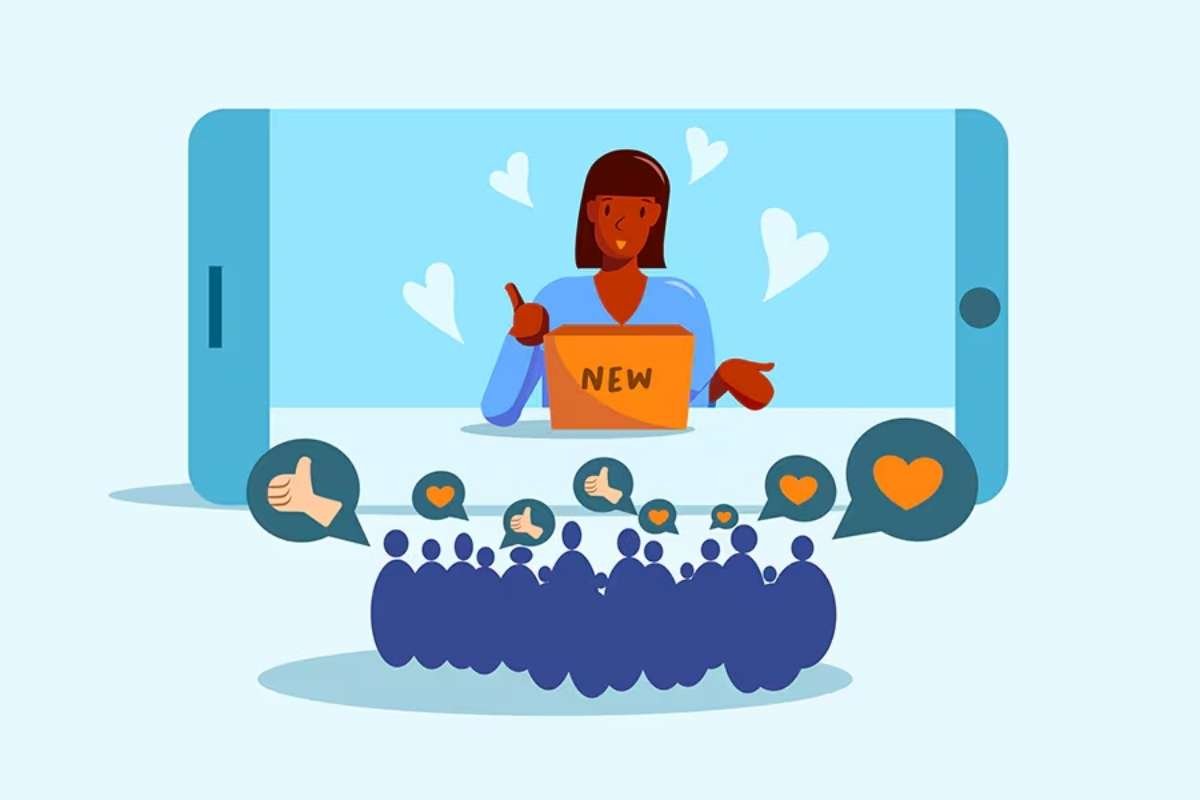
Brands can use both when campaign goals need wider support. A celebrity can create broad awareness across India’s many markets. Micro-influencers can then reinforce that message within niche groups. Each creator can support a different stage of the funnel.
Celebrities can spark interest, while creators can build trust.
Creators can also answer questions and show real product use. Yet brands need one clear message across every channel. Strong brand endorsement contracts should define roles, rights, and timelines. Teams should also follow negotiation tips for influencer partnerships carefully.
Memorable examples of celebrity and influencer endorsements
The strongest endorsements usually solve a clear brand problem. The creator should fit the audience, message, and format. These two examples show how that works in practice. We are talking about one celebrity endorsement and one influencer endorsement to give a comparison.
One8 by virat kohli: building a mass lifestyle brand
“Nobody gives two hoots about who we are who started this honestly! I think I would love to be forgotten completely for this to take over.” – Virat Kohli During One8 Launch
One8 shows how a star can build brand scale. Virat Kohli gave the label strong personal and sports appeal. PUMA also used his fame to reach India’s mass market. The brand focused on youth, sport, and active lifestyles. That fit helped connect Kohli’s image with One8 products. The partnership also moved beyond one simple product ad. It built a wider lifestyle brand around Kohli’s identity.
Nykaa and Malvika Sitlani: making beauty content feel personal
Nykaa’s partnership with Malvika Sitlani shows how a beauty creator can support a product launch with trust and practical expertise. Sitlani built her audience through makeup tutorials, product reviews, and beauty education before becoming one of Nykaa’s brand collaborators. Her content helped present beauty products in a routine-led format rather than as a one-off celebrity endorsement.
The partnership was especially relevant because Sitlani’s audience already followed her for product recommendations and application advice. Her role as a creator and beauty professional gave the endorsement more context than a standard promotional post. Instead of relying only on reach, the campaign connected the product with demonstrations, personal experience, and purchase consideration.
This example shows why creator fit matters in beauty marketing. A creator does not need to represent every customer. They need to have credibility with the audience most likely to care about the product.
What do these examples tell brands?
One8 focused on scale, identity, and broad brand building. The skincare campaign focused on language, relevance, and conversion. Both approaches worked because their goals differed from each other. That is the real lesson behind micro-influencers vs. Mega-celebrities. Brands should match creators with specific campaign needs first.
Conclusion: choose campaign fit over follower count
Mega-celebrities bring scale, fame, and fast mass awareness. Micro-influencers bring niche reach and closer community ties. Neither option wins every campaign or audience segment. Your goal should guide the choice before follower counts.
Consider audience, budget, product, timing, and campaign measurement. Also check whether your product needs trust or scale. For micro-influencers vs. Mega-celebrities, context should drive your decision.
Start with the outcome you need, then choose the brand endorsement accordingly.
FAQs
1. What is the difference between a micro-influencer and a mega-celebrity?
Micro-influencers reach smaller, focused groups with closer ties. Mega-celebrities reach much larger audiences across wider markets. Micro-influencers often offer sharper targeting within niche groups.
2. Are micro-influencers cheaper than mega-celebrities?
They usually charge lower individual fees for campaigns. However, many creators can incur management and production costs. Brands should compare the full campaign cost before deciding.
3. Do micro-influencers have higher engagement rates?
They can, but rates vary across platforms and niches. Audience quality also matters more than one engagement figure. Brands should check each creator’s past campaign results.
4. Are mega-celebrities better for brand awareness?
They can deliver greater mass reach and public attention. Still, relevance and strong campaign planning also matter greatly.
5. Can brands use micro-influencers and celebrities together?
Yes, brands can combine both for stronger campaign coverage. Celebrities can drive awareness, while creators build community trust.