


When brands choose public figures, two terms often get confused. A brand endorsement and an ambassador deal can serve different needs. An endorsement usually supports one campaign or product launch. An ambassador often represents the brand across a longer period. That difference can shape the whole marketing plan ahead.
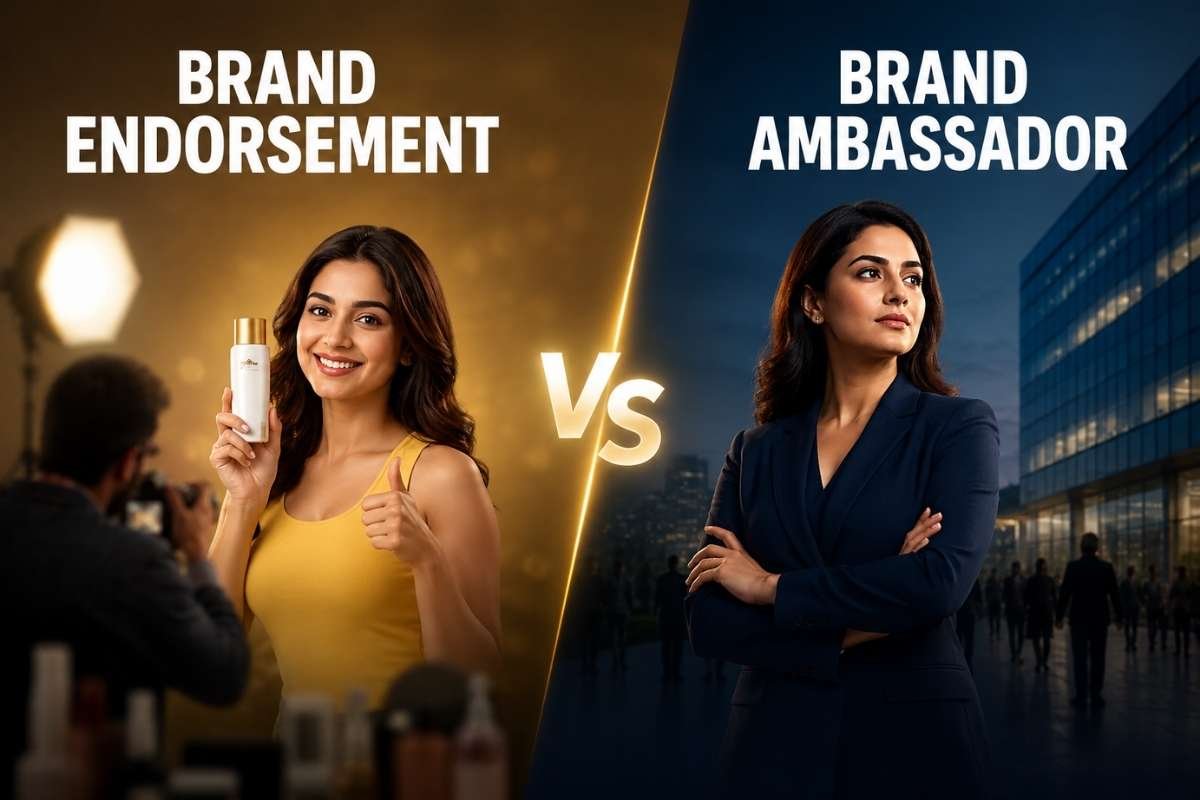
When comparing brand endorsement vs brand ambassador, context matters most. Marketers must weigh duration, relationship, cost, reach, and credibility. They should also assess control, goals, and audience fit. The right choice depends on what the campaign needs.
Brand endorsement vs brand ambassador: key differences
The biggest difference lies in how brands build relationships. An endorsement links a public figure with one campaign. An ambassador partnership usually runs across many campaigns. That choice affects budgets, content plans, and brand goals.
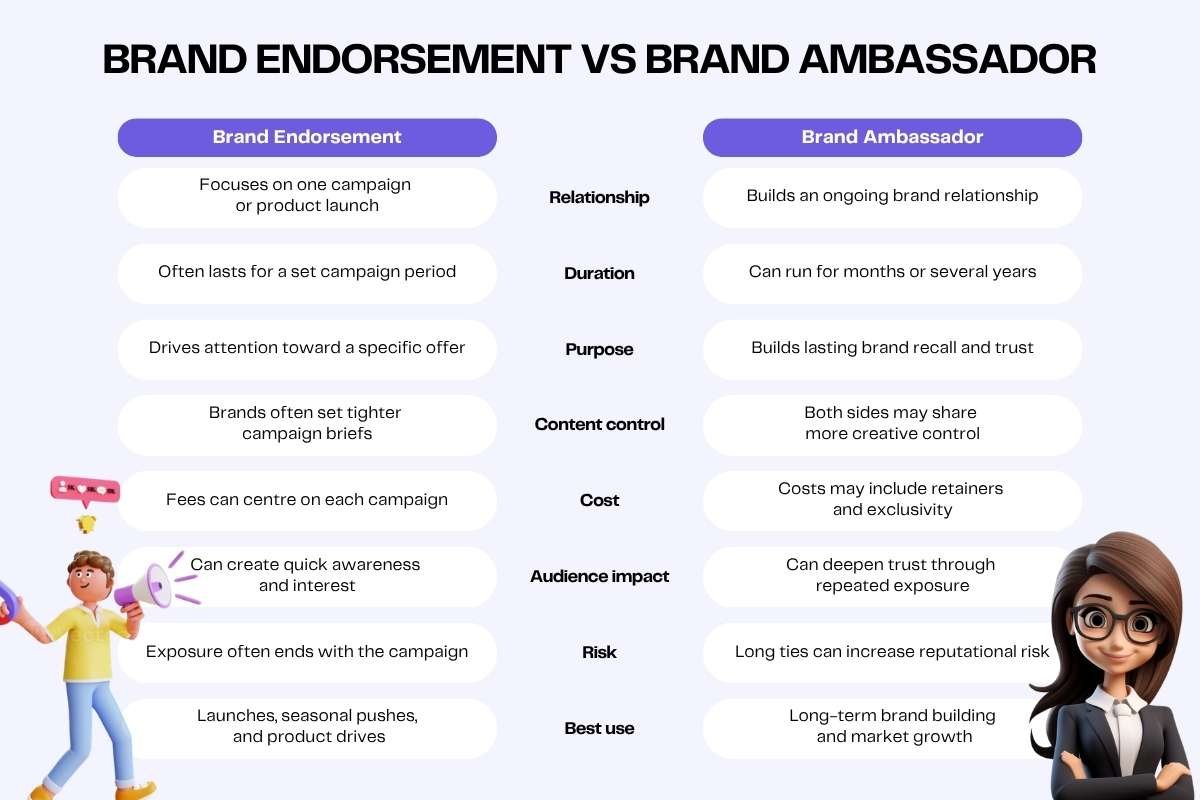
| Factor | Brand Endorsement | Brand Ambassador |
| Relationship | Focuses on one campaign or product launch | Builds an ongoing brand relationship |
| Duration | Often lasts for a set campaign period | Can run for months or several years |
| Purpose | Drives attention toward a specific offer | Builds lasting brand recall and trust |
| Content control | Brands often set tighter campaign briefs | Both sides may share more creative control |
| Cost | Fees can centre on each campaign | Costs may include retainers and exclusivity |
| Audience impact | Can create quick awareness and interest | Can deepen trust through repeated exposure |
| Risk | Exposure often ends with the campaign | Long ties can increase reputational risk |
| Best use | Launches, seasonal pushes, and product drives | Long-term brand building and market growth |
The cost gap can grow when brands seek exclusivity rights. Ambassador deals may also include retainers and usage rights. Endorsement deals may focus more on campaign fees alone. Production costs can still raise either model’s final spend.
Creative control also shapes how each model works. A campaign may need strict messaging across every channel. An ambassador relationship can allow more room for authenticity. That freedom may strengthen trust when the partnership feels natural.
So, the best choice between brand endorsement vs brand ambassador depends on the campaign goal. Brands seeking quick impact may favour an endorsement deal. Brands seeking lasting recall may prefer an ambassador agreement. The next step involves weighing cost against expected marketing returns.
Brand endorsement vs brand ambassador: when should a brand choose each?

I would choose an endorsement when the campaign needs quick attention. Product launches and seasonal pushes suit this model well. One-off offers can also benefit from celebrity-led awareness. I would choose an ambassador for long-term brand positioning. Repeated exposure can build recall and stronger category leadership.
Yet celebrity fame should never guide the choice alone. Audience-brand fit often matters more than follower counts. Marketers should assess budget, duration, exclusivity, and target audience. They should also match the deal with campaign goals.
Need a campaign boost? Choose an endorsement.
Need sustained brand association? Choose an ambassador.
Your wider plan can also include celebrities for endorsements. You can then compare formats through types of brand endorsements.
Brand endorsement vs brand ambassador: cost, ROI and risk considerations
Endorsement deals often bring a clear upfront campaign fee. Ambassador agreements can add retainers and exclusivity costs. Both models may include usage rights and production costs.
Media spend can also raise the final campaign budget.
For ROI, endorsements suit short campaign goals best. Ambassadors can create longer brand impact over time. ROI of brand endorsement depends on campaign goals, audience response, and long-term brand impact. Still, long-term impact needs more careful tracking methods.
Research shows that celebrity fit can greatly affect campaign outcomes. One meta-analysis reviewed 46 studies with 10,357 participants. It found stronger results when celebrities matched products well. Poor fit can also quickly create negative brand effects. So, fame alone should never drive the final choice.
Reputation risk also grows with longer brand ties. Audience mismatch can hurt trust and weaken campaign returns.
Real-world example of brand endorsement vs brand ambassador
One8 shows how a celebrity tie can grow beyond endorsement. Virat Kohli built One8 with PUMA through deep involvement. His style shaped the products, colours, and overall feel. That link made his personal image part of the positioning. The relationship therefore reflects sustained ambassador-style brand building.
For marketers, the lesson goes beyond celebrity fame. A strong personal fit can make partnerships feel more credible. Our memorable brand endorsement examples show similar patterns.
ICICI Prudential Life’s association with Amitabh Bachchan offers a contrasting example.
The company appointed him as its brand ambassador in 2011. His trusted public image supported a category built around security and long-term planning. The partnership helped make a complex financial product feel more familiar. This case shows why credibility and perceived reliability matter in high-consideration categories.
Asian Paints offers another model through its celebrity-led “Where The Heart Is” campaign. The web series featured celebrities and explored the personal meaning of their homes. Rather than relying on one permanent ambassador, the campaign used multiple personalities to create content and inspiration. It reportedly reached more than 62 million unique users and generated 1.7 million social engagements. The case shows how celebrity participation can support a broader campaign idea without defining the entire brand identity.
Together, these examples show three different approaches. One8 reflects a sustained partnership built around personal identity. ICICI Prudential demonstrates the value of trust in financial services. Asian Paints shows how celebrity-led content can generate reach and engagement around a campaign.
How to make the right choice? 7 key factors to consider

Before choosing, I would check seven key campaign factors:
- Campaign duration: Decide how long the partnership should run.
- Marketing objective: Match the deal with your main campaign goal.
- Budget: Include fees, rights, production, media, and exclusivity costs.
- Audience fit: Check whether the celebrity fits your target audience.
- Exclusivity: Decide whether competing brands need restrictions.
- Brand association: Define what traits you want audiences to remember.
- Measurement plan: Set clear metrics before the campaign starts.
If you need quick reach, choose an endorsement deal. If you need lasting recall, choose an ambassador partnership.
Conclusion:
The key difference comes down to relationship and campaign needs. Neither model works best for every brand or goal. Your choice should match budget, audience fit, and duration. It should also reflect your desired celebrity-brand relationship.
When weighing brand endorsement vs brand ambassador, start with strategy. Choose the model that supports your campaign goals best. The right partnership should create value beyond celebrity appeal.
FAQs
1. Is a brand ambassador the same as an endorser?
Not always. An endorser may support one campaign or product. An ambassador usually builds a deeper, longer relationship with the brand. The same celebrity can fill either role.
2. Which costs more, a brand endorsement or ambassador partnership?
Costs vary with celebrity fame, campaign scope, and contract terms. Ambassador deals may cost more overall due to retainers, exclusivity, usage rights, and longer commitments.
3. Can a celebrity be both a brand ambassador and an endorser?
Yes, a celebrity can hold both roles for one brand. They may represent the brand long-term while promoting specific products, launches, or seasonal campaigns through separate activities.
4. Which is better for a new product launch?
An endorsement often fits new launches because brands need fast awareness. Still, an ambassador can work better when the launch supports long-term positioning within a growing category.