
Key Takeaways
- Markets are fully pricing in a 25 basis-point RBI rate hike.
- August inflation reached 4.82%, above the RBI’s 4% target.
- Strong 7.8% growth could give policymakers room to tighten gradually.
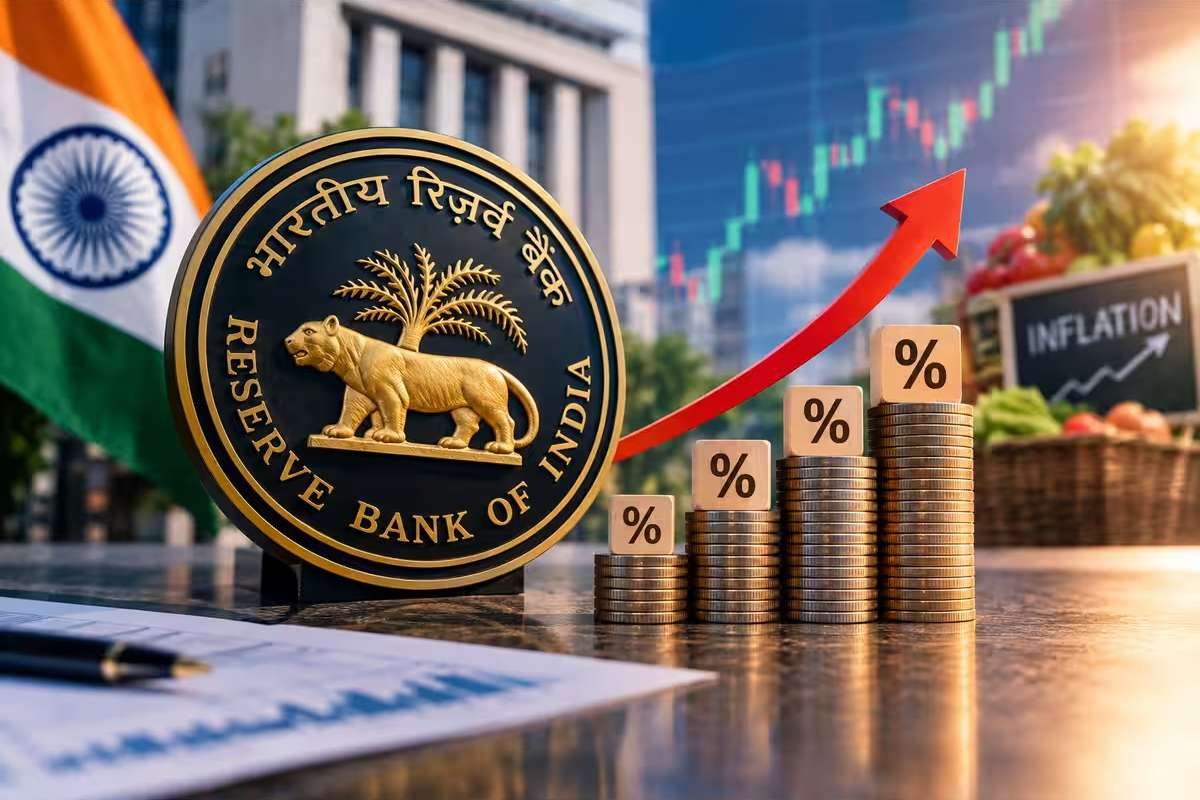
Investors expect an RBI rate hike this week as inflation strengthens, economic growth remains firm, and borrowing costs rise across major economies. A 25 basis point increase would take the repo rate above 5.25%, where it has remained for nearly 10 months.
Inflation and growth shape RBI rate hike
Economists expect an RBI rate hike as the Monetary Policy Committee meets on Wednesday. A 25 basis point hike would be the RBI’s first rate increase in nearly 4 years, following cumulative cuts of 125 basis points during 2025.
The repo rate was reduced from 6.5% to 5.25% during that easing cycle. The current debate has shifted as inflation has moved above the central bank’s 4% medium term target while economic activity remains strong.
Consumer inflation rose to 4.82% in August, marking the third consecutive month above the RBI’s target. Price increases have also broadened across the consumer price index, with prices in nearly half of the CPI basket rising at or above the 4% level.
At the same time, India’s economy expanded 7.8% in the April to June quarter. The combination of stronger growth and broader price pressures has reduced the need for policymakers to maintain the same level of monetary support.
Market expectations are already reflecting a higher cost of borrowing. Markets are fully pricing in an RBI rate hike of 25 basis points this week, with expectations for about 100 basis points of increases over the next 12 months.
The expected move would also come as several major central banks have moved toward tighter monetary policy. Higher global interest rates can influence capital flows into emerging markets, including India, by changing the relative attractiveness of domestic assets.
Markets assess potential RBI rate hike cycle
The larger question for businesses and investors is whether a potential October increase would represent a single adjustment or the beginning of a broader tightening cycle.
Some economists expect a relatively limited cycle of 25 to 50 basis points, while other forecasts point to 75 to 100 basis points of increases. Swap markets are pricing about 140 basis points of hikes over the next 24 months.
The rupee is another factor being monitored by markets. The currency remains about 1% below record lows reached in May. A higher domestic interest rate can influence the attractiveness of rupee assets, although currency movements also depend on global capital flows, commodity prices, and external financing conditions.
Higher rates could also affect Indian businesses through borrowing costs. Companies with significant floating-rate debt may face higher interest expenses if the tightening cycle extends. Banks and other lenders could also see changes in loan demand, deposit pricing, and credit conditions.
For investors, the RBI’s guidance may matter as much as the immediate rate decision. Changes to its inflation and growth forecasts, along with any adjustment to its neutral policy stance, could provide clues about future moves.
The central bank may choose to raise rates by 25 basis points while avoiding a firm commitment to additional increases. Alternatively, stronger guidance could signal that further tightening remains under consideration.
With inflation at 4.82% and quarterly growth at 7.8%, the RBI rate hike decision is shaped by both price pressures and economic resilience. The scale and pace of any future rate increases will remain important for borrowing costs, capital flows, currency markets, and business investment in India.