
More customers bring more demands. More employees bring more decisions. Priorities compete, old problems return, and the founder can end up spending more time managing the business than building it.
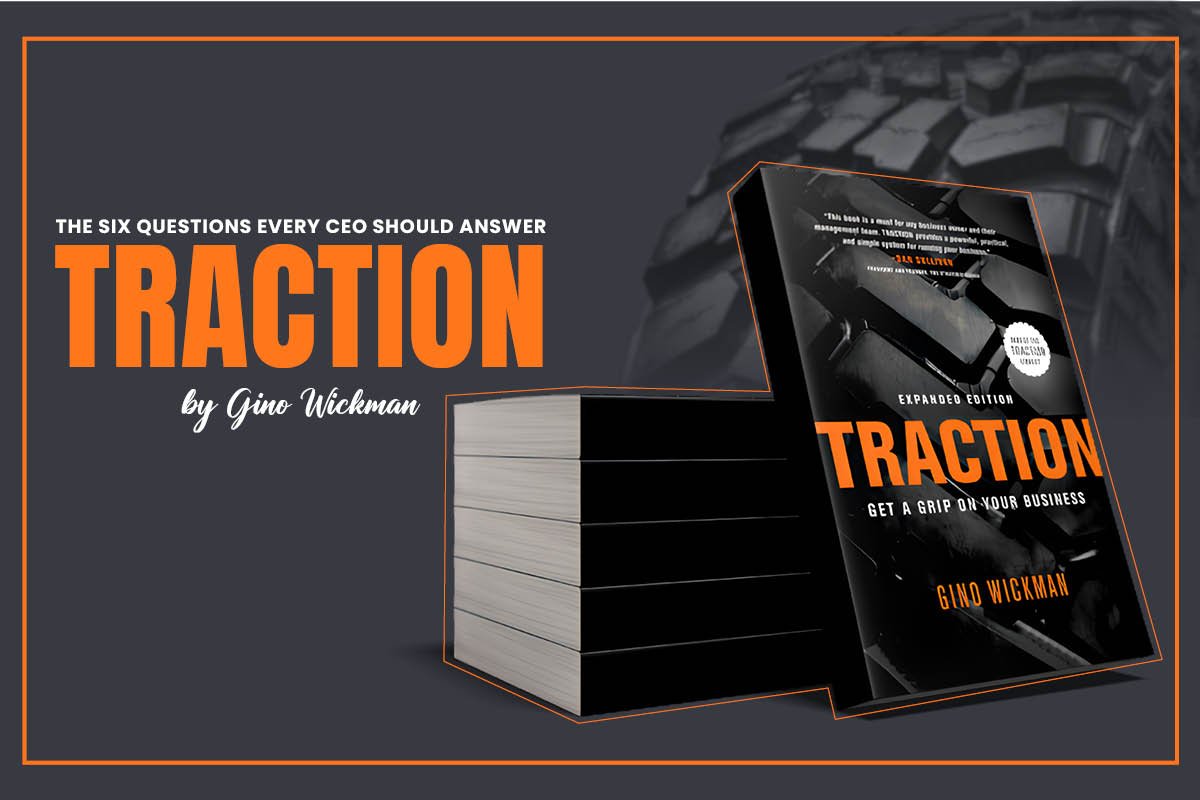
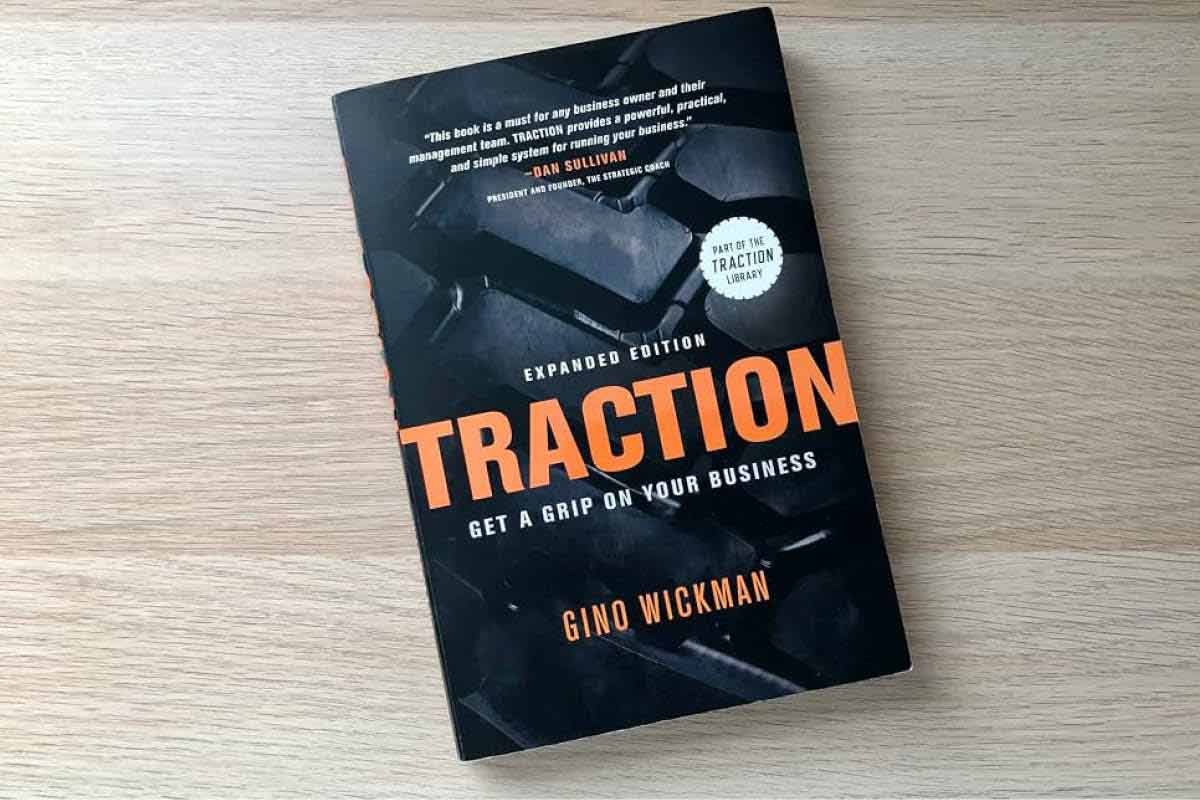
This is the challenge Gino Wickman explores in Traction by Gino Wickman: Get a Grip on Your Business. Through the Entrepreneurial Operating System (EOS), he brings six areas together: Vision, People, Data, Issues, Process, and Traction.
The system described in Traction by Gino Wickman is designed to address frustrations familiar to many growing companies: lack of control, poor alignment, insufficient profits, growth ceilings, and strategies that fail to deliver.
Wickman’s approach comes from experience. He began his entrepreneurial journey at 21 and, at 25, took over his family’s deeply indebted business. After turning it around and eventually selling it, he began helping other entrepreneurs build healthier, more self-sustaining companies.
Rather than treating EOS as six separate management ideas, Traction can be understood through six questions every CEO should be able to answer.
01. Where are we going?
VISION
A leader may know where the company is heading, but the rest of the organization may see something different.
The EOS Vision/Traction Organizer (V/TO), explained in Traction by Gino Wickman, brings the company’s direction together through core values, core focus, a 10-year target, marketing strategy, a three-year picture, a one-year plan, quarterly priorities, and the issues that could stand in the way.
The real value is in creating agreement. What does the company stand for? What should it become? What needs to happen this year?
That vision is brought closer through Rocks, the three to seven priorities that matter most over the next 90 days. A vision also has to move beyond leadership through regular communication so employees understand how their work contributes to it.
Where are we going?
If different people give different answers, the company has a clarity problem.
02. Who is taking us there?
PEOPLE
Strategy depends on the people responsible for carrying it forward.
EOS focuses on having the right people in the right seats. The right people fit the company’s values and culture; the right seats match their abilities and capacity.
The People Analyzer helps assess cultural fit. The Accountability Chart clarifies ownership, while GWC: Get it, Want it, Capacity asks whether someone understands the role, wants it, and can handle it.
As a company grows, a founder who once handled everything can become its bottleneck. Decisions wait for approval and responsibilities return to the CEO.
Building the right team means giving capable people clear ownership and the authority to act.
It also requires a shift in mindset: the founder cannot continue deciding and doing everything. Growth demands delegation and a leadership team capable of taking responsibility.
03. What are the numbers telling us?
DATA
Experience builds instinct, but instinct can be misleading. Revenue may rise while margins fall, or a busy team may appear productive without making real progress.
The EOS Scorecard, a key tool in Traction by Gino Wickman, provides a regular view of the business through five to fifteen important numbers. Some measure results; others act as early signals of what may be coming.
Reviewing the same numbers consistently makes changes easier to spot and keeps conversations grounded in evidence rather than opinion.
Data does not make decisions for a CEO. It makes those decisions better informed.
What are the numbers telling us?
And are we willing to respond when the answer is uncomfortable?
04. What is holding us back?
ISSUES
Every business has problems. The difference is how quickly and honestly it deals with them.
A temporary fix may solve today’s problem only for the same issue to return later. EOS uses IDS: Identify, Discuss, Solve, one of the core practices in Traction by Gino Wickman, to address problems at their source.
A customer complaint may reveal a training gap. Poor performance may come from unclear expectations. A missed deadline may point to a broken process or unclear ownership.
The Issues List gives leadership a place to bring these concerns into the open.
The aim is not to eliminate every problem. It is to stop solving the same one repeatedly.
This also requires leaders to accept that businesses inevitably hit ceilings. Breaking through them may require simplifying, delegating, changing structure, predicting problems, and systemizing the way the company operates.
What is holding us back?
Are we solving the cause or simply managing the symptom?
05. How should the work get done?
PROCESS
Every business has a way of working, but much of that knowledge often exists only in people’s heads.
EOS encourages companies, as outlined in Traction by Gino Wickman, to identify their core processes and document the essential steps. Using the 20/80 principle, the focus is on what matters most for consistency, quality, and repeatability.
This makes training easier, reduces dependence on individuals, and gives the company processes it can improve and scale.
For founders, it also creates freedom. When important knowledge belongs to the organization rather than one person, the business becomes less dependent on its founder.
EOS also calls for another important shift: everyone should operate from one system. When different departments follow different ways of working, alignment becomes difficult.
How should the work get done?
And can the company maintain its standards without the founder in the room?
06. Are we actually moving?
TRACTION
A company can have a strong vision, capable people, useful data, clear processes, and still struggle to execute.
This is where the approach presented in Traction by Gino Wickman brings everything together
EOS uses Rocks to focus the organization on three to seven priorities over 90 days. The Meeting Pulse supports that focus: annual meetings establish direction, quarterly meetings reset priorities, and weekly Level 10 Meetings review progress, solve problems, and maintain accountability.
The result is a steady rhythm of setting priorities, checking progress, addressing obstacles, and moving forward.
Underlying the system is one final mindset shift: leaders must remain open to new ideas and be willing to recognize their own limitations. EOS is not about finding a perfect formula; it is about creating a discipline the organization can follow consistently.
Are we actually moving?
If the answer is unclear, the problem may not be strategy. It may be execution.
The Six Questions Every CEO Should Answer
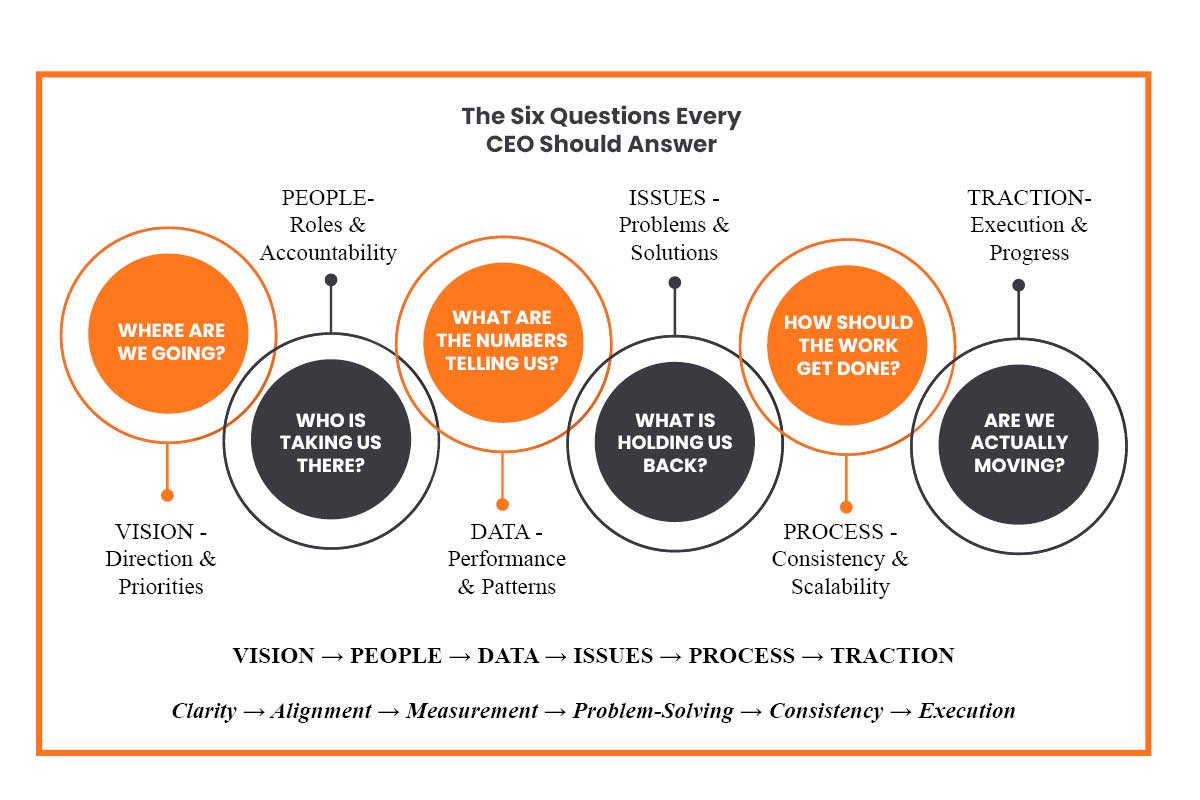
01 | WHERE ARE WE GOING?
VISION – Direction & Priorities
02 | WHO IS TAKING US THERE?
PEOPLE -.Roles & Accountability
03 | WHAT ARE THE NUMBERS TELLING US?
DATA – Performance & Patterns
04 | WHAT IS HOLDING US BACK?
ISSUES — Problems & Solutions
05 | HOW SHOULD THE WORK GET DONE?
PROCESS – Consistency & Scalability
06 | ARE WE ACTUALLY MOVING?
TRACTION – Execution & Progress
VISION → PEOPLE → DATA → ISSUES → PROCESS → TRACTION
Clarity → Alignment → Measurement → Problem-Solving → Consistency → Execution
What Readers Say
The response from readers shows the practical appeal of Traction by Gino Wickman. Several describe using its ideas rather than simply reading about them.
Tim
Read Tim’s full review on Goodreads
Tim calls Traction one of the most important books he has read as an entrepreneur. He has read it four times and built his business processes around its framework, noting that later readings reveal details missed the first time.
Jim B
Read Jim B’s full review on Goodreads
Jim B appreciates the focus on values, planning, leadership, and organizational clarity. He also notes that such frameworks do not fit every environment exactly and are best adapted to the situation.
Together, the reviews point to a practical strength: Traction gives leaders a common language for priorities, accountability, processes, and execution. They also suggest that the framework works best as a tool, not as a replacement for judgment.
Who Is Traction For?
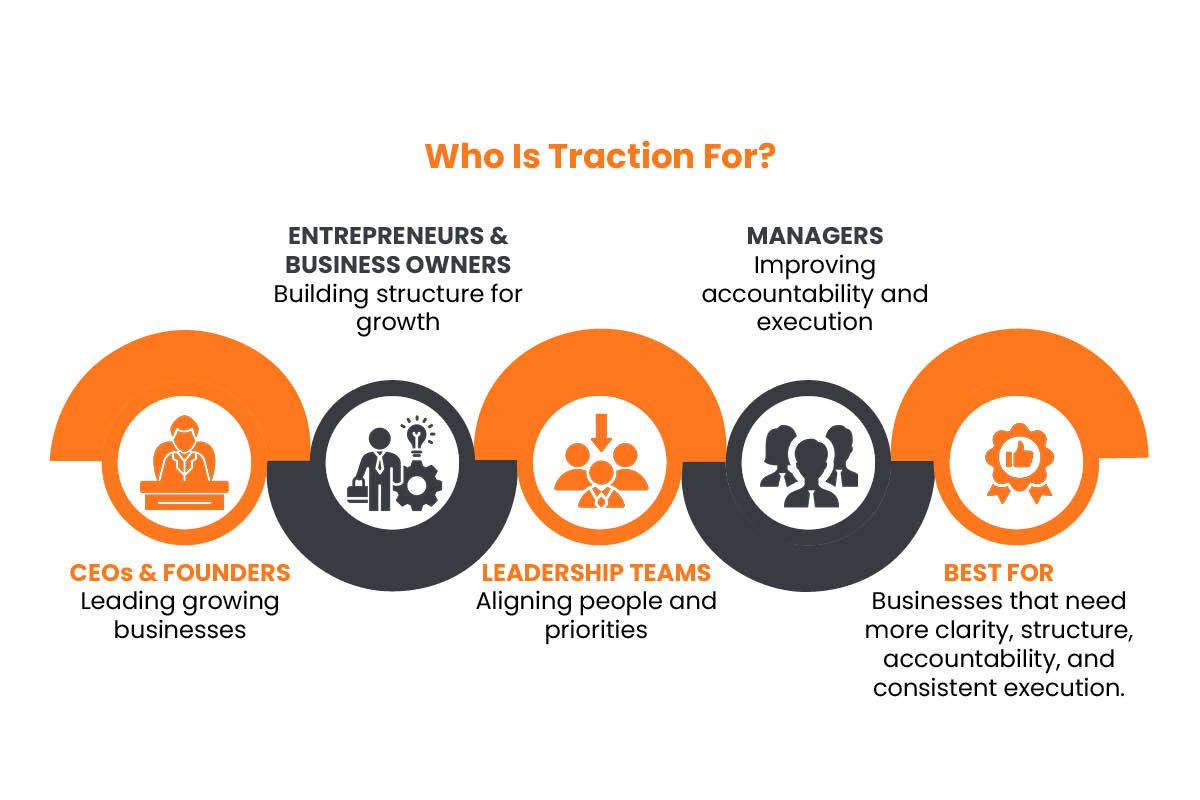
- CEOs & FOUNDERS: Leading growing businesses
- ENTREPRENEURS & BUSINESS OWNERS: Building structure for growth
- LEADERSHIP TEAMS: Aligning people and priorities
- MANAGERS: Improving accountability and execution
- BEST FOR: Businesses that need more clarity, structure, accountability, and consistent execution.
Is It Recommended?
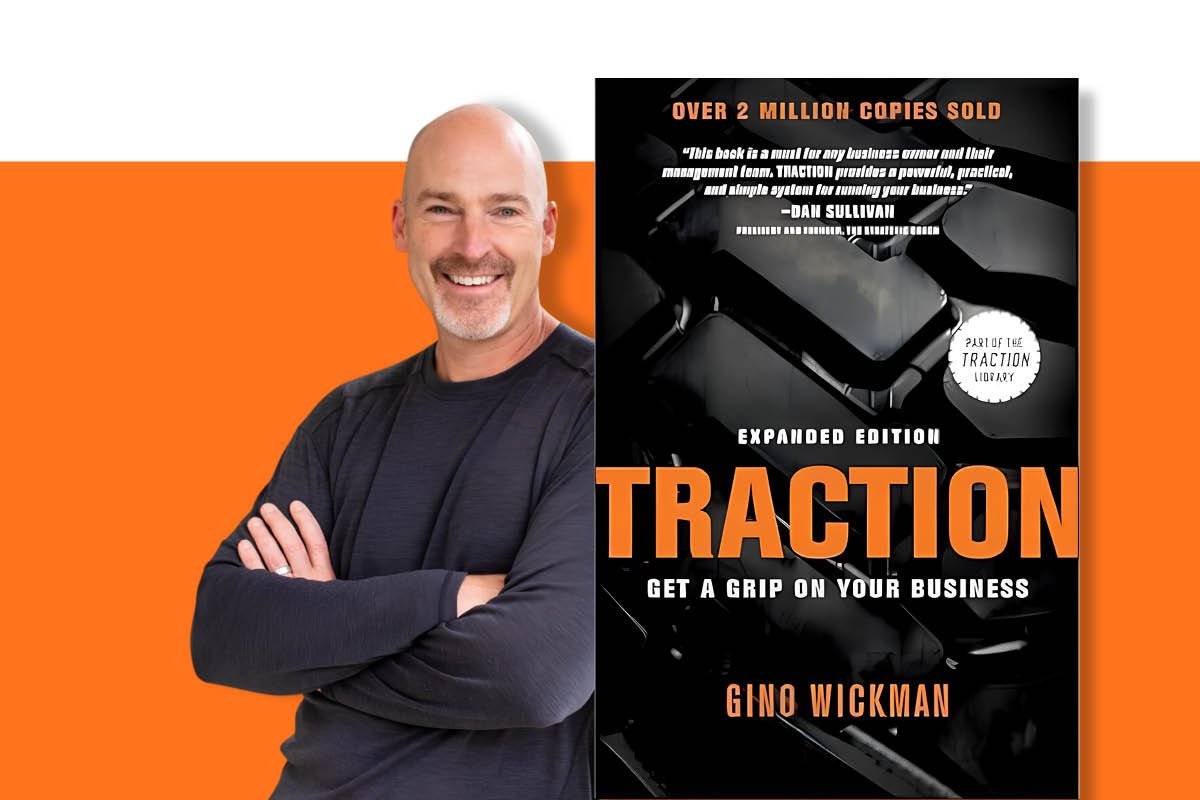
If you want a practical approach to running a growing business, Traction by Gino Wickman is worth considering. Its tools are designed to be used, not simply read.
The framework may feel structured at times, but its focus on people, priorities, processes, and execution remains useful.
Recommendation: Yes, especially for founders and leadership teams seeking more clarity and accountability.
Six Questions. One Operating Discipline.
Vision gives the business direction. People provide the capability to move it forward. Data shows what is really happening, while Issues bring problems into the open. Process creates consistency, and Traction turns priorities into progress.
For founders, the real shift is moving from being involved in everything to building a company that can operate without depending on one person.
That is the central idea behind Traction by Gino Wickman: growth needs more than ambition. It needs a way of working that keeps people focused, accountable, and moving forward.
Ambition sets the direction. Operating discipline gets the business there.
If a leadership team cannot answer these six questions clearly, perhaps the problem isn’t a lack of ambition. Perhaps it is a lack of operating discipline.
Thank You For Reading!
See More
The Lean Startup by Eric Ries: A Practical Guide to Building Successful Startups