


A few years ago, many companies simply bought power from the grid. Today, that approach looks less complete. Corporate adoption of renewable energy is changing how companies plan power for growth. A factory may now pair grid power with solar. An office may sign a long-term power deal.
A large plant may source power through open access. The shift reflects cost needs, climate goals, and buyer demands. But renewable procurement has no single path. This article covers adoption drivers, procurement models, key barriers, and new business opportunities.
Why are Indian companies adopting renewable energy?
Indian companies now treat power as a business planning issue. Corporate adoption of renewable energy reflects this wider shift. Four drivers stand out across sectors and business sizes.
- Energy-cost planning: Companies want better control over future power costs. Renewable contracts can add more price visibility over time.
- Decarbonisation commitments: Net-zero goals push companies to cut Scope 2 emissions. Renewable power can help lower emissions linked to purchased electricity.
- Energy security: Companies can reduce reliance on one power source. This matters most for plants with high and steady power demand.
- Stakeholder pressure: Investors and buyers now ask for clearer emissions data. Global supply chains also push Indian companies toward cleaner power choices.
SEBI’s BRSR framework also raises the bar for listed companies. Large listed companies must report key ESG metrics, including energy and emissions data.
The business case differs by sector, power use, and location. So, the procurement model matters as much as the renewable source.
How do companies procure renewable energy?
Companies can choose several routes to source renewable power. Corporate adoption of renewable energy does not follow one standard model. Each route fits a different power need and cost plan.
| Model | How it works | Best suited for |
| On-site solar | The company generates power at its own site. | Plants, offices, and facilities with suitable roofs or land. |
| Captive project | A company uses power from a dedicated renewable project. | Large companies with steady power demand. |
| Group captive | Multiple users share ownership in one power project. | Companies seeking shared project ownership. |
| Open access | Eligible users buy renewable power through approved arrangements. | Large commercial and industrial consumers. |
| Green power procurement | Companies buy renewable electricity through available market routes. | Businesses seeking more flexible procurement. |
On-site solar can work well when space allows generation near demand. It can also reduce the need for grid power during solar hours.
Captive projects suit companies with large, steady loads. They can support longer-term power planning when project scale makes sense.
Group captive models spread project participation across several power users. This can help companies seek renewable supply without building alone.
Open access can give eligible consumers more sourcing choices. State rules and charges still shape its financial value.
Green power procurement offers another route for businesses seeking flexibility. The right choice depends on demand and contract terms.
For corporate adoption of renewable energy, load profile matters first. Location, project size, capital, regulations, and contract structure matter too.
What determines a company’s renewable energy choice?
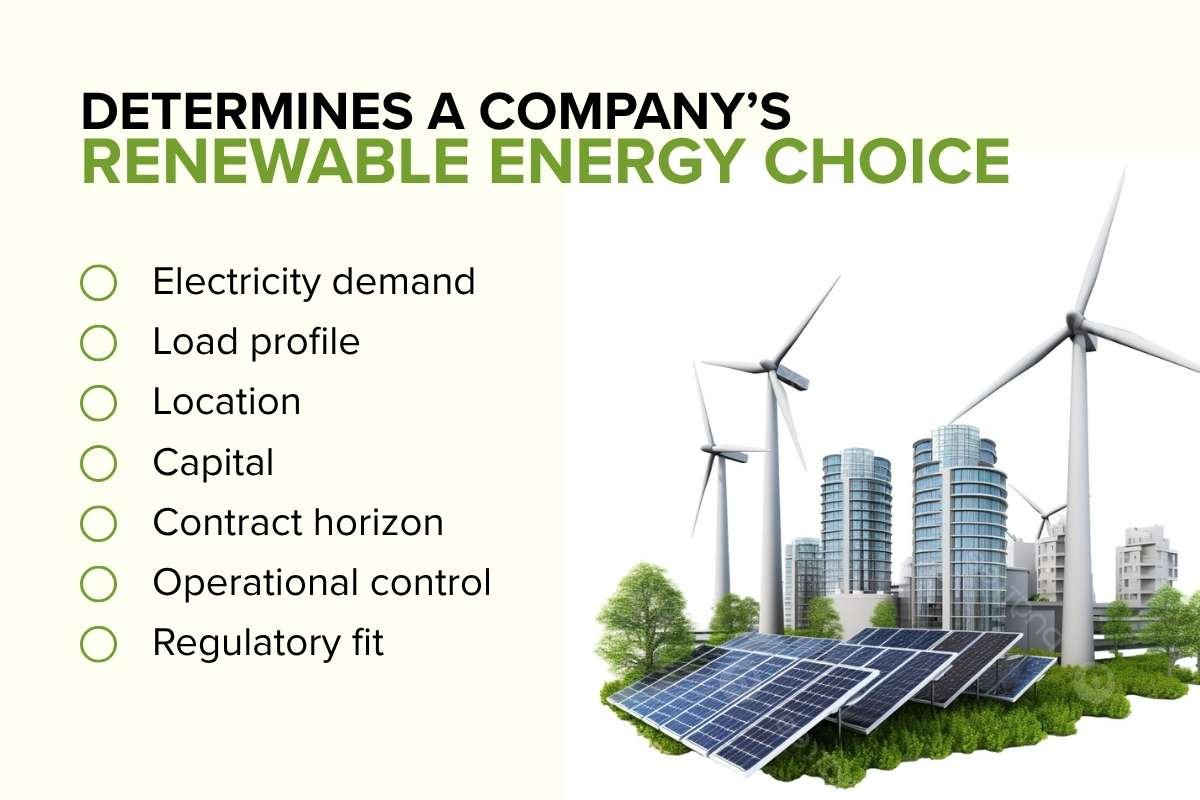
For corporate adoption of renewable energy, the right model starts with business needs. A simple decision check can narrow the options quickly.
A company should assess:
- Electricity demand: How much power does the company use daily?
- Load profile: Does power use stay steady or change often?
- Location: Can the site access suitable renewable projects nearby?
- Capital: Can the company fund an upfront project cost?
- Contract horizon: Can it commit to a long-term power deal?
- Operational control: Does it want to own assets or buy power?
- Regulatory fit: Which state rules apply to the chosen model?
These factors can rule out some options early. They also help teams compare costs, risks, and control.
The right procurement route is therefore a commercial decision, not simply a sustainability decision.
Where are the business opportunities around corporate renewable adoption?
Corporate adoption of renewable energy creates demand beyond power generation. Companies also need tools, skills, finance, and support around each project.
| Opportunity | Corporate need addressed |
| Solar EPC and installation | On-site generation |
| Energy-management software | Monitoring and optimisation |
| Renewable-energy consulting | Procurement and project choices |
| O&M services | Asset performance |
| Energy audits | Finding efficiency gains |
| Procurement support | Vendor and project checks |
| ESG and emissions data | Reporting needs |
| Financing support | Project capital needs |
This creates room for many green energy solutions and technology businesses. The best openings often sit around a company’s daily pain points.
But market demand alone does not make a strong business. Entrepreneurs must assess customer acquisition, technical skills, compliance, and working capital.
Capital-heavy models may also need better green energy business investment planning. Service-led models can need less upfront capital, but they still need strong skills and trust.
The key question is simple: what corporate problem can the business solve better?
What can slow corporate renewable adoption?
Corporate adoption of renewable energy can face hurdles before projects reach operation. These hurdles often come from business and system needs.
- Regulatory complexity: State rules can shape which procurement models work. Charges, approvals, and local rules can also change project economics.
- Grid and transmission constraints: Projects need suitable grid access and transmission capacity. These limits can affect both timelines and project costs.
- Contract complexity: Long-term power deals need careful commercial checks. Companies must assess terms, risks, prices, and future power needs.
- Demand mismatch: Renewable output may not match a company’s demand. Timing gaps can affect how much power the company can use.
These issues matter for companies and their service partners alike. Strong corporate demand does not automatically make every renewable-energy business opportunity viable.
Corporate adoption is creating a new green-business market

Corporate adoption of renewable energy is creating demand beyond power supply. Companies now need help with procurement, project development, monitoring, compliance, finance, maintenance, and emissions data.
That shift creates room for entrepreneurs across the wider energy value chain. The strongest opportunities often solve one clear corporate pain point.
This is where green business models that scale can gain ground. A business does not always need to own a power plant. It can build value by helping companies buy, manage, measure, or maintain renewable energy better.
Conclusion:
Corporate green energy adoption has moved beyond a simple green choice. Corporate adoption of renewable energy now shapes sourcing, cost planning, and long-term business strategy. Companies can choose from several procurement models based on their power needs. Location, capital, contracts, and state rules also shape green energy business.
This shift creates demand for services across the wider energy value chain. Entrepreneurs can support companies through project work, data, finance, compliance, and maintenance.
Frequently asked questions about corporate adoption of renewable energy
1. How can companies procure renewable energy in India?
Companies can use on-site solar, captive or group-captive projects, open access, and other eligible procurement routes based on their needs.
2. Why are companies shifting to renewable energy?
Companies seek better power-cost planning, lower emissions, stronger energy plans, and better alignment with investor and customer expectations.
3. What businesses benefit from corporate renewable-energy demand?
EPC, O&M, energy-management, procurement, consulting, financing, and emissions-data businesses can serve growing corporate needs.
4. What is corporate adoption of renewable energy?
Corporate adoption of renewable energy means companies generate or source renewable electricity for their business operations.