


Here’s a hard truth: You can do great work and still struggle to gain notice. Your skills may grow while your name stays less known. That gap can limit new roles, key contacts, and career growth. LinkedIn’s 2026 data shows that women held only 18% of top leadership roles in India in 2025, compared with a global median of 31%. Personal branding helps people understand what you know and what you offer. It shows your strengths, views, work, and value with clear proof.
Learning how to do personal branding can boost your career path. It can also help you build trust and lead with more confidence. Let’s be clear: Personal branding does not mean self-promotion. The difference? In personal branding, you share useful proof. You do not need to act fake or praise yourself each day. Instead, you need clear steps that help others see your value.
So, let’s look at the key steps you can take next.
Before understanding how to do personal branding, understand what it is
Jeff Bezos once said, “Branding is what people say about you when you are not in the room.” And honestly, there is no better way to put it. Personal branding means shaping how people see your work and value. It reflects your skills, values, views, and strengths at work. A strong personal brand rests on three simple parts.
- Expertise: What do you know, and what can you teach?
- Values: What do you stand for in your work?
- Visibility: Where can people see your skills and ideas?
A simple formula helps make this idea much clearer:
Personal brand = Expertise + Reputation + Visibility
Visibility without skill can create noise, not trust or respect. Expertise without visibility can leave great work out of sight. Your brand should always match your real work and proof. That link helps your audience trust what you say and share.
How to do personal branding? 7 tips for every woman leader
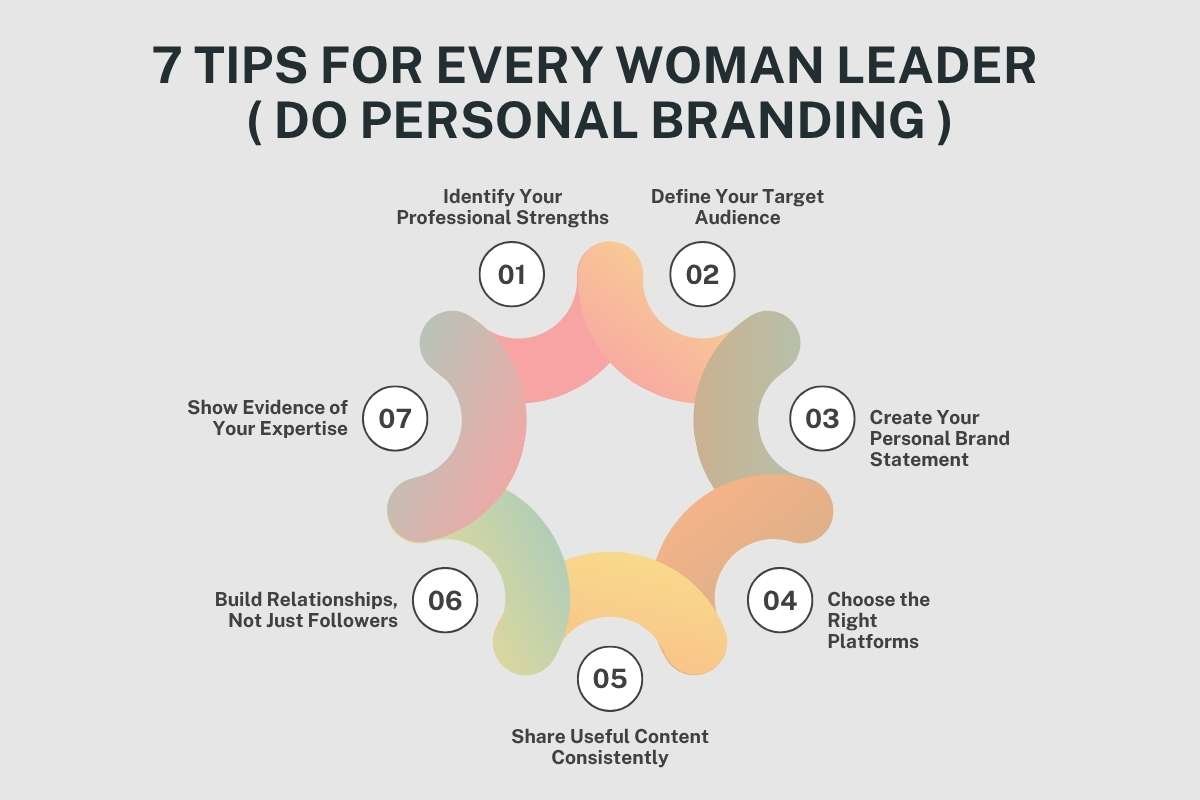
If you want to learn how to do personal branding, start small. You do not need a huge following to build trust. You need a clear focus, useful proof, and steady action. These seven steps can help you build that base.
1. Identify your professional strengths
Start by asking what you do well each day. Review past work, wins, praise, and key skills.
Then pick one or two areas you know best. Do not try to become known for every skill.
Your job title tells people what role you hold. Your expertise tells them what value you can bring. For example, a marketing manager could focus on B2B growth. That focus gives her brand a clear and useful edge.
2. Define your target audience
A strong personal brand needs a clear audience first. Ask who you want to reach through your work. You may want recruiters, clients, founders, peers, or leaders. Your audience shapes your topics, tone, and choice of platform. So, choose your audience before you plan your posts.
3. Create your personal brand statement
Write one line that sums up your work.
Use this simple format:
I help [audience] achieve [outcome] through [expertise].
Keep the line clear, specific, and true to your work. Skip vague terms like “passionate leader” without clear proof. Your past work should support every claim you make.
4. Choose the right platforms
You do not need to post on every platform. LinkedIn offers a strong start for most professionals. You can also use sites, events, journals, or niche networks. Choose each platform based on where your audience spends time. For example, Bharat 2.0 Conclave can support event-based networking [Landing Page]. The right mix can build both reach and trust.
5. Share useful content consistently
Share lessons, views, case studies, and work insights often. Useful content can do more than increase visibility. The 2024 Edelman-LinkedIn study found that 75% of B2B buyers and C-suite leaders said a piece of thought leadership had led them to research a product or service they were not previously considering. Create three content themes linked to your core expertise.
6.Build relationships, not just followers
A personal brand grows through real talks, not numbers alone. Comment on useful posts and join key industry talks. Attend events and meet people who share your goals. You can also connect with senior leaders through thoughtful messages. These links can strengthen trust around your work and ideas.
7. Show evidence of your expertise
Proof gives your personal brand more weight and trust. Share projects, wins, talks, awards, courses, and published work. Add clear results when you can share real numbers. For women leaders, this step can matter even more. Many women may downplay wins instead of sharing clear proof. Documenting your work helps others see the value you bring. That proof can support new roles, talks, and key links.
Personal branding mistakes to avoid
Personal branding can fail when your plan lacks a clear focus. Here are common mistakes that can hurt your work and trust.
- Trying to appeal to everyone can make your message feel weak. A clear niche helps people know why they should follow you.
- Copying someone else can make your brand feel less real. Your voice should match your work, views, and real goals.
- Posting without expertise gives people little reason to trust you. Choose topics where your skills and work give you proof.
- Talking only about wins can make your posts feel like ads. Share lessons and tips that help your audience take action.
- Posting with no steady plan makes your focus hard to grasp. Also, follower count alone cannot show if your brand works.
Personal branding for women in leadership
Personal branding can help women make their skills easier to see. It gives their work a clear voice and wider reach. That matters when women seek roles, talks, or key contacts. McKinsey found women held just 29% of C-suite roles. The same study found sponsors can boost promotion rates greatly. So, owning your wins does not mean showing off.
Instead, share the work, choices, lessons, and results behind them. For example, a sales leader could share one growth win. She could turn that win into a LinkedIn post. Then, she could expand it into a talk or article. That one story can show skill, insight, and sound judgment.
This approach builds trust while keeping the focus on value.
How can you measure personal branding’s success?

A strong personal brand needs more than likes and follower counts. I would track signs that show real career value instead. Start with relevant profile views and meaningful talks in comments. Then track speaking invites, expert requests, and new work leads.
Watch for recruiter messages, client calls, and useful network growth. You can also track mentions, links, and citations of your work. These signs show whether the right people notice your expertise. Quality attention matters more than a large but weak audience.
Remember, the goal is better trust, stronger links, and new career chances.
Conclusion:
So, how to do personal branding? First of all, remember, it takes time, trust, and steady work to grow. You cannot build strong recognition through one post alone. Start by finding your expertise and defining your target audience. Then, share useful ideas and build real professional relationships.
Keep showing proof through work, wins, talks, and useful insights.
Over time, these steps can strengthen trust in your name. Start today with one platform and one clear expertise area.
And soon, you will have your personal brand as one of the women in leadership.
FAQs
1. What is personal branding?
Personal branding shapes how people see your skills and value. It helps build trust, recognition, and new career opportunities.
2. How do I start personal branding from scratch?
First, identify your key expertise and strongest skills. Next, define your audience and their needs. Then, share useful content that proves your knowledge.
3. Is personal branding important for women leaders?
Yes, it can strengthen visibility, trust, and leadership reach. It also helps women share wins without downplaying their value.
4. Which platform is best for personal branding?
The best platform depends on your audience and career goal. Choose places where your target audience already spends time.
5. How long does it take to build a personal brand?
There is no fixed timeline for building strong recognition. Stay consistent, share useful ideas, and build trust over time.
Thank You For Reading!
Read Next
Why Top Brands and Investors Are Partnering with Women-Led Enterprises in 2026