


A familiar face can make a brand feel more worth choosing. Fans often trust brands linked with stars they already admire. But why does a celebrity’s reputation transfer onto products?
Research links celebrity trustworthiness, expertise, and attractiveness with stronger endorsement effects. The psychology behind why celebrity endorsements work involves several linked mental cues.
Source credibility can build trust before product claims even register. Parasocial bonds, social proof, and status can shape brand appeal. Familiarity and aspirational identity can also guide consumer choices. Celebrity-brand fit then helps make the endorsement feel more authentic. This article explains how these forces shape brand choice.
Why does celebrity endorsement work on the human mind?
The psychology behind why celebrity endorsements work starts with trust. People judge endorsers through traits beyond fame and status. They assess trust, skill, appeal, and social value first. These cues can shape brand views before product details. Research groups celebrity credibility into expertise, trustworthiness, and attractiveness.
1. Source credibility
A famous face cannot fix weak brand credibility alone. Consumers still ask whether the celebrity seems worth trusting. They also judge whether that person knows the product. A sports star fits better when promoting fitness gear. A chef may carry more weight for food brands. This makes credibility more useful than fame alone.
Research also supports this point across Asian consumers. One study tested celebrity credibility among 880 Singaporean students. It found strong support for the credibility scale’s structure. For Indian brands, this distinction matters across product types.
2. Source attractiveness
Attractiveness does not mean physical beauty alone here. It also covers likeness, familiarity, charm, and perceived similarity. People often respond better to people they already like. That response can then shape how brands seem too. Research finds attractiveness can strongly affect early brand attitudes.
This helps explain why stars feel instantly familiar. A known face needs less mental effort to process. That ease can make the ad feel more natural.
3. Social proof
Celebrity use can signal that something deserves attention. Yet social proof does not always mean widespread product use. It can mean someone socially valued chooses that product. That difference matters in India’s status-conscious consumer markets. A star can make ordinary products feel more significant. The signal works through status, trust, and public attention.
Still, fame alone cannot prove product quality or value. That creates one major limit for celebrity-led brand campaigns .
4. Aspirational identity
Consumers sometimes buy products linked with desired identities. Fashion brands often use this effect with great skill. Fitness stars can represent strength, health, and discipline. Luxury stars can signal status, taste, and success. Sports stars can represent drive, skill, and winning.
The product then becomes more than a simple purchase. It can become a small step toward aspiration. This effect grows when the celebrity fits the category. Research on celebrity advertising supports this match-up principle.
5. Repeated exposure
Repeated exposure can make familiar people easier to process. That mental ease can strengthen persuasion in some settings. Research found repeated spokesperson exposure increased message persuasiveness. However, familiarity does not guarantee stronger persuasion every time. Context still shapes whether familiarity helps the message.
This explains why repeated campaigns can build strong memories. The face becomes linked with the brand over time. That link can then speed up brand recognition later.
The celebrity effect is really about association; here’s why

Celebrity influence works through meaning, not fame alone. The psychology behind why celebrity endorsements work involves selective association. Consumers rarely transfer every trait linked with a celebrity. Instead, they connect specific traits with the brand. Research calls this process meaning transfer between people and products.
Consider how Indian audiences read familiar celebrity signals today. Virat Kohli often signals discipline, performance, and sporting excellence. Deepika Padukone can signal fashion, lifestyle, and premium appeal. Amitabh Bachchan can signal authority, trust, and lasting fame.
These meanings can shape how consumers view brands. That does not mean every celebrity creates these effects. The association must match what the brand wants. A celebrity’s fame alone cannot create that match.
Association turns celebrity meaning into brand meaning
Grant McCracken proposed the meaning transfer model in 1989. His model explains how celebrities carry cultural meanings forward. Those meanings can move from celebrities toward products. Consumers can then connect those meanings with themselves.
Associative learning research supports this basic psychological process too. One study found direct affect transfer through celebrity conditioning. It also found stronger effects when celebrity-product fit improved.
The process becomes easier through repeated brand associations. A celebrity appears beside the same brand repeatedly. Over time, both names can become mentally linked together. The brand then gains part of that learned meaning. And that’s the essence of the psychology behind why celebrity endorsements work.
Popularity is not the same as relevant meaning
This creates an important distinction for brand managers. A famous person can attract attention without adding meaning. Another star may add less reach but stronger relevance. That difference can change the value of an endorsement.
Indian brands often face this choice across crowded markets. A huge star may offer unmatched reach and recall. Yet a niche star may offer stronger category credibility. That can matter more when the product needs trust. That’s the secret sauce for memorable brand endorsements.
Research also challenges the idea that fit always works. One study found consumer-brand fit could matter more overall. It tested celebrity, brand, and consumer congruence separately. So marketers should match the celebrity with consumers too.
This makes celebrity selection more strategic than choosing fame. The best famous people endorsement adds useful meaning to brands. That meaning should support the brand’s own desired position.
Why celebrity-brand fit matters more than fame?
Fame can win attention, but fit can win belief. A famous person can still make a poor endorser. Consumers often ask one quiet question before trusting endorsements. Does this person actually make sense for this product?
This judgment reflects celebrity-brand congruence, or perceived fit. Strong fit makes the endorsement feel easier to believe. It also reduces doubt about the celebrity’s true motives. A sports star selling shoes feels easy to understand. A film star selling industrial software feels less natural.
Research on the psychology behind why celebrity endorsements work supports this effect across celebrity endorsement studies. A meta-analysis found that fit can shape endorsement effectiveness strongly. It linked congruence with better consumer responses toward brands.
What creates strong celebrity-brand fit? Understanding the basics
A useful framework keeps the choice simple for marketers:
Strong fit = Celebrity identity + Product category + Audience expectation
Each part needs to support the others clearly. Celebrity identity should match the meaning brands want. Product categories should suit the celebrity’s known strengths. Audience expectations should make the partnership feel believable.
Consider a cricket star promoting sports shoes in India. The link feels natural because performance supports both identities. Now consider that same star promoting luxury home decor. The partnership may still gain views, but questions could follow.
The issue does not involve fame or reach alone. The issue involves whether the association makes sense.
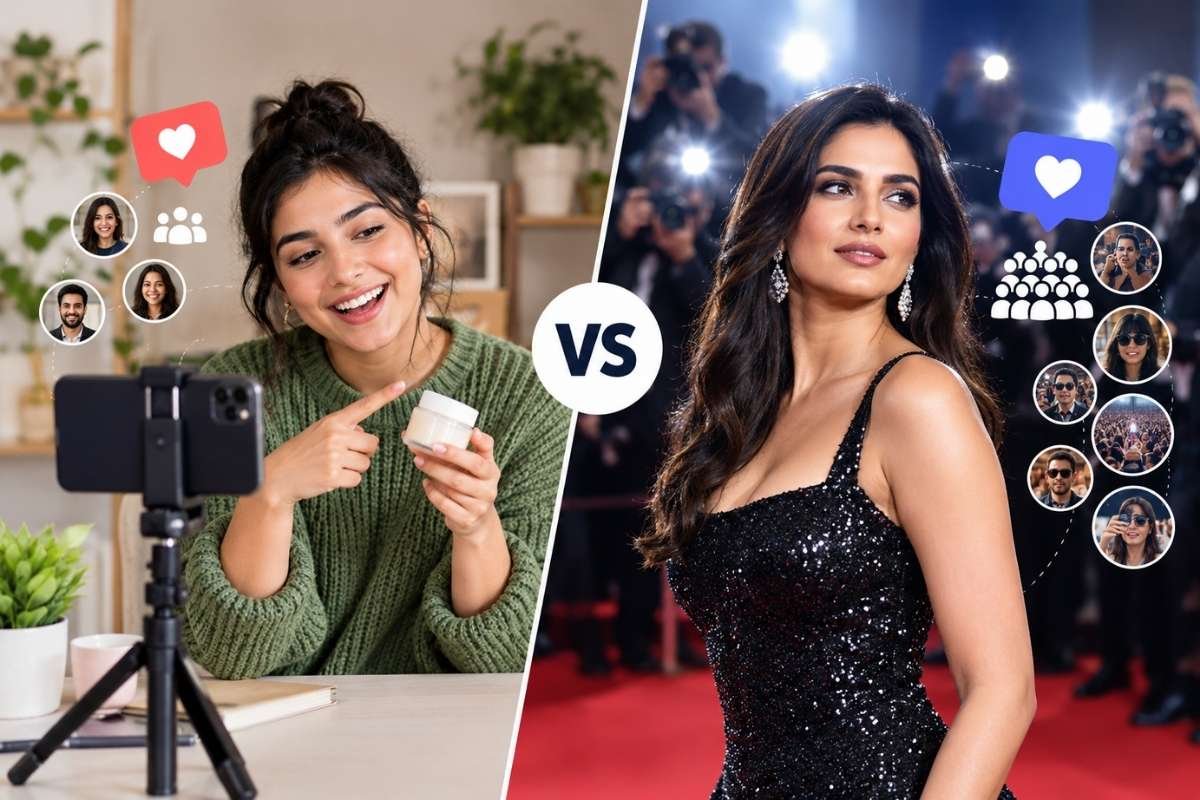
This distinction matters when comparing celebrities with influencers. Influencers often build deeper category-specific trust with audiences. Celebrities often bring wider cultural recognition across India. That difference can shape which partner suits each campaign.
Why familiar faces can influence buying decisions

Familiar faces can make ads easier for people to process. Recognition also helps people notice and recall brand messages. The brain needs less effort to process known faces. That ease can give familiar endorsers an early advantage.
Repeated exposure can strengthen links between celebrities and brands. Each appearance can make that connection easier to recognize. Over time, the celebrity can become part of brand memory. That effect can support recall when buyers later shop.
Research on mere exposure supports this effect quite well. Zajonc found repeated exposure can increase positive responses toward stimuli. His classic studies helped shape modern familiarity research.
However, familiarity does not guarantee a purchase decision. People can remember an ad without wanting the product. They can also like celebrities without trusting every brand choice. Price, need, quality, and timing still shape final decisions.
So celebrity influence works earlier within the buying journey. It can shape attention, perception, memory, and consideration first. Those effects can then support purchase behaviour under the right conditions.
A useful way to view this process stays simple:
Familiar face → Attention → Recall → Consideration → Possible purchase
Each step needs more than celebrity recognition alone. A strong product offer still needs to close the sale.
That distinction matters greatly for Indian brand campaigns today. A star may boost recall across India’s vast media market. Yet strong recall cannot replace value, trust, or product fit.
The strongest campaigns therefore treat fame as one lever. They combine familiarity with relevance, credibility, and clear product value.
Parasocial relationships make celebrity endorsements different
Knowing a celebrity does not mean feeling close to them. That difference helps explain why endorsements can feel personal. Some consumers develop one-sided bonds with public figures online. They may follow posts, interviews, stories, and daily updates closely. Social media can make these bonds feel more real.
This is called a parasocial relationship between audience and celebrity. It creates familiarity without any two-way personal relationship. A celebrity recommendation can then feel less like advertising. It may instead feel like advice from someone familiar.
Research supports this link between social media and attachment. One study surveyed 270 people about celebrity social interactions. It found parasocial interaction strengthened celebrity attachment and brand responses.
The Indian context makes this effect especially interesting. Research across three studies compared celebrities with influencers. Mainstream celebrities showed stronger endorsement effects among Indian consumers. Researchers linked this effect to stronger parasocial relationships.
Celebrity recognition is not celebrity relationship
Recognition simply means consumers know who someone is. A relationship involves repeated attention and perceived personal closeness. That distinction changes how famous people’s endorsement can work.
A film star can command instant attention across India. A follower may also feel they know that star. Social posts can deepen that perceived closeness over time. The endorsement then enters an already familiar mental space.
This explains the psychology behind why celebrity endorsements work more clearly. Fame creates recognition, while relationships create deeper influence. Parasocial relationships add another layer by making endorsements feel more personal.
Yet parasocial closeness does not guarantee every celebrity endorsement succeeds. Consumers still judge credibility, fit, value, and brand motives. A forced promotion can weaken even a strong celebrity bond. That makes authenticity important when brands build these partnerships.
For marketers, the lesson goes beyond hiring famous faces. The strongest partnerships use existing audience bonds with care. They make recommendations feel natural, relevant, and worth considering.
When celebrity endorsements stop working? 6 reasons why
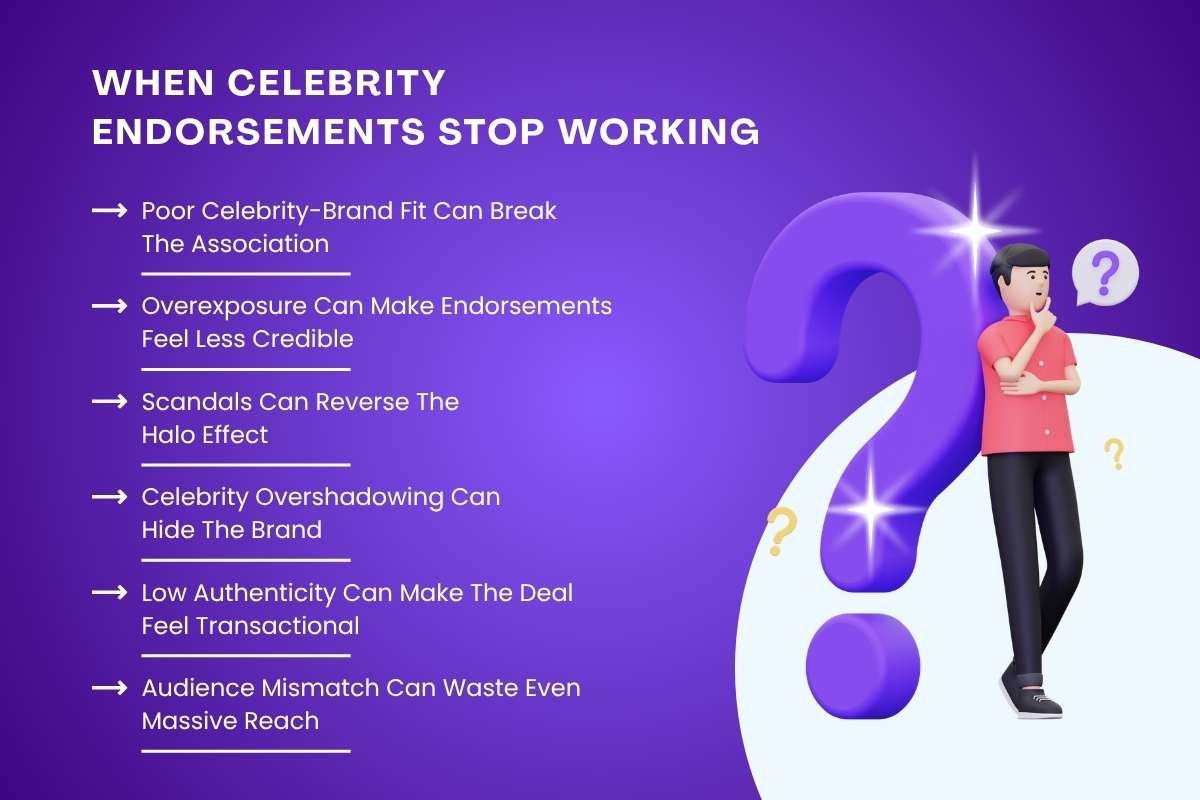
Celebrity influence can help brands, but it can also backfire. The same psychology behind why celebrity endorsements work can create losses. Several factors can weaken the value of celebrity partnerships.
1. Poor celebrity-brand fit can break the association
A weak match can make the endorsement seem forced. Consumers may question why the celebrity chose that product. That doubt can weaken trust and reduce persuasive impact. Strong fit instead makes the partnership easier to understand.
2. Overexposure can make endorsements feel less credible
Consumers may notice when stars promote too many brands. Repeated paid promotions can weaken perceived credibility over time. Recent research links over-endorsement with lower perceived influencer credibility. That credibility drop can then reduce purchase intentions.
The lesson applies beyond influencers to celebrity campaigns too. A crowded endorsement portfolio can dilute the celebrity’s meaning. The audience may start seeing payment behind every recommendation.
3. Scandals can reverse the halo effect
Positive celebrity traits can transfer toward brands through association. Negative traits can move in the opposite direction too. A scandal can damage trust, expertise, and perceived suitability. Research shows public disgrace can sharply reduce endorser value.
Recent research also shows social media can amplify damage. Negative events can weaken the celebrity’s marketing halo quickly.
4. Celebrity overshadowing can hide the brand
Sometimes audiences remember the star, not the product. Researchers call this problem the vampire effect in advertising. A large study tested this effect across 4,970 respondents.
The researchers confirmed celebrity overshadowing can reduce brand recall.
Strong celebrity-brand links can reduce this risk considerably. That finding brings the discussion back toward fit again.
5. Low authenticity can make the deal feel transactional
Consumers can sense when partnerships seem purely commercial. That perception can weaken the trust behind recommendations. Research links celebrity authenticity with stronger consumer attitudes and intentions. Low perceived investment can also make celebrities seem less authentic.
6. Audience mismatch can waste even massive reach
A huge following does not guarantee useful influence. Reach only matters when the audience fits the brand. A celebrity can attract millions but miss buyers entirely. That makes audience relevance more valuable than follower counts.
The best endorsement strategy therefore starts with psychological fit. Brands need credible, relevant, and believable celebrity partnerships first. For wider risks, see all the endorsement marketing risks before choosing partners.
What marketers can learn from the psychology behind why celebrity endorsements work?
Psychology helps marketers choose better partners before signing deals. The goal should involve influence, not fame alone. Five simple rules can guide that choice with care.
Five rules for smarter celebrity endorsements
- Choose relevance before reach.
A smaller, relevant star can beat a massive name.
Reach matters less when few viewers match target buyers. - Match identity with the brand.
The celebrity should already represent values the brand needs.
That match makes the partnership feel natural and believable. - Study audience perception, not follower counts.
Large audiences can still hold weak purchase relevance.
Check trust, interests, age, location, and category fit first. - Build repeated links without causing endorsement fatigue.
Repetition can strengthen memory and brand recognition over time.
Too many deals can make each recommendation feel less genuine. - Measure awareness, consideration, and sales separately.
Each metric answers a different question about campaign impact.
Awareness shows whether more people noticed the brand.
Consideration shows whether more people might choose it.
Sales show whether that interest helped drive actual demand.
A five-question check before signing
Before signing a celebrity, marketers should ask five questions:
1. What does this person represent?
Identify the traits, values, and meanings audiences already connect with.
2. What does the brand represent?
Define the brand image without using vague marketing terms.
3. Where do those identities overlap?
Look for shared values that consumers can understand quickly.
4. Does the target audience believe this connection?
Audience belief matters more than internal brand team approval.
5. Can measurement show changed behaviour after endorsement?
Track brand lift alongside consideration and sales data.
This approach shifts celebrity selection from fame toward fit. It also helps brands avoid paying only for attention. The strongest campaigns connect celebrity meaning with brand meaning. They then prove that connection through real audience behaviour.
Conclusion
Celebrity endorsements work through meaning, familiarity, and perceived credibility. Fame alone cannot create trust, relevance, or lasting recall. The psychology behind why celebrity endorsements work proves this clearly. Strong campaigns connect celebrity identity with brand and audience needs. That connection makes brand endorsements feel natural, useful, and believable. Marketers should therefore assess meaning before paying for reach. The right celebrity should strengthen the brand, not simply attract attention.
FAQs
1. Why are celebrity endorsements psychologically effective?
Celebrity endorsements can work through credibility, familiarity, and social proof. They can also support aspiration through admired public identities. Repeated exposure strengthens links between celebrities and brands. These associations can shape attention, memory, trust, and consideration.
2. Does celebrity popularity guarantee endorsement success?
No, popularity alone cannot guarantee endorsement success. A large following may still lack brand relevance. Poor fit can also make partnerships seem forced. Strong campaigns match celebrity identity with audience expectations.
3. Why does celebrity-brand fit matter?
Celebrity-brand fit makes an endorsement easier to believe. Consumers accept associations that seem natural and relevant. Strong congruence can support trust, recall, and positive brand attitudes. Poor fit can create doubt about the partnership.
4. Are celebrity endorsements more effective than influencer endorsements?
Neither option always works better across every campaign goal. Celebrities can deliver mass awareness and cultural recognition quickly. Influencers can offer niche credibility and closer audience relationships. The right choice depends on audience, category, and goals.