

Age used to be closely tied to business leadership.
A typical CEO was expected to spend decades building experience before reaching the top. Today, technology has changed that path. A teenager can learn to code, build a product, reach customers online, and attract investors without following a traditional corporate career.
That shift has created a new generation of the youngest CEOs in the world.
Some now lead companies valued in the billions. Others are building early-stage startups with venture funding and ambitious growth plans. Their industries range from artificial intelligence and quick commerce to recruitment technology and consumer products.
The youngest CEOs in the world are therefore not simply young people with impressive titles. They represent a wider change in how companies are created, funded, and led.
Here are some of the youngest CEOs in the world building and running companies in 2026.
The changing CEO archetype
The traditional route to the CEO’s office was gradual.
A person joined a company, gained technical expertise, moved into management, led larger teams, and eventually reached the executive level.
The startup ecosystem has created another route.
A founder can identify a problem, build a solution, attract early customers, raise capital, and become a CEO within a few years.
Artificial intelligence has accelerated this trend even further. Software development, market research, content creation, customer support, and other startup functions can now be supported by increasingly accessible digital tools.
Capital has also become more global. Young founders can pitch investors, recruit employees, and sell products across borders without building a traditional corporate infrastructure first.
Mercor offers one of the clearest examples. Its three young founders became billionaires after the AI company raised $350 million at a $10 billion valuation in 2025.
But youth is not the real competitive advantage.
The more important factors are speed of learning, product understanding, resilience, access to strong teams, and the ability to make sound decisions as a company grows.
The top 7 youngest CEOs in the world in 2026
Let’s take a look at some of the most remarkable names who have earned the title of CEO while still very young.
1. Aadit Palicha, CEO of Zepto
Aadit Palicha co-founded Zepto with Kaivalya Vohra and became one of India’s best-known young technology leaders.
At 24 in 2026, Palicha continues to lead the quick-commerce company as CEO.
Zepto has grown far beyond its early grocery-delivery model. Its FY26 draft prospectus reported more than 640 million orders and almost 48 million annual transacting users. The company also operated more than 1,100 stores.
Its growth has come with a complicated valuation story.
Zepto was previously valued at around $7 billion in private markets. In 2026, investor concerns over valuation contributed to the company delaying its planned public listing, with reports suggesting that it was considering a significantly lower valuation.
Palicha’s story shows that young leadership is not only about rapid growth. The story of the youngest CEOs in the world also involves making difficult decisions around profitability, valuation, competition, and public markets.
2. Brendan Foody, Co-Founder and CEO of Mercor

Brendan Foody is among the most prominent young CEOs emerging from the AI boom.
Foody co-founded Mercor with Adarsh Hiremath and Surya Midha in 2023. The company connects specialised human experts with businesses developing artificial intelligence systems.
The scale of Mercor’s growth has been remarkable.
In October 2025, the company raised $350 million at a $10 billion valuation. The funding round made its three young founders some of the youngest self-made billionaires in the world.
Mercor’s business has also moved beyond its original recruitment model. It increasingly works with AI companies that need expert human input to train and evaluate advanced models.
Foody’s rise demonstrates how quickly a young founder can become a major player when a startup operates in a fast-growing technology market.
3. Adarsh Hiremath, Co-Founder of Mercor
Adarsh Hiremath offers another example of a young technical founder moving into high-level company leadership.
He co-founded Mercor alongside Foody and Midha. The company initially focused on connecting companies with technical talent before expanding into AI data and expert-work infrastructure.
Hiremath’s technical background has been central to Mercor’s development.
The company’s $10 billion valuation also places the young founder among the most financially successful entrepreneurs of his generation.
His story highlights an important lesson for young entrepreneurs: technical ability can open the door, but scaling a company requires much broader skills.
Leadership eventually involves product strategy, hiring, capital allocation, partnerships, and organisational design.
4. Pranjali Awasthi, Founder of Slashy
Pranjali Awasthi became known internationally after starting an AI company as a teenager.
Her first startup, Delv.AI, reportedly raised outside funding and reached a valuation of around ₹100 crore.
By 2026, Awasthi had moved into a new chapter of her entrepreneurial career with Slashy, an AI workflow automation startup associated with Y Combinator’s Summer 2025 batch.
The shift is important.
Awasthi’s story is not simply about becoming one of the youngest CEOs in the world at 16. It demonstrates how young entrepreneurs can build experience through multiple ventures.
Instead of treating the first startup as the final destination, they can carry lessons, networks, and technical knowledge into the next company.
At 19, Awasthi represents a generation of founders entering the AI economy while still at an unusually early stage of their careers.
5. Roy Lee, Founder and CEO of Cluely
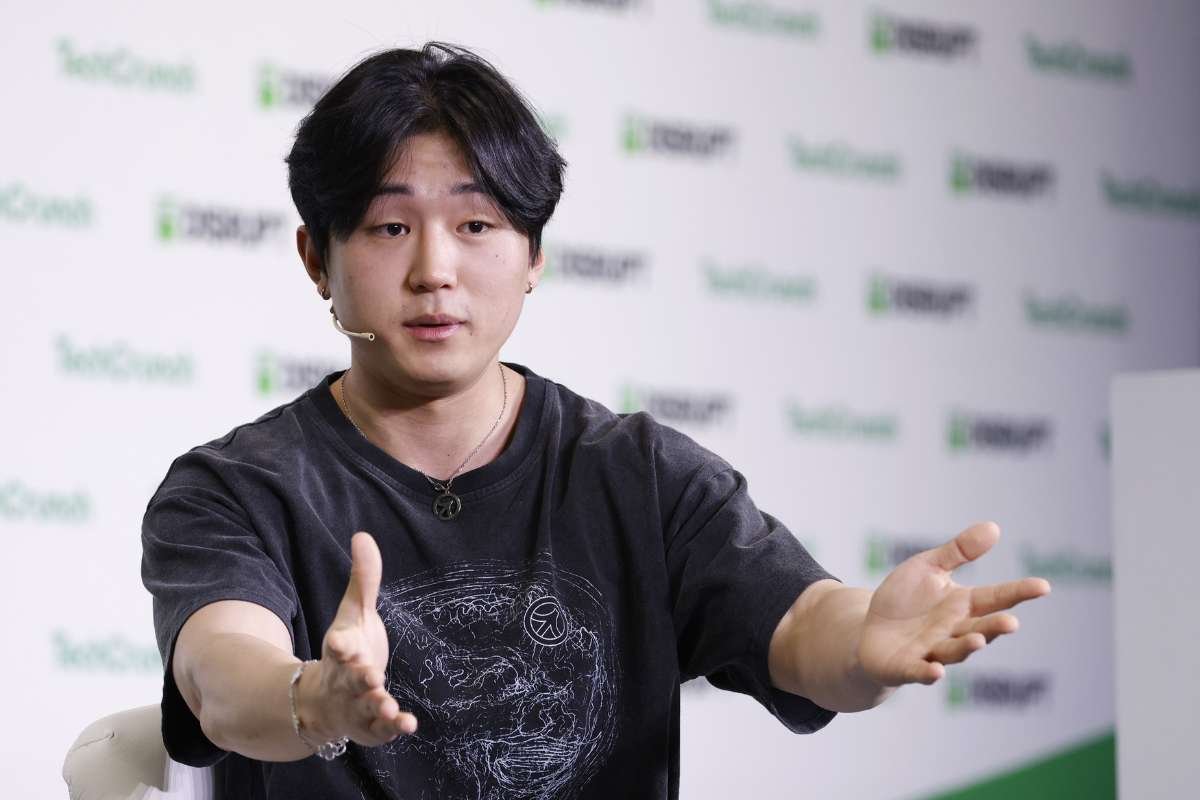
Roy Lee became known after launching Cluely, an AI company that attracted attention for tools designed to assist users during interviews and other situations.
The company raised $5.3 million in seed funding before securing a $15 million Series A led by Andreessen Horowitz. Its 2025 post-money valuation was reported at about $120 million.
Cluely’s story, however, also demonstrates the risks that come with fast-moving startups.
The company faced controversy around its marketing and later acknowledged that previously reported revenue figures were inaccurate.
By 2026, Cluely had shifted its product direction toward AI-powered meeting notes.
That makes Lee an interesting example of modern startup leadership. A young CEO may have to manage not only growth but also public scrutiny, product repositioning, and credibility.
6. Connor Vukelich, Founder of Poppin’ Jobs
Not every young founder needs a billion-dollar valuation to demonstrate entrepreneurial success.
Connor Vukelich started Poppin’ Jobs after experiencing the difficulties young people face when trying to find early work opportunities.
The company focuses on connecting young people with jobs, internships, and volunteer opportunities.
At 20 in 2026, Vukelich was still balancing university with running the company.
Poppin’ Jobs is also useful as a contrast to venture-backed companies such as Mercor and Zepto. Its story highlights a different path: identifying a personal problem, creating a focused solution, and developing the business without relying on a headline valuation.
7. Mikaila Ulmer, Founder of Me & the Bees Lemonade

Mikaila Ulmer remains one of the best-known examples of the youngest CEOs in the world.
She started selling lemonade at just four years old. Her business eventually became Me & the Bees Lemonade, a consumer brand built around honey-sweetened lemonade and bee conservation.
The company says its products are now available across all 50 U.S. states.
Ulmer appeared on Shark Tank as a child and received a $60,000 investment from Daymond John.
By 2025, reports said the company had sold nearly 10 million bottles, generating revenue of $5.9 million.
Ulmer is now a young adult and continues to be associated with the brand she founded. Her current public profiles identify her primarily as the founder, making “young founder” a more accurate description than presenting her as one of the world’s youngest current CEOs.
Her story remains valuable because it shows how a childhood idea can become a national consumer brand when it has a clear purpose and strong execution.
Comparison of young CEOs and founders in 2026
| Name | Company | Age (2026) | Industry | Est. Company Valuation / Revenue |
| Aadit Palicha | Zepto | 24 | Quick Commerce | Previously valued at ~$7B; 2026 IPO valuation discussions were reportedly lower |
| Brendan Foody | Mercor | 23 | AI / Recruitment | $10B reported valuation |
| Adarsh Hiremath | Mercor | 23 | AI / Enterprise Technology | $10B reported valuation |
| Pranjali Awasthi | Slashy | 19 | AI / Workflow Automation | Early-stage startup; disclosed pre-seed funding |
| Roy Lee | Cluely | ~22 | AI Software | ~$120M reported 2025 valuation |
| Connor Vukelich | Poppin’ Jobs | 20 | Recruitment Technology | No publicly disclosed valuation |
| Mikaila Ulmer | Me & the Bees Lemonade | 21 | Consumer Beverages | Private company; valuation not publicly disclosed |
Note: Most companies in this list are privately held. Their valuations come from funding rounds or reported transactions rather than public stock-market prices. Figures can therefore change significantly between funding events.
What drives the rise of youngest ceos in the world? 5 driving factors we ignore
The emergence of young company leaders is not happening by accident.
Several factors have made entrepreneurship more accessible.
1. Early access to technology
Young people can learn coding, design, marketing, AI, and other business skills online.
A teenager with an internet connection can now access many of the same learning resources used by professional developers and entrepreneurs.
This reduces the barrier between having an idea and testing it.
2. Easier product development
Building a digital product no longer requires a large technical team from day one.
Cloud services, no-code platforms, AI coding tools, and open-source software can help founders develop early versions of products with limited resources.
This allows young entrepreneurs to test ideas before raising significant capital.
3. Global access to capital
The venture ecosystem has also expanded the possibilities for young founders.
A promising startup can attract investors based on its product, market opportunity, growth rate, and team rather than simply the founder’s age.
Mercor is a striking example. Its founders reached a $10 billion valuation only a few years after starting the company.
4. Digital-first consumers
Young founders often understand digital consumers because they are part of the same generation.
They know how people use social platforms, mobile apps, creator communities, online marketplaces, and AI tools.
That familiarity can help when building consumer-facing products.
5. Strong support networks
Young founders rarely build successful companies alone.
Parents, mentors, co-founders, investors, advisors, and early employees can provide knowledge that a young entrepreneur has not yet had time to develop.
That support can be especially important when the company begins to scale.
The many challenges faced by young CEOs
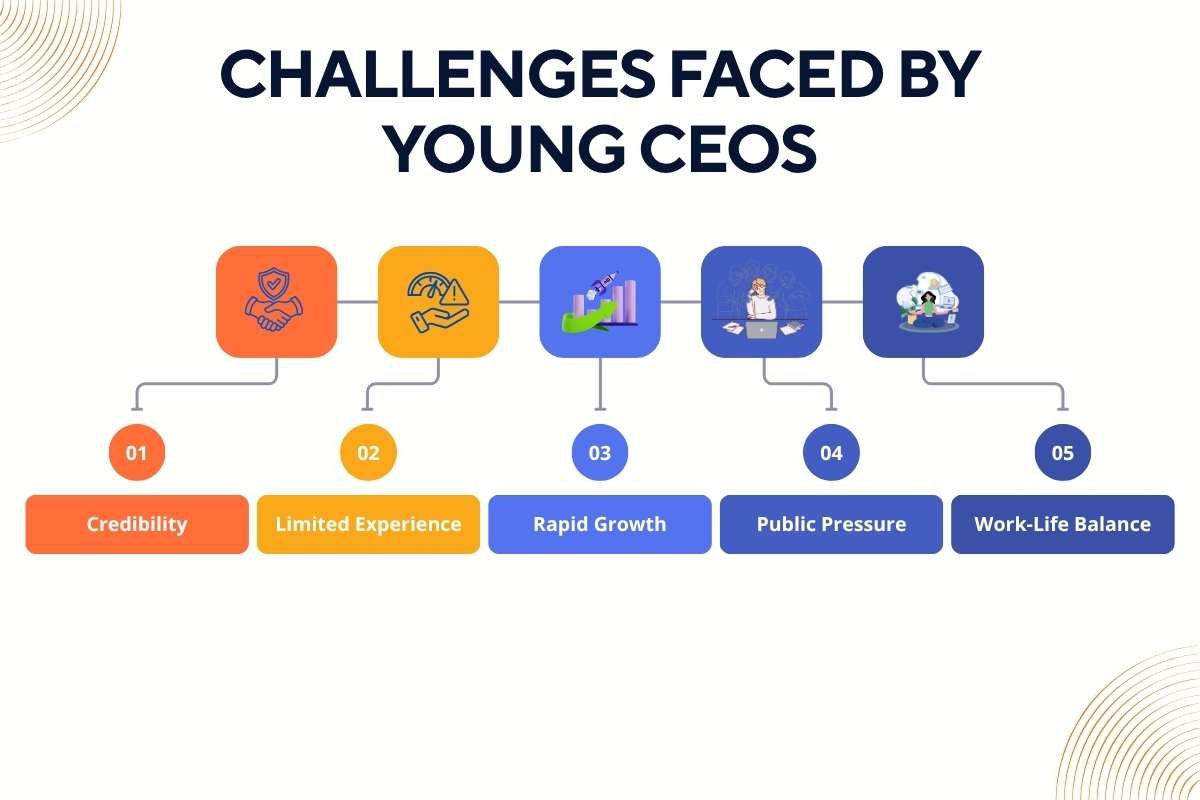
The stories may look impressive from the outside, but young leadership comes with serious challenges.
Credibility
A young CEO may need to work harder to convince investors, employees, customers, and partners that they can handle major decisions.
Limited experience
Experience cannot always be replaced by intelligence.
Young leaders may have strong technical or creative skills but limited exposure to hiring, corporate governance, financial planning, or crisis management.
Rapid growth
Fast-growing startups can create problems that did not exist at the beginning.
A founder who was excellent at building a product may suddenly need to manage hundreds of employees and complex operations.
Public pressure
The youngest CEOs in the world also face intense online scrutiny.
A controversial product decision, inaccurate statement, or failed strategy can become public within hours.
Work-Life balance
Building a company can consume enormous amounts of time.
For founders who are still in their teens or early twenties, balancing education, relationships, personal development, and company responsibilities can be particularly difficult.
The 5 lessons from the youngest CEOs in the world
Here are 5 lessons to learn from the world’s youngest CEOs.
Start with a problem
A strong business begins with a problem worth solving.
The founders in this list did not simply create companies because they wanted the CEO title. They identified problems in areas such as hiring, food delivery, AI workflows, employment, and consumer products.
Learn faster than the market changes
Young founders have one major advantage: they can adapt quickly.
Technology changes rapidly, particularly in AI. Companies that survive must keep learning and changing with the market.
Build a strong team
A founder does not need to know everything.
The smartest young CEOs surround themselves with people who have deeper expertise in areas where they are still learning.
Do not confuse funding with success
A high valuation can create headlines, but it does not guarantee a durable company.
Revenue, customer retention, margins, product quality, and strong execution ultimately determine whether a startup can survive.
Treat setbacks as part of building
Not every idea will work.
Some products will fail. Some funding rounds will fall through. Some strategies will need to change.
The ability to learn from those setbacks can matter more than starting young.
Conclusion:
The youngest CEOs in the world are changing the traditional image of business leadership.
They are entering industries once dominated by experienced executives and building companies around artificial intelligence, quick commerce, recruitment, consumer products, and digital services.
But their stories do not prove that age no longer matters.
Instead, they show that access to technology, capital, education, and global markets can give talented young people an opportunity to lead much earlier.
The most useful lesson is not to chase a CEO title at a young age.
It is to start solving meaningful problems, develop valuable skills, learn from failure, and build teams that can turn an idea into a lasting company.
In 2026, youth may open the door to entrepreneurship. But execution is what keeps it open