

You know your work well, yet leading people can still feel hard. A new role can test skills that your job never needed. You may need to guide peers, solve conflict, and make calls. That shift can feel tough, even when you feel ready. This is where leadership qualities and styles start to matter.
Your qualities shape how you act, speak, and earn trust. Your style shapes how you guide people through each task. Both can shape how others see you as a leader. For women, this can also affect voice, trust, and career growth. Let’s see how both can help you lead with more impact.
Leadership Qualities vs. Leadership Styles: Knowing the Difference
Firstly, we all know leadership qualities and styles are two separate things. Leadership qualities describe the traits you show while leading others. Leadership styles describe how you choose to lead them. Think of qualities as what you bring to each role. Think of styles as how you use those strengths daily.
| Leadership qualities | Leadership styles | Simple example |
| Confidence | Democratic | You seek team views before deciding. |
| Empathy | Coaching | You guide people through growth and change. |
| Clear thinking | Autocratic | You make quick calls during urgent tasks. |
| Accountability | Delegative | You trust others with key work and goals. |
One leader can show many qualities across different work settings. That same leader can also shift styles when needs change. For example, confidence supports firm calls during tense moments. Empathy can help when someone needs support or clear feedback. So, strong leadership needs both qualities and flexible styles.
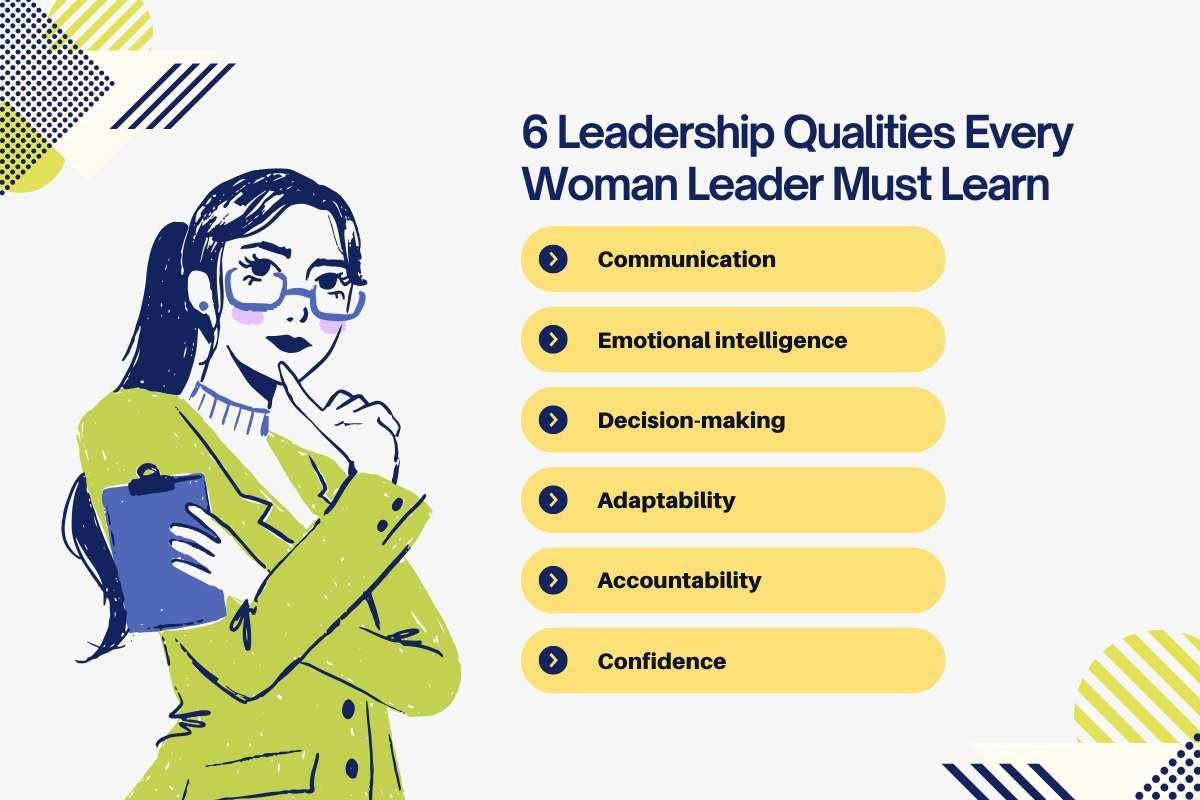
6 Leadership Qualities Every Woman Leader Must Learn
Let’s focus on qualities for a second. Between leadership qualities and styles, qualities must be developed, and style is chosen. Strong women leaders build key traits that help teams trust their judgment. For women, these traits can also support career growth. McKinsey found women hold just 24% of manager roles in India.
That gap makes strong leadership skills even more useful today.
1. Communication
Clear communication helps leaders share ideas and hear team needs. For example, I can state goals before a tough project starts. Then, I can ask my team what may block progress.
2. Emotional intelligence
Emotional intelligence helps leaders read needs and handle tense talks. A team lead can spot stress before conflict starts. She can then ask questions and guide a calm talk.
3. Decision-making
Good decision-making helps leaders act without waiting for perfect facts. I can review key data, weigh risks, then make my call. That habit helps teams move ahead with less doubt.
4. Adaptability
Adaptability helps leaders respond when plans or needs shift. For example, I may change team roles after market needs change. This keeps the work on track without slowing the whole team.
5. Accountability
Accountability means owning results instead of blaming team members. If a project fails, I can review my own choices first. This builds trust and helps teams learn from each setback.
6. Confidence
Confidence helps women share ideas and claim key chances. McKinsey found many women feel less free to take risks. So, I can state my view and own my work. These traits form a strong base for many leadership styles.
Leadership Styles Women Leaders Must Know About
Now that you know the main qualities of a good leader, let’s understand different styles. Your leadership style can change as your team and goals change. That makes flexible leadership more useful than one fixed approach. Here are five common styles and when each one fits best.
1. Democratic Leadership
This style invites team members to share ideas before decisions. It works well when team views can improve the final choice. However, too much input can slow down key decisions.
2. Autocratic Leadership
This style lets one leader make the key calls alone. It works best when crises demand fast and clear action. However, too much control can reduce team trust over time.
3. Transformational Leadership
This style helps teams support change and reach bigger goals. It works well when firms need fresh ideas and bold plans. However, constant change can tire teams without clear support.
4. Coaching Leadership
This style helps people build skills through advice and feedback. It works best when you want future leaders within your team. However, coaching can take more time than direct guidance.
5. Delegative Leadership
This style gives skilled team members room to make choices. It works well when teams know their tasks and goals. However, unclear roles can cause gaps or missed work.
The best leadership qualities and styles depend on each work need. I may coach one person yet give direct orders during crises. Strong leaders read the need, then shift their approach. That choice can help women lead with skill and confidence.
How Can Women Leaders Choose the Right Style?

The right leadership style depends on the need in front of you. Start by checking your team, task, time, and work culture. Your own strengths should also shape the way you lead.
| Need | Best approach |
| Need fast action | Use a more direct approach |
| Need team buy-in | Use a democratic approach |
| Need employee growth | Use a coaching approach |
| Need major change | Use a transformational approach |
Team skill also matters when you choose your leadership approach. An expert team may need more space and less control. A new team may need clear goals, steps, and close support.
I also would not copy one narrow view of strong leadership. Women leaders need not act tough just to gain respect. Clear words, firm choices, and empathy can all show strength. The best style should fit the need, not a stereotype.
Mistakes in Leadership Qualities and Styles You Must Avoid
Even skilled leaders can fall into habits that limit team growth. Avoid these common mistakes as you build your leadership approach.
- Using one style with every employee can hurt team results.
- Mistaking confidence for aggression can weaken trust and respect.
- Avoiding hard talks can let small issues grow much worse.
- Micromanaging skilled staff can slow work and lower trust.
- Skipping feedback can leave key gaps in your leadership.
- Taking every task can cause stress and block team growth.
- Women may overprove themselves when others doubt their expertise.
- Clear limits and shared work can help break that cycle.
Conclusion:
Leadership qualities and styles grow through practice, feedback, and real work experience. You do not need every leadership trait from day one. Your qualities shape how you act, while styles shape how you lead people through different tasks, needs, and change.
So, stay flexible, build trust, and keep learning from each role.
And for women, these habits can support growth into senior roles. This is one step toward stronger women in leadership across India. As you grow, the right networks can help you move further.
FAQs
1. What are the most important leadership qualities?
Key traits include clear communication, confidence, empathy, adaptability, accountability, and good judgment. These skills help leaders guide teams, handle change, build trust, and make sound choices.
2. What are the main types of leadership styles?
Common styles include democratic, autocratic, transformational, coaching, and delegative leadership. Each approach suits different needs, team skills, work goals, and levels of urgency.
3. What is the difference between leadership qualities and styles?
Leadership qualities describe what a leader brings to the role. Leadership styles describe how that leader guides people, makes choices, communicates, and handles different work needs.
4. Can a leader use more than one leadership style?
Yes, strong leaders can shift their approach based on each situation. A leader may coach staff during growth, then use direct guidance during an urgent crisis.
Thank You For Reading!
See More
Women in Business: How Women Are Shaping the Future of Enterprise