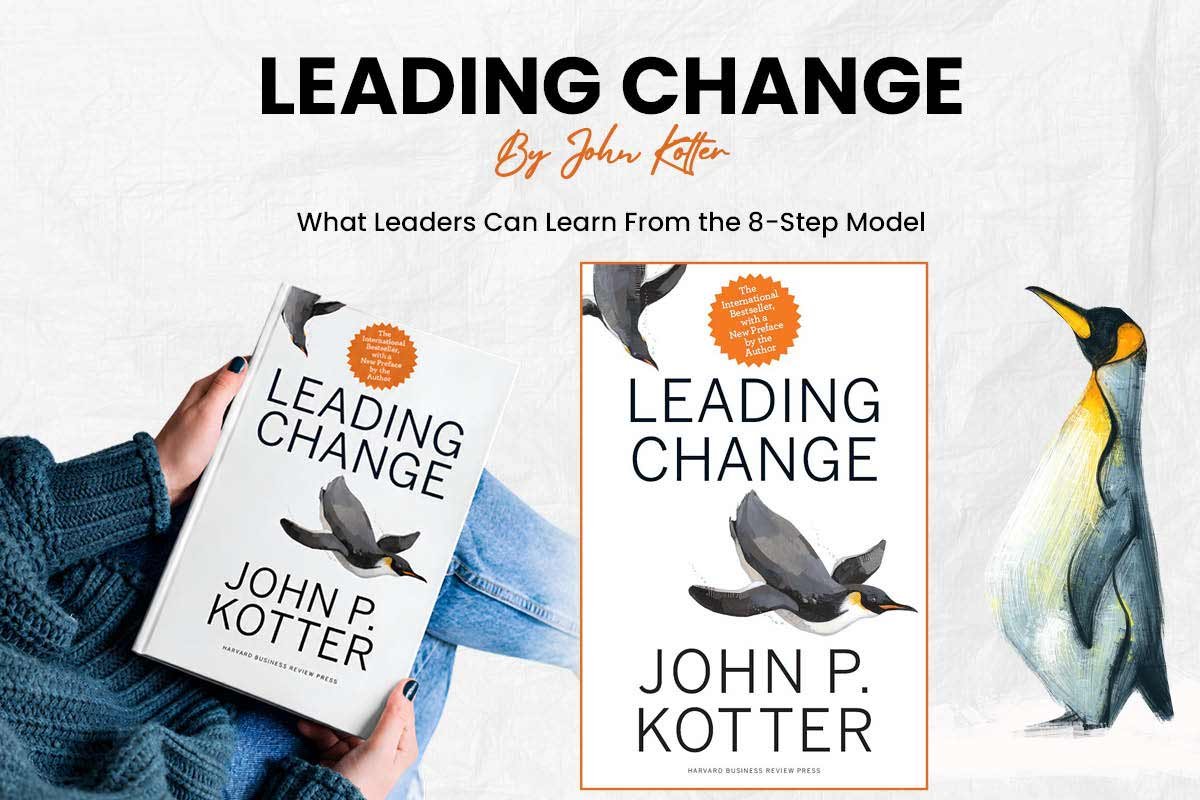



What happens when a company knows it must adapt, yet people still refuse to move?
That question sits at the heart of Leading Change by John Kotter, published in 1996 after he studied organizations facing major transformation. His argument is simple: success depends on leadership, direction, and participation. The book offers managers a practical framework for shifting strategy or culture.
Purpose of the book:
Explain why such efforts fail and give leaders a structured path to success, centered on behaviour, alignment, communication, and culture.
Author perspective and insight
Kotter views organizational change through years of research into leadership and transition.
His academic career shaped a practical approach to understanding why change succeeds or stalls inside organizations. He joined Harvard Business School in 1972 and became one of its youngest tenured professors in 1980. Later, he served as the Konosuke Matsushita Professor of Leadership, Emeritus.
Author Profile:
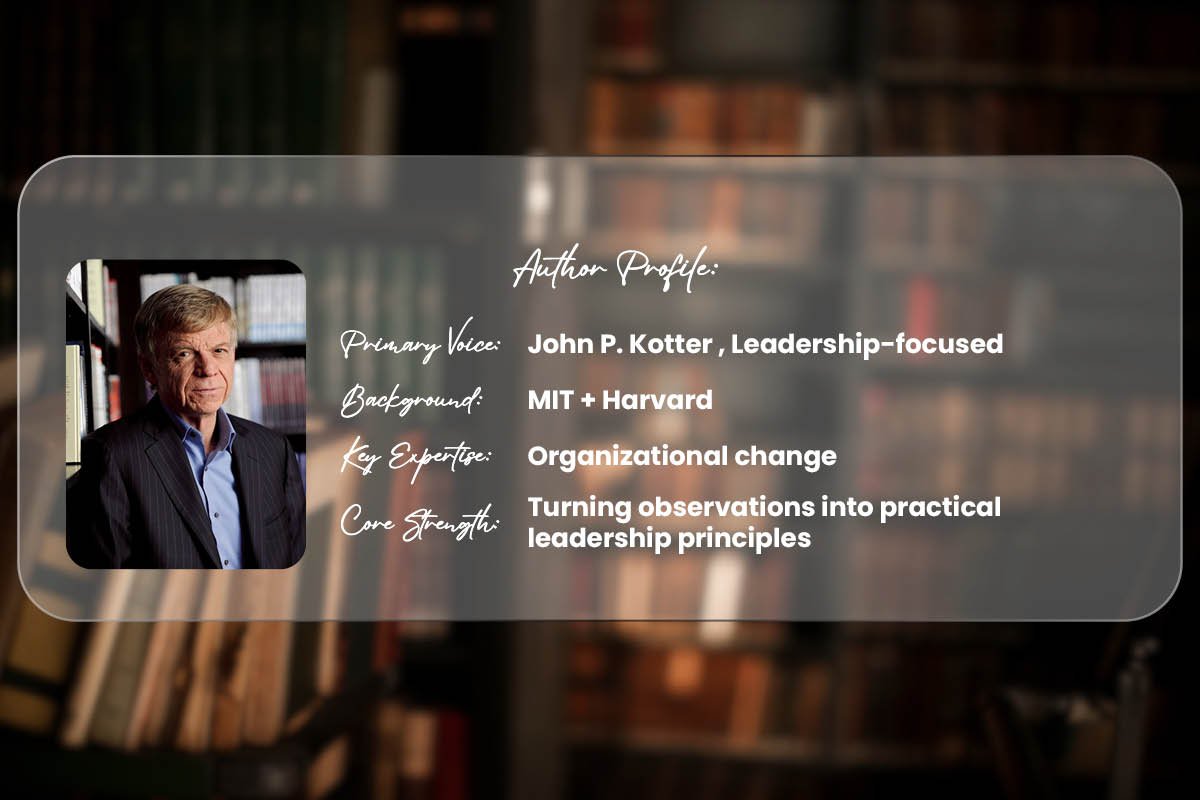
Primary Voice: John P. Kotter, Leadership-focused Background: MIT + Harvard Key Expertise: Organizational change Core Strength: Turning observations into practical leadership principles
His work gives readers practical insight into the human side of organizational shifts.
The book in 60 seconds
The Core Idea: Major organizational shifts often fail because leaders underestimate resistance, urgency, communication, and culture. Leading Change by John Kotter explores these challenges through a practical framework for guiding successful transformation.
Kotter identifies eight common mistakes that can derail major organizational shifts, including weak urgency, poor communication, limited employee involvement, and celebrating results too soon. His eight-stage process provides a practical sequence for guiding transformation and making new practices stick.
He also distinguishes leadership from management, with management focused on coordination and consistency, while leadership helps people embrace change. The framework highlights the value of clear purpose, employee participation, visible progress, and patience before declaring an initiative successful.
The book’s strengths and blind spots
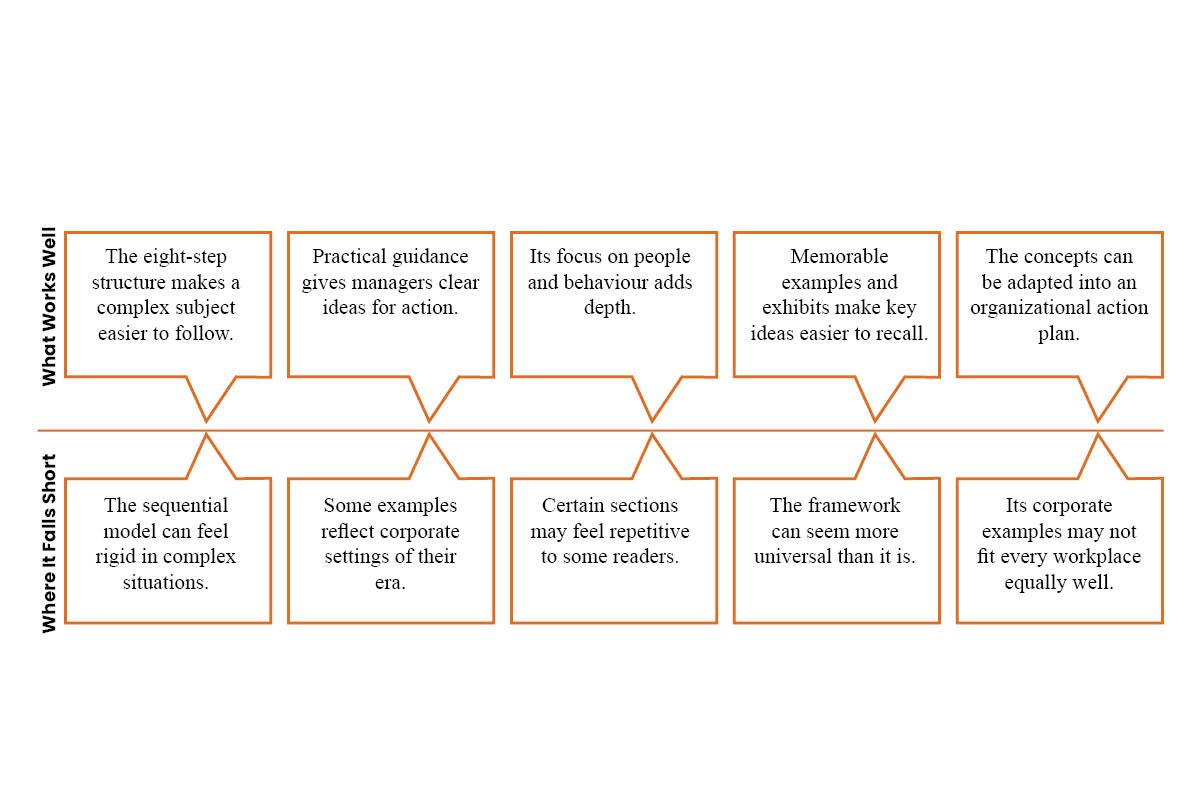
The framework in Leading Change by John Kotter stands out for its clarity and practical value, yet some of its assumptions deserve closer scrutiny.
| What Works Well | Where It Falls Short |
| The eight-step structure makes a complex subject easier to follow. | The sequential model can feel rigid in complex situations. |
| Practical guidance gives managers clear ideas for action. | Some examples reflect corporate settings of their era. |
| Its focus on people and behaviour adds depth. | Certain sections may feel repetitive to some readers. |
| Memorable examples and exhibits make key ideas easier to recall. | The framework can seem more universal than it is. |
| The concepts can be adapted into an organizational action plan. | Its corporate examples may not fit every workplace equally well. |
Its lasting appeal comes from its clarity, practical guidance, and focus on the human side of organizational change.
Kotter vs. Other change models
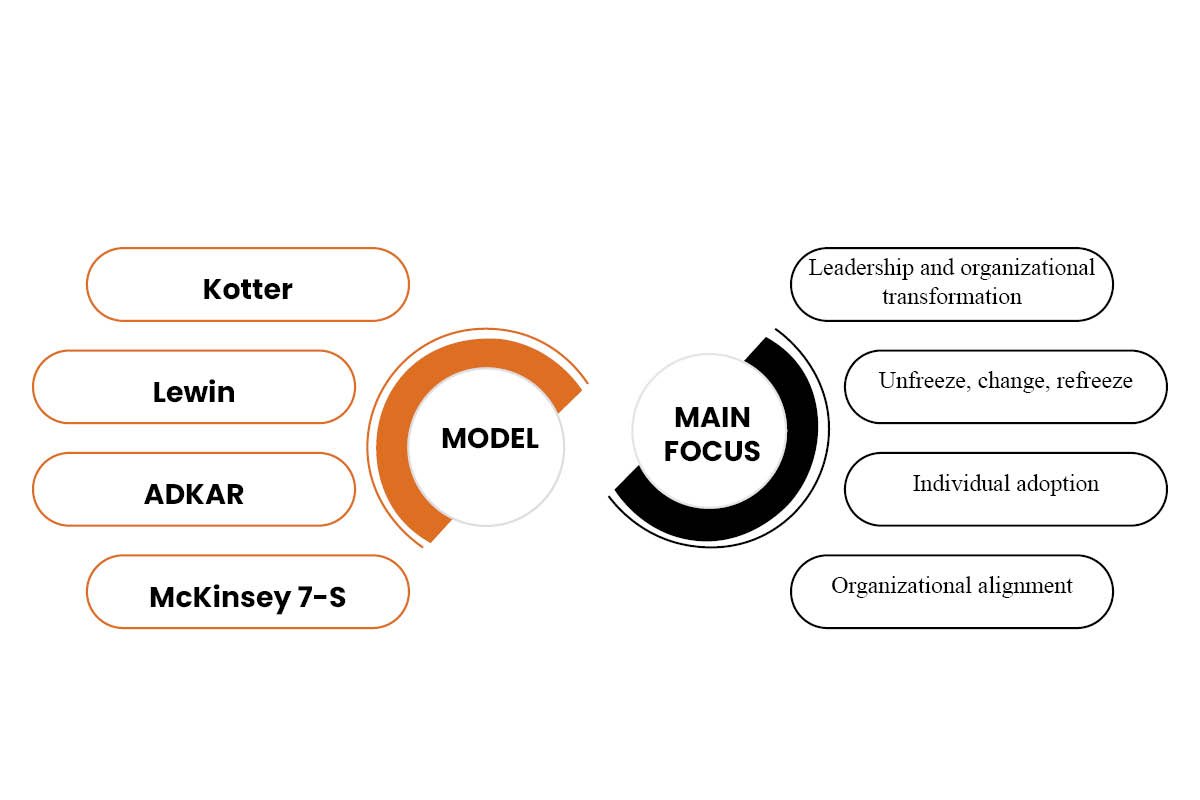
No single change model fits every situation, and Leading Change by John Kotter has a distinct place among established approaches.
| Model | Main Focus |
| Kotter | Leadership and organizational transformation |
| Lewin | Unfreeze, change, refreeze |
| ADKAR | Individual adoption |
| McKinsey 7-S | Organizational alignment |
Kotter suits situations where leaders must mobilize an organization around a major strategic shift. Lewin offers a simple change cycle, ADKAR focuses on individual adoption, while 7-S helps assess organizational alignment.
Who should read this book?
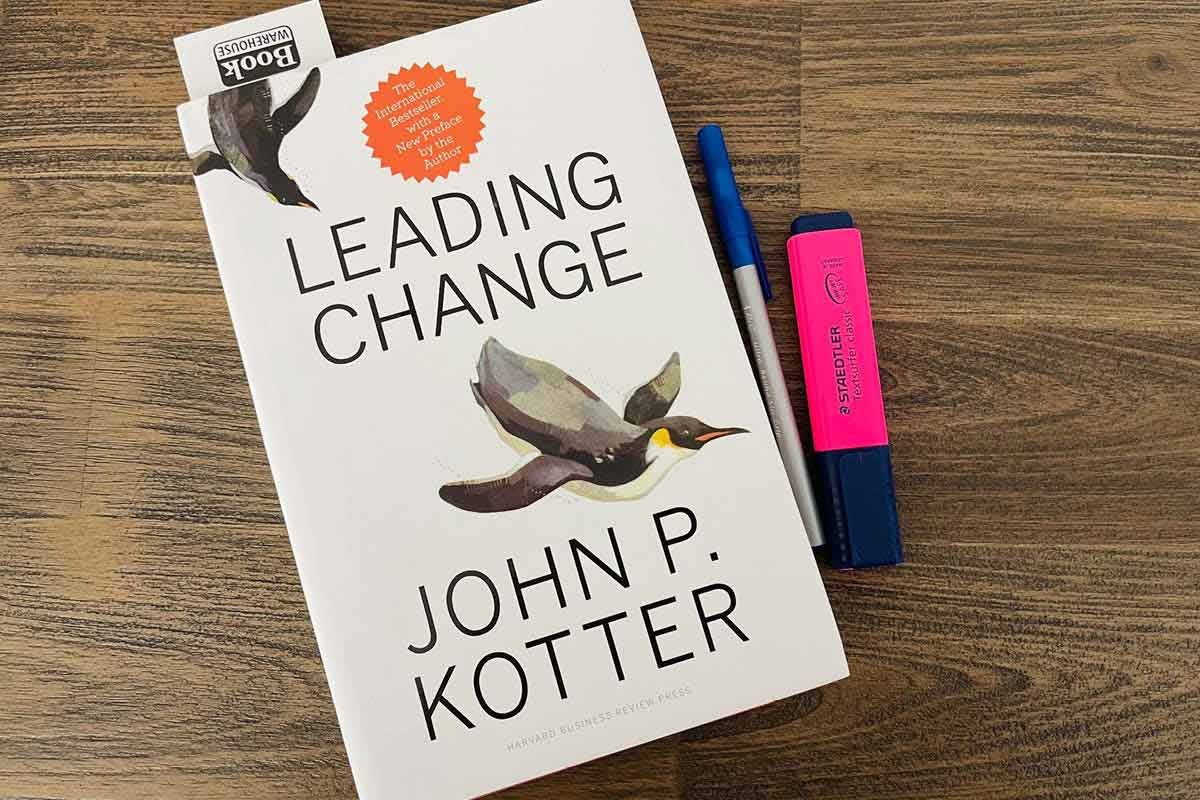
Whether you lead a team, study business, or want a practical introduction to organizational change, Leading Change by John Kotter offers useful insights for different readers.
- Best suited for: Business leaders ★★★★★ | Managers ★★★★★ | MBA students ★★★★★
- Also accessible to: First-time business readers ★★★★☆
- More demanding for: Academic readers ★★★☆☆
Why it reads well: Kotter uses clear explanations, practical examples, and useful exhibits to explain complex ideas without excessive theory.
One limitation: Some corporate examples may feel less relevant to readers outside conventional business settings. Overall, the writing remains accessible and practical.
Practical applications of the framework
The framework in Leading Change by John Kotter becomes most useful when a business faces a significant shift. It can guide restructuring, mergers and acquisitions, technology initiatives, strategic changes, cultural shifts, leadership transitions, and large process changes.
Use it as a leadership checklist: Is there enough urgency? Who owns the effort? Is the vision clear? Can people act on it? Are early results visible? Have new behaviours become part of daily work? These questions turn Kotter’s eight stages into practical actions for managing organizational transformation.
The book’s lasting business impact
Leading Change by John Kotter gave organizations a shared language for discussing major transformation. Its eight-step framework helped leaders see where an initiative needed attention and where responsibility was unclear.
The ideas later expanded through Kotter’s 8 Accelerators, offering a more flexible approach to organizational transformation.
Why it still matters:
- Makes leadership responsibility visible during periods of uncertainty and resistance.
- Helps teams discuss priorities and clarify who must act.
- Provides a practical way to consider what should happen next.
- Keeps attention on sustaining progress after initial results appear.
Editorial takeaway: Its lasting value lies in making leadership responsibilities easier to discuss and act upon.
Book reviews by readers
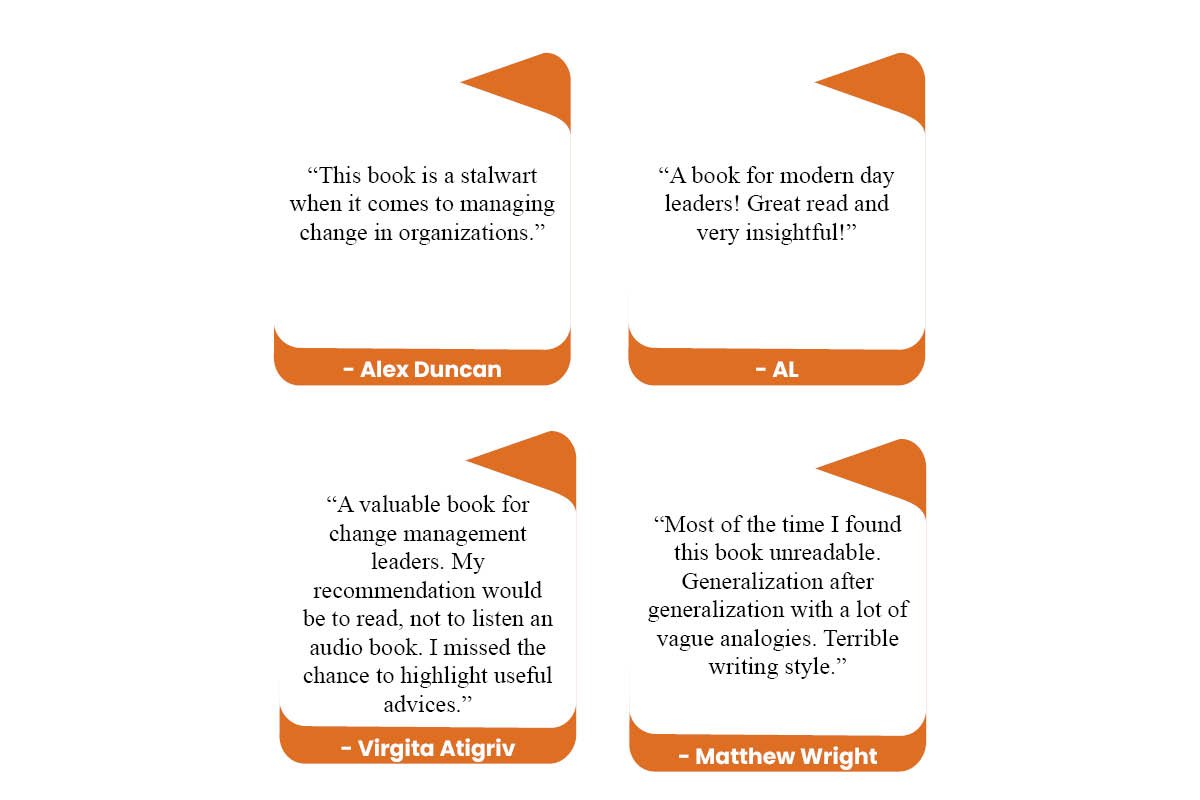
Reader reactions to Leading Change by John Kotter reveal a generally positive response, alongside a few reservations about its examples and reading experience.

“This book is a stalwart when it comes to managing change in organizations.”
Alex Duncan
“A book for modern day leaders! Great read and very insightful!”
AL
“A valuable book for change management leaders. My recommendation would be to read, not to listen an audio book. I missed the chance to highlight useful advices.”
Virgita Atigriv
“Most of the time I found this book unreadable. Generalization after generalization with a lot of vague analogies. Terrible writing style.”
Matthew Wright
Overall judgement
Leading Change by John Kotter remains a practical guide for leaders facing complex organizational shifts. Its clear framework, focus on people, and emphasis on leadership make it valuable for managers and business students. However, its sequential approach and older corporate examples can limit its relevance. Overall, the book offers useful principles that reward thoughtful application rather than rigid use.