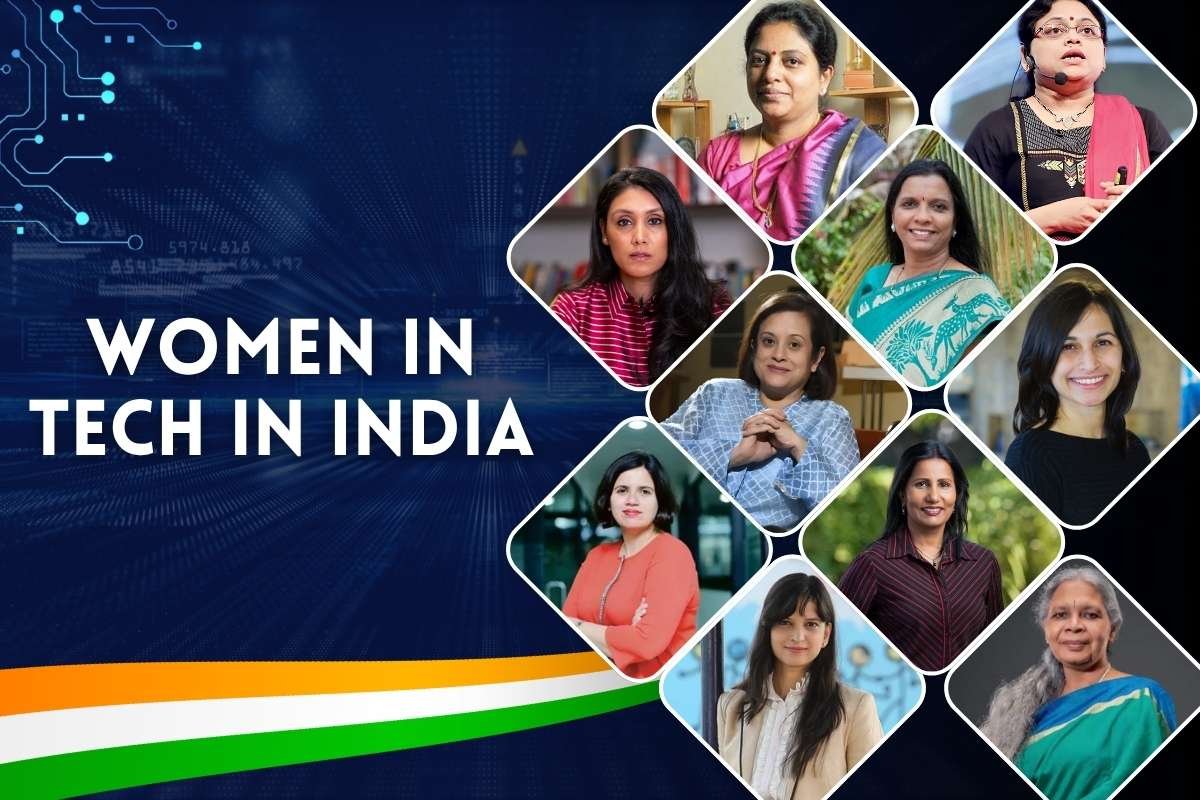



India has many female engineering stars. In fact, women in tech make up 36% of the workforce. Yet, few reach the top. Only 7% hold the highest executive roles. Many leave their jobs early due to a lack of support. We must fix this to keep great talent. Read the full report now to learn more.
The state of women in tech in India
Women in tech account for approximately 36% of India’s overall technology workforce. This baseline places India among global leaders for entry-level gender diversity in IT services. However, severe mid-career drop-offs reduce female representation to just 17% in mid-level management and a stark 7% in C-suite executive roles.
To understand the true position of women in tech in India, executives must look past recruitment numbers and evaluate technical retention rates. Closing this leadership gap requires structured sponsorship programs, transparent engineering promotion tracks, and performance-linked equity.
Data from the NASSCOM Foundation confirms that India’s technology sector employs over 2 million female professionals. Yet, research from the World Economic Forum Global Gender Gap Report shows that women hold only 28.2% of global STEM roles and a mere 12.2% of C-suite positions in science and engineering.
Furthermore, global data from UNESCO reveals that female founders secure less than 2.3% of total venture capital funding. To dismantle these systemic bottlenecks, enterprises must move beyond superficial diversity quotas. Organizations must build quantifiable, merit-based technical career tracks that preserve institutional knowledge and scale enterprise bottom-line performance.
The 100-point evaluation matrix: Selection criteria & scoring
Evaluating women in tech requires an objective metric. To construct our authoritative ranking of female technology pioneers, we created an evaluation system. Every candidate passes through a strict 4-pillar analytical framework:
| Evaluation Pillar | Analytical Focus & Scope |
| 1. Technical Impact & Innovation | Direct creation or oversight of proprietary code architectures, space payloads, patents, AI diagnostics, defense software, or digital payment rails in India. |
| 2. Enterprise Scale & Revenue | Management of multi-billion-rupee P&Ls, expansive engineering workforces, global client networks, or high-valuation tech platforms. |
| 3. Ecosystem & Community Leadership | Active venture capital deployment, technical policy advocacy, industry standard-setting, and mentorship for female technologists. |
| 4. Verifiable Industry Recognition | Peer-reviewed research publications, international patents, state honors, and global business awards. |
Ranking the top 15 women in tech in India: Detailed executive stories
Our comprehensive ranking highlights 15 pioneering women in tech in India, focusing strictly on their tangible contributions to software systems, aerospace hardware, artificial intelligence, and digital infrastructure.
1. Dr. Tessy Thomas — Former Director General of Aeronautical Systems, DRDO
Growing up near the Thumba rocket launching station in Alappuzha, Kerala, Tessy Thomas watched rockets pierce the sky and decided to master aerodynamics. Joining the Defence Research and Development Organisation (DRDO) in 1988, she faced deep skepticism in a male-dominated missile testing facility. She ignored the noise and took charge of the Agni missile guidance design team.
As Project Director for Agni-IV and Agni-V, she engineered the indigenous re-entry thermal shield that protects payload electronics against friction temperatures exceeding 3,000°C. Her energy management guidance scheme solved critical trajectory control issues during atmospheric re-entry, earning her the title “Missile Woman of India.”
2. Dr. Ritu Karidhal Srivastava — Senior Scientist & Mission Director, ISRO
Fascinated by space from her childhood home in Lucknow, Ritu spent nights tracking star movements and reading aerospace papers. After completing her master’s degree in physics, she joined the Indian Institute of Science (IISc) and subsequently entered the Indian Space Research Organisation (ISRO) in 1997.
During India’s historic Mars Orbiter Mission (Mangalyaan), she served as Deputy Operations Director. She authored the autonomous software algorithms that allowed the spacecraft to execute orbital corrections 200 million kilometers away without human intervention. She later directed Chandrayaan-2’s lunar insertion maneuvers, proving Indian deep-space software capabilities to the world.
3. Roshni Nadar Malhotra — Chairperson, HCLTech
Instead of taking a traditional administrative role, Roshni studied communications at Northwestern University and earned her MBA from Kellogg before immersing herself in IT operations. When she assumed leadership of HCLTech as Chairperson in 2020, she spearheaded a massive strategic pivot toward enterprise cloud transformation, cybersecurity engineering, and generative AI platforms.
She executed a $1.8 billion acquisition of select IBM software products, transforming HCLTech into a $13+ billion global IP-led technology giant employing over 227,000 professionals across 60 countries.
4. Dr. Geetha Manjunath — Founder, CEO & CTO, NIRAMAI Health Analytix

A top PhD graduate from IISc with over 25 years of computer science research at HP Labs and Xerox, Geetha faced personal heartbreak when two close family members developed late-stage breast cancer. Determined to invent a painless diagnostic tool, she launched NIRAMAI in 2016. She invented Thermalytix®, an AI platform backed by 17 international patents that detects early-stage tumors by analyzing thermal radiation patterns without physical contact or radiation.
Her work demonstrates how women in tech create life-saving deep-tech innovations that solve critical health challenges across emerging markets. During COVID-19, she co-built X-RaySetu, bringing automated AI chest radiograph screening directly to rural doctors via WhatsApp.
5. Debjani Ghosh — Distinguished Tech Leader & Former President, NASSCOM
As a young executive scaling Intel’s operations across South Asia, Debjani realized early on that hardware without accessible software ecosystems limits national development. She led Intel’s digital literacy drives across rural India. Her leadership style helped in setting up community hardware labs.
When she became the first female President of NASSCOM, she established the “FutureSkills Prime” portal alongside the Ministry of Electronics and IT. This initiative upskilled over 500,000 Indian software professionals in AI, cybersecurity, and cloud engineering, while her “Women Wizards Rule Tech” campaign directly expanded the talent pool of female developers.
6. Dr. Pooja Rao — Co-Founder & Head of R&D, Qure.ai
Trained as a physician with a deep passion for data science, Pooja observed that radiologists in developing nations faced overwhelming patient loads. Combining clinical medicine with machine learning, she co-founded Qure.ai in 2016.
She led the R&D team that developed qXR and qER, deep-learning algorithms that scan chest X-rays and head CTs in under 30 seconds. Her software detects tuberculosis, lung nodules, and traumatic brain hemorrhages with 95%+ accuracy, assisting medical teams across 80 countries and hundreds of Indian municipal health centers.
7. Upasana Taku — Co-Founder & COO, MobiKwik
After completing her master’s in Management Science and Engineering at Stanford University and designing payment architecture for HSBC in Silicon Valley, Upasana returned to India in 2008. Seeing that millions of unbanked citizens struggled with digital transactions, she co-founded MobiKwik in 2009.
Working out of a small office, she wrote early transaction protocols and built the Zaakpay payment gateway from scratch. Her financial software architecture now powers secure digital transactions for over 140 million users and 4 million retail merchants.
8. Meerah Rajavel — Chief Information Officer, Palo Alto Networks
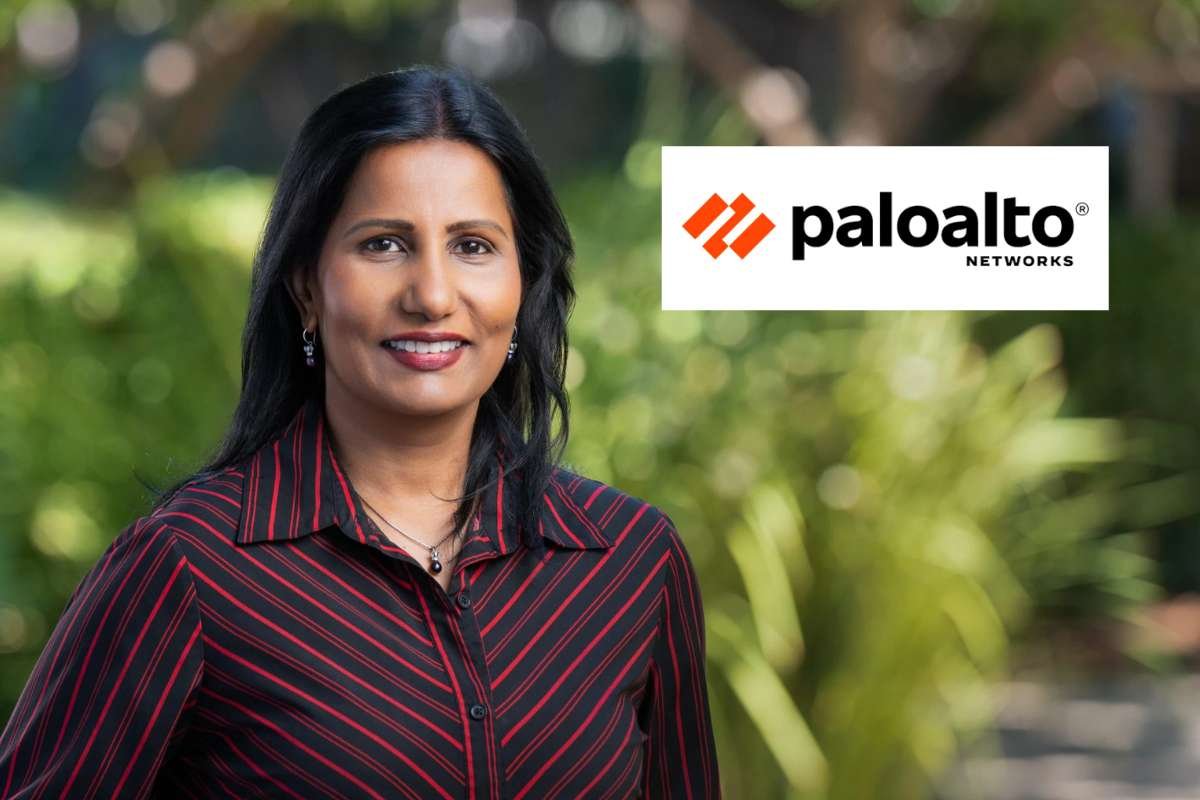
Starting her technical career as a software developer writing low-level networking code, Meerah climbed corporate engineering hierarchies at Cisco, Infosys, and Citrix. As Chief Information Officer at Palo Alto Networks, she revolutionized enterprise defense by constructing automated, zero-trust cloud infrastructure.
She built AI-driven threat mitigation systems that process billions of daily telemetry events, protecting Fortune 500 networks against state-sponsored cyber intrusions.
9. Bhawna Agarwal — Senior VP & Managing Director, HPE India
With over two decades navigating India’s digital evolution, Bhawna led major platform transitions before taking charge as Senior VP & Managing Director at Hewlett Packard Enterprise (HPE) India. She directed the deployment of India’s fastest supercomputing clusters for scientific research while expanding hybrid cloud infrastructure across major Indian banking, automotive, and public sector organizations.
10. Dr. Annapurni Subramaniam — Director, Indian Institute of Astrophysics (IIA)
Driven by a passion for the cosmos from her youth in Kerala, Annapurni earned her PhD at the Indian Institute of Astrophysics (IIA) and eventually became its first female Director. As a calibration scientist for the Ultraviolet Imaging Telescope (UVIT) aboard AstroSat—India’s first space observatory—she developed complex calibration software that removed space-background noise.
Her software allowed astronomers worldwide to study star formation in distant dwarf galaxies. Her career highlights how women in tech lead frontier space science, software calibration, and astrophysics research. She currently directs India’s next-generation space telescope program, INSIST.
- Breakdown Scores: $S_{\text{Tech}}$: 25/25 | $S_{\text{Scale}}$: 20/25 | $S_{\text{Eco}}$: 22/25 | $S_{\text{Rec}}$: 21/25
11. Navrina Singh — Founder & CEO, Credo AI
Spending over a decade at Qualcomm engineering mobile chips and leading technical business incubators, Navrina realized that unmonitored AI algorithms introduce massive corporate liabilities. In 2020, she launched Credo AI. She designed an enterprise SaaS platform that automates algorithmic auditing, compliance tracking, and risk management for machine learning models. Her platform enables global corporations to measure AI safety, earning her an appointment to the U.S. National Artificial Intelligence Advisory Committee (NAIAC).
12. Gazal Kalra — Co-Founder, Rivigo
While pursuing joint graduate degrees at Harvard Kennedy School and Stanford Graduate School of Business, Gazal toured freight corridors in India and witnessed long-haul truck drivers living in harsh conditions away from their families. To eliminate this operational inefficiency, she co-founded Rivigo in 2014.
She engineered the “Relay Logistics” software platform. Her algorithmic dispatch engine routes trucks through relay pits, swapping drivers every 300 kilometers so truckers return home daily while cutting transit times by 50%.
13. Vani Kola — Founder & Managing Director, Kalaari Capital

After building and successfully selling two tech software firms (RightWorks and Certus Software) in Silicon Valley, Vani returned to India in 2006 when the local startup ecosystem barely existed.
She launched Kalaari Capital, raising over $650 million in assets under management. She personally evaluated and funded early-stage tech ventures like Dream11, Snapdeal, and Cure. fit, building the venture capital blueprint that accelerated India’s tech boom.
14. Radhika Ghai — Founder, Kindlife; Co-Founder, ShopClues
Holding an MBA from Washington University and a background in product strategy, Radhika co-founded ShopClues in 2011 to connect small merchants in tier-2 and tier-3 Indian cities with online buyers.
She engineered custom merchant tools, automated cataloging engines, and fraud-detection software, making ShopClues India’s first female-co-founded tech unicorn. She now applies her platform engineering expertise to Kindlife, building an AI-driven clean lifestyle marketplace.
15. Kirthiga Reddy — Former MD, Facebook India; CEO, Virtualness
Earning an engineering degree from BR Ambedkar Marathwada University and an MBA from Stanford, Kirthiga started her tech career writing software at Silicon Graphics and Good Technology. In 2010, she became Facebook’s first employee in India.
Working from a temporary setup, she built Facebook India’s operations from scratch, scaling localized ad-tech platforms, mobile product integrations, and developer partnerships to over 100 million active users. She later joined SoftBank’s $100B Vision Fund as its first female Investment Partner.
Information gain: The equity retention framework vs. the leaky pipeline
For decades, human resource executives treated the underrepresentation of female software engineers as a simple recruitment problem. Corporate leaders assumed that hiring more female STEM graduates would automatically balance executive C-suites over time.
Data proves this assumption false. According to research from NASSCOM, while women account for 36% of entry-level engineering hires, 45% of female engineers quit core technical roles after eight years. They leave primarily due to rigid workplace structures, lack of technical sponsorship, and uncompensated coordination tasks.
[Old View: The Leaky Pipeline] ──► Focuses only on Entry-Level Hiring ──► 45% Attrition Rate
[New View: Equity Retainment] ──► Focuses on Mid-Career Sponsorship ──► High C-Suite ROI
To eliminate this talent loss, forward-thinking organizations must replace the passive “Leaky Pipeline” concept with an active Equity Retainment Framework. Understanding why retaining women in tech yields direct financial ROI helps enterprises build sustainable engineering organizations.
The 3 pillars of the equity retainment framework
- Sponsorship over Mentorship: Mentors offer advice, but sponsors spend political capital. Companies must pair senior engineering leaders with high-performing mid-career female developers. Sponsors guarantee direct access to flagship architecture projects, system deployments, and P&L responsibilities.
- Dual-Track Career Progression: Many tech firms force senior engineers into general management to secure salary upgrades. Female coders often get redirected into project administration rather than core system engineering. Companies must create equal-pay Principal Engineer and Fellow tracks that reward pure technical innovation.
- Algorithmic Promotion Audits: HR teams must use data analytics to audit promotion velocity. If male engineers advance to senior ranks in 6 years while female engineers take 8+ years with identical code-commit quality, the enterprise must correct bias in evaluation systems.
Key barriers hindering female tech leadership
Despite structural progress, systemic barriers still hinder women in tech from reaching the C-suite across the industry.
- The Mid-Career Drop-Off Zone: Data shows the sharpest decline in female technical talent occurs between ages 28 and 35. Unyielding working hours combined with unsupportive family leave policies force skilled female engineers out of the workforce during critical promotion windows.
- Venture Capital Allocation Disparity: Female tech founders face severe funding hurdles. Research cited by Harvard Business Review shows that venture capital firms allocate less than 2.3% of their total investment dollars to female-led startups. Unconscious bias among male-dominated investment committees limits access to growth capital.
- Isolation in Deep-Tech Roles: Female engineers frequently find themselves as the sole woman in core system engineering, AI research, or cybersecurity teams. This lack of peer representation accelerates burnout and increases turnover. Now, many women leadership summits help women find peers.
Government schemes & institutional support systems
To support female technologists, institutional schemes actively support women in tech who launch ventures or lead scientific research across India.
- Women Entrepreneurship Platform (WEP) by NITI Aayog: The NITI Aayog WEP operates as an aggregator providing female tech founders with incubator access, grant funding, legal compliance support, and industry mentorship.
- KIRAN & Vigyan Jyoti Schemes by the Department of Science and Technology (DST): The Indian government operates the KIRAN (Knowledge Involvement in Research Advancement through Nurturing) program to address gender parity in research. Vigyan Jyoti encourages high-school students to pursue higher education in STEM fields.
- TIDE 2.0 Scheme by MeitY: The Ministry of Electronics and Information Technology offers financial and technical assistance to tech startups developing emerging technologies like AI, IoT, and Blockchain, with dedicated support for women-led ventures.
These government schemes help many women leaders go through with their ideas.
Frequently asked questions (PAA breakdown)
1. What percentage of the tech workforce in India is female?
Women comprise approximately 35% to 36% of the overall technology workforce in India. However, female representation drops significantly in executive roles, with women occupying only 17% of mid-level management positions and 7% of C-suite roles.
2. Why do female engineers leave technical roles mid-career?
Female engineers leave mid-career due to a lack of technical sponsorship, rigid workplace policies, uncompensated administrative work, and promotion delays. Research shows that male engineers transition to senior management in about 6 years, whereas female engineers take over 8 years to reach identical positions.
3. How do Indian government schemes support female tech entrepreneurs?
Initiatives like NITI Aayog’s Women Entrepreneurship Platform (WEP), DST’s KIRAN scheme, and MeitY’s TIDE 2.0 offer grant funding, incubator access, policy backing, and technical mentorship designed specifically for women building technology ventures in India.
BVP’s point of view: The c-suite verdict on technical equity
The Bottom Line: Elevating female technical leaders is not a feel-good corporate social responsibility task—it is an urgent financial imperative. For executive leaders, retaining top women in tech represents an operational imperative.
When an enterprise loses a principal engineer after eight years of service, it loses irreplaceable domain knowledge, system architecture expertise, and code stability. In an economy driven by Generative AI, space infrastructure, cloud computing, and cybersecurity, corporations cannot afford to waste half their engineering talent.
The executive verdict is clear: Stop relying on superficial recruitment drives. Measure your promotion velocity, enforce dual technical career tracks, mandate executive sponsorship, and treat gender equity as a core engineering KPI. The enterprises that master technical talent retention today will lead the global digital economy tomorrow.
To Understand Women in leadership,
Read our Blog: Women in Leadership: Everything You Need to Know in 2026
Official Verified References & Academic Source Links
- NASSCOM Research & Diversity Publications: https://www.nasscom.in/knowledge-center/publications
- NASSCOM Foundation EmPowerHer Initiatives: https://www.nasscomfoundation.org/
- World Economic Forum Global Gender Gap Report: https://www.weforum.org/reports/global-gender-gap-report-2024/
- UNESCO STEM Gender Disparity Research: https://www.unesco.org/en/gender-equality/education/stem
- NITI Aayog Women Entrepreneurship Platform (WEP): https://wep.gov.in/
- Indian Space Research Organisation (ISRO) Official Portal: https://www.isro.gov.in/
- Defence Research and Development Organisation (DRDO) Official Portal: https://www.drdo.gov.in/