Should you build your own green energy company or join an established brand? For Indian entrepreneurs, this choice goes beyond startup costs. It shapes your pricing, tech choices, customer ties, and growth path. Green energy startup vs franchise comes down to more than money. You must weigh risk, skills, service needs, and long-term goals. The right model depends on your resources and the energy service you plan to sell.
A rooftop solar EPC business may need strong vendor ties and skilled teams. An EV charging franchise may offer brand support, but set rules can limit control.
So, let’s get into the differences.
Green energy startup vs franchise: what is the difference?
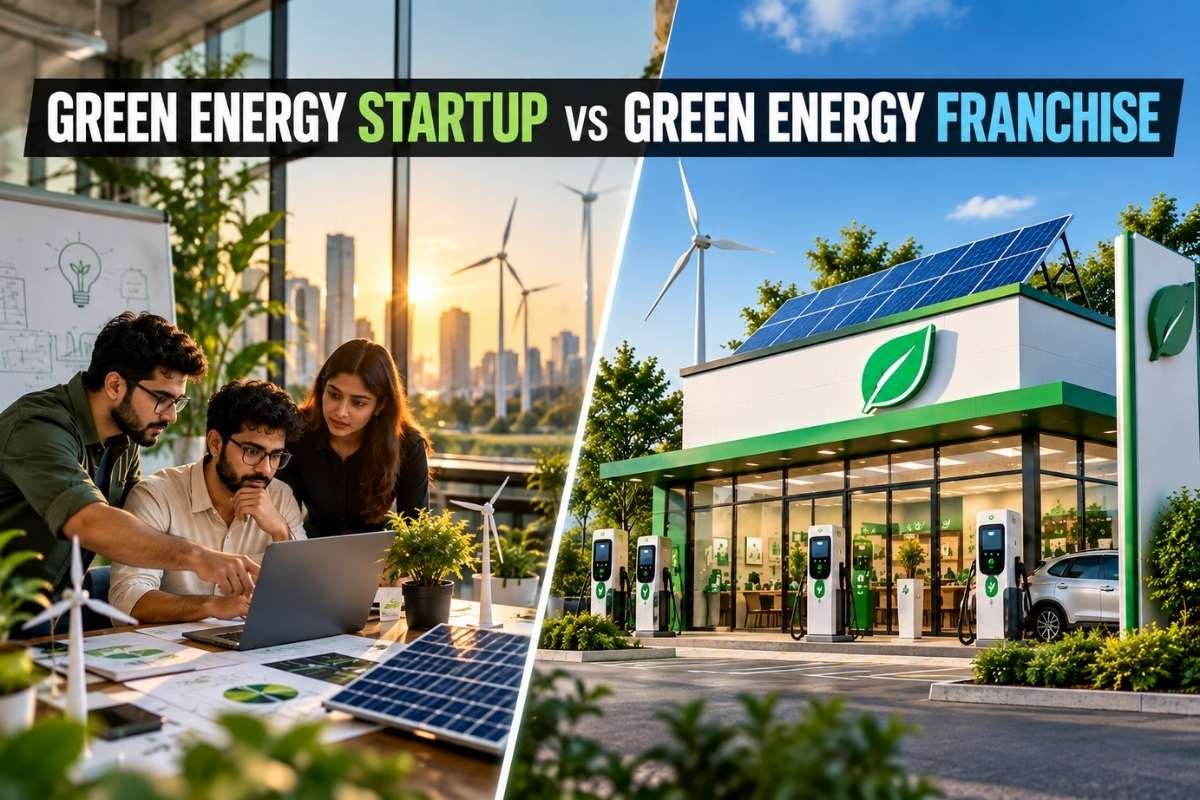
A green energy startup gives you control over your brand, services, and tech choices. You build your own customer base and set your operating model. A green energy franchise lets you run a business under another brand’s rules. You may gain training, approved suppliers, and tested work systems.
But the two models need more than a simple cost check. A franchise can still require local staff, working capital, permits, and customer care. Some brands offer installation services, while others focus on selling equipment or providing maintenance.
The key difference lies in control, contracts, and daily operations. Let’s also separate franchises from dealerships, distributorships, and channel partnerships.
A practical distinction
A franchise agreement can cover training, lead support, and technical help. For example, Waaree’s franchise disclosures describe staff training and local installation support. However, terms differ across brands and agreements.
A dealership mainly focuses on selling products. A distributorship often involves supply and regional sales networks. A channel partnership may connect businesses without granting full franchise rights. Always check the contract before assuming these models offer the same control or protection.
Green energy startup vs franchise: detailed comparison
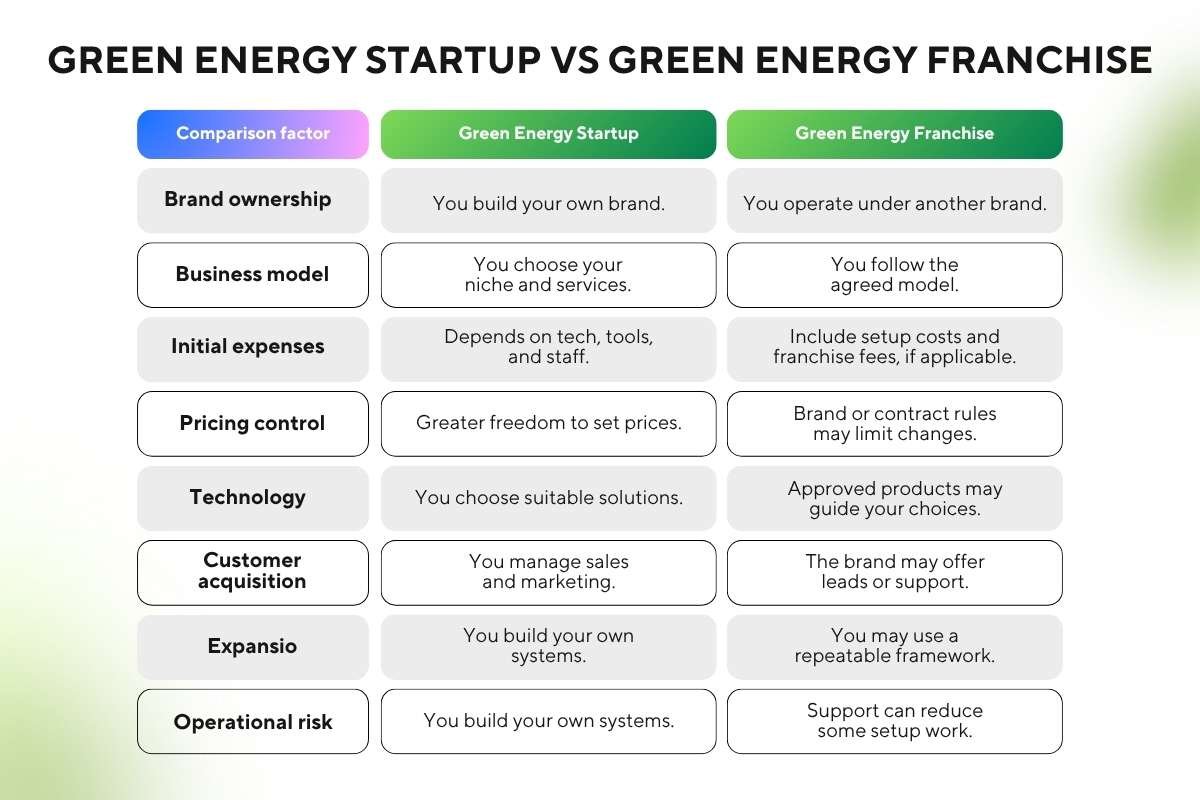
The real difference comes down to who controls the business and who carries the work. A startup gives you more freedom. A franchise may offer a ready-made system. Both still need strong sales, skilled teams, and good service.
| Comparison factor | Green Energy Startup | Green Energy Franchise |
| Brand ownership | You build your own brand. | You operate under another brand. |
| Business model | You choose your niche and services. | You follow the agreed model. |
| Initial expenses | Depends on tech, tools, and staff. | Include setup costs and franchise fees, if applicable. |
| Pricing control | Greater freedom to set prices. | Brand or contract rules may limit changes. |
| Technology | You choose suitable solutions. | Approved products may guide your choices. |
| Customer acquisition | You manage sales and marketing. | The brand may offer leads or support. |
| Expansion | You build your own systems. | You may use a repeatable framework. |
| Operational risk | You build systems from scratch. | Support can reduce some setup work. |
Where the costs and control change
An EPC startup may spend more on skilled staff, tools, sales, and vendor ties. An energy audit business may need trained auditors and measurement tools. An EV charging service may need site checks, electrical work, and maintenance support. So, the cost depends on the service you sell.
A franchise can reduce some brand-building work. Yet fees, supplier rules, and minimum purchase terms can affect margins. Check whether the franchisor offers supplier credit or expects you to fund stock upfront. Warranty handling matters too. Who pays when a charger fails, or a solar part needs replacement?
Who owns the customer?
This question often gets missed in the green energy startup vs franchise debate.
A startup usually owns its customer data and sales process. A franchise agreement may set rules for leads, customer records, and territory rights. Check whether you can add energy audits, AMC contracts, or energy management services. Also ask whether you can serve customers outside your assigned area.
Equipment sales and installation bring one-time revenue. Annual maintenance contracts can add repeat income. Energy management services may create ongoing billing. The contract should clarify who controls these relationships and revenue streams.
A known brand may help earn initial trust. Local service quality still shapes repeat business.
Money does not always mean profit. In India’s green energy sector, equipment costs, staff pay, and delayed customer payments can shape your cash flow.
A startup may spend more on its own brand and tech. A franchise may add entry fees, royalties, or supplier limits. Both models need funds for warranty work and after-sales care. Your customer payment cycle matters too, especially for EPC projects.
Your capital needs depend on the model, service type, and growth plans, making the green energy startup vs franchise decision an important financial consideration. Compare these factors when planning your investment in a green energy business.
A simple break-even check
Use this basic formula before committing funds:
Break-even projects = Fixed CostContribution Per Project
For example, ₹3 lakh in fixed costs and ₹15,000 contribution per project means 20 projects to break even. This is an illustration, not a promise of earnings. Contribution must cover variable costs first.
Franchise costs vary widely. Bolt. Earth lists EV charging station tiers starting at ₹9.99 lakh, while APN Solar lists franchise plans from ₹46,000 plus GST. These figures cover different models, so compare scope before drawing conclusions.
Licenses, technical expertise, and operational control
Starting a green energy business does not mean every model needs the same licenses. Your activity, state, site, and equipment shape the rules. A rooftop solar EPC startup may need qualified electrical staff and project approvals. An EV charging operator may face different site and safety requirements.
A franchise does not shift every duty to the brand. You still manage local staff, customer contracts, and service quality. Business registration, project approval, and technical authorization serve different purposes. Registration creates your business identity. Project approval clears a specific site or activity. Technical authorization confirms required skills or permissions.
For rooftop solar, MNRE guidance connects installations with DISCOM processes and approved vendors. EV charging also involves safety and technical standards under CEA guidance.
Before starting, check which licenses are needed for a green energy business based on your activity, state, and project requirements. A franchise may offer guidance, but you remain responsible for meeting local rules.
Green energy startup vs franchise: which model fits different entrepreneur profiles?
Your skills and goals shape the right business model. A technical founder may want to build a niche energy solution. A first-time operator may value training and clear work systems. But a franchise does not remove the need for business skills. An independent startup can also suit a skilled founder who wants greater control.
Before choosing, ask yourself:
- How much capital can I commit?
- What technical skills do I have?
- How much control do I want?
- Who is my target customer?
- What contract limits apply?
- How do I plan to expand?
One question matters before signing: Who pays when an installation fails, equipment needs replacement, or a customer disputes service quality?
Conclusion:
Choosing between a green energy startup vs franchise depends on your goals, skills, funds, and desired control. Compare real agreements, local demand, and service costs before you commit. Check warranty duties, payment cycles, and contract limits too. A low entry cost does not always mean better margins. As you assess a green energy business in India, choose a model that matches your strengths, protects your margins, and gives you room to grow with confidence.
Frequently asked questions:
1. Is a green energy startup more expensive than a franchise?
Costs depend on equipment, staff, service type, and franchise terms. Compare setup costs, working capital, royalties, and service expenses.
2. Does a green energy franchise guarantee customers?
No, brand recognition does not guarantee sales. Check lead support, territory rights, and customer ownership in the agreement.
3. Can a green energy startup expand into a franchise later?
Yes, a startup may adopt franchising after building repeatable systems. Its legal structure, service quality, and operating model must support expansion.
4. What should entrepreneurs check before investing in an energy franchise?
Review fees, royalties, supplier limits, territory rights, service duties, and exit clauses. Verify financial assumptions before investing.
5. What are the main risks of starting a green energy business?
Key risks include project delays, cash flow gaps, tech changes, compliance costs, and warranty duties. Customer acquisition can also affect margins.