
Established companies have no shortage of ideas, talent, customers, capital, or industry knowledge. The challenge lies in turning these strengths into new businesses without letting established processes slow experimentation.
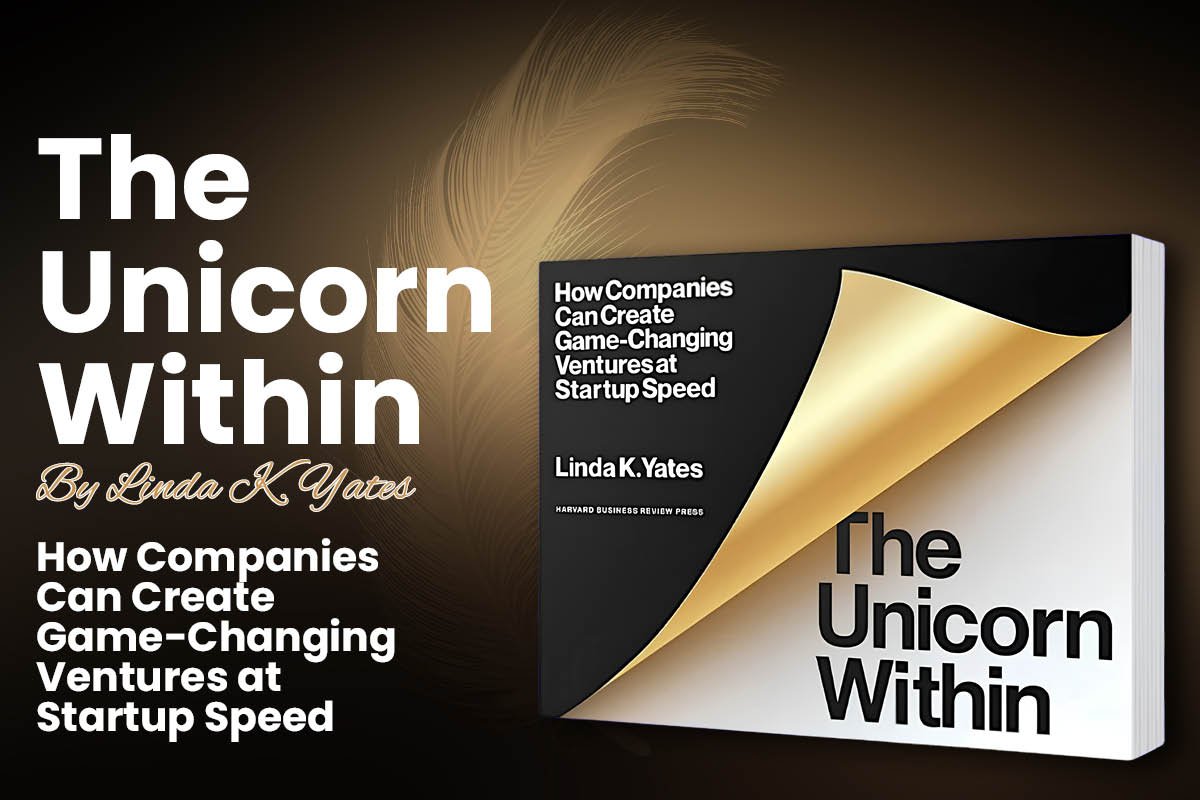
The Unicorn Within by Linda K. Yates examines this challenge and presents a structured approach to corporate venture creation. Rather than treating innovation as an occasional initiative, Yates shows how companies can build the capabilities, teams, and systems needed to develop new ventures repeatedly and create sustainable sources of growth.
Purpose of the book
Why do established companies struggle to turn promising ideas into new ventures? The Unicorn Within by Linda K. Yates offers a systematic approach to venture creation, helping organizations identify opportunities, test ideas, and develop viable businesses while making innovation a repeatable capability.
Core question
How can established companies build new ventures without allowing corporate processes to slow them down?
The book in 60 seconds
The book presents venture building as a disciplined, repeatable capability rather than an occasional innovation exercise. The Unicorn Within by Linda K. Yates introduces the Venture Factory, which combines focused teams, structured experimentation, and progressive investment to turn promising ideas into viable businesses.
Author’s perspective
Through Mach49, Yates has helped companies develop practical capabilities for experimentation, venture creation, and growth.
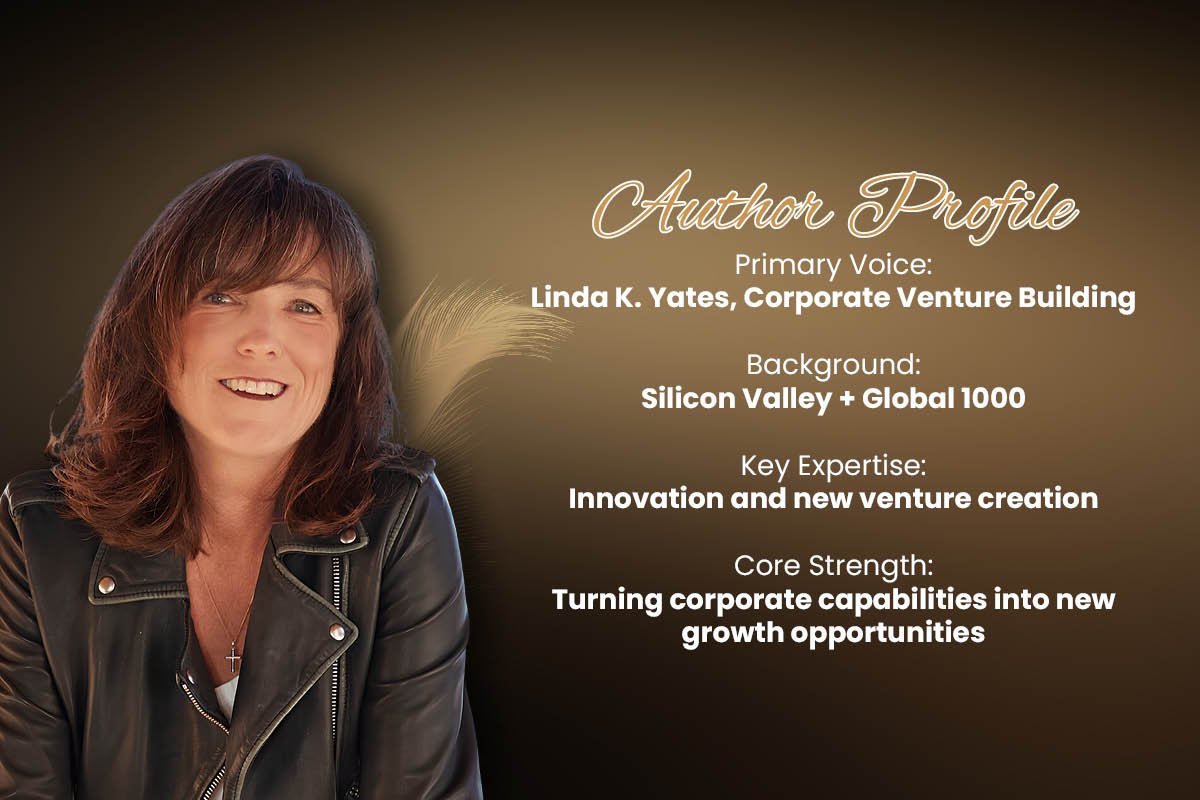
Author profile:
- Primary Voice: Linda K. Yates, Corporate Venture Building
- Background: Silicon Valley + Global 1000
- Key Expertise: Innovation and new venture creation
- Core Strength: Turning corporate capabilities into new growth opportunities.
This perspective gives The Unicorn Within a practical foundation, linking entrepreneurial methods to the realities of established organizations. Instead of treating venture creation as a purely theoretical exercise, Yates examines the structures, people, decisions, and investment discipline needed to turn promising ideas into viable businesses.
The venture-building engine
At the heart of The Unicorn Within by Linda K. Yates is a four-stage process for turning corporate opportunities into viable businesses: Ideate, Incubate, Accelerate, and Scale. Yates presents venture creation as a progression of evidence, with each stage answering a different question before the company commits additional resources.
1. Ideate: find the opportunity
The process begins by identifying problems worth solving. Teams can start with a specific idea, explore a market, or examine customer needs, technologies, and industry shifts. The goal is not to generate ideas endlessly but to identify opportunities with enough potential to justify further testing.
2. Incubate: test the business
Promising opportunities move into incubation, where assumptions face closer scrutiny. Yates approaches this stage through three areas: Customer, Product/Service/Solution, and Business. Teams first establish whether customers have a meaningful problem, develop a solution around that need, and then assess whether a workable business model can support it.
3. Accelerate: prove the potential
Once the concept has supporting evidence, the venture moves toward product-market fit, early revenue, and operational viability. Teams continue testing customer demand, go-to-market plans, economics, and the capabilities required for growth. Funding and support can increase as the evidence becomes stronger.
4. Scale: build for growth
The final stage shifts attention from proving the idea to growing the business. The venture strengthens its operations, establishes a sustainable model, and determines how it can use the larger company’s resources without losing the focus and speed that supported its early development.
A central principle in Yates’s framework is the use of small bets. Instead of funding an uncertain idea as though its success were already proven, companies can invest progressively as teams learn more. This approach limits unnecessary risk while allowing promising ventures to earn greater investment.
The framework ultimately turns venture creation into a repeatable business capability rather than an occasional corporate experiment.
The mothership problem
Established companies have valuable assets that can give new ventures an early advantage, including customers, capital, technology, talent, distribution, and industry expertise. The Unicorn Within by Linda K. Yates refers to the parent organization as the “Mothership.”
However, the same corporate structure that provides these resources can also create friction. Approval processes, established performance measures, risk controls, and pressure for predictable returns may limit the flexibility that early-stage ventures need. New businesses often require quick decisions, experimentation, and the freedom to change direction as they learn.
Yates therefore emphasizes a balanced relationship. The Mothership should provide support and access to its strengths without imposing every process used by the mature business. Giving venture teams enough independence allows them to test ideas while still benefiting from the parent company’s capabilities.
The broader lesson is that corporate involvement works best when it enables a venture’s progress rather than controlling how it develops.
Critical evaluation
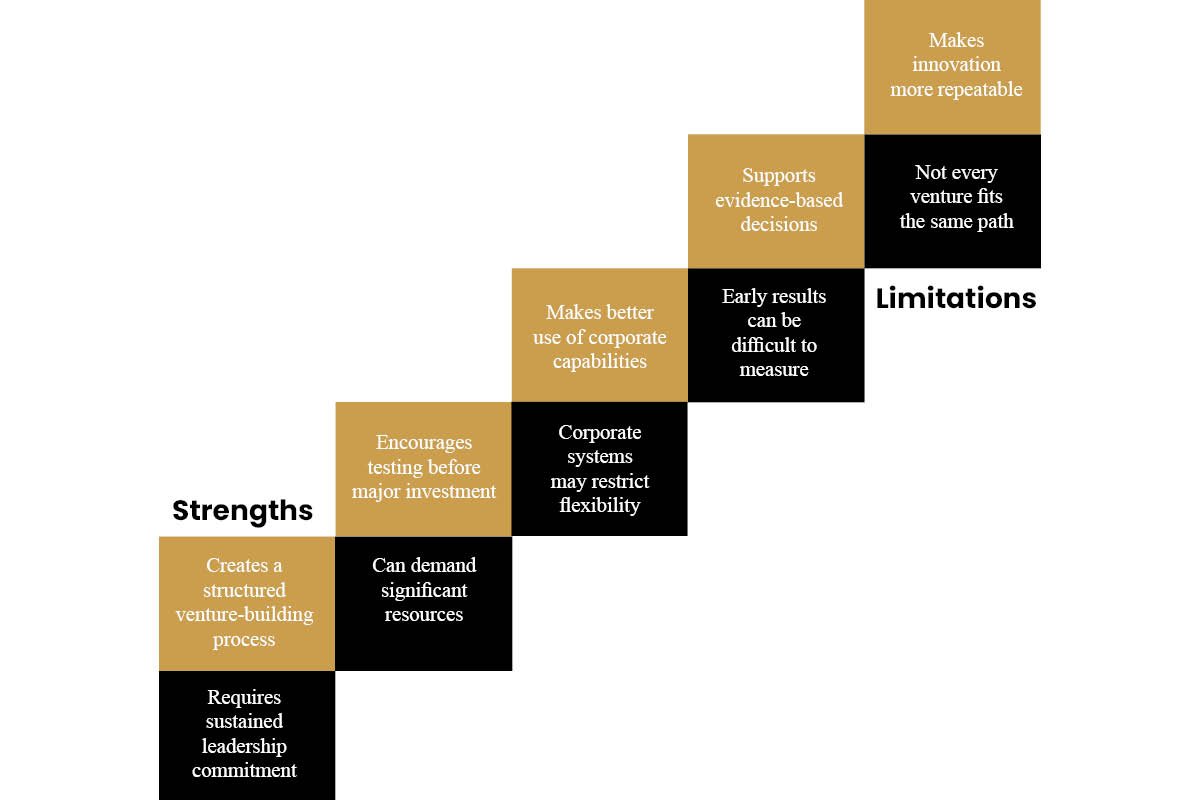
Like any business framework, The Unicorn Within by Linda K. Yates offers both strengths and challenges. Its effectiveness depends on an organization’s ability to provide leadership support, resources, and room for experimentation.
| Strengths | Limitations |
| Creates a structured venture-building process | Requires sustained leadership commitment |
| Encourages testing before major investment | Can demand significant resources |
| Makes better use of corporate capabilities | Corporate systems may restrict flexibility |
| Supports evidence-based decisions | Early results can be difficult to measure |
| Makes innovation more repeatable | Not every venture fits the same path |
The book’s strongest contribution is its focus on building a repeatable system for new growth, rather than relying on isolated innovation efforts. At the same time, putting the framework into practice requires disciplined funding, capable teams, and leaders willing to accept uncertainty.
Who should read this book?
The Unicorn Within by Linda K. Yates is particularly relevant for senior executives, innovation leaders, corporate entrepreneurs, and teams responsible for creating new sources of growth. It can also benefit established companies looking to move beyond one-off innovation programs and develop a systematic approach to venture creation.
The book is most useful for organizations willing to combine their existing strengths with experimentation, disciplined investment, and greater autonomy for new ventures.
Relevance and applications

The framework in The Unicorn Within by Linda K. Yates can support companies pursuing new markets, products, services, or business models. Its principles give leaders and innovation teams a way to evaluate opportunities, test assumptions, allocate resources progressively, and use existing corporate strengths without allowing them to constrain early-stage experimentation.
Book reviews by readers
“Unique approach to intrapreneurship is something that many companies are lacking.”
Darya | ★★★★☆
“Look, this is a great, very overlooked book from someone who has studied with Ash Maurya, Bill Aulet, and Steven Gary Blank. You have an incredible book. This is a very overlooked book, probably done as a marketing initiative and treated as such by reviewers. READ IT. Amazon has purchase limits.”
Fun Gus | ★★★★★
Conclusion
The Unicorn Within by Linda K. Yates presents a practical approach to building new ventures within established companies. By combining experimentation, disciplined investment, focused teams, and corporate resources, Yates shows how organizations can make innovation more structured and sustainable. The book offers useful guidance for leaders seeking sustainable growth through new business opportunities.