



What happens to employees after a merger? They may keep their jobs, but their roles, managers, or benefits could change. The employee merger impact depends on the deal structure, business needs, and integration plan.
A merger does not always lead to job cuts or lost benefits. Some employees gain new roles, skills, or wider career paths. Others may face new teams, changed duties, or uncertain futures.
In India, these changes can also affect service terms and employee rights. Let’s look at what employees should expect and how they can prepare.
How does the type of M&A deal affect employees?
The first thing to check is which type of deal took place. The employee merger impact depends partly on the deal structure and its effect on your employment terms.
| Deal structure | What employees should check |
| Merger or amalgamation | The approved scheme, job continuity, and employment terms |
| Share acquisition | The employer’s identity, new management, and policy changes |
| Business or asset transfer | Transfer arrangements, consent where applicable, and service history |
In a share acquisition, the employer usually remains the same legal entity, though management may change. A merger follows an approved scheme, while a business or asset transfer may require separate employee transfer arrangements.
Indian legal guidance highlights the need to review service continuity and employment terms.
The next step is to see how these deals affect job security.
Does employee merger impact include job loss risk?

A merger can put some jobs at risk, but layoffs are not certain. Companies may review roles when they combine teams and operations.
For example, two Indian companies may merge their finance teams. They may retain staff with key tax or regulatory skills while moving others into new roles. They may also offer voluntary exits or begin retrenchment, subject to applicable law.
These changes can shape the employee merger impact in different ways. Role consolidation combines similar jobs, while redeployment moves staff to other roles. Retrenchment ends jobs under applicable legal rules.
The outcome depends on the company’s business needs and integration plan. Employees should track official updates and avoid making career decisions based on rumours.
What is the employee merger impact on salaries, benefits, and employment terms?
A merger does not guarantee a pay rise or the same benefits. Your new terms depend on the deal, your contract, and applicable law. Before accepting any change, assess the employee merger impact on your pay, benefits, and service terms:
| What may change | What you should verify |
| Basic pay, bonuses, and incentives | Written pay terms and performance targets |
| Provident Fund (PF) and gratuity | Contribution records and service history |
| Leave, insurance, and other benefits | Balance, coverage, and any transition rules |
| Notice period and job terms | Contract clauses and written amendments |
A change in ownership does not always mean a new employment contract. However, a business transfer may need clear terms for service continuity. Review the due diligence in M&A to understand why buyers check contracts and benefit liabilities before closing a deal.
Indian law also sets rules for wages and social security. The four Labour Codes took effect on 21 November 2025, according to the Ministry of Labour and Employment. Their provisions cover wages, employment relations, and social security, subject to the relevant rules.
Before agreeing to new terms, compare your old and new documents. Keep copies of payslips, PF records, benefit statements, and any revised contract. Written terms matter more than informal assurances from managers or HR.
What are employee rights during a merger in India?

Your rights during a merger depend on your job, contract, deal structure, and applicable labour laws. Indian law does not treat every employee or transaction in the same way.
Start by checking three things:
- Employment continuity: In a share acquisition, the employer usually remains the same legal entity. A statutory amalgamation or asset transfer may lead to different arrangements.
- Existing terms: Check whether your contract, pay, benefits, and service history continue. Do not assume every transfer preserves all terms without change.
- Notice and compensation: If the employer ends your job, notice or compensation rules may apply. The exact duties depend on your legal classification and the reason for termination.
The Industrial Relations Code, 2020 took effect on 21 November 2025. It now governs relevant industrial relations matters, while some older cases may continue under transition rules. The earlier Industrial Disputes Act, 1947 should not be treated as interchangeable with the Code.
Do not assume every employee must consent to a deal. The process depends on the transaction and applicable law. If your employer proposes a transfer or termination, ask HR for written terms. Seek advice from an Indian employment lawyer if your rights remain unclear.
How a merger affect workplace culture and employee retention?
A merger can change how teams work and make decisions. Local managers may lose authority as the new company centralises approvals. Employees may also face new targets, reporting lines, and review methods.
Poor communication can weaken trust and morale. Staff may question differences in pay, perks, or decision-making power. Skilled employees may leave if their roles or career paths seem uncertain. These cultural integration challenges can put key skills and client ties at risk.
A clear plan can reduce the employee merger impact on trust and retention. Managers should explain new roles and targets early. HR should share policy changes and answer questions. Targeted retention plans can also help keep key employees.
A 2017 PwC survey of 151 senior executives at Fortune 1000 companies found that fewer than half reported success in retaining employees through a merger transition. The share fell from 56% in 2010 to 45% in 2016. Though not India-specific, the findings show why employee retention needs a clear plan.
What should employees do after a merger announcement?
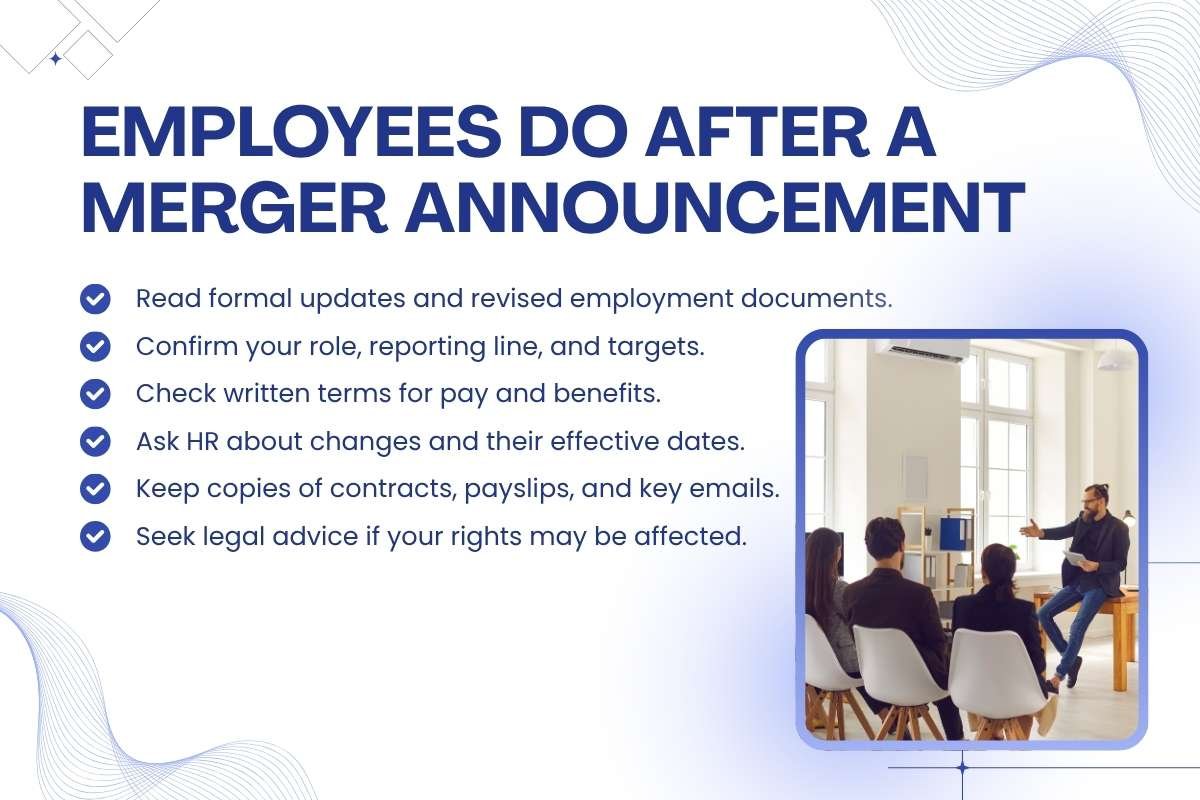
A merger announcement can raise questions about your job and future. Take these steps:
- Read formal updates and revised employment documents.
- Confirm your role, reporting line, and targets.
- Check written terms for pay and benefits.
- Ask HR about changes and their effective dates.
- Keep copies of contracts, payslips, and key emails.
- Seek legal advice if your rights may be affected.
The stages of an M&A deal process explain when further updates may arrive. Avoid making career decisions based on rumours.
Conclusion:
A merger marks a period of change, but it does not define your career path. Stay informed, ask clear questions, and keep records of important decisions. If proposed changes raise concerns, seek qualified advice before taking action. A measured response can help you protect your interests and plan your next steps with confidence.
Frequently asked questions
1. Can an employee refuse a transfer after a merger?
It depends on the transfer terms, employment contract, and applicable law. Employees should review the proposed terms and seek legal advice before refusing a transfer.
2. Does an employee’s service history continue after a merger?
Service continuity depends on the deal structure and transfer terms. Employees should get written confirmation of their joining date, past service, and related benefits.
3. Can an employee resign after a merger without penalty?
Employees can generally resign, but notice periods and other contract terms may apply. Check your employment agreement before leaving to understand any obligations or consequences.