
Boardrooms across Delhi are talking about a new kind of power. Investors ask about production costs. Manufacturers ask about supply. Policymakers ask about exports. At the centre of these conversations is a fuel once confined to research labs, now tied to factories, ports, and trade routes.
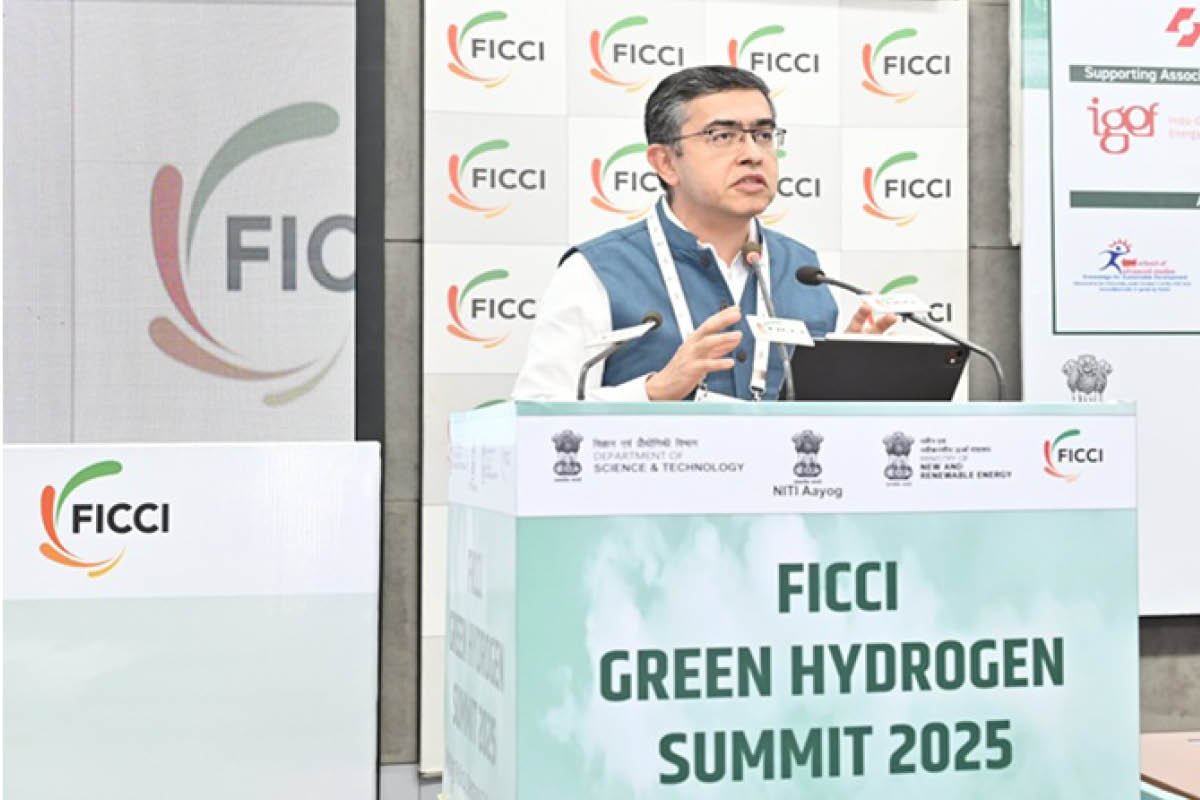
The 2nd Bharat Green Hydrogen Summit 2026, hosted by FICCI in New Delhi, gathers these voices under one roof, built around positioning India as a global energy hub. This piece walks through what happens at the summit and why industry watchers should take note.
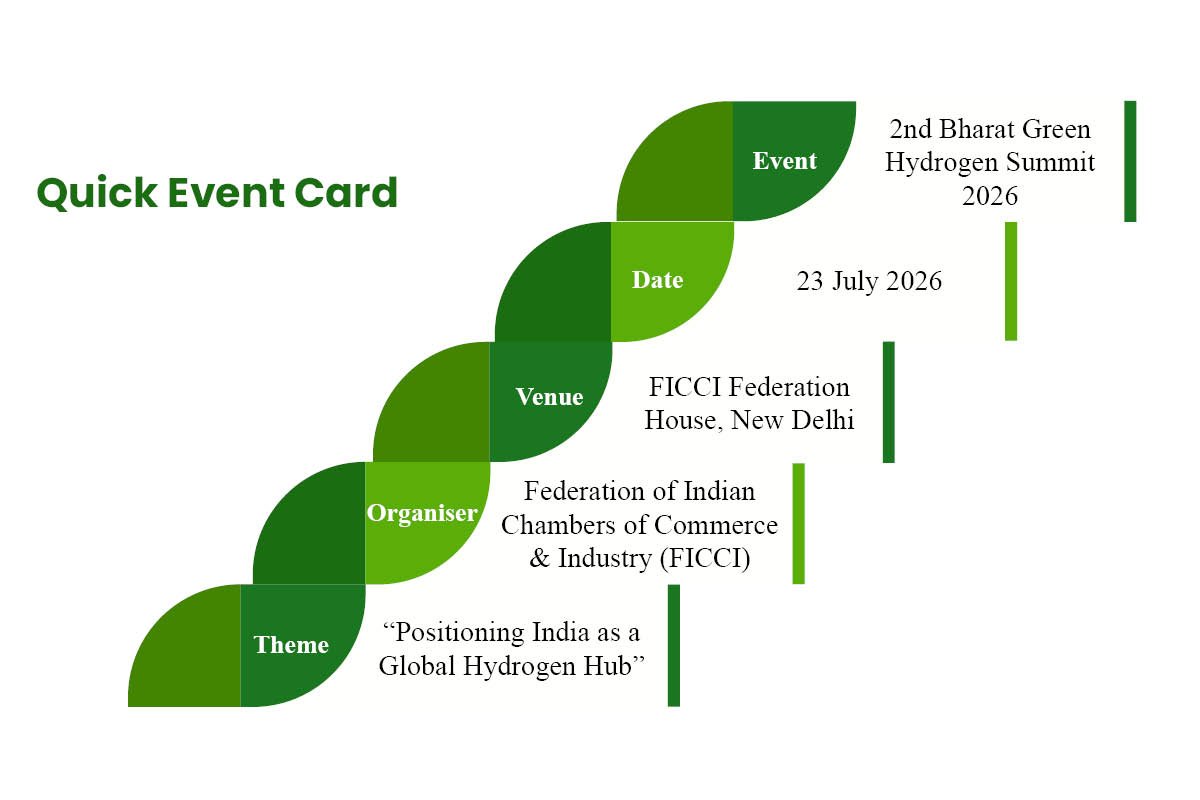
The summit at a glance
- Event: 2nd Bharat Green Hydrogen Summit 2026
- Date: 23 July 2026
- Venue: FICCI Federation House, New Delhi
- Organiser: Federation of Indian Chambers of Commerce & Industry (FICCI)
- Theme: “Positioning India as a Global Hydrogen Hub”
FICCI describes the summit as a meeting point for policymakers, government agencies, public sector units, industry leaders, financial institutions, technology providers, startups and academia.
The theme reflects the wider scope of the national mission.
It covers production, domestic consumption and export opportunities, along with the technology, infrastructure, financing and skilled talent needed to support them. Together, these priorities shape how India approaches clean energy manufacturing and trade at scale.
How the green hydrogen summit day unfold?
A single day at the summit moves through several stages, each building naturally on the one before it.
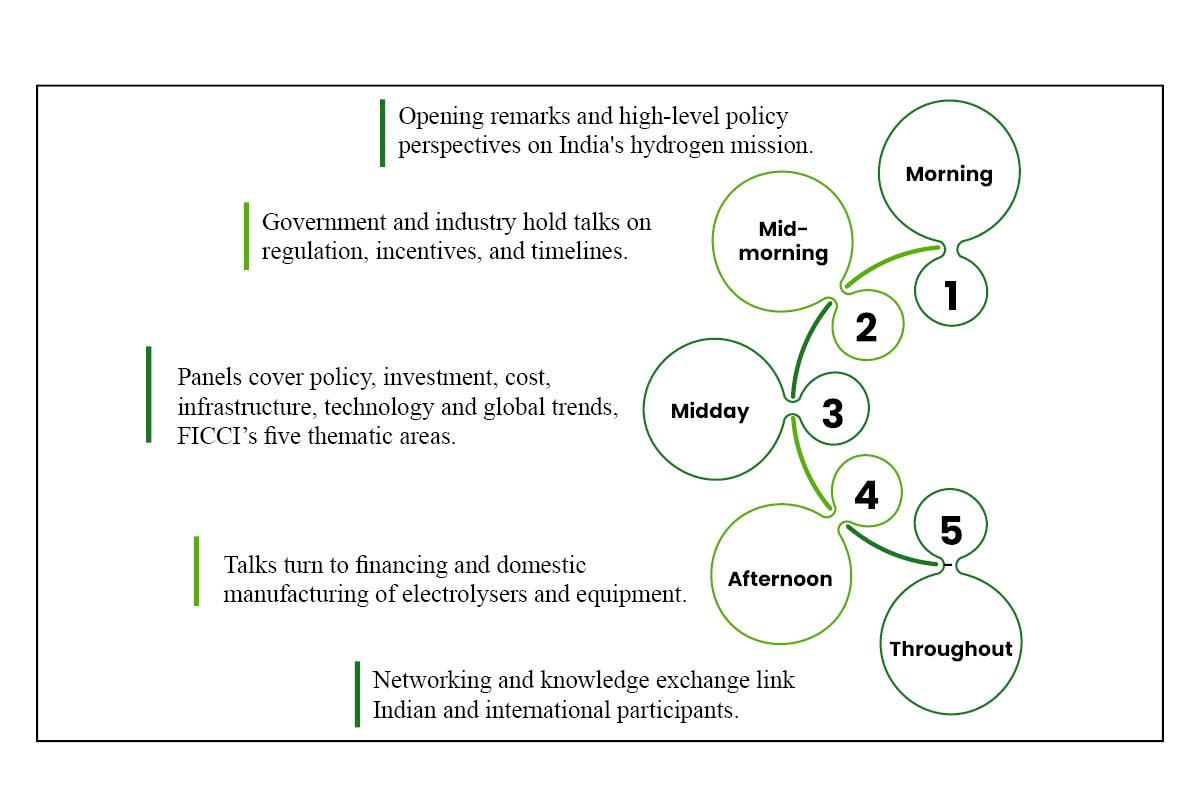
- Morning: Opening remarks and high-level policy perspectives on India’s hydrogen mission.
- Mid-morning: Government and industry hold talks on regulation, incentives, and timelines.
- Midday: Panels cover policy, investment, cost, infrastructure, technology, and global trends, FICCI’s five thematic areas.
- Afternoon: Talks turn to financing and domestic manufacturing of electrolysers and equipment.
- Throughout: Networking and knowledge exchange link Indian and international participants.
Similar events across India follow this same pattern, pulling policymakers, industry leaders, financiers, researchers and global stakeholders under one roof.
The big conversations: policy, cost and demand
Three questions dominate discussions at the summit, and each points to a different piece of the puzzle facing India’s clean-energy ambitions.
Can policy make projects easier to build?
Speakers are expected to raise regulatory clarity, certification standards, procurement rules, and firmer policy backing as conditions that could make projects easier to implement across states.
Can production become commercially viable?
The cost of renewable electricity, electrolyser economics and project financing all shape whether output can compete with existing fuels on price and reach commercial viability.
Who will buy it?
Without buyers, supply means little. Long-term offtake agreements and steady industrial demand in ammonia, steel, mobility and shipping will decide whether projects reach real scale.
The Ministry of New and Renewable Energy notes that the national programme covers demand creation, competitive procurement, certification, financial incentives, pilot projects, infrastructure and dedicated Green Hydrogen hubs, tying these questions to an already active policy framework.
Technology, manufacturing and infrastructure
Turning policy into working infrastructure is the real challenge. Panels at the summit are expected to examine what must exist on the ground:
- Electrolyser manufacturing, seen as central to reducing import dependence
- Reliable renewable power supply to run production at scale
- Water availability and resource planning for electrolysis
- Storage systems built for a highly reactive fuel
- Pipelines, tankers and distribution networks connecting producers to industrial users
- Dedicated hydrogen hubs clustering production, storage and consumption
- Domestic R&D aimed at improving efficiency and cutting costs
The Green Hydrogen Mission backs many of these pieces directly, with incentives for electrolyser manufacturing, production-linked support, hydrogen hubs and public-private research. These technical foundations are expected to shape the summit’s infrastructure and manufacturing sessions closely, underlining how much groundwork remains before wide deployment.
Investment, exports and India’s global opportunity
The commercial conversation is where the event turns practical, moving past technology and policy into hard questions of money and markets.
The business case: what’s on the table
| Area | What’s at Stake |
| Financing | Large projects need capital, but lenders still see the sector as untested; speakers will look at bankable models built on clear demand signals |
| Export infrastructure | Ports, pipelines and storage terminals must be ready before shipments can begin |
| Global standards | International certification and buyer requirements will decide which projects qualify for overseas contracts |
| Partnerships | Cross-border collaboration can bring funding, technology and offtake agreements together |
| Derivatives | Green ammonia is expected to see rising demand as an early export product |
For Indian manufacturers and project developers, these discussions point toward a genuine opening in global supply chains.
Who should pay attention to the event?
The Green Hydrogen Summit brings together several groups, each with a different reason to attend.
- Policymakers and government bodies: direct policy insight and regulatory updates
- Energy companies and PSUs: commercial connections and project leads
- Renewable energy developers: market knowledge and partnership options
- Hydrogen producers: cost benchmarks and buyer conversations
- Electrolyser and equipment manufacturers: technology exposure and demand signals
- Banks and investors: financing conversations and deal flow
- Technology companies and startups: visibility among industry decision-makers
- Research institutions and universities: access to applied, real-world use cases
- Potential hydrogen buyers: supplier contacts and pricing clarity
- International partners: entry points into India’s hydrogen mission
For most attendees, this works as one meeting point covering policy, finance, and technology together, saving the separate outreach each conversation would otherwise need.
Why this summit matters?
The Bharat Summit brings together policy, industry, and finance to answer one question: how does India turn its hydrogen ambitions into a working market?
1. Execution. It connects policy ambition with real business execution.
2. Collaboration. It brings producers, users, and infrastructure players into one room.
3. Finance. It gives companies a venue to work through financing and offtake questions.
4. Manufacturing. It puts domestic technology development on the table.
5. Global Reach. It links India’s hydrogen plans to buyers and partners abroad.
Together, these points show why the summit sits at the centre of India’s clean energy calendar. The Green Hydrogen Mission set out to build capacity; gatherings like this decide how that capacity gets used.
MNRE’s stated goal remains a country positioned as a global hub for producing, using, and exporting hydrogen and its derivatives.
Closing: what readers should take away
One Question to Watch
The Bharat Summit matters less for its speeches and more for the practical work behind them: pricing demand, weighing costs, planning infrastructure, testing technology, structuring investment, and building ties with buyers abroad. These conversations, not slogans, will decide how far India’s Green Hydrogen plans travel. That leaves one question worth watching: can the country turn its hydrogen ambitions into commercially viable projects at scale?