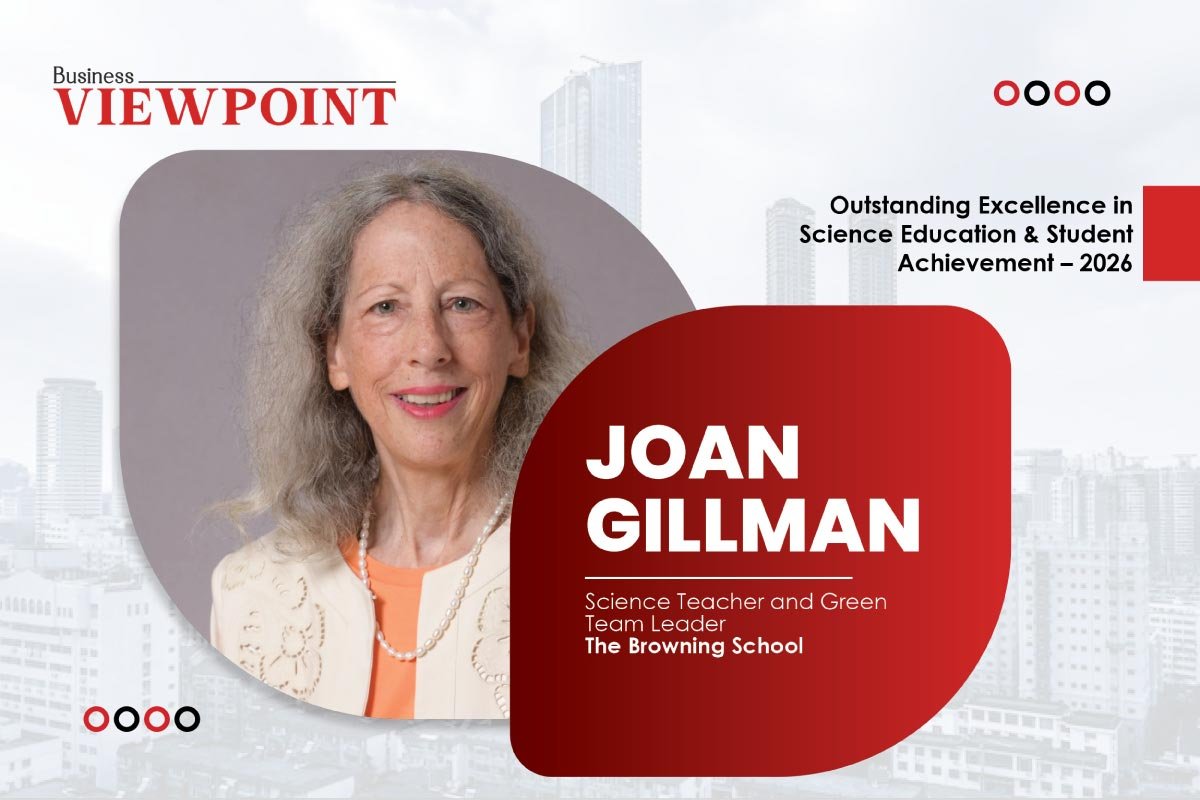


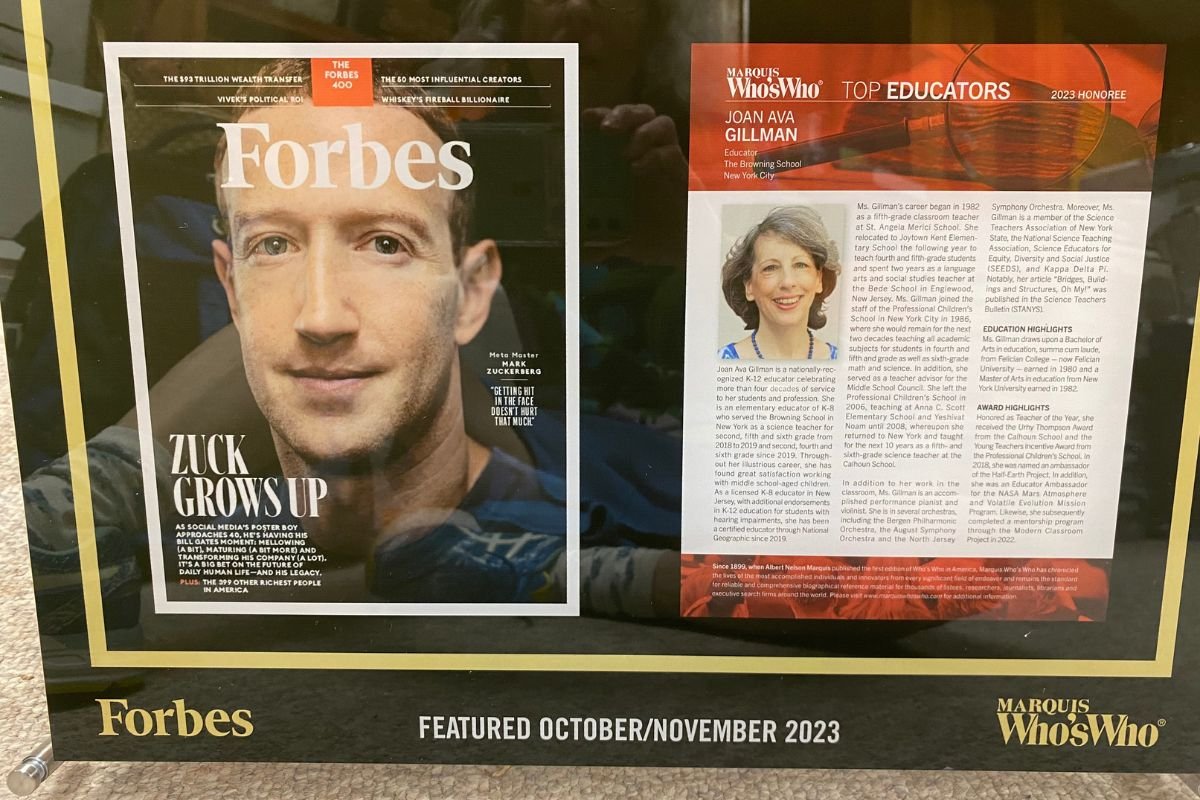
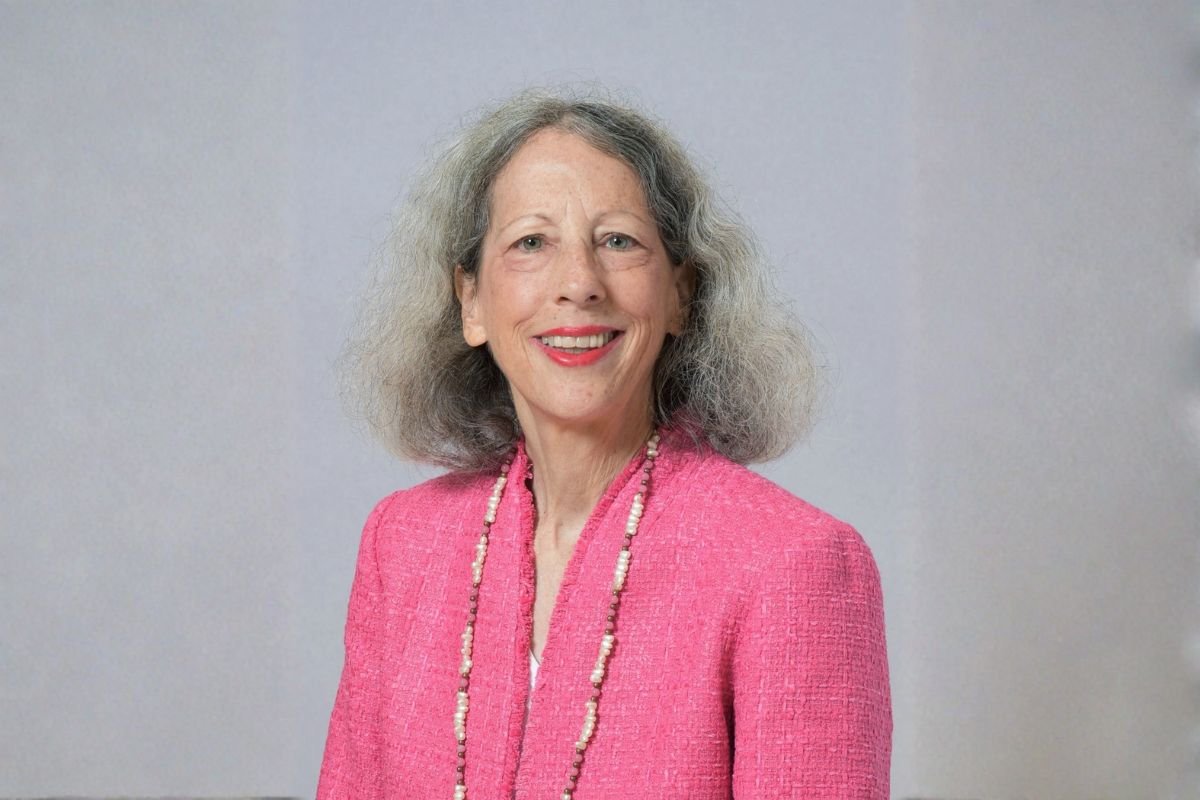
At a time when science education is increasingly shaped by rapid technological advancement and pressing global challenges like climate change, the need for educators who can balance innovation with compassion has never been greater. Joan Gillman, Science Teacher and Green Team Leader at The Browning School, is doing just that, transforming the way young learners engage with science by making it hands-on, inclusive, and deeply connected to real-world impact.
With a remarkable 44-year career rooted in the belief that every child deserves an opportunity to shine, Joan has built vibrant classroom communities where curiosity thrives, and no student fears asking questions. Her unique approach seamlessly blends rigorous scientific inquiry with genuine environmental stewardship, guiding students to master everything from rocket trajectories to climate advocacy. A lifelong learner herself, she empowers each child to recognize their strengths and use knowledge as a force for meaningful change in the world around them.
A Foundation Built on Inclusivity and Wonder
Joan Gillman’s journey into teaching began during high school, where a community service requirement led her to volunteer in the lower school, teaching recorder, tutoring math, and organizing inclusive playground games. The school head admired her ability to engage all children, not just the athletically gifted. Simultaneously, she taught swimming at the local JCC, including special needs children, and substituted as a ballet teacher. The joy of helping children overcome fears and discover confidence shaped her core belief: every child deserves an opportunity to shine, and learning compassion, dignity, and respect matters as much as any skill.
Her fascination with science emerged early as she mixed solutions in her bathroom, measured snowfall, and built robots, model cities, and snow tunnels with her older brother playful experiences that unknowingly prepared her for education. While earning her Master’s, she student-taught profoundly deaf students at P.S. 47, where her mentor’s hands-on approach transformed her pedagogy. Watching students build a working miniature amusement park to demonstrate engineering principles revealed the irreplaceable power of experiential education.
Joan felt drawn to The Browning School when she first saw its Diversity Statement framed in the lobby, which gave her confidence during her interview. Now entering her ninth year, she affirms the school lives its mission. Initially teaching grades two, five, and six while serving as sixth-grade advisor and Green Team co-leader, she later became the K-8 Green Team lead when the high school moved to a separate building. This fall, she embraces a new challenge: teaching kindergarten, second, and fourth-grade science while continuing her environmental leadership.
Where Mission Meets Method in the Science Classroom
The Browning School’s mission to “create men of intellect and integrity to contribute meaningfully to our world” is woven into every lesson Joan Gillman teaches. The four guiding values Curiosity, Honesty, Dignity, and Purpose are stressed throughout the year, and she consistently reminds students to treat everyone fairly and with respect. She believes the school’s commitment to equitable practices and social impact permeates all aspects of school life rather than serving as a curriculum supplement.
Joan envisions her classroom as a community where every child’s strengths are recognized, whether as artists or presentation builders, and no student feels intimidated to ask questions. She prioritizes preserving natural curiosity and teaches students they can use knowledge to make a genuine difference. Her environmental dedication extends beyond the classroom through Central Park clean-ups and conservation activities, where students build leadership and collaboration skills. This hands-on advocacy has inspired some to pursue roles as environmental advocates in their future careers.
Her Fourth Grade Straw Rocket unit exemplifies her approach. Students experiment with variables straw length, fin design, nose cone size, and launch angles, measuring and recording flight distances before analyzing results to determine ideal configurations. The iterative process allows redesign and second attempts, teaching that learning continues beyond initial trials. Students remember this activity for years. Meanwhile, the science department works diligently toward full NGSS alignment across all lower and middle school classes, a process expected to conclude within the next year.
From Classroom Lessons to Community Action
Joan Gillman believes science education extends far beyond textbooks, and she prioritizes maintaining the natural wonder and curiosity every child possesses about the world around them. While science can seem daunting, she consistently teaches her students that they are powerful and can use their knowledge to make a genuine difference.
A vivid example emerged during a lesson on water shortages with her sixth graders. Discussing who has access to clean water deeply inspired one student, now in tenth grade, to take meaningful action. He joined the Green Team, and together they researched organizations, ultimately partnering with water.org. The group held a school fundraiser, with students volunteering to collect money, make posters, and distribute information, raising over one thousand dollars a testament to the younger generation’s passion.
This past year, when Green Team students learned ninety thousand families lost their homes in Hurricane Melissa, they organized a week-long fundraiser collecting donations in the lobby and running a sold-out bake sale that raised over $2,300 for Project Hope and American Friends of Jamaica. Joan could not have been prouder. If she could redesign science education, she would include more hands-on projects, believing authentic, purposeful work excites students far more than memorizing facts for a test ever could.
Moments of Transformation & Discovering Hidden Potential
Throughout her career, Joan Gillman has treasured moments when students unexpectedly discover their potential. One cherished memory involves a Fifth-grade boy, a New Jersey student who had caused considerable havoc in previous classes. Despite warnings, Joan kept an open mind and remains grateful she ignored those predictions. During the owl pellet lab, he shined using tools like a surgeon with unmatched patience as he carefully dissected the pellet, his fascination palpable.
When the lab ended, he cleaned up all the tools without any coaxing. Grateful, Joan called his mother to share her pride, but assuming it was another disciplinary call, the family had his uncle call back. Upon hearing the positive news, they were genuinely grateful. From that day forward, the boy would wave and smile whenever he passed her lab, reaffirming that Joan had made a genuine difference in his life.
Another unforgettable moment occurred during a lesson on cause and effect and energy transfer, when Joan had students building Rube Goldberg-type machines with specific requirements. Working in groups, the boys brainstormed ideas, drew plans, and gathered materials before building and testing their creations. Joan Gillman recalls the heartwarming sound of boys shouting, “This is the best science class ever!” The sheer joy in their voices confirmed that hands-on, creative learning reaches students in ways traditional instruction simply cannot.
Preparing Young Scientists for an Unwritten Future
Joan Gillman recognizes that science and technology are evolving rapidly, and schools must prepare students for careers yet to exist. A key challenge is addressing climate change without frightening children. They need to understand how the world works to make wise decisions as adults. As Green Team leader, Joan empowers students to go into the community and demonstrate how even small changes can make a meaningful difference.
Through Green Team experiences, students learn environmental preservation while gaining leadership and collaboration skills. Joan fosters environmental consciousness to help students understand critical planetary challenges, and she is proud that this has inspired some to become environmental advocates. The impact extends beyond environmental topics: at her previous school, a student fascinated with cells and biology now pursues her doctorate in biological studies. Hearing about her former student’s career path has made Joan immensely proud.
Looking toward the future of STEM education, Joan firmly believes curriculums must become more interdisciplinary. In her science classes, she incorporates all academic subjects into lessons so learning never takes place in isolation. Through this integrated approach, students see the natural connections between disciplines because, as she notes, that is the way the world actually works. By breaking down artificial barriers between subjects, Joan prepares students for a future where complex problems demand multifaceted solutions.
Nurturing Resilience Through Choice and Creativity
Joan Gillman believes that fostering curiosity, resilience, and a growth mindset requires giving students the freedom to approach challenges in ways that honor their individual strengths. This past year, while teaching the parts and functions of cells, she noticed some students found the material particularly challenging. Rather than pressing forward with traditional methods, she decided to make the information more reachable by having students complete a project where they would highlight each cell part and explain its function.
Crucially, she let students choose their medium, and results were as diverse as the learners themselves. Some composed songs weaving scientific vocabulary into music, others crafted labeled cell models, and several developed interactive games. One struggling student created a comic-themed book, sculpting each cell part and attaching 3D models to pages with bubble dialogues explaining functions in his own words. For this child, the project became the answer.
Not only did he fully understand the function of each cell part, but he had a genuinely enjoyable time completing his comic book and sharing it with his peers. It felt wonderful for Joan Gillman to witness him take such immense pride in his work after having struggled so much initially. This experience reinforced her conviction that when students encounter setbacks, providing autonomy and creative choice can transform frustration into deep, lasting understanding and newfound confidence.
Embracing Technology While Honoring Hands-On Learning
Joan Gillman acknowledges that keeping up with new technologies has been one of her biggest challenges. When she began teaching in 1982, she used only a blackboard and chalk, not even knowing how to turn on her first classroom computer. Today, she cannot imagine teaching without technology. Each classroom at The Browning School has a SmartBoard, transforming her instruction; she now easily shows videos, displays images of animals, and writes notes in different colors so students with tracking difficulties can follow along clearly.
Additionally, each classroom has Chromebooks for notes, videos, assignments, and sharing work. Joan uses three age-appropriate platforms across divisions: Seesaw, Google Classroom, and Canvas. On AI, she believes it will grow widespread but insists it must enhance learning without replacing skill development. Any new technology, she maintains, requires thoughtful caution balancing innovation with the irreplaceable value of hands-on, experiential learning.
AI Integration in the Classroom
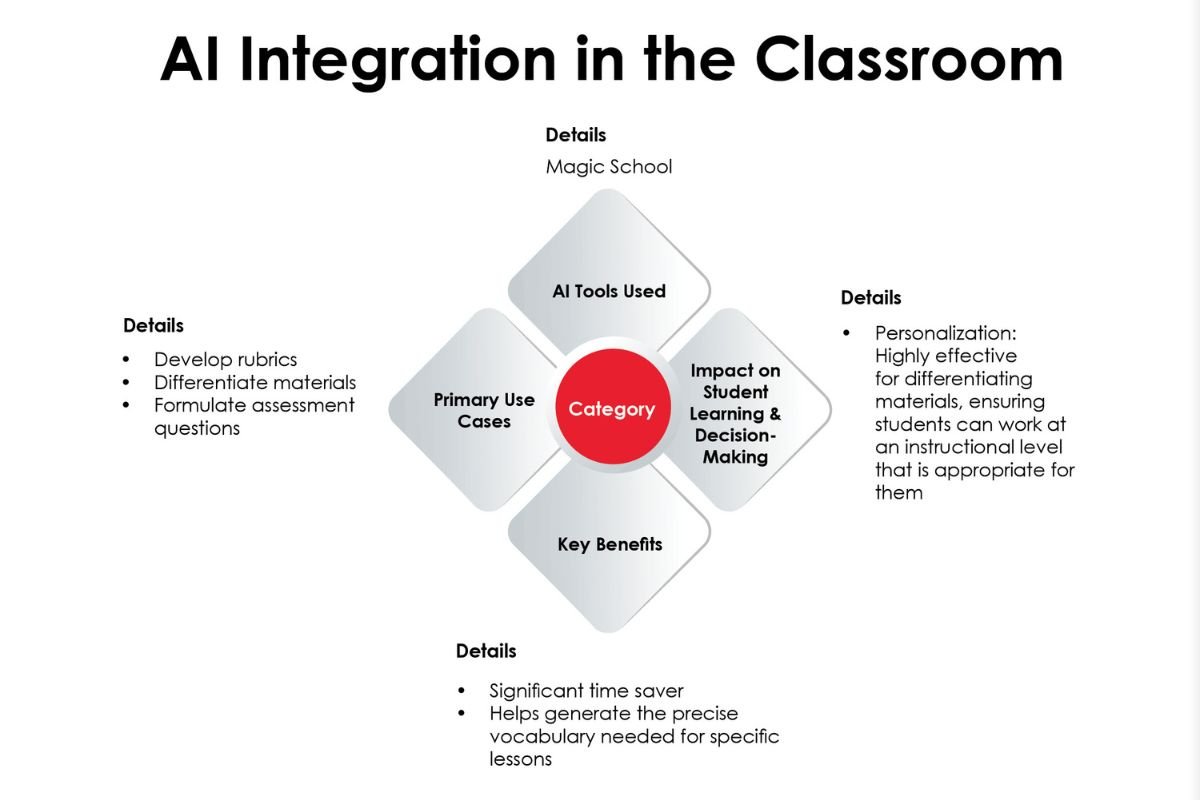
As educators adapt to modern classrooms, leveraging artificial intelligence streamlines administrative workflows and enhances personalized instruction. Below is a structured summary of how Magic School AI is currently utilized to support teaching responsibilities and student success.
| Category | Details |
| AI Tools Used | Magic School |
| Primary Use Cases | Develop rubrics, differentiate materials, formulate assessment questions |
| Key Benefits | Significant time saver; helps generate the precise vocabulary needed for specific lessons |
| Impact on Student Learning & Decision-Making | Personalization: Highly effective for differentiating materials, ensuring students can work at an instructional level that is appropriate for them. |
Shaping a Science Mentor & The Turning Point
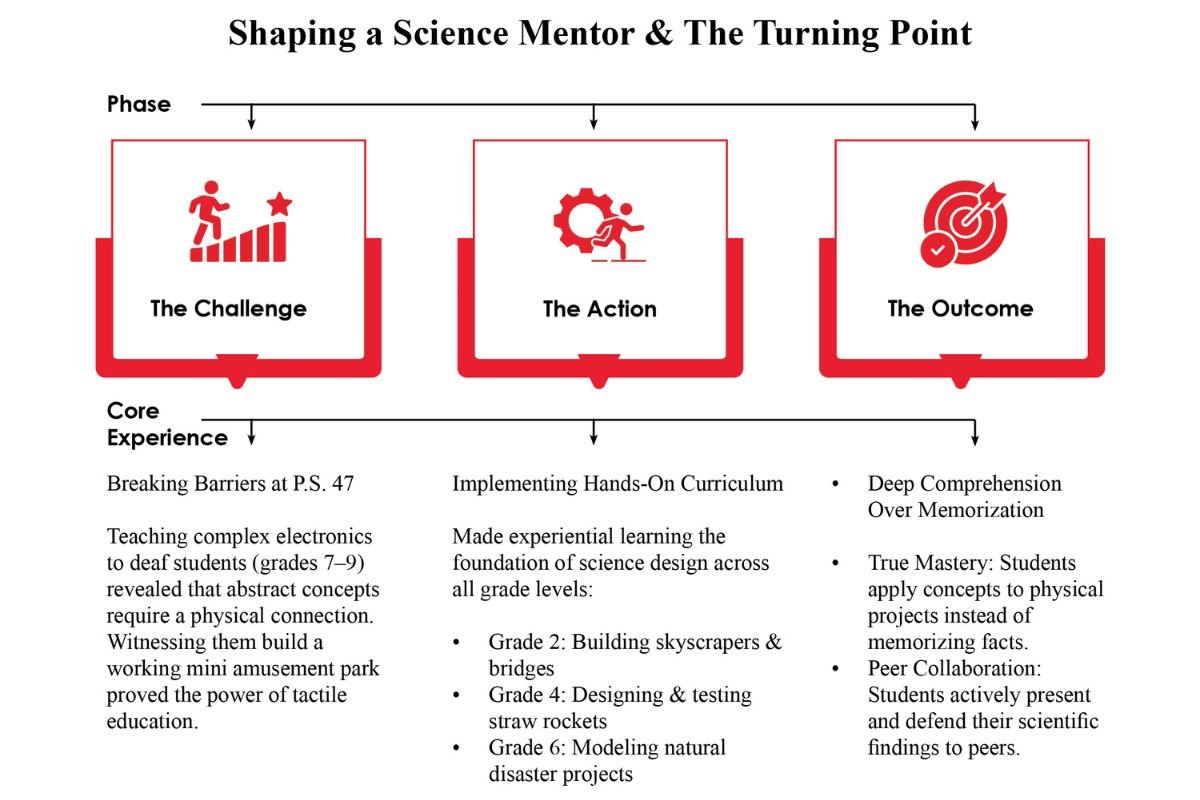
A pivotal experience student-teaching deaf learners transformed a traditional teaching philosophy into a lifelong commitment to experiential science.
| Phase | Core Experience |
| The Challenge | Breaking Barriers at P.S. 47 Teaching complex electronics to deaf students (grades 7–9) revealed that abstract concepts require a physical connection. Witnessing them build a working mini amusement park proved the power of tactile education. |
| The Action | Implementing Hands-On Curriculum Made experiential learning the foundation of science design across all grade levels: Grade 2: Building skyscrapers & bridges; Grade 4: Designing & testing straw rockets; Grade 6: Modeling natural disaster projects |
| The Outcome | Deep Comprehension Over Memorization True Mastery: Students apply concepts to physical projects instead of memorizing facts.Peer Collaboration: Students actively present and defend their scientific findings to peers. |
The Heart of Exceptional Teaching Ft. Honesty, Humor, and Lifelong Learning
Joan Gillman believes exceptional educators possess qualities beyond subject expertise. She credits her 44-year longevity to continuous professional development through workshops, courses, and conferences, keeping her enthusiastic and open to fresh perspectives. She emphasizes maintaining a sense of humor when students become challenging, noting that patience and humor preserve the love of teaching. She advises teachers not to fear asking for help, reminding them that supportive colleagues surround them. While acknowledging teaching is challenging and exhausting, Joan affirms it remains one of the most rewarding professions and encourages educators to keep their spirits up, as the best days lie ahead.
She believes exceptional educators must be honest, hardworking, and approachable. After forty-four years, she feels colleagues value her knowledge and experience, yet she recognizes that good leaders must also be good listeners open to others’ ideas. She remains willing to learn from colleagues and discover new ways to enhance student learning. This balance of confidence and humility, of teaching and learning, represents what Joan Gillman believes makes educators truly exceptional and what schools should nurture to cultivate continuous learning, collaboration, and excellence among both students and faculty.
NGSS, Lifelong Learning, and Environmental Stewardship
Looking ahead, Joan Gillman’s aspirations are both immediate and far-reaching. This year, she is working closely with colleagues to implement the Next Generation Science Standards across all Middle School Science courses at The Browning School. While full K-8 alignment will take several years, she believes the effort will be worthwhile, ensuring every student receives a well-rounded education and exposure to every branch of science. Joan is particularly excited that NGSS will give more students opportunities to experience phenomena that spark genuine interest in science.
In the coming years, Joan hopes to continue teaching and inspiring the next generation of leaders while expanding her impact beyond the classroom. She plans to give workshops at professional science conferences and hopes to write articles and contribute to podcasts. Simultaneously, she will continue attending workshops and conferences herself, updating her knowledge so her skills as a science instructor keep growing. For Joan, the learning never stops.
Reflecting on her legacy, Joan hopes her students remember the lessons from her science classes and Green Team meetings. Her deepest wish is to have awakened their enthusiasm for science so they eagerly explore topics further after leaving her classroom. Her ultimate aim is to make them lifelong learners. As K-8 Green Team leader, she strives to instill a strong desire to protect the Earth and preserve the environment. The planet’s future will depend on them, and Joan is building a legacy that will live on through the countless young minds she has inspired to explore, question, and care for the world around them.
“The Success Code”
Joan Gillman’s second-grade engineering unit lets students design and build skyscrapers and bridges while learning about iconic structures worldwide. She finds it heartwarming when students celebrate their cultures upon recognizing familiar buildings from their home countries. Rather than testing, Joan uses “The Elephant Project,” where students must build a bridge strong enough to support a family of four elephants after the babies get stranded across a bridge during their daily walk. Drawing upon science, engineering, art, and mathematics, students construct their bridges from recycled materials and arts and crafts supplies. The project seamlessly combines skills from every aspect of learning, and Joan notes the children absolutely love it; it is simply so much fun.