


For years, succession planning has followed a familiar formula: identify a critical leader, select a potential replacement, and prepare for a future vacancy. But as industries change and new capabilities become essential, organizations must look beyond replacement planning and consider whether they are developing the talent required for the future.
Artificial intelligence is helping reshape that approach. At the center of this shift is ClayHR, which brings AI-powered intelligence into succession planning and talent development. Led by Dr. Amrinder Arora, Chief Executive Officer, alongside Pragati Parihar, Director of Business Development, and Monika Devi, Talent Management Product Leader, the company is helping organizations gain a clearer view of talent potential, development needs, and future capability requirements.
For Pragati Parihar, the shift is fundamentally about changing the question organizations ask. Rather than waiting for a critical position to become vacant, leaders can begin looking earlier at the capabilities they will need, the people who could develop into those roles, and the steps required to prepare them.
“The shift is from asking ‘who replaces this person?’ to asking ‘what capabilities will we need?”
Pragati Parihar, Director of Business Development, ClayHR
That perspective reflects ClayHR’s broader approach to succession planning: making workforce readiness an ongoing process rather than an exercise that begins only when a leadership gap appears.
A Connected and Adaptable Workforce Technology Platform
Founded in 2013 and headquartered in Reston, Virginia, ClayHR provides organizations with a configurable HR technology platform designed to connect different aspects of the workforce experience. Rather than treating performance, learning, development, career growth, and succession planning as isolated processes, the company brings these areas together to create a more connected view of talent.
ClayHR’s approach is built around adaptability. Organizations can define their own talent structures, competency models, career paths, workflows, and development processes instead of being required to follow a rigid methodology. As workforce priorities differ across industries and organizations, this flexibility allows the technology to support different operating models and levels of talent maturity.
With AI becoming important to workforce decision-making, ClayHR is also expanding the intelligence available across its platform. Its approach combines workforce data with AI-powered insights to help organizations better understand talent, readiness, development needs, and future capability requirements. The goal is to provide structure without creating rigidity while helping organizations make more informed decisions about their people and the future they are preparing to build.
From Replacement Planning to Workforce Readiness
For many organizations, succession has traditionally begun when a critical position becomes vacant or a senior leader prepares to leave. The process often centers on identifying a replacement and determining who is ready to step into the role. While this approach addresses an immediate need, it does little to help organizations prepare for changing workforce demands before those needs become urgent.
ClayHR is taking a broader view. The company approaches succession planning as a continuous workforce-readiness process that brings together insights from competencies, performance, goals, feedback, learning, career aspirations, and role requirements. AI can help organizations interpret these signals, identify emerging talent, uncover readiness gaps, and recognize potential capability risks earlier.
The shift changes the conversation from “Who can replace this person?” to “What capabilities will we need, who can grow into them, and what should we do now to prepare them?” Through this approach, succession planning can move beyond an annual HR exercise and become an ongoing strategy for building stronger talent pipelines and preparing the organization for what lies ahead.
Beyond the Limits of Performance
One of the most common assumptions in succession planning is that today’s highest performers will automatically become tomorrow’s strongest successors. ClayHR challenges that assumption. Strong performance in a current role is important, but it does not always indicate readiness for a position that demands greater complexity, broader influence, different capabilities, or an entirely new set of responsibilities.
Future potential requires a wider perspective. Some employees may demonstrate strong learning agility, transferable skills, leadership capacity, and the ability to expand, even if they are not currently the most visible performers. Others may excel in familiar responsibilities but require further development before taking on a more complex role.
AI can help organizations look beyond titles, reputation, and individual performance ratings by bringing together a broader range of talent signals. The goal is not to allow technology to label someone as a high-potential employee. Instead, it can give leaders stronger evidence to understand who could become ready for a future role, what capabilities they already possess, and what development may be required to help them get there.
Responsible AI and Human Judgment
As AI takes on a larger role in workforce decision-making, questions around bias, transparency, and employee trust become very important. ClayHR believes AI should strengthen human judgment rather than operate as an invisible substitute for it. Talent decisions can carry significant consequences, making explainability an essential part of responsible AI.
The platform aims to provide leaders with visibility into the factors behind a recommendation. Rather than presenting a conclusion without context, managers and HR leaders can examine role match scores, readiness gaps, competencies, experiences, and other relevant signals that contribute to the assessment. Organizations can also define and configure the criteria that matter to their own workforce instead of relying on a fixed, black-box definition of potential.
ClayHR’s approach also recognizes that AI should support more inclusive talent decisions. By considering multiple relevant signals rather than placing excessive weight on a single manager’s opinion or performance rating, organizations may discover qualified employees who might otherwise remain overlooked. AI can accelerate analysis and provide deeper workforce insight, but the responsibility for consequential people decisions remains with human leaders.
Turning Insight into Development
Identifying a potential successor is only the beginning. The real value of succession planning lies in helping that individual become ready for the responsibilities ahead. ClayHR connects succession planning with the organization’s broader development processes to create a clearer path from potential to readiness.
Its AI-powered agents support different parts of this process. Miles helps assemble and maintain succession plans, while Vera, ClayHR’s readiness agent, assesses how closely a candidate maps to the requirements of a target role. The resulting match score gives leaders a clearer view of where a candidate stands and which gaps still need attention. Sage then supports employees as they work on the critical skills identified through that assessment.
Together, these capabilities connect succession insights with practical development actions. The process can include formal learning, mentoring, stretch assignments, cross-functional exposure, new goals, certifications, or opportunities to build specific competencies.
This creates a continuous cycle: Critical Role → Potential Successor → Readiness Assessment → Skill Gaps → Development Plan → New Experience and Learning → Updated Readiness. Rather than maintaining a static list of names, organizations can continuously develop their talent pipelines, with readiness evolving alongside changing workforce needs.
That full picture—active plans, candidate readiness, skills match scores, and gap analysis—comes together in ClayHR’s Succession Plan Book, which can be downloaded as a formatted, board-ready PDF. Instead of requiring leadership teams to reconstruct succession information for every review, the plan provides a consolidated record that can be taken directly into board and executive discussions.
“A succession plan that lives only in a dashboard isn’t ready for the boardroom — it needs to travel as easily as the decision it supports.”
Monika Devi, Talent Management Product Leader, ClayHR
The CKR Framework for Role Readiness
Understanding whether someone is ready for a future role requires more than reviewing performance history or assigning a single potential rating. ClayHR approaches readiness through its CKR framework: Capabilities, Knowledge, and Relationships. Together, these three dimensions provide a broader understanding of what success in a critical role may actually require.
Capabilities include the competencies, leadership qualities, and professional attributes needed to perform effectively. Knowledge covers the technical expertise and institutional understanding required for the role. Relationships reflect the stakeholder networks and trust that often enable leaders to create meaningful outcomes. A job title alone cannot reveal whether an individual possesses the right balance of these elements.
“Capabilities, knowledge, and relationships are the three things a title never tells you — and the three things that actually predict readiness.”
Monika Devi, Talent Management Product Leader, ClayHR
ClayHR recognizes that every critical role has its own success formula. A plant manager, chief medical officer, and regional sales leader may require very different combinations of capabilities, knowledge, and relationships. By allowing organizations to define and weigh these dimensions according to the role, the platform can provide a clearer view of candidate readiness, identify remaining gaps, and support more targeted development decisions.
The Three Dimensions of Role Readiness
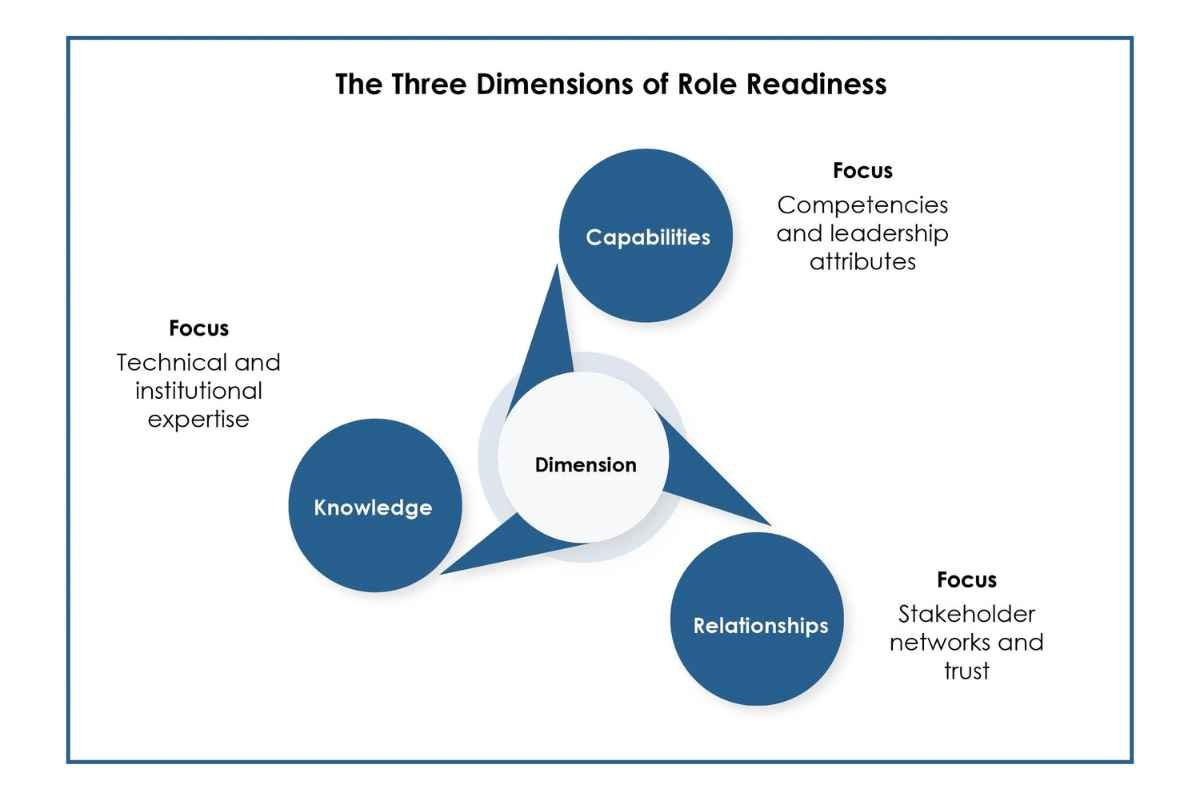
| Dimension | Focus |
| Capabilities | Competencies and leadership attributes |
| Knowledge | Technical and institutional expertise |
| Relationships | Stakeholder networks and trust |
Technology That Adapts to Every Organization
No two organizations approach succession planning in the same way. A growing professional services firm, a healthcare organization, and a global technology company may each define critical roles, readiness, competencies, and career progression differently. ClayHR addresses this diversity by building flexibility into its talent management approach rather than applying a fixed succession methodology.
Organizations can configure job profiles, competency models, career paths, readiness criteria, talent pools, workflows, and development processes according to their own requirements. They can also connect succession planning with workforce data already available within the platform, including performance management, goals, feedback, learning, and certifications. This is particularly important in regulated and licensed environments, where certifications may be an essential requirement for filling certain roles. This creates a system that can reflect how an organization actually operates.
The approach also allows companies to progress at their own pace. One organization may begin with a simple process for identifying critical positions and potential successors, while another may build a more detailed framework around competency gaps, career aspirations, readiness levels, and AI-assisted talent discovery. The underlying principle remains the same: technology should adapt to an organization’s talent strategy rather than force the organization to adapt to the software.
The Capabilities That Will Shape Tomorrow’s Workforce
The future of work cannot always be mapped through today’s job titles. As technology reshapes responsibilities and organizations introduce new ways of working, some roles may change significantly while entirely new ones emerge. This makes it difficult for organizations to prepare for the future by focusing only on existing positions.
ClayHR encourages organizations to look beyond job titles and consider the underlying capabilities they will need. By focusing on competencies and skills, organizations can identify emerging requirements, discover where related capabilities already exist within the workforce, and recognize employees with adjacent skills who may be able to develop into future roles.
AI can strengthen this process by identifying connections between skills, experiences, and roles that may not be immediately visible through a traditional organizational structure. The broader shift is from succession planning as a response to vacancies toward capability planning as preparation for future workforce needs. Instead of asking only who will fill a role, organizations can begin asking what capabilities will become strategically important and how they can start building them today.
“The evolution we see is from succession planning to capability planning.”
Pragati Parihar, Director of Business Development, ClayHR
A Smarter Future for Workforce Technology
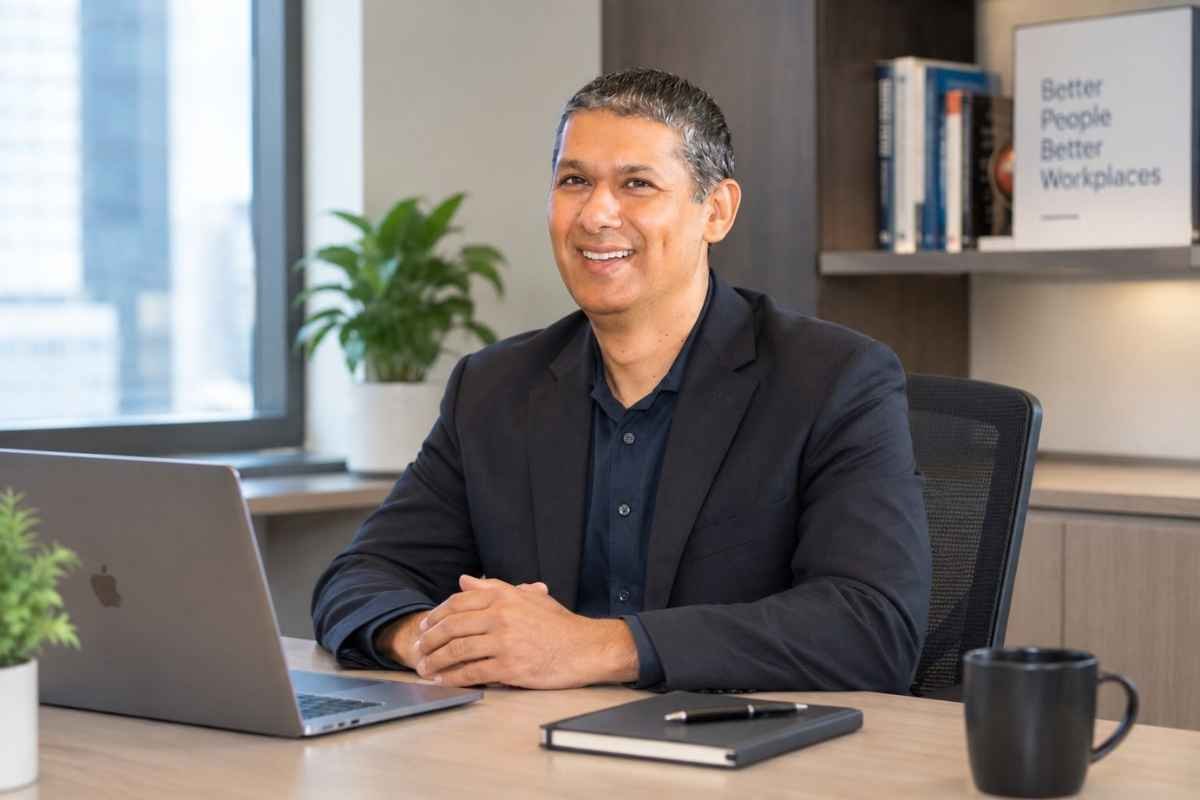
The next phase of HR technology will depend less on adding isolated AI features and more on creating intelligence across the workforce system. For ClayHR, this means bringing together signals from skills, performance, goals, feedback, learning, experience, and organizational data to create a more complete understanding of talent and workforce readiness.
Conversational access is also becoming important. Instead of navigating multiple reports and dashboards, leaders may ask direct questions about succession risks, future talent needs, and employee readiness. AI can help transform complex workforce data into more accessible insights while allowing leaders to act on information more quickly.
Interoperability will remain equally important as organizations rely on multiple systems to manage workforce information. Through open APIs and integrations, ClayHR aims to connect important talent signals across the wider business ecosystem. As agentic AI continues to develop, the company also sees opportunities for technology to identify emerging gaps, flag succession risks, recommend development actions, and help keep workforce plans current. The responsibility for consequential people decisions, however, remains with human leaders.
Growing Through the Right Partnerships
As ClayHR continues to expand its role in workforce innovation, partnerships and selective acquisitions may also play a role in strengthening the platform and extending its reach. The company is particularly interested in capabilities that complement its broader workforce strategy, including learning and development, employee communication, assessments, analytics, workforce intelligence, and integration with the systems customers already use.
Regional and channel partnerships can also help ClayHR serve organizations more effectively across different markets. The company’s approach, however, is not focused on expansion simply for the sake of adding features. The priority is to build deeply where a capability belongs at the core of the talent platform and partner or acquire where doing so can bring meaningful value to customers faster.
A More Flexible System for HR Technology
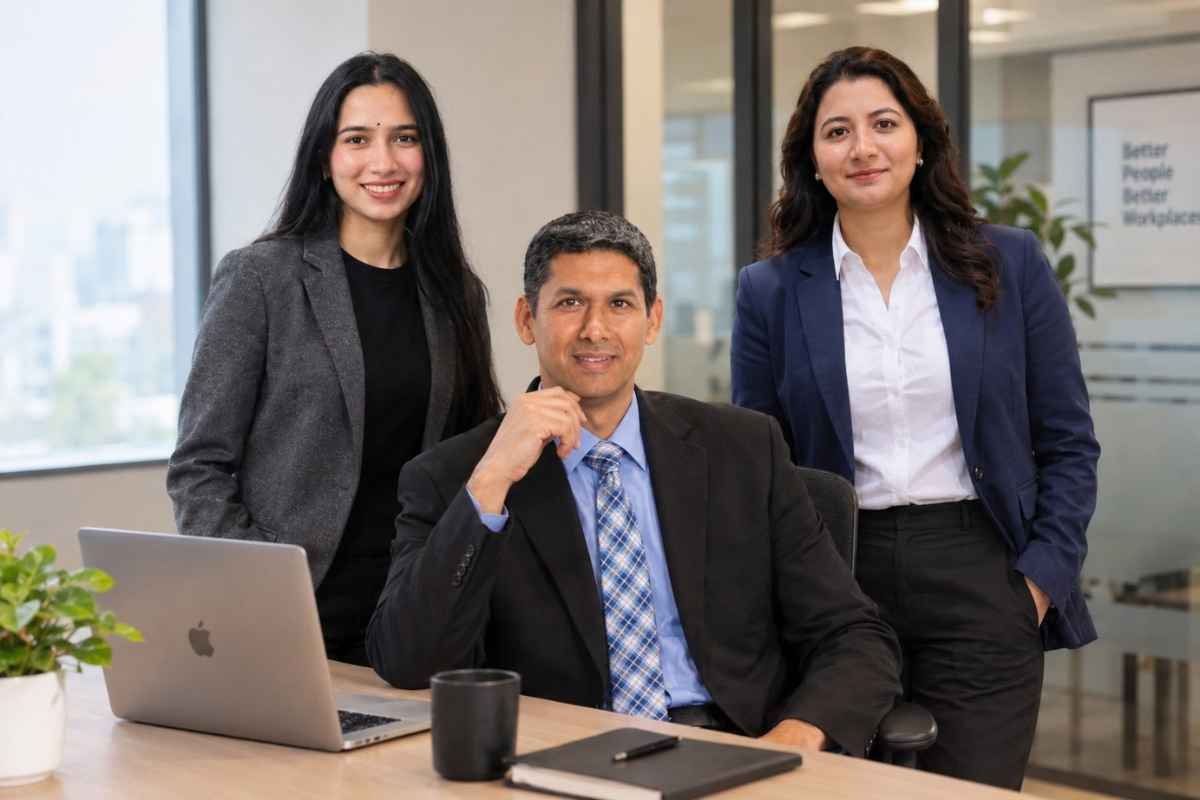
For Dr. Amrinder Arora, one of the most important lessons in ClayHR’s journey has been recognizing that customers do not necessarily need more HR features. They need technology that can reflect the way their organizations actually operate. This realization helped shape ClayHR’s approach to product development and its focus on flexibility rather than a rigid collection of predefined workflows.
Organizations differ in how they manage performance, careers, competencies, approvals, development, and other people processes. Trying to fit every organization into the same model can create unnecessary complexity and limit the value technology is meant to provide. ClayHR therefore focuses on configurability, extensibility, automation, open APIs, and interconnected talent data.
This philosophy continues to guide the company’s product direction. Rather than telling organizations how HR should work, ClayHR aims to provide a strong technological framework that can adapt to different operating models. The principle is simple but significant: modern HR technology should provide structure without creating rigidity.
A Broader Measure of Organizational Strength
The value of AI-powered succession planning extends beyond traditional HR metrics. For organizations, the real impact can be seen in stronger successor coverage, reduced key-person risk, greater internal mobility, and improved readiness for critical positions. A clearer view of workforce capability can also help leadership teams identify potential risks before they become urgent business challenges.
ClayHR also helps organizations make development investments more targeted. Rather than broadly assigning learning opportunities or relying solely on subjective judgments about high-potential employees, leaders can focus on specific gaps connected to future roles. This creates a stronger link between succession planning and the actions required to prepare people for greater responsibilities.
Visibility is another important advantage. Leaders can identify where succession depth is strong, where critical roles lack viable successors, and where future leaders share similar capability gaps. This shifts succession planning beyond an annual HR document and turns it into a more meaningful source of insight for organizational planning. For ClayHR, the broader opportunity lies in using workforce intelligence as an early-warning system for future readiness.
Success Code
| Stay close to reality, not to your assumptions. In business, technology, and leadership, we are constantly forming hypotheses about what customers want, what employees need, and what the market will do next. The danger comes when we become emotionally attached to those hypotheses. The most useful signals are often the ones that contradict what we already believe. Listen carefully, measure what is actually happening, and be willing to change your product, process, or point of view. Progress rarely comes from defending the original idea. It comes from learning faster than the assumptions become obsolete. |