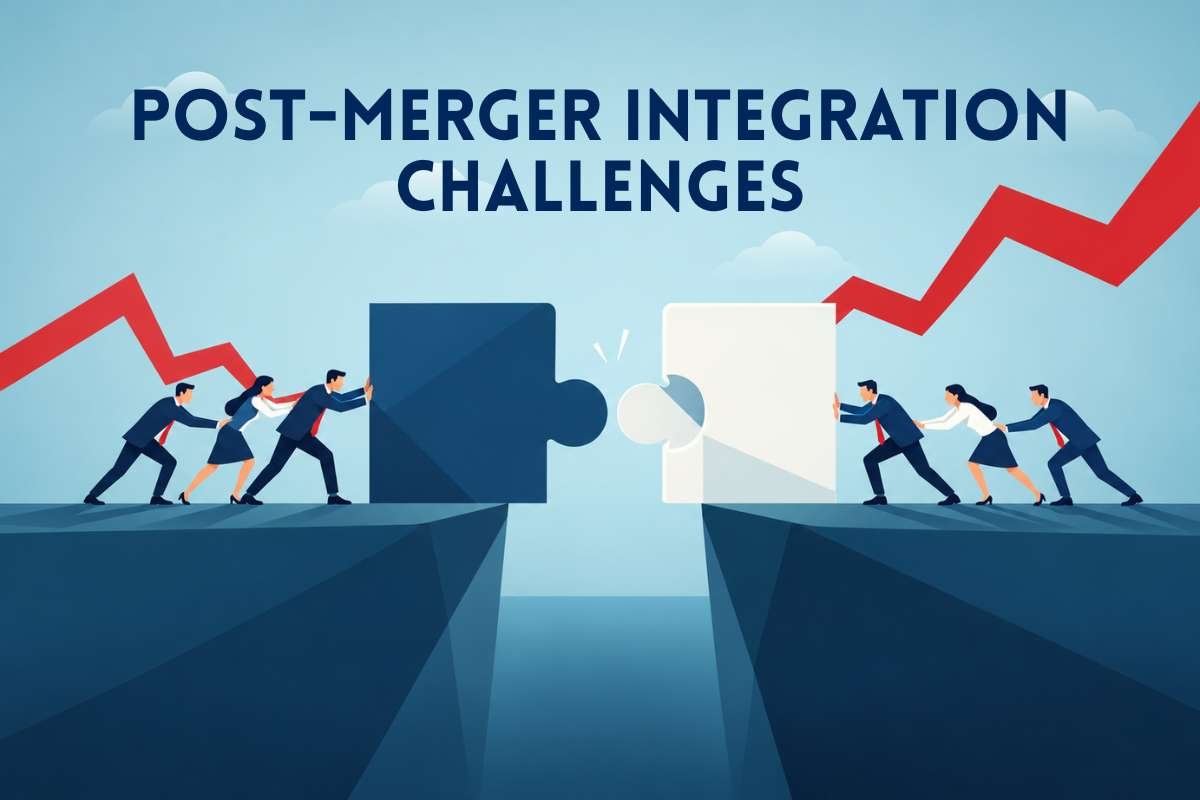



An acquisition may close on time yet fail to deliver its expected value. Post-merger integration challenges often explain this gap between a signed deal and real business gains. The buyer must bring two businesses together without hurting sales, customer trust, or key skills. Even small gaps in planning can delay growth and raise costs.
In India, these risks can grow when teams follow different work styles, systems, or local rules. A smooth deal closing does not ensure a smooth shift. Leaders must spot risks early and act before they hurt the business. This article covers seven key risks, from culture clashes and staff exits to IT gaps, weak controls, and missed synergies.
These are the seven post-merger integration challenges
1. Cultural misalignment and conflicting decision-making
Cultural differences can slow decisions long after an acquisition closes. The real issue goes beyond dress codes, office habits, or team events. It lies in how people make choices and get work done.
Consider an Indian promoter-led business acquired by a professionally managed group. The old owner may approve supplier deals through quick calls. The new parent may require written bids and several sign-offs. These new steps can delay orders, hiring, and customer offers. Sales teams may lose deals while they wait for approval.
The same clash can affect risk appetite, reporting norms, and team autonomy. Staff may also struggle with new targets and tighter controls. McKinsey’s research on integration stresses the need to match management practices with deal goals. Leaders should map key decisions early and set clear approval limits. This helps both teams work well without adding needless layers.
McKinsey highlighted these issues in its January 2016 article, How the Best Acquirers Excel at Integration. Its global research stressed the role of management practices, cultural alignment, and deal goals in integration outcomes. The lesson for Indian acquirers is clear: align decision rights before adding new controls.
2. Losing critical employees before roles are settled
Employee exits can weaken a deal before the new structure takes shape. The greatest risk often comes from people who hold vital knowledge. These include key account managers, plant heads, and technical leads. Their skills and client ties may take years to replace.
Uncertainty can push these employees to seek safer roles elsewhere. They may worry about new bosses, pay, job titles, or career paths. Clear answers about what happens to employees after a merger can ease some of these fears.
Keeping headcount steady does not mean the buyer has kept key talent. A company may retain hundreds of staff yet lose its top client lead. That loss can put major accounts and future sales at risk.
Buyers should map critical roles before closing the deal. They should set retention priorities and share role decisions early. This helps protect key skills while the wider structure takes shape.
3. It systems, data and reporting fail to connect

Two businesses may sell similar products yet use very different systems. Their ERP tools, customer records, payroll platforms, and finance reports may not match. Access controls can also block staff from data they need.
Imagine a buyer merging its sales team with an acquired company. The new team cannot view past orders or customer needs. Sales staff then miss repeat orders and fail to spot cross-selling chances. These gaps can hurt revenue while leaders wait for system fixes.
Data migration adds another risk if teams skip basic checks. Poor records, unclear ownership, and incompatible formats can corrupt key data. PwC India’s 2017 Post-Merger Integration Survey found that over 30% of respondents had not done full operational due diligence across areas such as IT, HR, sales, and operations.
Buyers should map critical systems, test data transfers, and set one source of truth for each key record.
4. Expected synergies do not translate into measurable results
An acquisition model may promise savings and new sales. Yet these targets mean little without clear owners, deadlines, and measures. Post-merger integration challenges often arise when leaders treat planned gains as achieved results.
Cost synergies may come from merging suppliers or removing duplicate tools. Revenue synergies may come from cross-selling products to each company’s customers. Both need clear plans, but revenue gains often depend on customer trust and sales cycles.
McKinsey’s research on M&A cross-selling found that fewer than 20% of surveyed organisations achieved their cross-selling goals. This highlights the gap between projected revenue gains and actual sales growth.
Teams can also count the same saving twice or set unrealistic deadlines. This makes progress look better than the real outcome. PwC India’s 2017 survey found that 40% of respondents lacked a formal approach to synergy realisation. Another 50% tracked metrics with functional owners on an ad hoc basis.
| Synergy target | How to measure actual results |
| Cut supplier costs by 10% | Compare spend before and after integration |
| Raise sales through cross-selling | Track added revenue from shared accounts |
Assign each target to an owner. Track results against a baseline, not the deal model alone.
5. Customer and supplier relationships get disrupted

An acquisition can unsettle customers who value steady service and familiar contacts. New account managers, changed terms, and late deliveries can weaken trust. These risks grow when buyers change processes before learning how customers work.
Consider an Indian auto-parts maker that acquires a smaller supplier. The buyer shifts orders to a central warehouse before checking delivery cycles. A key vehicle maker then faces delays on parts it needs for production. One rushed change can put future orders at risk.
Supplier changes carry similar risks. Buyers may overlook credit terms, contract limits, or long lead times. A lower quoted price may not offset the cost of late supplies.
Post-merger integration challenges need account-level plans, named relationship owners, and clear service targets. Review supplier contracts in phases before making changes. If new names or product labels confuse buyers, plan brand integration after a merger around customer needs.
6. Operating models and accountability remain unclear
A deal can close while both businesses keep running in parallel. Duplicate teams, overlapping roles, and conflicting approval limits can slow daily work. The problem grows when no one knows who owns each decision.
For example, two finance heads may keep separate budgets and targets. Two sales leaders may also compete for the same accounts. Pricing changes then stall, while teams wait for someone to take charge. Performance reviews become harder when each team follows different goals.
These gaps need clear rules, not more meetings. Buyers should name one accountable owner for each integration workstream. They should also set approval limits and clear routes for urgent issues. Each owner needs a measurable goal and a firm deadline.
| Integration decision | Accountable owner | Success measure |
| Combine finance teams | Group CFO | One budget and reporting cycle |
| Set shared sales targets | Sales head | One agreed target plan |
| Align approval limits | Integration lead | Faster decision times |
Clear ownership helps teams act without delay. It also lets leaders spot gaps before they harm results.
7. Compliance gaps and integration costs are underestimated

Closing a deal does not settle every duty the buyer must meet. Teams must review contracts, licences, employee records, tax treatment, and statutory reports. Some duties continue unchanged, while others need updates or fresh approvals.
Indian deals also need careful checks before teams combine operations. Where CCI standstill rules apply, parties must not implement the deal before they receive the required approval. Legal closing alone does not permit every step of integration. Teams should confirm the rules that apply to their deal structure.
Costs can also rise when plans overlook system changes, staff moves, legal advice, or site changes. A rushed budget may miss data migration and contract review costs. These gaps can cut into the savings promised at the deal stage.
Assign owners to each duty and track every deadline. Check requirements against current CCI, MCA, Companies Act, and tax rules. Legal and finance teams should review the plan together before changes begin.
How to identify integration risks before they damage deal value?
A clear monitoring plan helps leaders spot trouble before losses grow. Track warning signs against agreed baselines, not gut feelings alone.
| Warning sign | Business impact | Metric to monitor |
| Critical staff resignations | Lost skills and client ties | Key-role retention rate |
| Delayed system migration | Slow orders and weak reports | Migration milestones met |
| Rising customer churn | Lost sales and trust | Customer retention rate |
| Missed synergy milestones | Lower deal value | Savings and added revenue |
| Unclear decision rights | Delayed budgets and pricing | Decision turnaround time |
| Supplier delays | Disrupted production | On-time delivery rate |
| Open compliance actions | Legal or tax exposure | Overdue actions |
Set baselines before closing, where legally permissible. After closing, review each metric against its target. Assign owners to warning signs and escalate gaps before they spread.
Conclusion
An acquisition creates value only when the combined business delivers its goals. Leaders must protect revenue, retain key talent, and keep daily work on track. The best approach links integration priorities to the deal’s main value drivers. It avoids treating every change as equally urgent. Clear ownership, steady customer service, and measurable targets help teams stay focused. These principles also shape sound decisions across mergers and acquisitions basics, from deal planning to executing post-merger integration challenges.
Frequently asked questions about post-merger integration challenges
1. Why do post-merger integrations fail?
Post-merger integrations often fail when weak planning, unclear ownership, and poor tracking prevent the buyer from turning deal goals into real results.
2. When should companies start planning post-merger integration?
Companies should begin integration planning during due diligence and negotiation, while following confidentiality rules and applicable competition-law restrictions.
3. What are the biggest post-merger integration challenges?
The biggest challenges include culture clashes, key employee exits, IT gaps, missed synergies, unclear roles, customer disruption, and compliance risks.