


A factory can have clean books and still miss key stock. Supplier delays can halt work while demand plans miss the mark. This gap makes supply chain tech hard to choose. Many organisations now use ERP and SCM systems side by side. ERP handles the wider business, from money to core resources. SCM software goes deeper into supply chain planning and execution. In 2025, 82% of firms surveyed faced tariff impacts, McKinsey found.
So, ERP vs SCM software needs more than a feature list. This article shows where ERP ends and SCM begins. It also explains when firms need one or both systems.
ERP and SCM software: what does each system actually manage?
First of all, ERP and SCM software are important components of supply chain management. An ERP system connects core business work in one shared system. It links finance, accounting, HR, sales, procurement, and manufacturing. It also tracks inventory, orders, and key business data. Its main goal is broad business control and data flow.
SCM software works deeper inside the supply chain itself. It helps teams plan demand, supply, inventory, suppliers, warehouses, transport, and fulfillment. It also adds tools for supply chain visibility and planning. Gartner places supply chain planning among key supply chain technology capabilities.
The clearest split comes from the questions each system answers:
| Business question | ERP | SCM |
|---|---|---|
| What did the purchase cost? | Strong | Supporting |
| How much inventory do we need? | Basic or varies | Strong |
| Which supplier performs poorly? | Limited or varies | Strong |
| What is the financial impact? | Strong | Supporting |
| How should demand change production? | Varies | Strong |
ERP is the business control layer. SCM acts as the supply chain decision layer. Together, they can connect money, plans, stock, and orders.
Key differences between ERP and SCM software
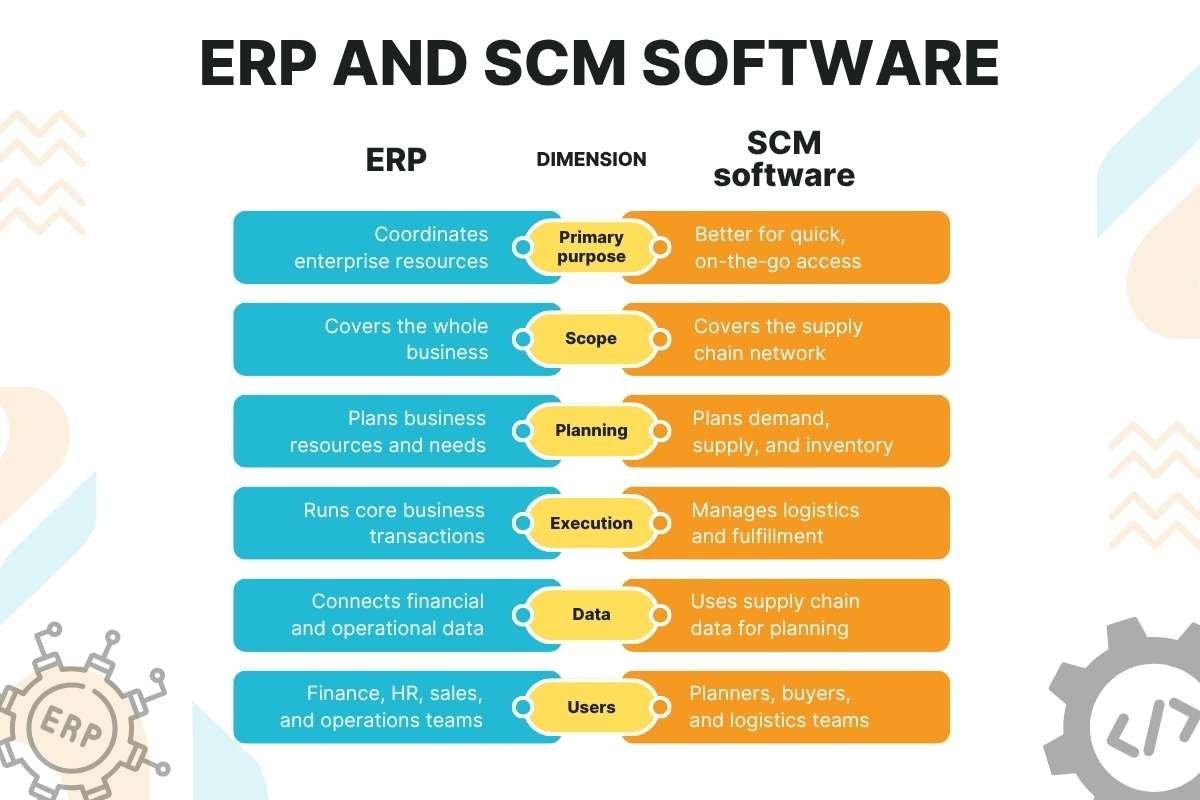
The key ERP vs SCM software question starts with business decisions. ERP links finance, sales, procurement, HR, manufacturing, and core operations. SCM tools in focus on supply chain choices, such as demand, supply, stock, routes, and fulfillment.
| ERP | Dimension | SCM software |
|---|---|---|
| Coordinates enterprise resources | Primary purpose | Optimizes supply chain flows |
| Covers the whole business | Scope | Covers the supply chain network |
| Plans business resources and needs | Planning | Plans demand, supply, and inventory |
| Runs core business transactions | Execution | Manages logistics and fulfillment |
| Connects financial and operational data | Data | Uses supply chain data for planning |
| Finance, HR, sales, and operations teams | Users | Planners, buyers, and logistics teams |
That does not make ERP and SCM rival systems. Many firms need both. IBM notes that ERP integration can connect sales, shipping, warehouse, and manufacturing data.
For example, ERP can record a purchase order and its cost. SCM can assess supplier risk, demand, lead time, and stock needs. IBM also highlights links between ERP, WMS, supplier, and logistics systems for real-time data flow.
The best setup often lets each system do what it does best. That’s the secret to supply chain optimization strategies
ERP vs SCM software: which one does a business need?
The right choice depends less on size and more on supply chain complexity. An ERP vs SCM software decision should start with the problem, not the product.
Choose ERP first when:
- Finance, procurement, sales, and stock use separate systems.
- The firm needs one core system across key teams.
- Leaders need cleaner data and standard business processes.
Consider dedicated SCM software when:
- Demand shifts often make forecasts hard to trust.
- Many suppliers, warehouses, or routes need close control.
- Teams need deeper planning, stock, and supplier tools.
- Transport costs keep rising across a wide delivery network.
Choose both when:
- ERP already runs core business transactions well.
- Supply chain teams need deeper planning and what-if tools.
- Leaders need finance and supply chain data in one view.
Business complexity matters more than company size. A small Indian auto-parts maker may face hundreds of suppliers and volatile orders. A larger firm may run a far simpler network. McKinsey cites cases where advanced planning cut inventory by up to 20%.
So, do not buy deeper software just because the company grows. Buy it when supply chain choices grow harder.
How ERP and SCM software work together? Benefits and limitations

ERP and SCM work best when they share data across each step. The flow starts with a demand signal and SCM planning. SCM then guides buying, stock, and production needs. ERP records purchase orders, costs, payments, and other key transactions. Warehouse and logistics tools then handle stock moves and deliveries. ERP can later bring those results into financial reports.
The real value comes from one shared flow of data. Without integration, teams may keep duplicate records across systems. They may also see different stock numbers for the same item. Manual checks then slow buying and planning decisions. Finance teams may also lack clear supply chain data.
IBM notes that integrated systems can connect supply chain data across key business tools.
In simple terms, SCM helps decide what should happen next. ERP helps record what the business did and what it cost.
Both systems can add value, but each comes with clear trade-offs.
| System | Benefits | Drawbacks |
| ERP | Connects core business data across teams. | May lack deep supply chain planning tools. |
| ERP | Supports finance, sales, buying, and operations. | Complex setups can take time and cost more. |
| SCM software | Improves demand, supply, and stock planning. | Adds another system to manage and connect. |
| SCM software | Helps teams manage suppliers and logistics better. | Costs can rise with advanced features and scale. |
| SCM software | Gives planners deeper supply chain insights. | Teams may need new skills and training. |
The best fit depends on the gaps each business needs fixed.
ERP vs SCM software: a practical decision checklist
Before choosing software, ask these questions:
- Does the business need enterprise-wide process integration?
- Is demand hard to predict across key product lines?
- Does stock often miss its target levels?
- Does the company manage many suppliers or sites?
- Are logistics costs hard to track and control?
- Does the current ERP lack advanced planning tools?
- Do planners still rely on spreadsheets for key choices?
- Does management need real-time supply chain visibility?
Mostly ERP problems? Prioritize ERP as the core system.
Mostly supply chain problems? Evaluate dedicated SCM tools.
Both types appear? Build an integrated stack that connects both.
The goal should not involve buying more software. The goal should involve fixing the right bottleneck.
Conclusion:
ERP and SCM solve different layers of the same business. ERP connects core work across finance, sales, buying, and operations. SCM goes deeper into planning, stock, suppliers, and logistics. The right choice depends on business needs and supply chain complexity. Existing systems also matter when leaders plan a new tech stack.
In the end, ERP vs SCM software should not become an either-or choice. Connected systems can link supply chain plans with costs and transactions. Leaders in supply chain management should first find their key gaps, then choose tools that fix them.
Frequently asked questions
1. Is SCM software part of ERP?
Some ERP platforms include built-in supply chain modules. Dedicated SCM platforms often offer deeper planning and forecasting tools. They may also support advanced logistics and supply chain optimization.
2. Can ERP replace SCM software?
Yes, an ERP may meet basic supply chain needs. Firms with complex demand, suppliers, or logistics may need specialized SCM tools. The right choice depends on supply chain complexity.
3. What is the main difference between ERP and SCM software?
ERP vs SCM software boils down to what they manage. ERP manages resources across the wider business. SCM focuses on planning and improving supply chain activity. ERP has a broader scope, while SCM offers deeper supply chain tools.
4. Do companies need both ERP and SCM software?
Many companies use ERP as their main business system. They then add SCM tools for deeper planning and supply chain needs. Integration helps both systems share key data.
5. Can ERP and SCM software integrate?
Yes, both systems can share data through APIs and other tools. Integration can connect plans, orders, stock, and financial records. This helps teams work from more consistent data. In essence, it’s not ERP vs SCM software, but rather with it.