



A small business may show steady sales but depend on its owner’s personal ties. One major customer or informal supplier credit can also shape its earnings. These risks make small business acquisition basics vital before you commit your money. The asking price alone cannot show what you will gain or inherit. You must check maintainable earnings, hidden liabilities, customer ties, and transferable contracts.
This guide explains Small Business Acquisition in India and offers a practical way to assess an existing business. You will learn what to verify, what to negotiate, and when to walk away.
Small business acquisition: define the right target before evaluating price
The first step in Small Business Acquisition is identifying a business that fits your goals, budget, and skills. A low asking price means little if you cannot run the business well. Set your budget, industry, skills, and desired role before you assess any deal. Also, check whether customers will stay after the seller leaves.
| Screening factor | What the buyer should verify |
| Revenue quality | Does the business earn repeat sales or rely on one-off orders? |
| Owner dependency | Who manages sales, pricing, and key customer accounts? |
| Customer concentration | What share of revenue comes from its largest customers? |
| Operating continuity | Can staff, suppliers, licences, and systems support a smooth handover? |
| Capital needs | Can you cover the price, daily costs, and cash reserves? |
A profitable business may still be the wrong fit for you. For example, a local distributor may rely on its owner’s personal ties. Without those ties, suppliers could change credit terms, or customers might leave. Keep enough cash for wages, stock, rent, and delayed payments after closing. This reserve can protect daily operations while you settle into ownership.
Calculate what the business is actually worth

The asking price reflects what the seller wants, not what you should pay. In Small Business Acquisition, buyers should assess sustainable earnings, assets, liabilities, and future costs before agreeing on a price. Start by checking the profit the business can sustain under new ownership. One-time income, personal expenses, and unusual costs can distort its reported earnings. An owner’s low salary can also hide the cost of hiring a replacement.
Example: Estimating an indicative business value
- Reported annual profit: ₹18 lakh
- Adjustments for one-off income and valid non-recurring costs: ₹4 lakh net reduction
- Estimated maintainable annual earnings: ₹14 lakh
- Illustrative earnings multiple: 3×
- Indicative value: ₹14 lakh × 3 = ₹42 lakh
This 3× multiple is an example, not a market benchmark. The right method depends on the sector, risk, and earnings measure. If assets drive value, assess stock, equipment, and property separately. Then account for debt, working capital, repairs, and planned capital spending.
A lower price may still hide a poor deal. Major repairs or lost customers can weaken future returns. Test the asking price against your equity, borrowing capacity, and repayments. Your financing options for a business acquisition should fit the cash flow the business can sustain. A qualified valuation professional can help test your assumptions before you make an offer.
Verify financial records and find hidden liabilities
Financial checks help you see what the seller’s records actually prove. Small Business Acquisition due diligence helps buyers verify financial claims and identify potential risks before closing the deal. The core of small business acquisition is matching claims with evidence. This is where due diligence in M&A becomes relevant to small deals. Ask for two to three years of accounts, tax returns, bank statements, and GST returns where applicable.
Use this checklist to link each finding to its likely cost.
| Check | Red flag |
| Bank credits versus sales | Sales do not match bank credits or tax filings. |
| Receivables ageing | Large customer balances remain overdue or disputed. |
| Inventory | Stock is obsolete, damaged, or overstated in value. |
| Tax and statutory records | Tax notices, unpaid dues, or filing gaps remain unresolved. |
| Loans and guarantees | Hidden debt or guarantees could create future payment duties. |
| Staff and suppliers | Unpaid wages or supplier bills could strain cash flow. |
| Customer contracts | Termination or change-of-control clauses threaten future sales. |
| Assets and licences | Ownership is unclear, or key permissions cannot transfer. |
| Leases and intellectual property | Lease rights or ownership of key IP remains uncertain. |
For registered businesses, the GST portal lets you check registration details and return-filing status. GST taxpayer search guidance explains the available public checks. For companies and LLPs, MCA provides master data and public filings. MCA public document guidance explains how buyers can access these records. Private financial details still require the seller’s cooperation.
Turn findings into deal terms. Overdue receivables may leave too little cash for daily costs. A contract that cannot transfer may cut future earnings. Ask your chartered accountant or lawyer to assess material gaps. Renegotiate the price, seek suitable protections, or walk away if key risks remain unresolved.
Choose the right purchase structure

The purchase structure shapes what you acquire and which risks follow. In small business acquisition basics, buyers must compare two common routes.
| Purchase structure | What the buyer should know |
| Share purchase | You buy shares and take control of the existing company. Its past tax issues, debts, and legal exposures remain with that entity. |
| Asset or business purchase | You buy listed assets or an operating business. The deal terms and law govern which duties, contracts, and liabilities transfer. |
Neither route removes every risk or ensures a clean handover. Contracts may need consent, while staff, leases, and licences may need fresh steps. Tax costs and stamp duty can also vary by deal and state. Check the Companies Act, 2013, tax rules, and local stamp-duty laws before signing.
The right choice depends on the target’s legal form and needs. A share deal may preserve company contracts, but also its past exposures. An asset deal may offer more control over what you buy. Still, some duties may follow the assets or business under law. Unlike a merger, acquisition, or spin-off differences, this choice concerns how you buy an operating business. Ask a lawyer and chartered accountant to review both routes before you commit.
Negotiate terms that protect the buyer’s capital
A fair deal covers more than the price you pay at closing. Good small business acquisitions include terms that address risks found during checks. The right negotiation strategies in mergers and acquisitions can help you protect cash and limit disputes.
| Issue found | Possible response | What to document |
| Customer concentration | Link part of the payment to customer retention. | Retention targets, time period, and payment rules. |
| Uncertain receivables | Adjust the price for doubtful or overdue balances. | Closing accounts and rules for disputed debts. |
| Seller-dependent operations | Seek seller support after closing. | Handover period, duties, and support fees. |
| Working-capital shortfall | Set a target level at closing. | Calculation method and shortfall adjustment. |
You may also agree on staged payments or an earn-out. An earn-out ties part of the price to future results. Define the metrics, time frame, data source, and dispute process. Vague terms can cause conflict over what the seller has earned.
Ask your lawyer to draft suitable warranties, indemnities, and remedies. Also record closing conditions, payment dates, and handover duties. These terms should state what happens if either side fails to close. Never rely on verbal promises when the deal puts your capital at risk.
Plan the ownership transition before closing
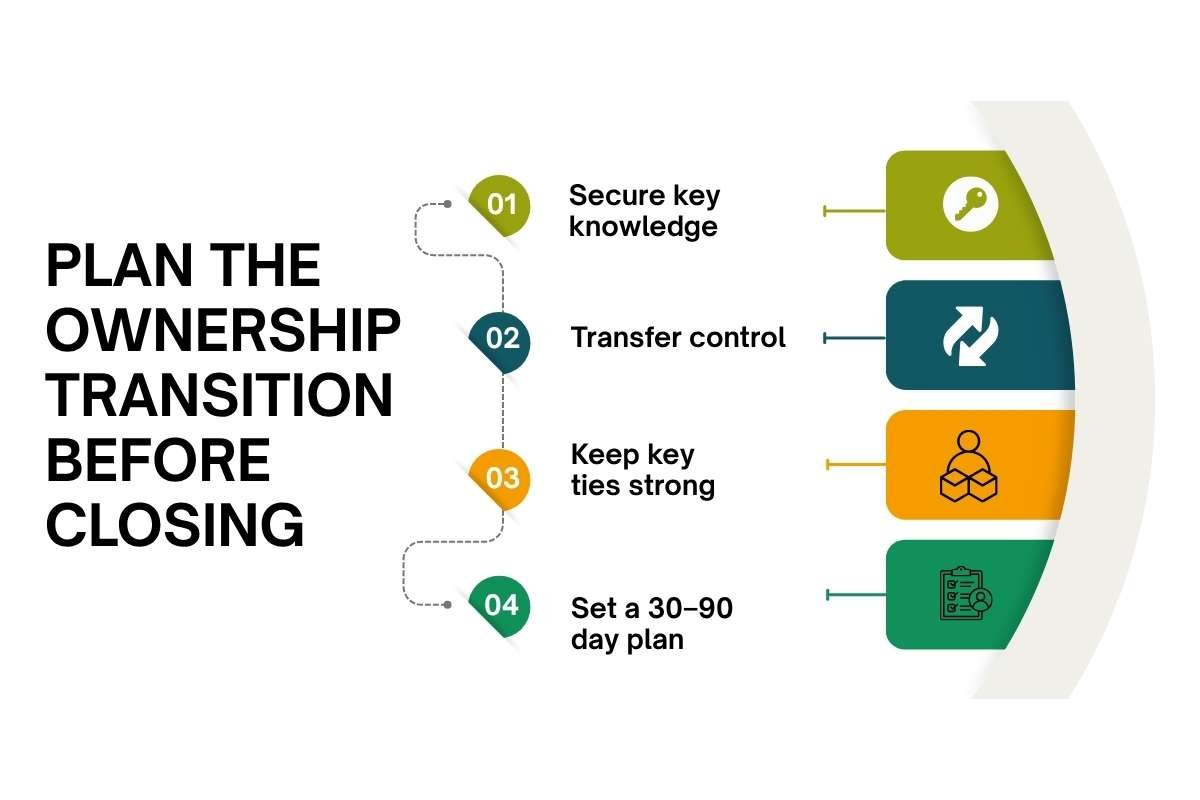
A signed deal does not ensure customers, staff, or suppliers will stay. Strong small business acquisition also includes planning the handover before closing.
- Secure key knowledge: Identify staff who manage customers, suppliers, and daily work.
- Transfer control: List passwords, records, systems, contracts, stock checks, and payment rights.
- Keep key ties strong: Ask the seller to introduce you to key customers and suppliers.
- Set a 30–90 day plan: Assign duties, track cash, and explain staff changes.
Start these steps before the seller exits, not after. Early planning helps you spot gaps while the seller can still help. It also gives staff clear roles during the change in ownership.
Conclusion
Strong small business acquisition basics start with proof, not promises. Check sustainable earnings, transferable operations, and liabilities before you commit. Count working capital, repairs, and debt alongside the purchase price. Base your final offer on verified records and clear legal protections. If key risks remain unresolved, renegotiate or walk away. These checks bring discipline to business purchases and support sound decisions in mergers and acquisitions.
Frequently asked questions
1. What should I check before buying a small business acquisition?
Check financial records, tax filings, bank statements, debts, contracts, licences, customers, and working capital. Verify key claims independently.
2. How do I know whether a small business is overpriced?
Assess sustainable earnings, assets, debt, customer retention, and future costs. No single valuation multiple suits every business.
3. Is it better to buy a company’s shares or its assets?
Small business acquisition depends on liabilities, contracts, licences, and tax effects. Seek legal and tax advice before choosing.