Indian-origin executives are now leading major companies across technology, healthcare, consumer goods, logistics, media, and luxury. In 2026, new appointments at Procter & Gamble and Microsoft Gaming have added to a group that already includes names such as Satya Nadella, Sundar Pichai, Arvind Krishna, and Leena Nair.
But what makes the rise of Indian Origin CEOs worth looking at is not just where they come from. Their leadership has also shaped how major companies grow, compete, and respond to change.
Some built their careers over decades inside one company, while others came through medicine, engineering, science, startups, or specialist roles. So, who are these leaders, what have they changed, and how widespread is this trend in 2026?
Who are the Indian origin CEOs leading major companies?
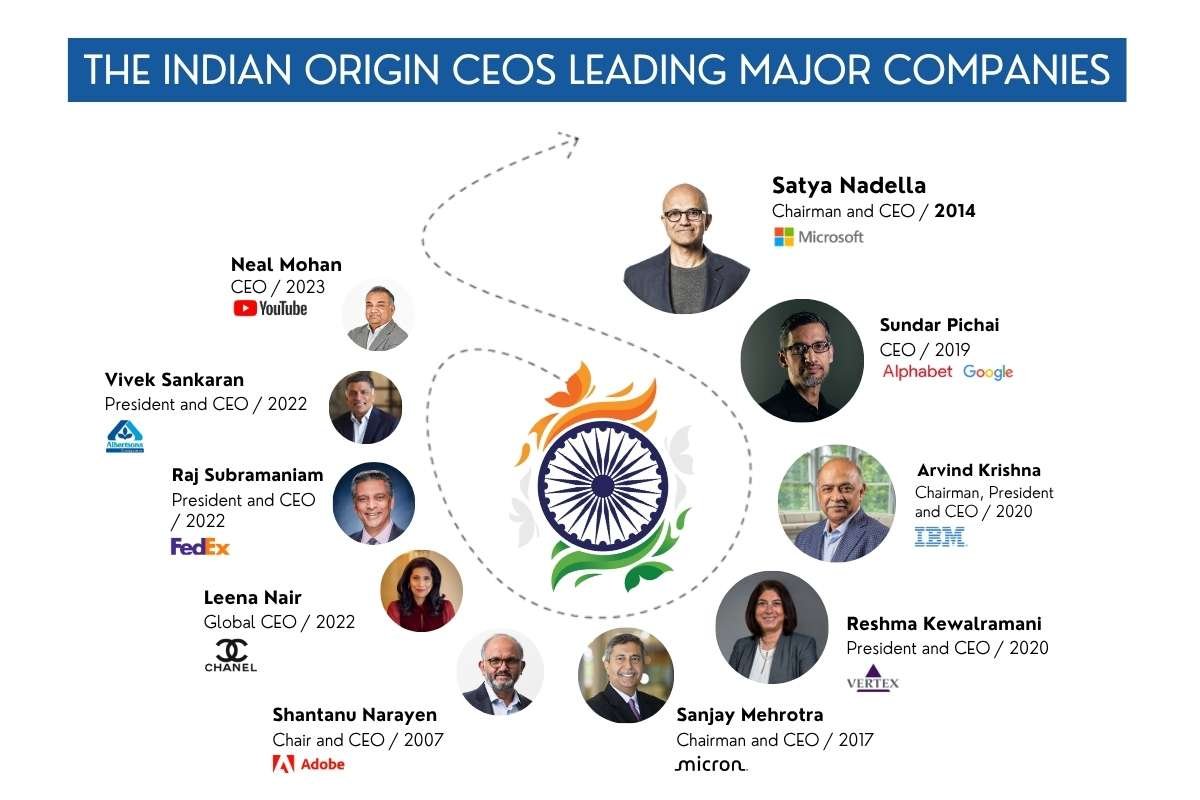
Here are some prominent Indian origin CEOs and the roles they hold today.
| Name | Company | Role | Year Appointed |
|---|---|---|---|
| Satya Nadella | Microsoft | Chairman and CEO | 2014 |
| Sundar Pichai | Alphabet and Google | CEO | 2019 |
| Arvind Krishna | IBM | Chairman, President and CEO | 2020 |
| Reshma Kewalramani | Vertex Pharmaceuticals | President and CEO | 2020 |
| Sanjay Mehrotra | Micron Technology | Chairman and CEO | 2017 |
| Shantanu Narayen | Adobe | Chair and CEO | 2007 |
| Leena Nair | Chanel | Global CEO | 2022 |
| Raj Subramaniam | FedEx | President and CEO | 2022 |
| Vivek Sankaran | Albertsons Companies | President and CEO | 2022 |
| Neal Mohan | YouTube | CEO | 2023 |
| Ravi Kumar S | Cognizant | CEO | 2023 |
| George Kurian | NetApp | CEO | 2015 |
| Sridhar Ramaswamy | Snowflake | CEO | 2024 |
| Shailesh Jejurikar | Procter & Gamble | Chairman, President and CEO | 2026 |
| Asha Sharma | Xbox | CEO | 2026 |
| Anil Chakravarthy | Adobe | President and CEO-designate | 2026 |
Who are the newest Indian origin CEOs appointed in 2026?
The biggest new appointments in 2026 include Shailesh Jejurikar at Procter & Gamble and Asha Sharma at Xbox. Adobe has also named Anil Chakravarthy as its next CEO, although he does not take the position until December 1, 2026.
1. Shailesh Jejurikar – Chairman, President and CEO, Procter & Gamble
Shailesh Jejurikar became P&G’s President and CEO in January 2026. Born in Mumbai, he studied economics at Mumbai University and earned his management qualification from IIM Lucknow before joining P&G in 1989.
Before becoming CEO, Jejurikar served as P&G’s Chief Operating Officer and held leadership roles across several businesses and regions. In August 2026, he also became Chairman of P&G’s Board, adding the role to his responsibilities as CEO.
His career is a clear example of an executive rising through a long internal career rather than entering the company as an outside CEO.
2. Asha Sharma – CEO, Xbox
Microsoft appointed Asha Sharma Executive Vice President and CEO of Microsoft Gaming in February 2026. Microsoft later renamed the business Xbox and updated Sharma’s title to CEO of Xbox.
Her appointment brought an executive with experience in consumer technology and platforms into the gaming business.
3. Anil Chakravarthy – President and CEO-Designate, Adobe
Adobe announced in September 2026 that Anil Chakravarthy will become its President and CEO on December 1, 2026. Until then, Shantanu Narayen remains Adobe’s Chair and CEO.
Chakravarthy currently leads Adobe’s Customer Experience Orchestration business and worldwide field operations. Before joining Adobe, he served as CEO of Informatica and held senior positions at Symantec, VeriSign, and McKinsey.
Which established Indian origin CEOs continue to lead global companies?
The leaders below have been at the helm of major global companies for several years. Here’s a closer look at what they have changed:
4. Sundar Pichai – CEO, Alphabet and Google
Sundar Pichai has helped Google move beyond its traditional search business while keeping Search at the center of Alphabet. Under his leadership, Google has expanded Google Cloud and invested heavily in AI across Search, YouTube, and its other major products.
In 2026, that strategy is visible in the rapid growth of Cloud and the rollout of AI features across Search. Pichai has focused on building new growth areas without losing the scale of Google’s core products.
5. Satya Nadella – Chairman and CEO, Microsoft
Satya Nadella changed Microsoft on two fronts: its business strategy and its internal culture. He pushed the company toward cloud computing while replacing its older competitive culture with a stronger focus on learning, collaboration, and customer needs. That shift helped create the foundation for Microsoft’s broader cloud and technology expansion.
6. Arvind Krishna – Chairman, President and CEO, IBM
Arvind Krishna has focused IBM on hybrid cloud, software, and newer technology businesses. Before becoming CEO, he played a major role in IBM’s $34 billion acquisition of Red Hat, which became central to the company’s hybrid-cloud strategy. As CEO, he has continued to build IBM around cloud, AI, and other technology areas while reshaping its software and services portfolio.
7. Shantanu Narayen – Chair and CEO, Adobe
Shantanu Narayen led one of Adobe’s biggest business changes: moving its creative software from desktop licenses to a cloud-based subscription model. He also helped build Adobe’s digital experience business, giving the company a much broader role beyond creative software. Adobe has continued building on that foundation as it expands its products and services.
8. Leena Nair – Global CEO, Chanel
Leena Nair has brought a strong focus on long-term brand building, people, and operational discipline to Chanel.
During her tenure, Chanel has continued investing heavily in its craftsmanship, client experience, and creative work while maintaining growth across its business. In 2025, the company reported $19.3 billion in revenue and continued major investment in the brand.
Nair combines consumer-focused business thinking with a strong emphasis on people and the long-term value of the brand.
9. Sanjay Mehrotra – Chairman and CEO, Micron Technology
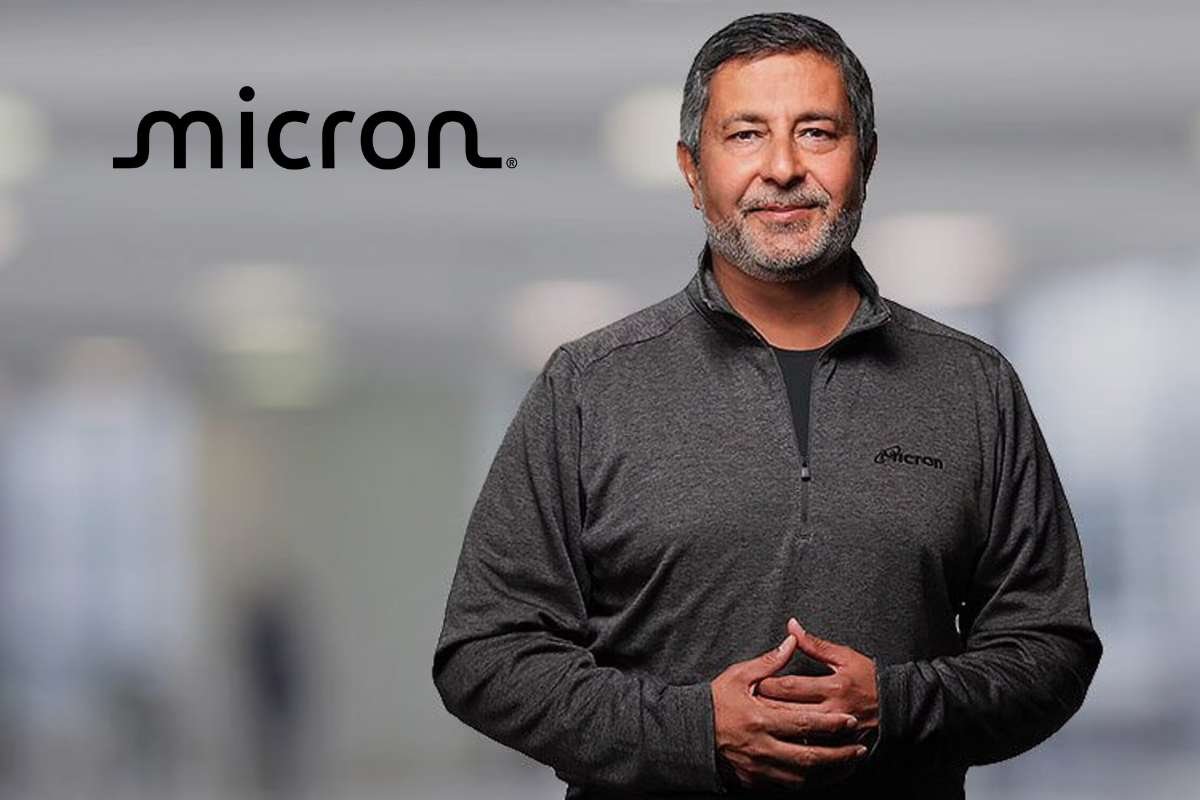
Sanjay Mehrotra has positioned Micron around the growing importance of memory and storage in modern computing. His leadership has kept the company focused on advanced memory technology while preparing for rising demand linked to AI and new computing systems. Micron is also expanding its technology and operating leadership to support that growth.
Mehrotra brings deep semiconductor expertise to a market where technical decisions can shape the company’s future for years.
10. Raj Subramaniam – President and CEO, FedEx
Raj Subramaniam has been leading FedEx through a major effort to simplify and improve its global network. The company is focusing on cost savings, network efficiency, higher-value markets, and a more flexible operating model.
Its 2026 strategy also includes further digital investment and network changes aimed at improving margins and long-term growth.
11. Neal Mohan – CEO, YouTube
Neal Mohan has pushed YouTube to treat creators as business partners, not simply content producers. Under his leadership, the platform has expanded creator monetization through shopping, brand deals, fan funding, and other revenue tools.
His 2026 priorities also put creators and their businesses at the center of YouTube’s next stage of growth.
What helped these executives reach the CEO office?
The executives come from different fields and have followed different routes, but several patterns appear across their professional histories.
1. Strong technical and professional education
Several Indian origin CEOs began with degrees in engineering, science, medicine, or technology before moving into business leadership.
Arvind Krishna studied electrical engineering at IIT Kanpur before completing a PhD in electrical engineering in the United States. Shantanu Narayen studied electronics engineering at Osmania University, while Raj Subramaniam studied chemical engineering at IIT Bombay.
Education did not determine their careers on its own. Their later experience across products, operations, research, customers, and international markets also shaped their path to senior leadership.
2. Experience across markets
Many of these executives have worked across countries and business functions. That experience becomes especially relevant for companies that operate across large and diverse markets.
Raj Subramaniam, for example, worked in international roles at FedEx before becoming CEO in 2022. Shailesh Jejurikar has also held roles across North America, Europe, Asia, Africa, and Latin America during his long P&G career.
3. Deep industry knowledge
Several leaders spent many years building expertise before taking the top job.
Sanjay Mehrotra spent decades in the semiconductor industry and co-founded SanDisk before becoming Micron’s CEO. Ravi Kumar S spent more than 20 years in technology and consulting roles before Cognizant appointed him CEO in 2023.
Others also moved through specialist roles. Reshma Kewalramani began her career as a physician and later moved into biopharma before becoming Vertex’s CEO in 2020.
4. Long corporate careers
Some of the most visible examples followed a long path inside one company.
Satya Nadella joined Microsoft in 1992 and became CEO in 2014 after leading its Cloud and Enterprise group. Shailesh Jejurikar joined P&G in 1989 and became CEO more than three decades later.
This makes their careers different from leaders who moved into the CEO role after founding companies or switching industries.
What challenges do Indian-origin executives still face?

The growing number of Indian origin CEOs does not mean representation is equal across all industries or leadership levels. CEO appointments represent only one part of a much larger corporate workforce.
Gender representation is another area where the picture remains mixed. Leena Nair, Reshma Kewalramani, and Asha Sharma are among the prominent women in this group, but a small number of high-profile appointments does not by itself show equal representation across global corporate leadership.
There are also practical challenges in leading companies across countries and cultures. Executives must manage different customer needs, regulations, workplace expectations, and business conditions while keeping a large organization aligned.
Conclusion
The story of Indian Origin CEOs in 2026 is no longer limited to a handful of technology companies. Indian-origin executives now lead businesses across technology, consumer goods, healthcare, logistics, luxury, media, biotechnology, and semiconductors.
Together, they offer a broad picture of how Indian-origin professionals have reached senior leadership positions around the world.
FAQs
1. Is Kunal Shah the CEO of WhatsApp?
No. Meta appointed Kunal Shah as the global head of WhatsApp in June 2026. He succeeded Will Cathcart, but official and credible reports describe his role as Head of WhatsApp rather than CEO.
2. Is Shantanu Narayen still Adobe’s CEO in 2026?
Yes, as of September 2026, Narayen remains Adobe’s Chair and CEO. He will become Executive Chair when Anil Chakravarthy takes over as President and CEO on December 1, 2026.
3. How many Indian-origin CEOs are there in the world?
There is no single authoritative worldwide count. Published 2026 lists identify prominent examples, but the number depends on how companies, subsidiaries, private businesses, and the term “Indian origin” are defined.
4. Do Indian-origin CEOs mostly come from technology?
No. While technology companies have many high-profile examples, Indian-origin CEOs also lead businesses in consumer goods, healthcare, biotechnology, logistics, luxury, semiconductors, and professional services.