

Some failures happen through carelessness. Others happen despite every right decision, made by smart people, at exactly the right time. That second kind of failure is harder to explain, and far more unsettling for anyone running a business today.
Purpose of the book:
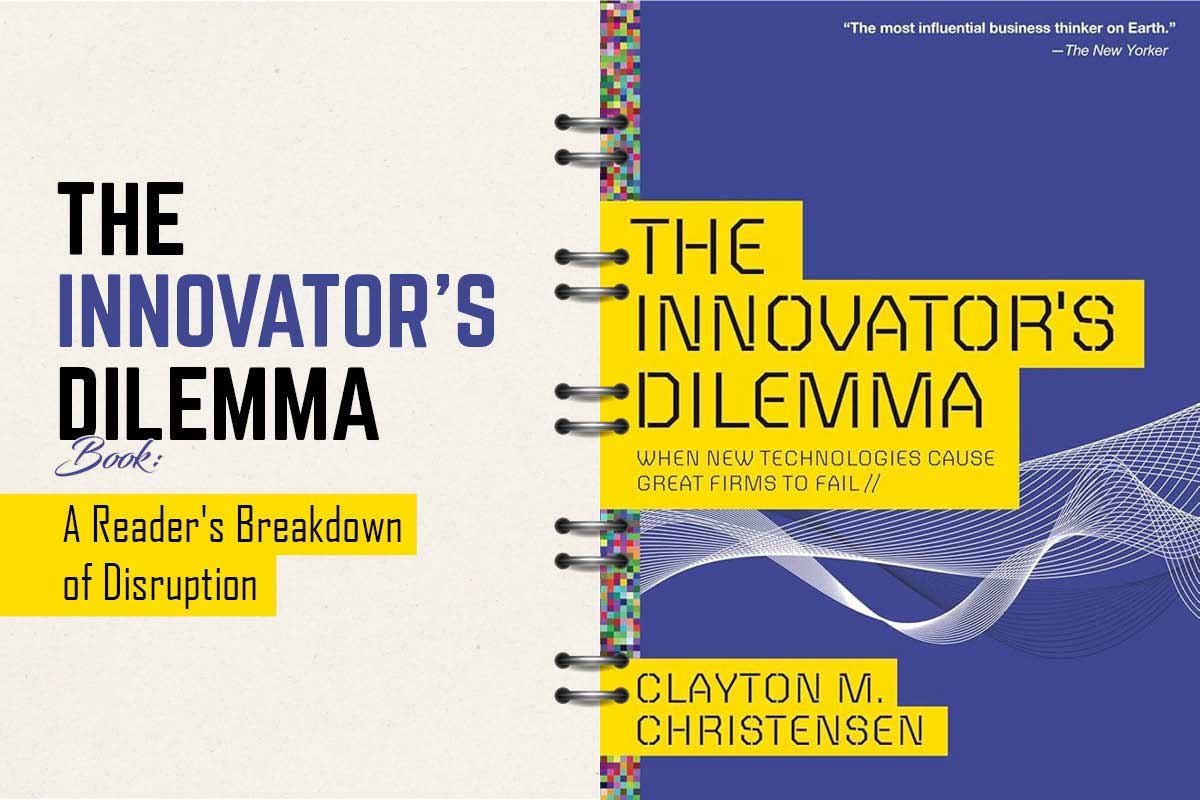
Why do capable companies make sound decisions and still lose ground when new technology appears? The Innovator’s Dilemma book studies this exact conflict, tracing the tension between defending an established business and pursuing unfamiliar opportunities. Clayton M. Christensen questions common assumptions about good management, customer focus, resource allocation, and innovation, showing how each can quietly undermine a company’s future.
Core Question:
When does listening to your best customers become a weakness?
Author’s perspective:
Christensen writes as a researcher, not a motivator, tracing patterns across industries to explain business failure.
Author Profile:

- Primary Voice: Clayton M. Christensen
- Background: Harvard Business School professor
- Key Expertise: Technological change and business strategy
- Core Strength: Cross-industry pattern recognition
Christensen examines firms in disk drives, computers, manufacturing, and retail, using their histories to show how sound management practices, centered on customer priorities, resource allocation, and market structure, can become obstacles once markets shift direction.
The idea at the book’s core
Christensen separates two kinds of change. Sustaining innovation makes existing products better for existing customers. Disruptive innovation starts small, offering something simpler or cheaper to buyers that established firms tend to ignore. Large companies usually favor sustaining work because it matches their customers, revenue targets, capabilities, and processes.
Trouble begins once that small offering improves and starts pulling in mainstream buyers. The Innovator’s Dilemma book traces this exact pattern across industries, explaining how once-dominant companies lose their footing.
The Disruption Path:
Small Opportunity ➝ Early Adopters ➝ Improved Performance ➝ Wider Adoption ➝ Market Leader Displaced
Critical evaluation: pros and cons
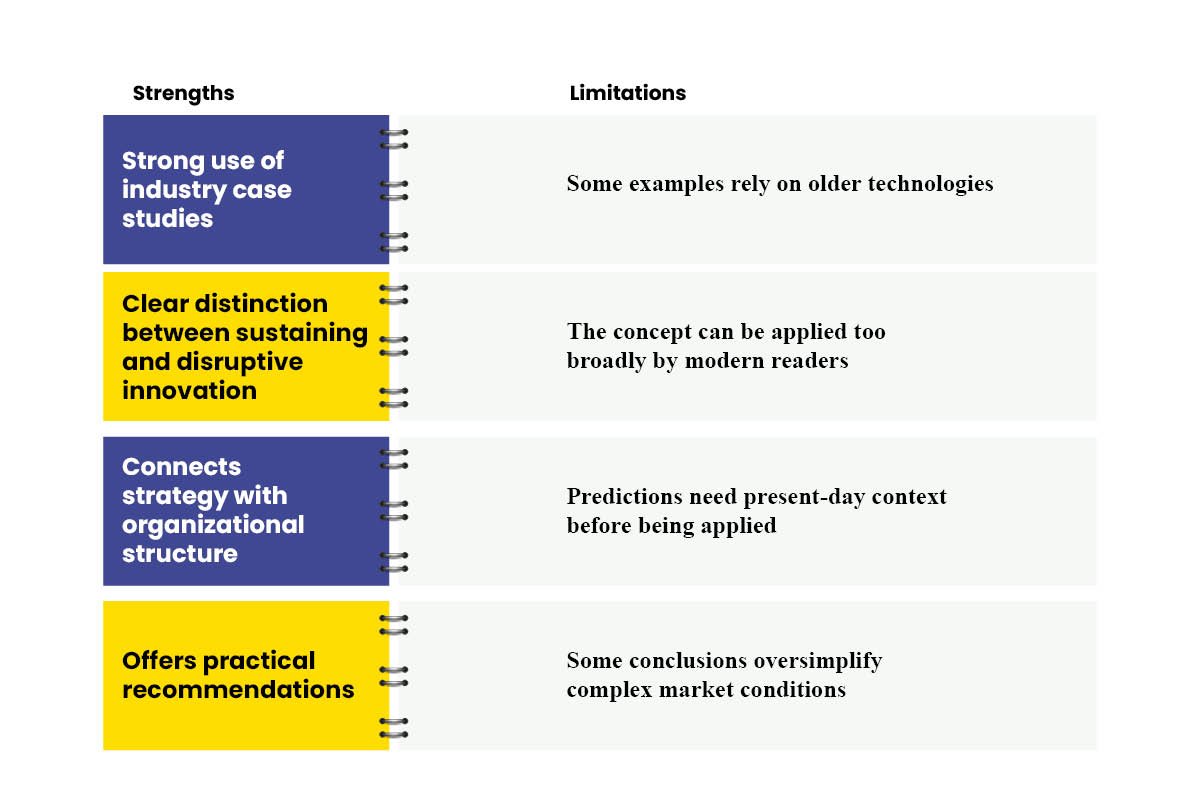
No book earns lasting influence without a few gaps, and this one is no exception.
| Strengths | Limitations |
| Strong use of industry case studies | Some examples rely on older technologies |
| Clear distinction between sustaining and disruptive innovation | The concept can be applied too broadly by modern readers |
| Connects strategy with organizational structure | Predictions need present-day context before being applied |
| Offers practical recommendations | Some conclusions oversimplify complex market conditions |
The framework in The Innovator’s Dilemma book stays valuable because it explains why rational decisions can produce poor long-term outcomes. Its readability and relevance across industries keep the discussion active among readers today.
Who should read this, and how it reads
The writing stays analytical yet approachable. Readers interested in business strategy, technology, management, entrepreneurship, engineering, and organizational change should find the case-based structure easy to follow. Cadence calls The Innovator’s Dilemma book unusually readable for a business title, and NETO Innovation similarly presents it as accessible to a broad audience.
Reader-fit meter: ★★★★★ Business readers | ★★★★☆ General readers
Best suited for:
- Founders and CEOs
- Product managers and strategists
- Consultants and investors
- Engineers and students of management
Beyond readability, the book offers lasting lessons: current customers rarely reveal every future opportunity, small markets can deserve early attention, new ventures often need different structures, and a successful business model may hinder the next one.
Relevance and applications
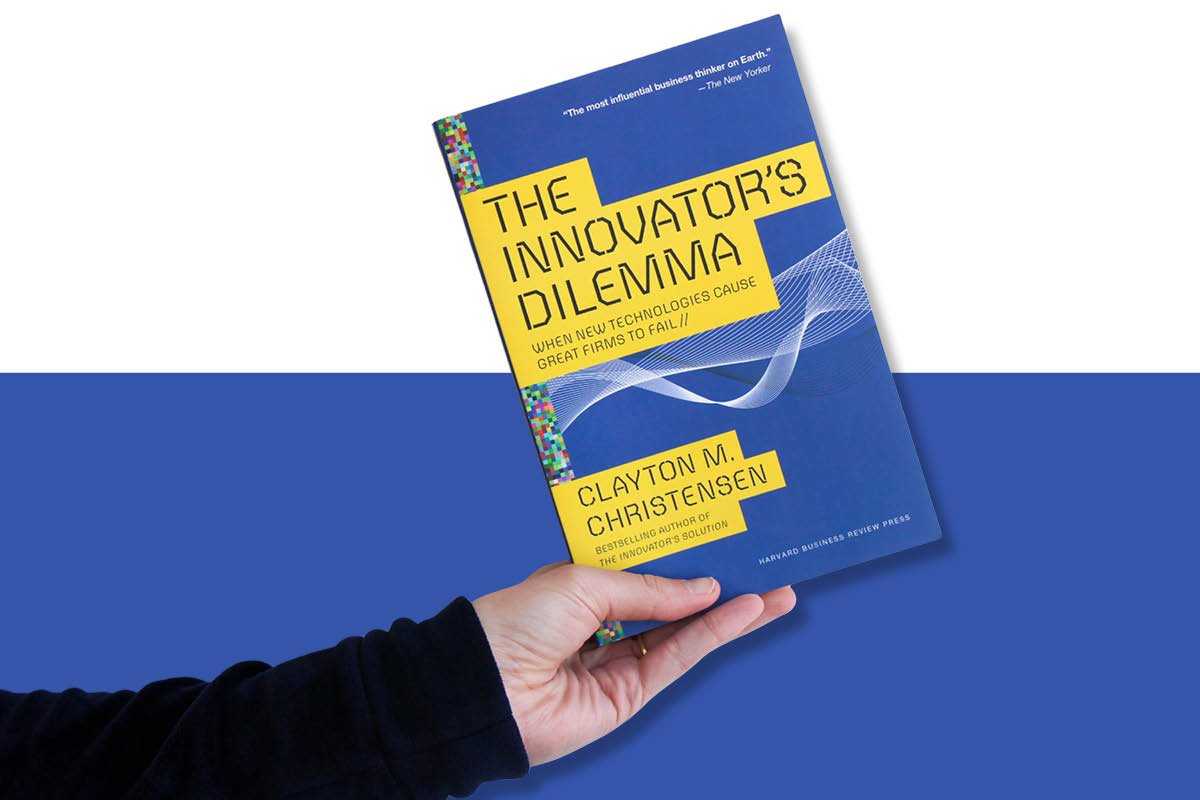
The Innovator’s Dilemma book offers ideas that apply well past the boardroom. A company can build a protected team for emerging opportunities, give new ventures proper resources, and judge a new product on its own terms rather than the standards of a mature business. Even academic libraries have used this thinking, examining how e-books, open access, and shifting user expectations test established practices.
Application Cards:
Product Strategy | R&D | Startups | Education | Libraries | Technology Management
Business impact of the book
History offers no shortage of smart companies that saw the future clearly and still lost their footing.
- Kodak: Understood digital photography early, but its established capabilities and business model made the shift difficult, as Cadence notes.
- Digital Equipment Corporation: Saw the personal computer coming, yet the market looked too small to chase at the time.
- Disk-Drive Makers: Spotted each new format entering the market, but stayed loyal to existing customers until competitors captured the space.
The Innovator’s Dilemma book shows a consistent pattern here: recognizing change rarely guarantees a company can act on it before the opportunity closes.
Inside the framework dashboard
Most important section for business readers. The Innovator’s Dilemma book rests on four practical models, shown here as a dashboard.
1. Sustaining vs. Disruptive Innovation
Check whether an innovation improves an existing market or builds a different value network.
2. Resource allocation principle
Large organizations naturally favor opportunities with sizeable markets, strong customers, and clearer returns.
3. Independent venture principle
Give disruptive projects enough autonomy so mature-business expectations do not suppress them.
4. Learning-plan principle
Treat uncertain ventures as experiments. Save resources for repeated attempts rather than demanding perfect forecasts.
Business takeaway:
Protect the core business. Give emerging opportunities room to develop on their own terms.
Book Reviews by Readers


Reader reactions rarely stop at a star rating; the real feedback shows up in what people choose to remember.
“Sometimes, supply creates demand. That’s my summary of the book.”
Gabriel Pinkus
“This business classic resonated with my long career in high tech. There were no major conclusions that I took issue with. I nodded my head often while reading. So in a few words — Christenson really knows his material.”
Dan |
“A very interesting thesis with compelling examples.”
Chip Huyen |
“This innovation classic is still as relevant as ever, with well-explained theories grounded in data and practical implications for managing disruptive innovations.”
Hannamari |
Conclusion
Christensen’s core lesson stays simple: good management can still fail when markets shift beneath it. The Innovator’s Dilemma book pushes readers past star ratings and case studies toward a harder question about protecting what works while making room for what’s unproven. For founders, strategists, and engineers alike, that balance remains the real challenge behind every decision to defend or explore.