


A hospital is more than a collection of departments, treatment rooms, and advanced medical equipment. It is a carefully interconnected environment where every design decision can influence clinical workflows, staff efficiency, patient safety, and the quality of care. As India continues to address the growing demand for accessible, financially sustainable healthcare infrastructure, architectural thinking must evolve beyond conventional space planning and construction-led priorities. The challenge lies in creating facilities that balance present-day clinical requirements with long-term adaptability, without allowing cost constraints to compromise functionality or patient dignity.
Dushyant Kumar, Co-Founder & Director at Renascent Consultants, is part of a Delhi-based architecture practice with over two decades of experience and a strong focus on institutional and healthcare architecture. The firm brings together architectural expertise and practical understanding to develop functional, high-performing built environments. Dushyant’s approach to healthcare architecture centres on translating clinical realities into practical solutions. By prioritising workflow efficiency, lifecycle value, flexible infrastructure, and purposeful technology integration, he champions a design philosophy that looks beyond immediate construction goals. His vision is to help shape healthcare facilities that are not only functional at the time of completion but also resilient, resource-efficient, and capable of delivering meaningful value to patients, healthcare professionals, and communities for years to come.
Challenging the cost-first mindset in healthcare architecture
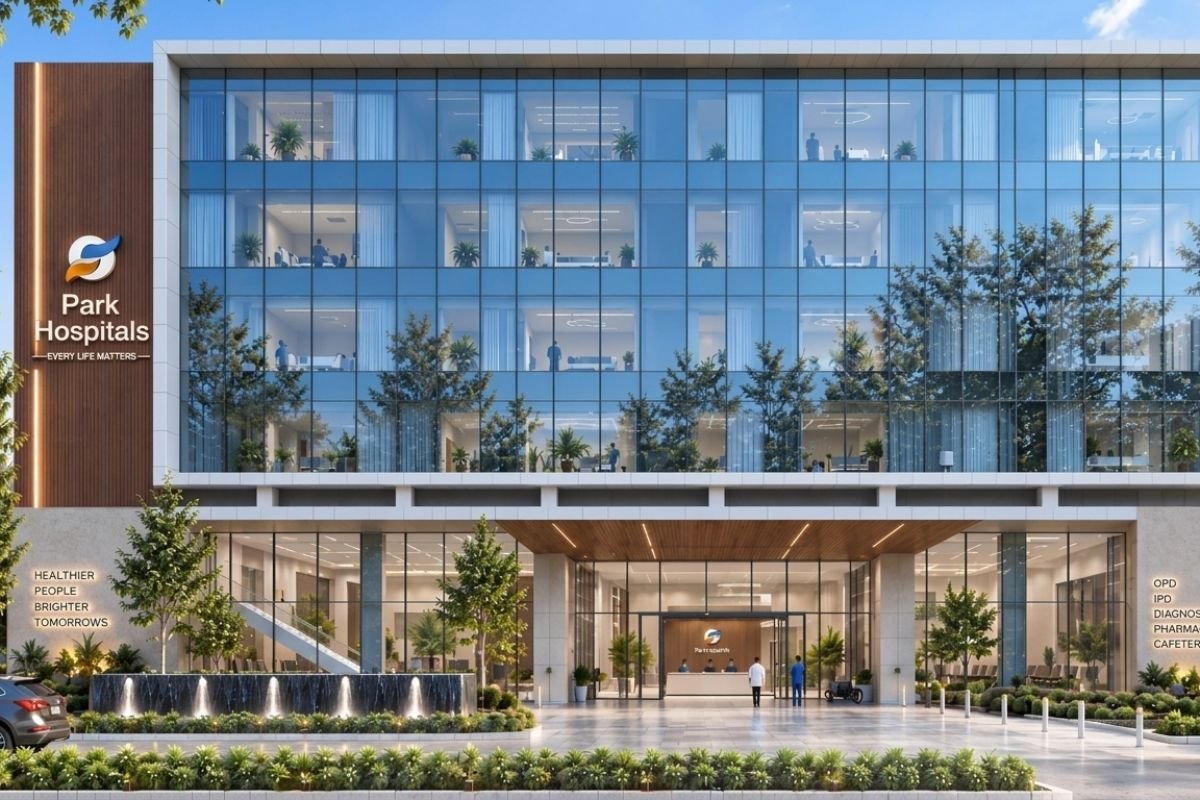
For Dushyant Kumar, the most important trade-off to challenge in healthcare architecture is the assumption that clinical efficiency and patient experience must come at the cost of financial viability. He believes these priorities should work together instead of competing. To make this happen, healthcare projects must change how they define and measure value.
Dushyant highlights how prioritizing initial capital expenditure over long-term operational performance leads to significant inefficiencies. Over time, this focus can result in inefficient workflows, excessive staff movement, underutilized spaces, higher energy consumption, and compromised patient comfort. Lowering initial construction costs often leads to much higher maintenance and operating expenses later on.
He argues that healthcare buildings should be assessed based on their total long-term value rather than initial construction costs. In his view, thoughtful planning, efficient circulation, flexible infrastructure, climate-responsive design, and sustainable building systems can improve clinical outcomes while reducing operating expenses. His approach emphasises the importance of designing healthcare facilities that balance operational efficiency, patient well-being, and financial sustainability over the long term.
From floor plans to patient-centred planning
Dushyant Kumar believes India must move beyond designing hospitals around departments and floor plans, shifting the focus towards the movement of people, clinical workflows, and the delivery of care. He recognises that conventional hospital planning often prioritises space allocation and departmental boundaries over the relationships between patients, clinicians, support services, and infrastructure. This can lead to unnecessary movement, operational bottlenecks, staff fatigue, and stressful patient experiences.
He advocates a workflow-first approach in which the journeys of patients, doctors, nurses, materials, waste, and services inform the design from the outset. He believes this approach must be complemented by flexible planning, infrastructure that accommodates technological change, climate-responsive architecture, and resource-efficient systems. He also emphasises the need for India’s healthcare facilities to anticipate future growth, changing disease patterns, and the realities of operating across diverse economic and geographic contexts.
For Dushyant, a resilient hospital is not simply one that meets today’s requirements. It must be capable of adapting, performing efficiently, and delivering dignified, patient-centric care as needs evolve.
The clinical logic of design
Dushyant designs hospital spaces by first understanding how healthcare works in practice. He maps out how patients, staff, materials, waste, and services move through the facility, using those flow patterns to guide his architectural decisions.
These movement patterns guide departmental adjacencies, circulation networks, nursing station locations, diagnostic access, and the separation of clean and contaminated flows. He evaluates every planning decision against its impact on staff movement, response times, infection prevention, patient privacy, and operational clarity.
Dushyant Kumar believes that reducing unnecessary movement and eliminating points of conflict can significantly improve staff efficiency and patient safety. Equally important to his approach is creating intuitive environments that reduce anxiety, provide clear wayfinding, and preserve dignity throughout the care journey.
For Dushyant, workflow-led design is not merely a planning technique; it is a clinical performance strategy. He believes that when architecture supports the way people work, and patients heal, the entire healthcare experience becomes more efficient, safer, and more humane.
Balancing vision with practicality
Dushyant Kumar believes that design philosophy holds value only when it can withstand the realities of practice. He recognises that architecture must respond to budgets, regulations, operational requirements, and client responsibilities. For him, the challenge lies not in choosing between design intent and practical constraints, but in reconciling them with clarity.
His approach begins with understanding a project’s fundamental purpose, its intended users, and its long-term performance. This understanding helps him establish clear priorities, make objective design decisions, and evaluate compromises based on their actual consequences.
Dushyant distinguishes between essential requirements and elements open to adaptation. Clinical functionality, safety, durability, and long-term operational efficiency remain non-negotiable, while formal expression, material choices, and certain spatial arrangements can evolve in response to budgets and site conditions without compromising the project’s underlying intent.
He also believes that regulatory compliance should establish a baseline rather than define the boundaries of architectural thinking. Meeting prescribed standards is fundamental, but thoughtful design must go further.
Dushyant views architecture as an exercise in judgment. It demands the conviction to defend essential principles, the humility to adapt when necessary, and the discipline to carry ideas through execution. His philosophy rests on a clear principle: design must be guided by clarity, and that clarity must translate into built reality.
Growing through expertise and purposeful collaboration
For Dushyant Kumar, growth at Renascent Consultants is about strengthening capabilities and creating greater value for clients, rather than simply expanding the practice. As healthcare infrastructure becomes more complex, he recognises the importance of collaboration across architecture, engineering, technology, sustainability, and healthcare operations.
His focus is on building relationships with specialists and organisations whose expertise complements the firm’s own. Potential collaborations span healthcare planning, advanced building systems, digital infrastructure, sustainable design, and operational efficiency, enabling the firm to address complex project requirements while preserving its integrated design approach. Dushyant is particularly interested in partnerships that bring practical innovation to India’s healthcare sector by improving clinical workflows, enhancing resource efficiency, and making quality healthcare infrastructure more accessible across diverse regions.
His approach to acquisitions is equally measured. Any expansion must align with the firm’s long-term vision without compromising design quality, professional accountability, or organisational culture. Dushyant aims to grow Renascent Consultants through stronger expertise, trusted partnerships, and meaningful contributions to healthcare infrastructure, creating facilities that perform better, adapt intelligently, and serve communities for generations.
Using artificial intelligence to strengthen professional judgment
Renascent Consultants integrates AI into everyday workflows to improve efficiency, explore design alternatives, and support informed decisions while keeping professional expertise at the forefront.
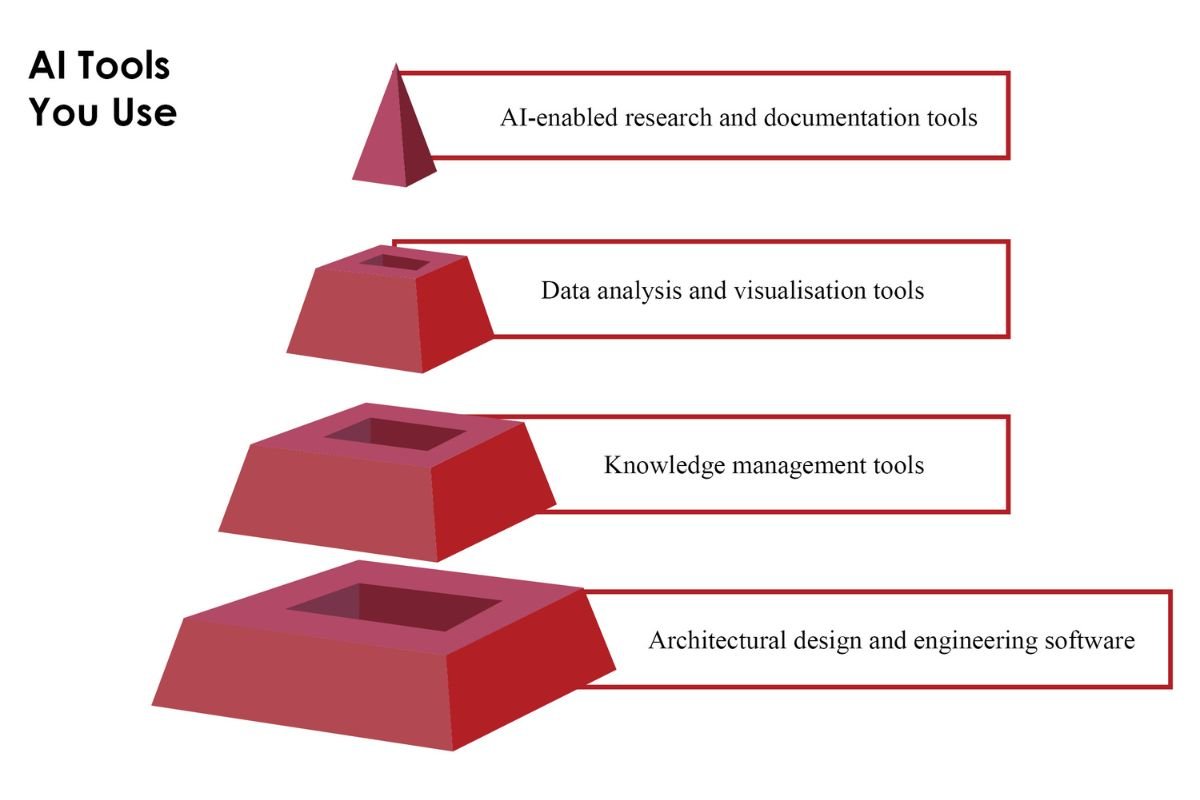
AI tools you use:
- AI-enabled research and documentation tools
- Data analysis and visualisation tools
- Knowledge management tools
- Architectural design and engineering software
Primary use cases:
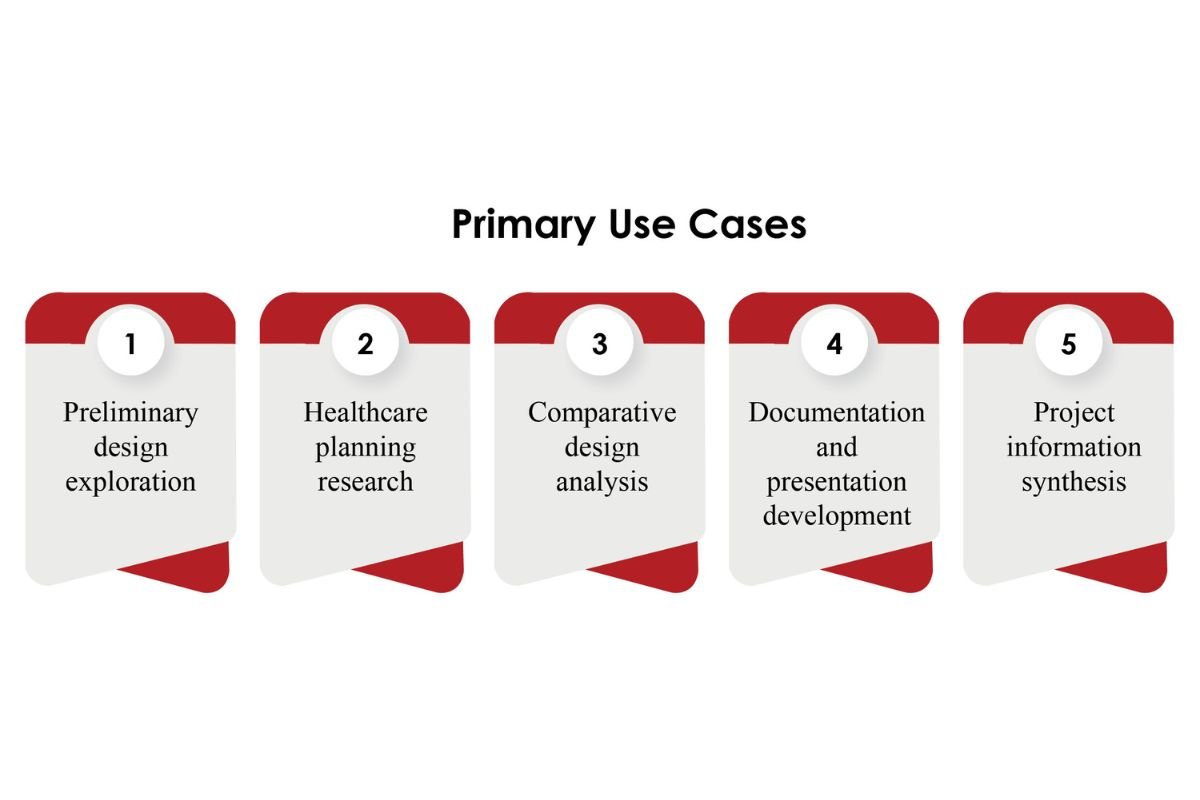
- Preliminary design exploration
- Healthcare planning research
- Comparative design analysis
- Documentation and presentation development
- Project information synthesis
Key benefits:
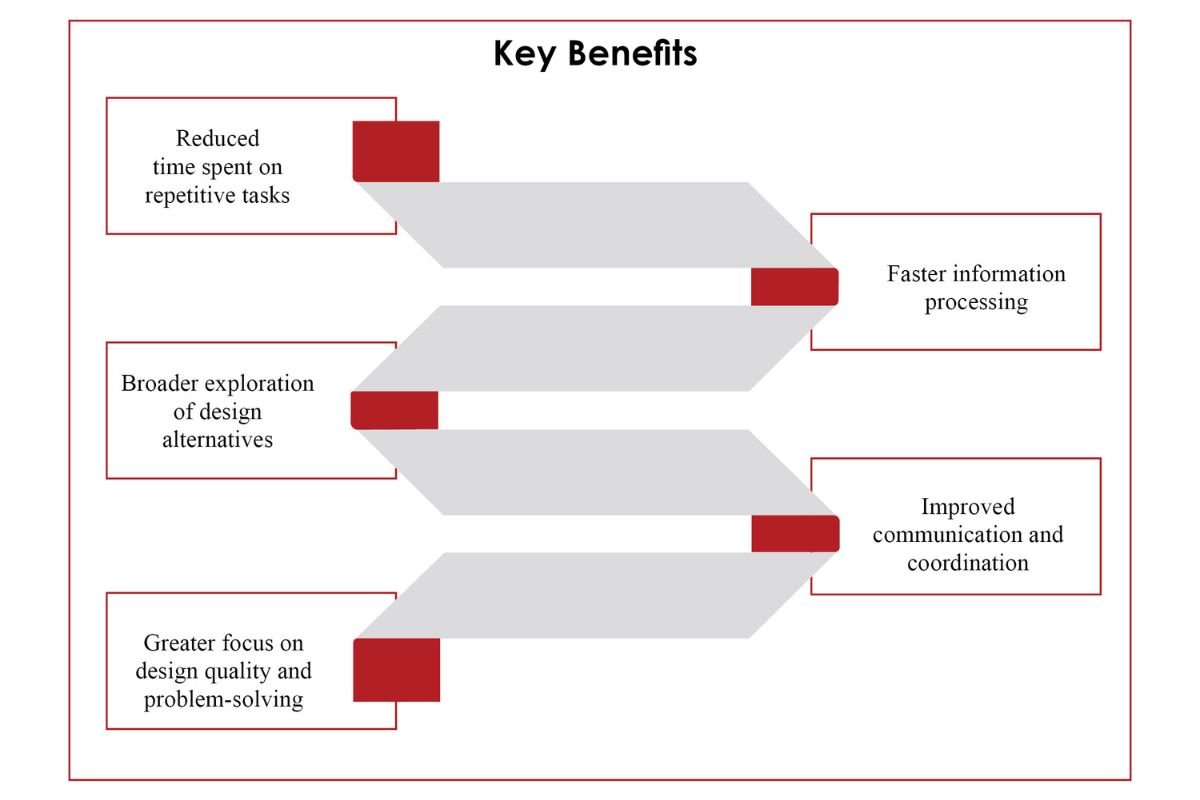
- Reduced time spent on repetitive tasks
- Faster information processing
- Broader exploration of design alternatives
- Improved communication and coordination
- Greater focus on design quality and problem-solving
Impact on decision-making:
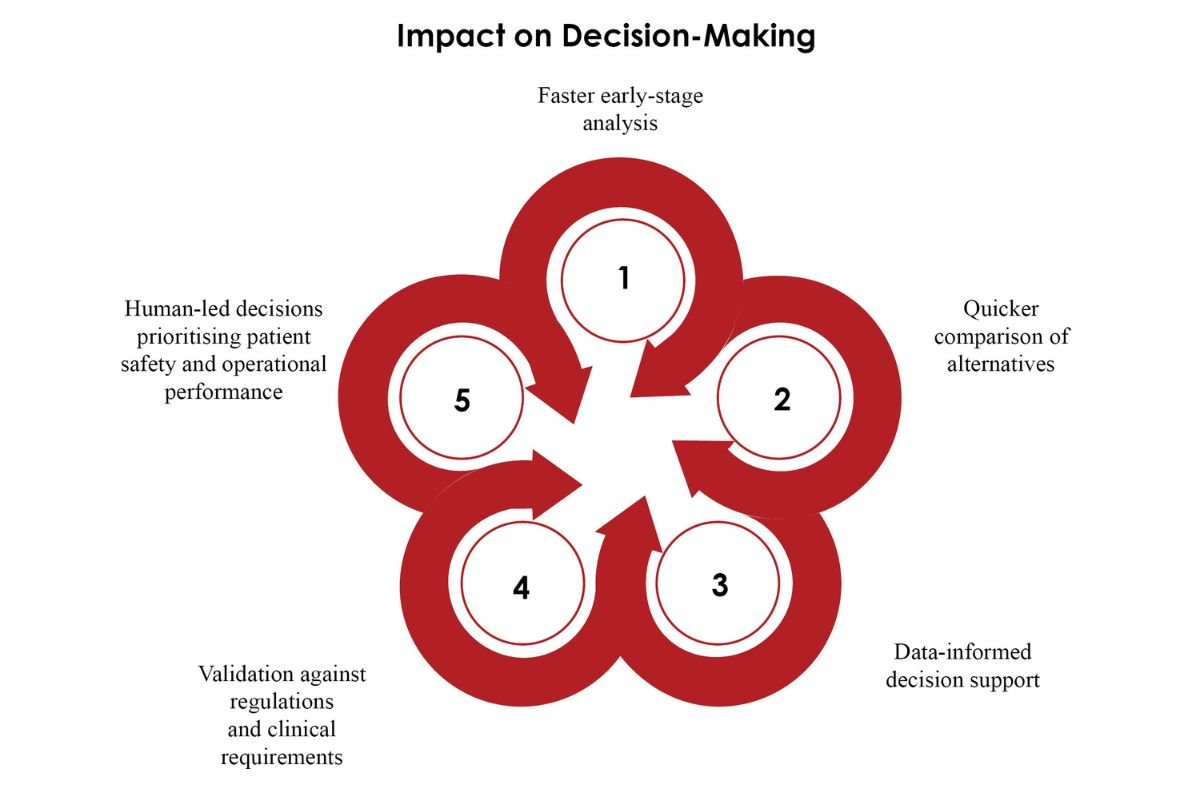
- Faster early-stage analysis
- Quicker comparison of alternatives
- Data-informed decision support
- Validation against regulations and clinical requirements
- Human-led decisions prioritising patient safety and operational performance
The economics of flexible design
Dushyant Kumar believes adaptability must be incorporated into healthcare facilities from the outset rather than introduced later through expensive modifications. For him, the key lies in distinguishing between elements that are likely to change and those that must remain stable.
His approach prioritises flexible planning grids, modular departmental layouts, accessible service zones, and appropriately sized shafts and plant rooms. By separating the primary structure from internal partitions, he aims to make spaces easier to reconfigure with minimal disruption. Planning for future medical equipment, digital infrastructure, and incremental capacity expansion also helps reduce the risk of costly retrofitting.
However, Dushyant emphasises that adaptability should not lead to overbuilding. Excessive space or infrastructure designed for every conceivable future requirement can increase capital costs without delivering proportional value. Instead, he advocates identifying realistic growth scenarios and prioritising investments according to their long-term operational benefits.
He believes a lifecycle-cost approach is essential to balancing initial expenditure with future flexibility, maintenance, and operational efficiency. For Dushyant, a resilient hospital does not anticipate every possibility, but is designed to accommodate change intelligently and economically, with minimal interruption to patient care.
Rethinking the measures of healthcare success
Dushyant Kumar believes the biggest gap in India’s healthcare infrastructure lies between the need for accessible, operationally efficient healthcare and the tendency to measure success primarily through bed capacity, construction costs, and project completion.
Healthcare facilities must do more than accommodate patients. They must support effective clinical workflows, enable safe care delivery, remain financially sustainable, and respond to changing medical needs. Yet fragmented planning, inadequate coordination between clinical and design teams, and insufficient attention to lifecycle costs can compromise long-term performance.
Dushyant believes addressing this gap requires industry leaders to move beyond a construction-led mindset towards an integrated, outcome-oriented approach. Clinical requirements, architectural planning, engineering systems, technology, sustainability, and operational strategy must inform decisions from the earliest stages of a project.
Equally important, he emphasises the need to develop scalable, resource-efficient models suited to India’s diverse urban, semi-urban, and rural contexts. For him, the real measure of healthcare infrastructure is not how much is built, but how effectively it serves people. India’s next generation of healthcare facilities must deliver better outcomes, greater resilience, and lasting value.
Beyond being right
One of the most significant lessons Dushyant Kumar has learnt is that a sound solution does not automatically become the right solution simply because it is technically correct. Its value also depends on how well it addresses the concerns, expectations, and practical realities of the people involved.
This understanding has reshaped the way he approaches professional relationships and leadership. Rather than treating disagreements as obstacles to overcome, he recognises them as opportunities to examine assumptions and uncover perspectives that might otherwise be overlooked. He places greater emphasis on thoughtful dialogue, shared understanding, and helping people recognise the reasoning behind important decisions.
For Dushyant Kumar, this does not mean compromising on principles. He remains firm on matters that demand accountability, but understands that conviction is most effective when accompanied by openness. The willingness to reconsider an approach, acknowledge another viewpoint, or change direction when circumstances warrant it reflects sound judgment rather than uncertainty.
This shift has given greater depth to his understanding of leadership. He believes progress is not about establishing who has the right answer, but about creating the conditions in which better decisions can emerge. For him, professional maturity lies in knowing when to stand firm and when to make room for a better perspective.
Rethinking the future of hospital design
Dushyant Kumar believes the future of healthcare infrastructure will depend less on spectacular technologies and more on how intelligently they are integrated into everyday hospital operations.
He sees significant potential in artificial intelligence, digital twins, real-time building management systems, and integrated hospital information platforms to improve operational efficiency, energy performance, predictive maintenance, and clinical coordination. Equally important are modular planning, flexible infrastructure, climate-responsive design, and resource-efficient systems that allow hospitals to adapt to changing technologies and healthcare demands.
However, Dushyant considers fully automated hospitals and technology-led solutions without clearly defined operational objectives to be overhyped. He believes technology cannot compensate for poor planning, fragmented workflows, or inadequate infrastructure. Digitising an inefficient system, he argues, merely makes inefficiency more sophisticated.
For him, the real opportunity lies in integrating technology with sound architectural principles, clinical workflows, and measurable performance outcomes. Particularly in India, he emphasises that solutions must remain scalable, maintainable, and financially viable across different healthcare settings.
Dushyant Kumar believes the hospital of tomorrow will not necessarily be the most technologically advanced, but one that uses technology judiciously to deliver safer care, better experiences, and stronger operational resilience.
The success code: clarity before creativity
In architecture, success is not measured merely by buildings completed, or projects won, but by the value those buildings create for the people who use them. Every project demands sound judgement, disciplined execution, and the courage to prioritise what truly matters over what merely looks impressive.
We have learnt that lasting success comes from asking the right questions, listening carefully, and making decisions that stand the test of time. Trends change, technologies evolve, but integrity, clarity of purpose, and commitment to excellence remain timeless.