

A factory and a cold store do not use power in the same way. That simple fact can shape the right energy system. A factory may need more power during sunny work hours. A cold store may need steady power through each hour. So, clean power alone cannot solve every energy need.
Businesses now need tools that can make, store, and manage power. These tools include rooftop solar, batteries, biogas, and energy management systems. Together, green energy solutions and technology can reshape energy use. The right mix depends on how each site uses power.
Key factors include energy use, work hours, and site location. Grid strength, roof space, and load profile also matter. India already shows how fast these systems can scale. MNRE reports 164.59 GW of solar capacity as of July 2026.
This blog looks at both proven and newer technologies. It explains how they work and where they fit. It also shows how Indian businesses can match technology with need.
What Are Green Energy Solutions and Technology?
Green energy solutions use tech to make, store, or manage power. They aim to cut the harm linked with energy use. These systems can also help firms use power more wisely.
- Energy generation makes power from sources like sunlight or biogas.
- Energy storage saves power for use at later times.
- Energy management tracks power use and controls when systems run.
- Energy conversion changes energy into a form equipment can use.
- Energy efficiency helps equipment deliver more work with less power.
These tools can work alone or form one linked system. A distributed energy system brings power close to where demand sits. A rooftop solar plant offers one simple example of this model.
Still, each green tech solves a different energy problem. Solar can make power, but cannot store unused power. Batteries can store power, but cannot make new power.
A simple framework helps tie these parts together:
Generate → Store → Manage → Consume
Solar PV generates power from sunlight at the site. A battery stores extra power for later use. An energy management system controls when stored power flows. Machines then consume the power when they need it. This model helps firms view energy as one linked system.
The 6 Core Green Energy Technologies Used by Businesses
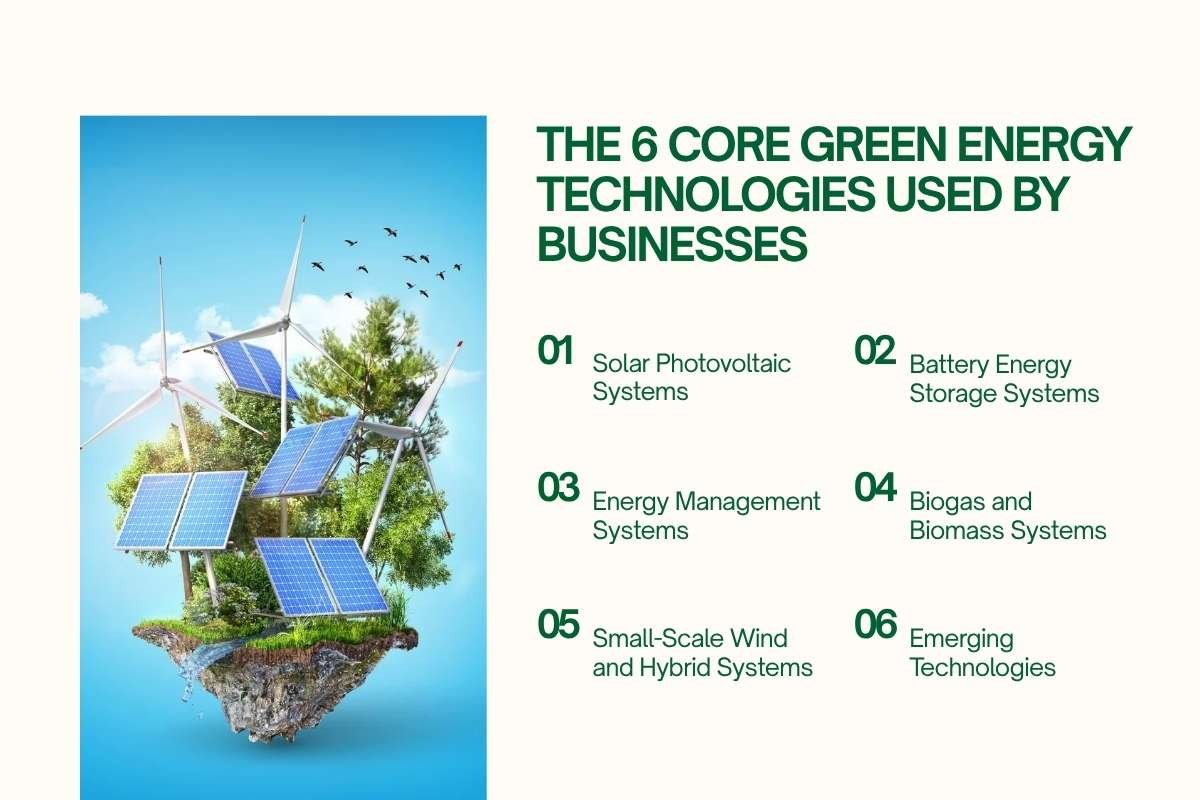
Businesses can now choose from several energy technologies. Each one solves a different part of the power problem. The best choice often depends on when power demand occurs.
1. Solar Photovoltaic Systems
Solar PV turns sunlight into electricity through PV modules. Inverters then convert that power into usable AC electricity. Rooftop systems suit factories, offices, malls, and warehouses. Ground-mounted plants suit firms with larger open sites. Behind-the-meter solar sends power straight to on-site loads.
India had 164.59 GW of solar capacity by July 2026. That total included 30.74 GW from rooftop solar systems. Yet solar output rarely matches demand across every hour. A factory may need power after sunset too. That gap makes storage or grid power useful.
2. Battery Energy Storage Systems
Battery Energy Storage Systems, or BESS, store power for later use. Lithium-ion batteries currently lead many commercial storage projects. Businesses can shift solar power into evening hours. They can also manage short periods of peak demand. Some systems can support backup loads during grid outages.
But battery size alone cannot define system value. Businesses must also match storage capacity with load duration. A two-hour load needs a different system from eight hours. India now tracks BESS projects through regular CEA reports.
3. Energy Management Systems
Energy management systems help businesses control power use. Smart meters gather data from key loads and equipment. Sensors can track temperature, voltage, current, and machine use. IoT tools then send this data to central dashboards. The system can forecast loads and adjust equipment use.
This connects generation, storage, and consumption in one system. For example, solar can charge batteries during surplus hours. The system can then release stored power during peak demand.
4. Biogas and Biomass Systems
Biogas systems turn organic waste into usable energy. Anaerobic digesters break down waste without oxygen inside sealed tanks. Farms can use animal waste as a feed source. Food companies can use crop and food-processing waste. Factories can also process other organic industrial waste.
This makes biogas useful across India’s farm-to-food value chain. Biogas can then fuel boilers, generators, or other equipment. However, steady feedstock supply remains a key operating need.
5. Small-Scale Wind and Hybrid Systems
Small wind systems work best at suitable wind sites. They need steady wind speeds and enough open space. Solar-wind hybrids can balance output across different weather patterns. Still, small wind cannot replace solar at every site.
6. Emerging Technologies
Green hydrogen uses renewable power to split water through electrolysis. India targets at least 5 MMT of annual green hydrogen production. The mission also targets 60–100 GW of electrolyser capacity. Fuel cells can then turn hydrogen into useful electricity.
Advanced storage and smart grids remain key areas of growth.
These emerging technologies still differ in commercial maturity and scale. Solar, BESS, and energy management have wider business use today. Hydrogen, advanced storage, and smart-grid tools need more scaling.
Together, these systems form modern green energy solutions and technology. The next step involves making these technologies work as one.
How Do These Green Energy Technologies Work Together?
One energy system can link several technologies at once. A common setup combines solar, BESS, EMS, and the grid. Each part handles a different step in the power flow.
First, solar panels generate electricity during daylight hours. The business uses that power for its active loads. Any extra power can then charge the battery. The EMS tracks demand, solar output, and battery status. It can guide when the battery should charge or discharge. When solar output falls, stored power can support demand. The grid then supplies any power the site still needs.
Businesses can build this setup in different ways.
- Grid-connected: Solar works alongside the existing electricity grid.
- Solar-plus-storage: Solar power works with batteries for later use.
- Hybrid system: Multiple power sources work with storage and controls.
Consider a cold-storage facility that runs through each hour. Its cooling loads may continue well after sunset. Solar alone cannot match that full load profile. A BESS can store daytime solar for evening demand. The EMS can also manage cooling loads during peak periods. The grid then covers any remaining power needs.
This shows why green energy solutions and technology need integration. The goal involves matching power supply with demand timing.
How to Choose the Right Green Energy Technology?
The right way to start green energy adoption always starts with the site’s actual power use. A good choice should match both demand and site limits.
1. What does the load profile look like? Check daytime use, night use, and peak demand first. Also check base load and changes across each season. These patterns show when the site needs the most power.
2. How much physical space can the site offer? Check roof area, land, shade, and roof strength. These factors can limit solar size and system design.
3. Does the site need energy storage? Batteries matter when power supply and demand don’t match. They can store solar power for later use when needed.
4. How reliable is the grid? Cutting grid use differs from cutting peak demand. Backup power also differs from full energy independence. Each goal needs a different system design and control plan.
5. What does the site actually do each day? Manufacturing, warehousing, farming, hotels, and data centres differ. Their loads, uptime needs, and power patterns can vary greatly.
| Business need | Technology to evaluate |
| Daytime electricity demand | Solar PV |
| Evening demand | Solar + BESS |
| High peak demand | BESS + EMS |
| Organic waste availability | Biogas |
| Multiple renewable sources | Hybrid system |
| Real-time energy control | EMS |
This approach helps companies compare systems on real operating needs.
Green Energy Solutions and Technology by Business Sector
Different sectors place different demands on their energy systems. That makes sector needs useful when choosing the right technology.
- Manufacturing: Factories often run large machines during fixed work shifts. Rooftop solar can match much of that daytime demand. BESS can support peak loads and later power needs. Energy monitoring can also flag waste across process loads.
- Warehousing and Logistics: Warehouses often need steady lighting, cooling, and material handling. Rooftop solar can support daytime loads across large roofs.
EV chargers can also share power with site systems.
BESS can help manage charging and peak demand periods. - Agriculture and Food Processing: Indian farms can use solar pumps for water supply. Food units can use biogas from organic waste streams. Biomass can also support heat needs in some plants. Cold stores need steady power across day and night.
- Hospitality: Hotels have mixed loads across rooms, kitchens, and common areas. Solar can support daytime power and hot-water demand. Energy management can track cooling and lighting loads closely. Batteries can support key loads during short grid outages.
- Commercial Buildings: Offices often have strong daytime loads from cooling and lighting. Rooftop solar can match that pattern in suitable buildings. Smart meters can track floor-level and system-level energy use. Storage can help manage peaks when demand rises sharply.
The best green energy solutions and technology mix follows operations. It should match when, where, and how energy gets used.
What Is Mature and What Is Still Emerging?
Not every clean energy technology has reached the same stage. Businesses should separate what works today from future options.
1. Commercially established
Solar PV now supports many commercial and industrial energy needs. Solar water heating also has many proven uses across India. Energy monitoring tools can track power use with ease. Biogas systems also serve farms and food processing units. Some BESS uses already work well for peak load control.
2. Scaling rapidly
Commercial battery storage continues to gain wider use worldwide. Solar-plus-storage systems can better match supply with demand. Smart energy tools also help firms control loads in real time. Hybrid systems can combine solar, wind, storage, and grid power.
3. Emerging
Green hydrogen still needs wider cost and scale improvements. Long-duration storage aims to cover much longer energy gaps. Advanced electrolyzers may improve hydrogen production over time. New battery types could also improve storage performance and life.
This distinction matters when firms assess green energy solutions and technology. A technology may look promising without fitting today’s operating needs. The key question remains simple: Can it work today? Future potential matters, but current readiness matters more.
Key Challenges in Deploying Green Energy Solutions and Technology
Green energy systems can work well with careful site planning. Still, each project comes with key technology and design limits.
Solar and wind output changes with weather and daylight hours. Some load profiles may need batteries or stronger grid links. High upfront costs can also shape system size and scope. Battery degradation can reduce storage capacity across its useful life.
Limited roof or land space can restrict system capacity. Grid integration may also need new controls and protection systems. Skilled teams matter for safe installation, testing, and upkeep. Different devices must also work together without system conflicts.
Recycling and end-of-life plans need attention from project teams. Financing can add more steps when projects use several technologies. These factors do not rule out renewable systems or storage.
What to Check Before Adopting a Green Energy Solution?
A detailed checklist can prevent poor technology choices later. It also helps compare green energy solutions and technology fairly.
Start with load-profile analysis before choosing any technology. Check current power use across each hour of operation. Then review peak demand, base load, and seasonal changes.
Next, check the space available for system installation. Review roof strength, land area, shade, and site access. Assess existing electrical systems and the site’s grid connection. Then define storage needs based on actual demand patterns.
Also check the system’s expected operating life and upkeep needs. Make sure the system offers strong tools for energy monitoring. Review vendor experience, equipment warranties, and service support. Finally, plan for equipment recycling and end-of-life handling.
Conclusion:
Green energy now works as a connected technology ecosystem. It involves far more than choosing one renewable power source. Solar and other systems can generate power on-site. Batteries can store power when supply exceeds demand. Energy management systems can then control how power flows.
The right mix depends on how each business uses energy. A factory may need daytime solar and peak-load control. A cold store may need storage for night-time demand. Other sites may need biogas, wind, or hybrid systems.
Some technologies already offer proven commercial use today. Others still need more scale, testing, or cost gains. That gap matters when businesses assess future technology choices.
The broader green energy landscape offers many paths forward. But technology selection should always start with actual energy use. The best green energy solutions and technology match real operating needs. The goal is not to add the most technology possible. It is to build the right system for each energy profile.
Frequently Asked Questions
1. What are green energy solutions and technology?
Green energy solutions use technology to generate, store, manage, or consume energy sustainably. Examples include solar PV, batteries, biogas, and energy management systems.
2. What is the most common green energy technology for businesses?
Solar PV is one of the most common green energy solutions for businesses. It works best for sites with daytime energy demand and suitable installation space.
3. How does battery storage work with solar energy?
Batteries store excess solar power for later use. They provide electricity when solar generation is low or demand increases.