

Education has accumulated an impressive vocabulary for transformation: international curricula, learning outcomes, assessment frameworks, artificial intelligence, inquiry, skills development, and future readiness. Yet none of these, on their own, guarantees better learning. The real test begins inside the classroom, where a teacher must translate curriculum intent into meaningful experiences for students. This is where educational transformation becomes less about adopting the right framework and more about building the right ecosystem around the people responsible for bringing it to life.
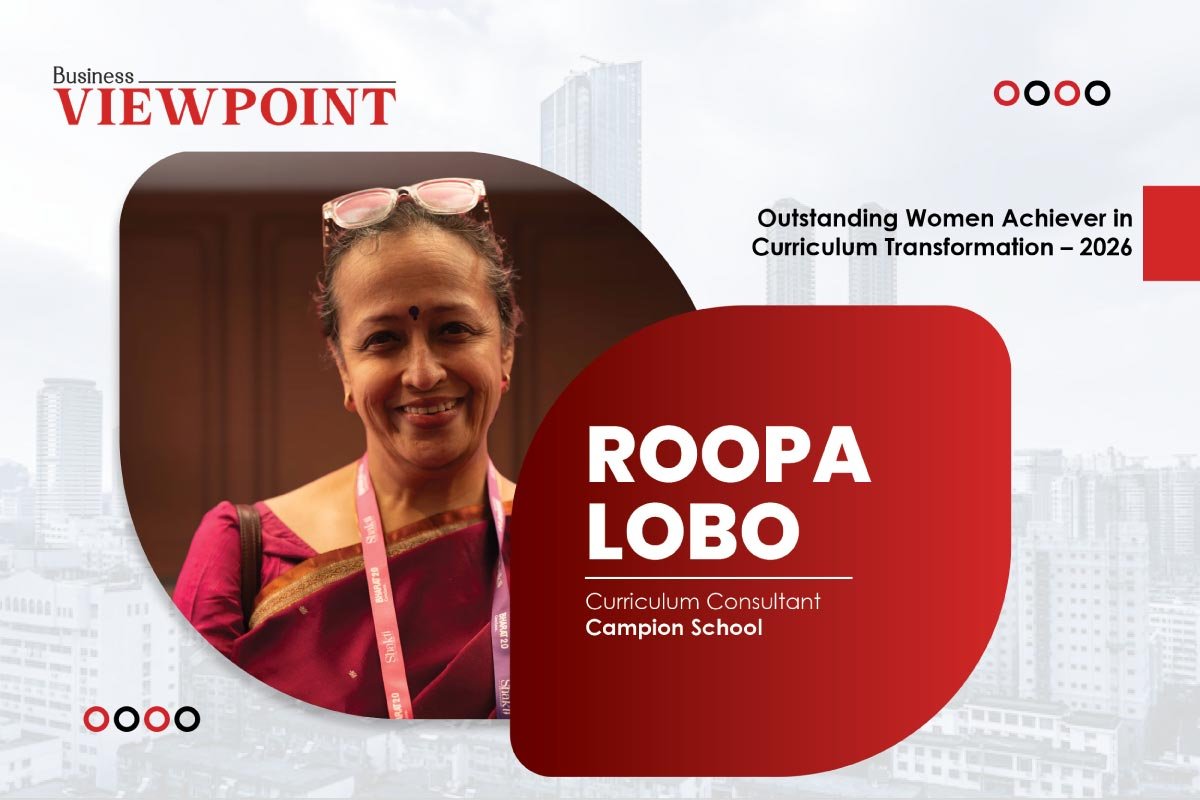
Few principles capture Roopa Lobo’s approach more clearly. At Campion School, she serves as Curriculum Consultant, Educational Leader, and Curriculum Transformation Specialist. Her work centers on connecting curriculum, teaching, assessment, teacher development, and student progress.
Bridging Heritage with the Future
Roopa Lobo does not view her approach as going against conventional academic wisdom. She sees curriculum transformation as building on what an institution already does well while thoughtfully introducing practices that prepare learners for the future.
At Campion School, with its long-standing heritage, strong values and established academic culture, she believes transformation must begin with respect for the institution’s identity. The transition towards Cambridge need not mean replacing everything that came before it. Instead, it offers an opportunity to build on existing strengths through inquiry, conceptual understanding, skills development, learner engagement and formative assessment.
She advocates moving the curriculum conversation beyond “What content do we need to complete?” towards more meaningful questions about what students should understand, which skills they should progressively develop, and how meaningful learning can be demonstrated.
Her philosophy also extends to teacher development. Classroom observations, she believes, can move beyond evaluation and become opportunities for professional dialogue, reflection, mentoring and growth.
Innovation in a heritage institution is not about choosing between tradition and transformation. It is about creating a thoughtful bridge between the two, preserving the values that define the school while evolving teaching and learning for the world its students will enter.
Influence Beyond Authority
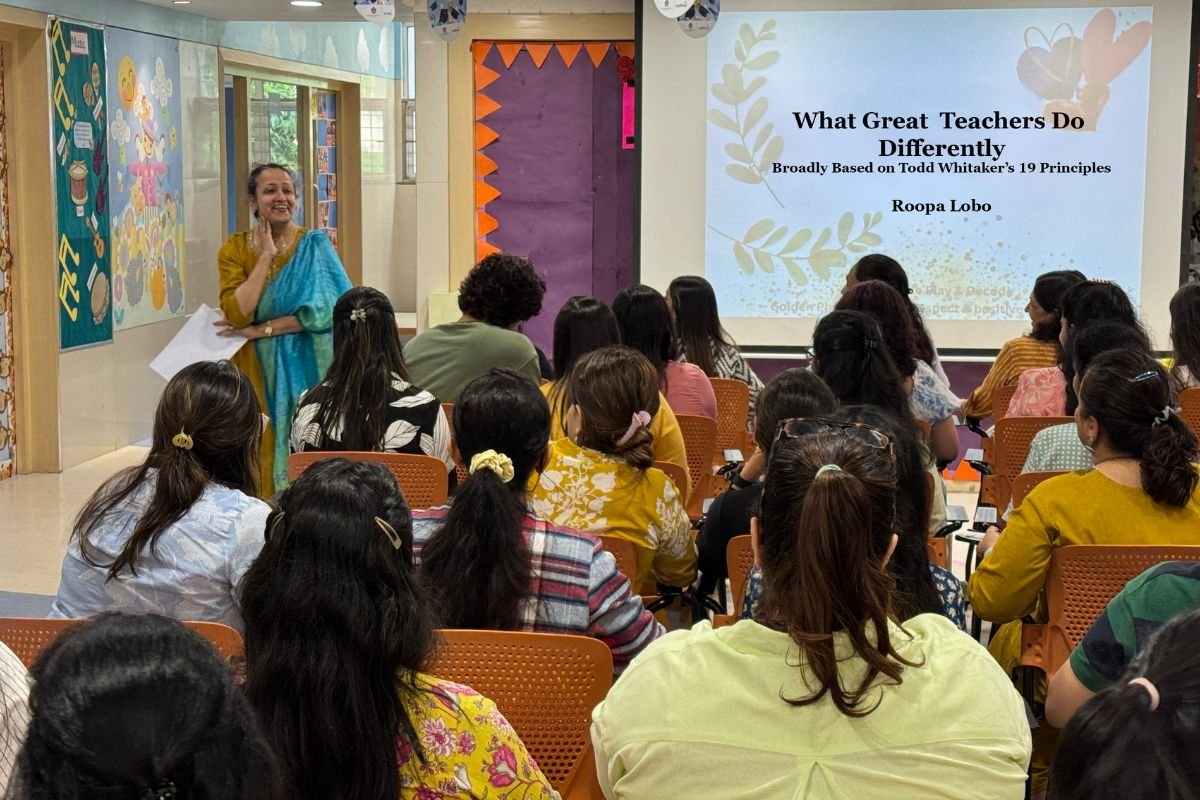
Influence can sometimes create more sustainable change than authority. As a curriculum consultant at Campion School, Roopa’s role focuses on academic development and the systems that support curriculum implementation, rather than day-to-day school operations.
She begins by listening to leadership, coordinators, and teachers before recommending change. This allows her to understand what already works and where systems require strengthening. Rather than simply prescribing a new planning format, she works towards creating a connected academic architecture comprising curriculum maps, planning templates, progression frameworks, assessment structures and classroom observation systems.
She also believes that a classroom observation framework should not function merely as an inspection tool. It can become a professional development mechanism through which teachers understand where their practice currently stands and what their next stage of growth might look like.
Similarly, professional learning communities and collaborative planning give teachers opportunities to discuss practice rather than simply receive instructions. When people understand the purpose behind change and participate in building it, ownership gradually becomes embedded within the institution. That is when transformation becomes sustainable.
From Building Systems to Building People
Receiving recognition for her work in curriculum transformation is not simply a personal milestone; it is a reflection of the opportunities, trust, and experiences that CNS provided. She spent a formative decade there. That time played a significant role in shaping the educator and curriculum leader she is today. As a result, CNS remains an enduring and deeply valued part of her professional journey.
Challenge
- Contribute during the school’s formative years, helping shape its culture and curriculum systems.
- Build a broader understanding of learning beyond individual classrooms.
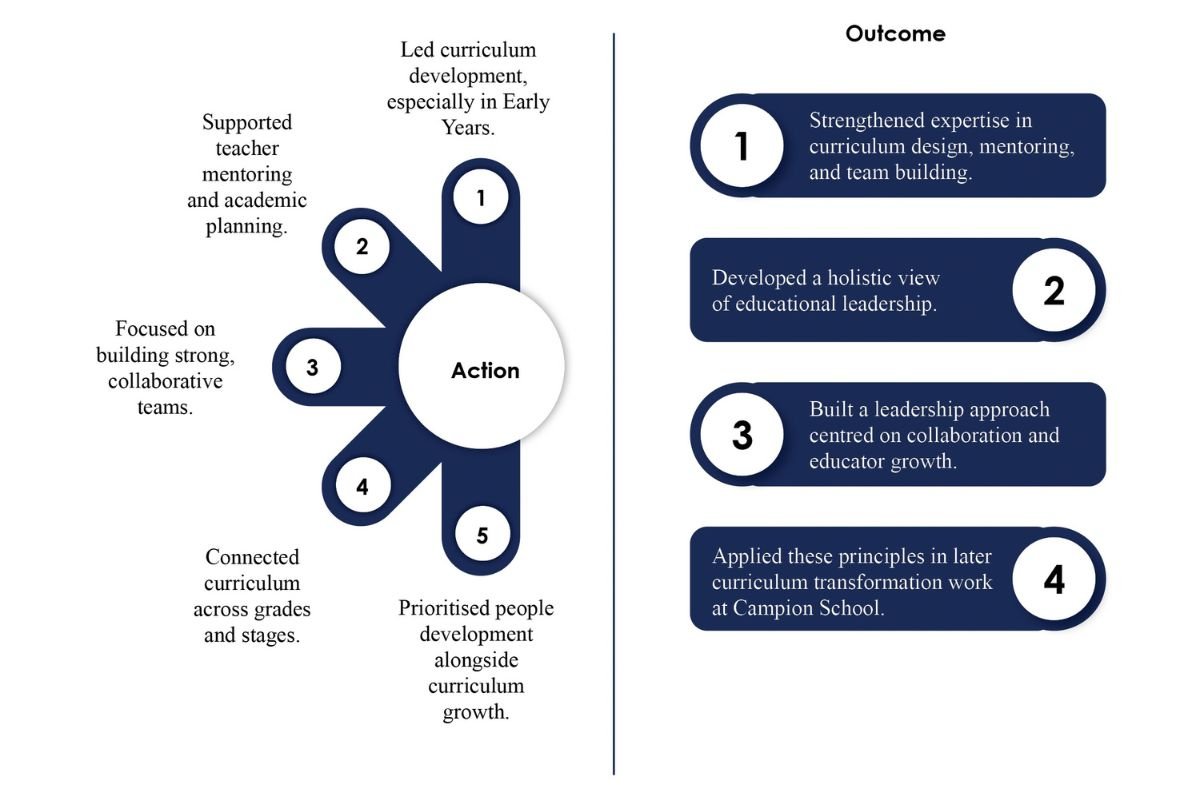
Action
- Led curriculum development, especially in Early Years.
- Supported teacher mentoring and academic planning.
- Focused on building strong, collaborative teams.
- Connected curriculum across grades and stages.
- Prioritised people development alongside curriculum growth.
Outcome
- Strengthened expertise in curriculum design, mentoring, and team building.
- Developed a holistic view of educational leadership.
- Built a leadership approach centred on collaboration and educator growth.
- Applied these principles in later curriculum transformation work at Campion School.
Rethinking Academic Rigour
The biggest paradox in modern education is the assumption that academic rigour and student well-being are competing priorities. She believes the opposite is true. A child who feels secure, curious and intellectually engaged is far more capable of rigorous learning than one who is simply pressured to perform.
Roopa Lobo believes rigour should not be confused with workload. True academic rigour, in her view, means encouraging students to think deeply, make connections, justify their reasoning, solve unfamiliar problems, communicate effectively and reflect upon their learning.
This philosophy also shapes her perspective on assessment. Assessment shouldn’t just show a child’s score. Instead, it should help educators understand where the learner is and what they comprehend. From there, teachers can determine what needs to happen next. For her, the point where well-being and rigour meet is a classroom that combines high expectations with appropriate support.
The Limits of the Scorecard
Roopa Lobo believes education has an opportunity to broaden the way student success is defined and recognised. Academic achievement remains important, but examination scores capture only one dimension of learning.
A student may reproduce information successfully in an examination yet struggle to apply that knowledge in an unfamiliar context. Conversely, another learner may demonstrate exceptional creativity, communication, collaboration or problem-solving that conventional testing barely captures.
Therefore, schools need a broader understanding of evidence. Assessment should include conceptual understanding, application, skill progression, reflection, communication and learner growth alongside academic attainment.
The question should gradually move from, “What marks did the child receive?” to, “What can the child now understand and do that they could not do before?” For her, that is a much more meaningful measure of education.
Systems That Outlast the Leader
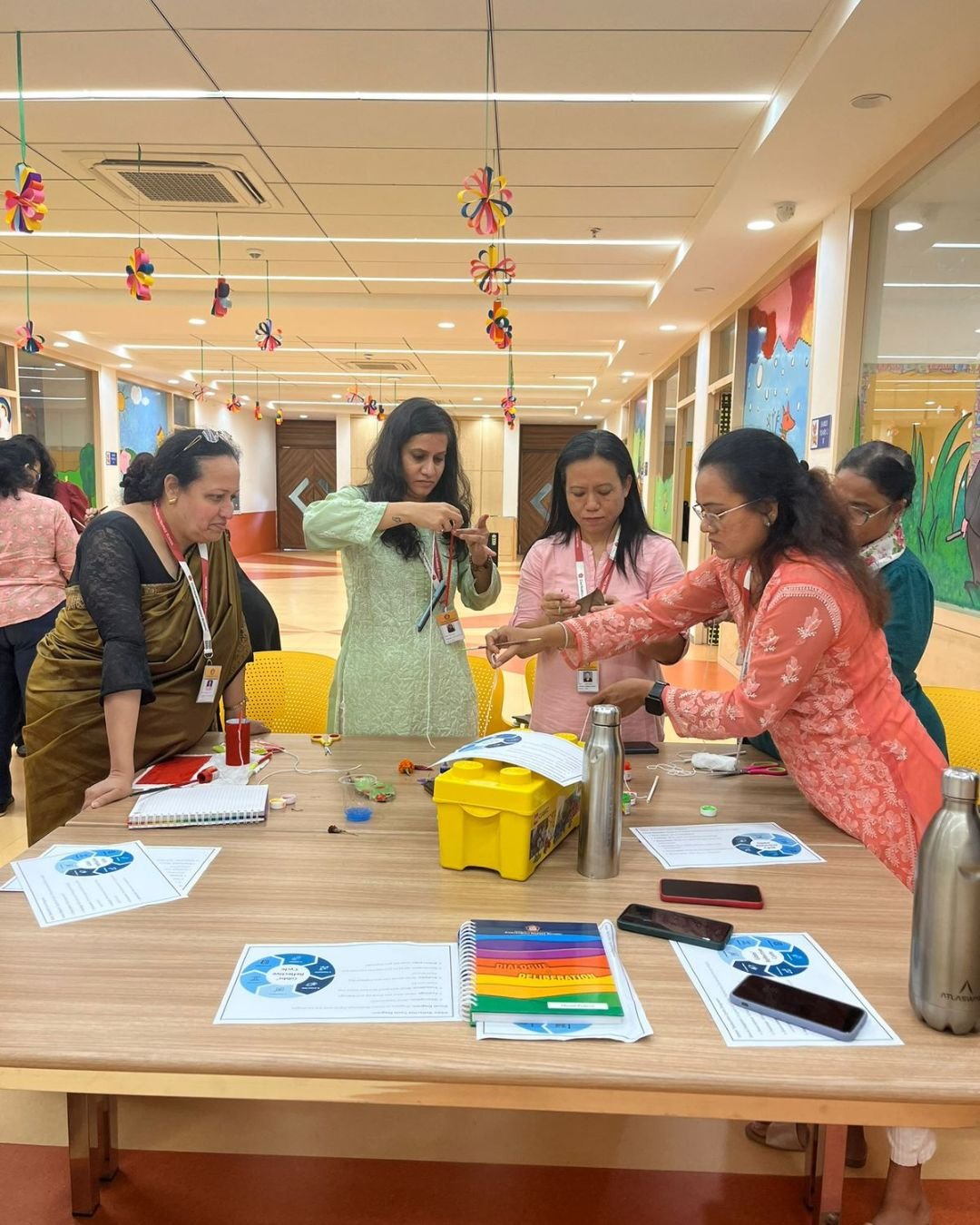
One of the most important tests of leadership is whether the work continues effectively when the leader is no longer in the room. This principle has strongly influenced the way she approaches curriculum transformation. Instead of creating systems dependent upon individual expertise, she focuses on creating structures that other educators can understand, implement, review, and improve.
These include:
- Horizontal and vertical curriculum maps
- Learning progression frameworks
- Cambridge-aligned planning structures
- Assessment and readiness frameworks
- Classroom observation rubrics
- Teacher reflection mechanisms
- Professional development structures
- Curriculum documentation and review cycles
For example, a vertical curriculum map allows teachers to see not only what they teach in their own grade but also what learning precedes it and where that learning will progress next. This reduces duplication, identifies gaps, and creates genuine continuity across the school.
The goal is not to make teachers dependent upon a consultant. It is to build institutional capacity so that eventually the system becomes stronger than the individual who helped design it.
Connecting the Academic Ecosystem
One of the greatest opportunities for the next phase of curriculum development lies in strengthening implementation capacity. Nowadays, schools have access to excellent international frameworks, sophisticated technology, and an enormous body of educational research. Yet, for her, a curriculum is only as effective as the teacher interpreting it in the classroom.
She identifies the real challenge as connecting the different elements of the academic ecosystem: curriculum, planning, teaching, assessment, observation, teacher development, and student progress. When these elements operate independently, curriculum transformation can become fragmented, with each component functioning in isolation rather than contributing to a connected learning journey.
Roopa’s work focuses on building stronger connections between these elements. If curriculum maps identify progression but classroom observations do not examine whether that progression is visible in teaching, the system remains incomplete. Similarly, assessment data has limited value unless teachers use it to understand learning and modify subsequent instruction.
The next stage of curriculum transformation must therefore move beyond simply adopting frameworks and towards building coherent educational systems. She sees this connection between curriculum intent and classroom implementation as one of the most important areas of work in Indian K–12 education today.
The Learner as Common Ground
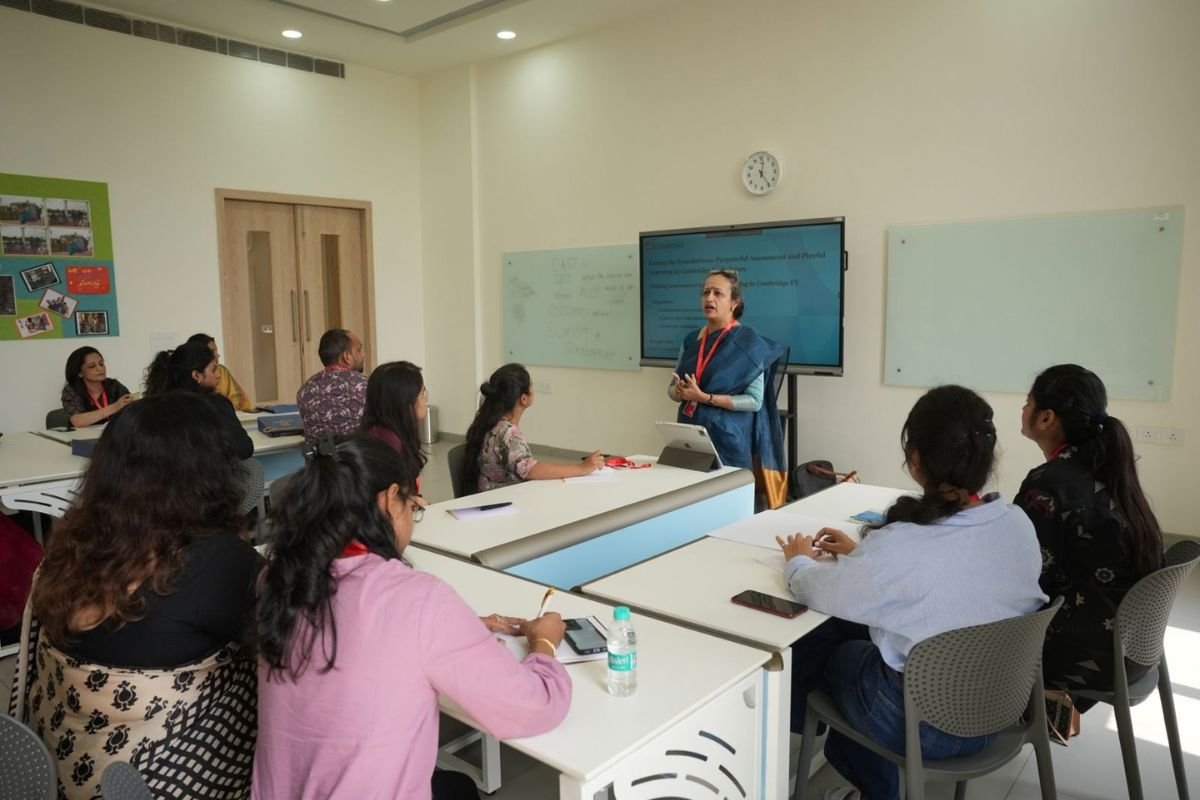
Roopa sees educators, parents and administrators as partners who approach the same child from different perspectives, united by a shared commitment to the child’s learning and development. For her, the common ground is always the learner.
She recognises that each stakeholder has different needs and responsibilities. Teachers need clarity about pedagogy and opportunities for professional growth. Parents value understanding how educational approaches support their children’s learning and future readiness, while leadership seeks coherent systems, thoughtful implementation and evidence of progress.
Communication therefore becomes central to Roopa’s approach to curriculum transformation. Teacher workshops, collaborative planning, professional learning communities, mentoring and structured classroom observations create opportunities for educators to understand, contribute to and take ownership of evolving practices.
Parent engagement is equally important. Through structured conversations around curriculum, assessment and learning, she helps families understand how conceptual learning, inquiry and skills development complement strong academic foundations.
Meaningful dialogue and clarity around the purpose behind educational decisions allow everyone to see themselves as part of a shared learning community. She believes the most sustainable curriculum transformation occurs when leadership, educators and families move forward together, keeping the child at the centre of every decision.
Technology as an Enabler, Not a Replacement
Roopa Lobo is particularly interested in meaningful educational partnerships and professional collaboration. She would like to explore collaborations with universities, international curriculum organisations, teacher education institutions, educational research bodies and responsible educational technology organisations.
Her areas of interest include partnerships focused on curriculum research, teacher professional development, assessment literacy, leadership development and the thoughtful integration of artificial intelligence into education. Through these collaborations, she hopes to strengthen the connection between educational research and what actually happens inside classrooms.
Her long-term interest lies in helping bring research, professional expertise and classroom practice closer together, creating opportunities for educational thinking to have a more meaningful impact on teaching and learning.
Leveraging AI to Strengthen Educational Practice
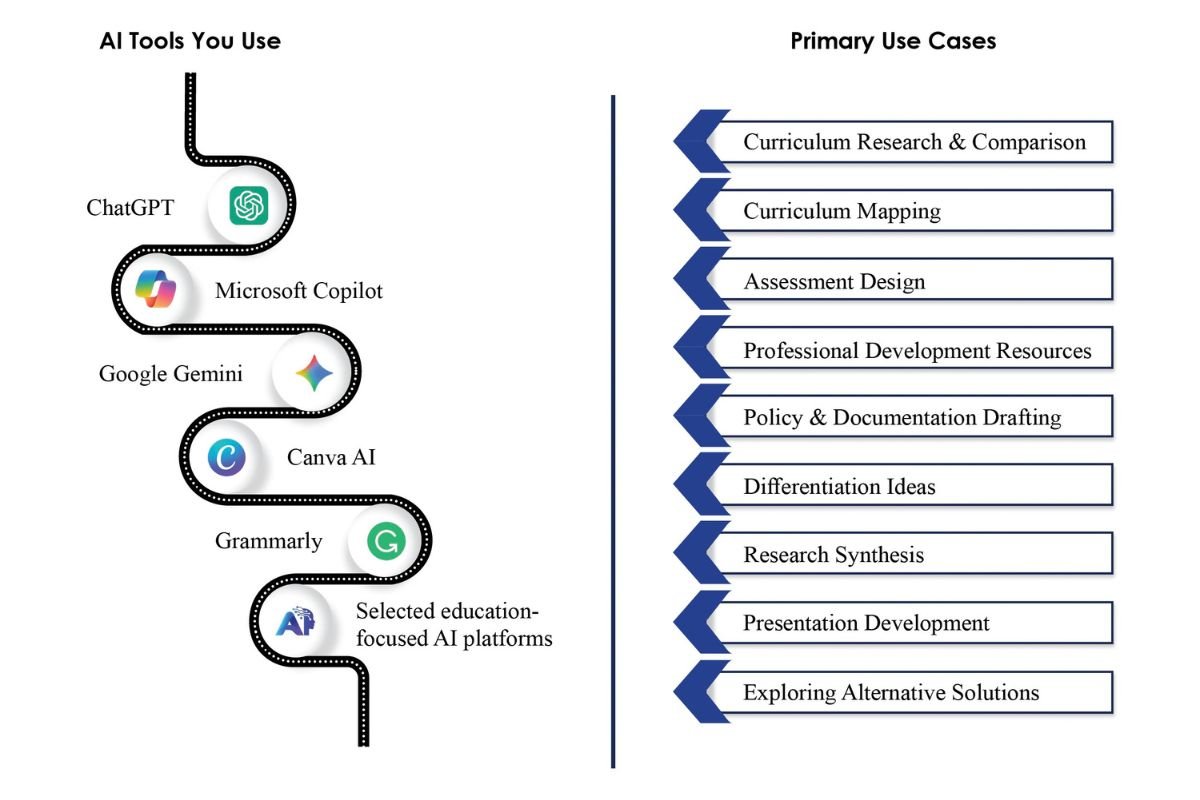
Roopa Lobo strongly believes that AI should inform professional judgement, never replace it. In education particularly, context, ethics, experience and an understanding of children and teachers remain fundamentally human responsibilities.
AI Tools You Use
- ChatGPT
- Microsoft Copilot
- Google Gemini
- Canva AI
- Grammarly
- Selected education-focused AI platforms
Primary Use Cases
- Curriculum Research & Comparison
- Curriculum Mapping
- Assessment Design
- Professional Development Resources
- Policy & Documentation Drafting
- Differentiation Ideas
- Research Synthesis
- Presentation Development
- Exploring Alternative Solutions
Key Benefits
- Greater Speed & Efficiency
- Broader Research Perspectives
- Improved Organisation
- Rapid Iteration
- More Time for Strategic Thinking
- More Time for Human Interaction
Impact on Decision-Making
- Examine possibilities more rapidly
- Compare frameworks and approaches efficiently
- Organise complex information effectively
- Use broader perspectives to inform professional decisions
Recognition of a Journey in Educational Leadership
For Roopa Lobo, this recognition is deeply meaningful because much of curriculum leadership happens quietly behind the scenes. A curriculum leader may not always be the most visible person in a school. However, the systems they create directly influence generations of learners. Their impact shapes what children learn, how teachers plan, how assessment informs instruction, and how educators develop professionally.
Roopa also sees this recognition as belonging partly to the institutions and people who have shaped her journey. Her years at Chatrabhuj Narsee School were particularly formative. CNS gave her opportunities to build, learn, experiment, mentor and grow as an educational leader. The relationships, experiences and lessons from those years remain an important part of who she is professionally.
Today, her work at Campion represents another chapter in that journey, contributing to a respected heritage institution as it navigates curriculum transition and prepares for the future.
Being recognised at the Bharat 2.0 Conclave: Shakti Edition therefore feels less like recognition of a single achievement and more like an acknowledgement of a journey, one built through continuous learning, collaboration and a belief in the transformative power of education.
The Success Code by Roopa Lobo
My enduring principle is that lasting educational change is built through people, not programmes. Curriculum documents can be created, frameworks introduced and policies written, but transformation happens only when educators understand and believe in what they are doing. My years at Chatrabhuj Narsee School taught me the importance of building teams and nurturing people; my work today continues to reinforce that lesson. I believe leadership is ultimately about creating clarity, developing capacity, and then allowing others to take ownership. The true measure of success is not how indispensable you become, but how confidently the work continues without you.