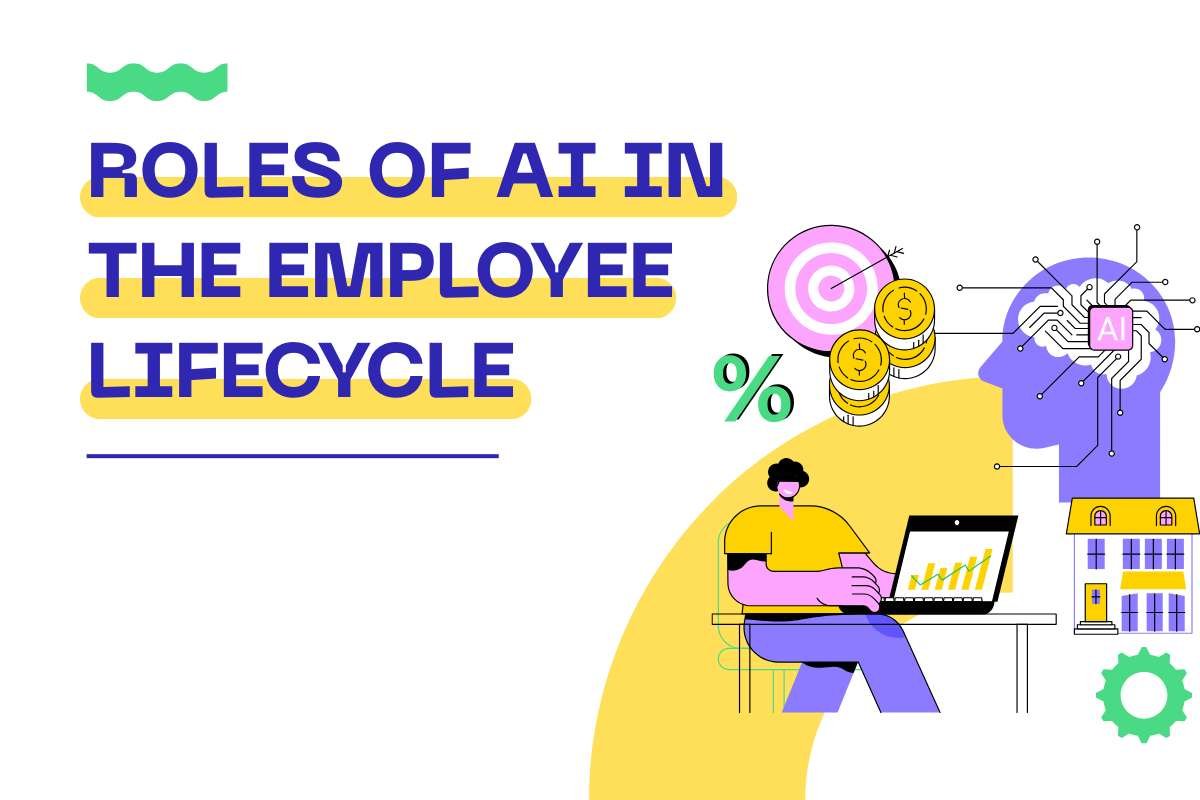


Artificial Intelligence is revolutionizing every stage of the employee lifecycle. From AI-powered hiring tools and personalized onboarding to predictive retention analytics and leadership planning, organizations are using AI to improve employee experiences and business performance. This article explores the key roles of AI in the employee lifecycle, supported by real-world case studies, statistics, and practical implementation strategies for modern businesses.
The workplace is undergoing one of the biggest transformations in modern business history. Artificial Intelligence (AI) is no longer limited to automation in manufacturing or customer service. Today, HR departments worldwide are integrating AI into nearly every stage of the employee lifecycle.
According to the 2025 Global Human Capital Trends Report by Deloitte, over 70% of organizations are actively exploring or implementing AI-powered HR technologies to improve workforce management, employee engagement, and operational efficiency.
At the same time, employees expect personalized experiences, flexible work environments, continuous learning opportunities, and faster career growth. AI helps organizations meet these expectations while improving business outcomes.
The roles of AI in the employee lifecycle now extend across:
- AI in recruitment and talent acquisition
- Onboarding and Integration
- Learning and Development
- Performance management
- Employee Engagement and Well-being
- Career development and Succession planning
Importantly, AI is not replacing HR professionals. Instead, it is helping HR teams focus on strategic and human-centered work like mentoring, relationship-building, leadership development, and organizational culture.
Let’s explore how and why.
Roles of AI in the Employee Lifecycle
Artificial Intelligence (AI) is transforming how organizations manage employees from hiring to leadership development. Companies now use AI to automate repetitive HR tasks, improve employee experiences, reduce costs, and make better workforce decisions.
Below are the major roles of AI in the employee lifecycle, explained with real-world examples and case studies.
1. AI in Recruitment and Talent Acquisition

AI helps organizations find, screen, and hire the right candidates faster and more accurately.
How AI Helps in Recruitment?
AI recruitment systems can:
- Screen thousands of resumes within seconds
- Match candidates with job descriptions
- Conduct chatbot-based interviews
- Analyze candidate skills and experience
- Reduce hiring bias
- Schedule interviews automatically
This reduces manual work for recruiters and speeds up hiring.
Real Example: Unilever
Unilever Careers transformed its hiring process using AI-powered recruitment tools.
The company introduced:
- AI-based candidate assessments
- Video interview analysis
- Automated resume screening
Results:
- Hiring time reduced by almost 75%
- Recruitment became faster and more scalable
- Candidate experience improved significantly
According to the Guardian, Unilever saved thousands of hours in recruitment while improving hiring efficiency.
2. Onboarding and Integration

AI improves employee onboarding by creating personalized and smoother experiences for new hires.
How AI Helps in Onboarding?
AI onboarding systems can:
- Automate paperwork and documentation
- Provide virtual HR assistants
- Create personalized training schedules
- Answer employee questions instantly
- Track onboarding progress
This helps employees adapt faster to their new workplace.
Real Example: IBM
IBM’s Official Website uses AI-powered virtual assistants for employee onboarding.
Its AI assistant helps new hires with:
- IT setup
- Company policies
- Payroll support
- Benefits enrollment
- Training guidance
Results:
IBM reported improved onboarding efficiency and reduced HR workload. New employees received faster support and better onboarding experiences.
3. Learning and Development

AI helps organizations personalize employee training and continuous learning.
How AI Helps in Learning and Development?
AI-powered learning platforms can:
- Identify skill gaps
- Recommend personalized courses
- Track learning progress
- Suggest certifications
- Predict future skill requirements
Employees receive training tailored to their career goals and job roles.
Real Example: IBM SkillsBuild Platform
IBM SkillsBuild uses AI to provide personalized learning experiences.
The platform:
- Recommends courses based on employee skills
- Suggests career pathways
- Helps employees prepare for future roles
Results:
IBM improved workforce upskilling and internal mobility while preparing employees for emerging technologies like AI and cloud computing.
According to LinkedIn Learning, organizations investing in AI-powered learning systems see better employee engagement and retention.
4. Performance Management

AI helps companies move beyond traditional annual performance reviews toward continuous feedback systems.
How AI Helps in Performance Management?
AI systems can:
- Track employee goals in real time
- Measure productivity trends
- Analyze engagement data
- Detect burnout risks
- Provide continuous feedback insights
Managers can make more objective and data-driven decisions.
Real Example: Adobe
Adobe’s Official Website replaced traditional annual reviews with a continuous feedback system called “Check-In.”
AI and analytics tools helped managers:
- Monitor employee progress regularly
- Conduct ongoing conversations
- Improve performance tracking
Results:
Adobe reported:
- Higher employee engagement
- Reduced voluntary turnover
- Improved manager-employee communication
The system became one of the most recognized examples of modern performance management.
5. Employee Engagement and Well-Being

AI helps organizations understand employee satisfaction, mental well-being, and the workplace
engagement.
How AI Supports Employee Engagement?
AI tools can:
- Analyze employee feedback
- Monitor workplace sentiment
- Detect burnout signs
- Recommend wellness support
- Conduct pulse surveys
This helps organizations improve employee happiness and retention.
Real Example: Microsoft
Microsoft Viva uses AI-powered employee experience tools to improve workplace well-being.
Microsoft Viva analyzes:
- Employee collaboration patterns
- Meeting overload
- Productivity trends
- Work-life balance indicators
Results:
The platform helps managers identify employee burnout risks and improve workplace engagement through better communication and wellness support.
According to the Microsoft Work Trend Index, employee well-being and flexibility are now major workplace priorities globally.
6. Career Development and Succession Planning

AI helps organizations identify future leaders and prepare employees for career growth opportunities.
How AI Helps in Career Development?
AI systems can:
- Identify high-potential employees
- Recommend career paths
- Match employees with internal job opportunities
- Predict leadership gaps
- Suggest development programs
This strengthens long-term workforce planning.
Real Example: PepsiCo
PepsiCo Careers uses workforce analytics and AI-driven talent management tools to support leadership development and succession planning.
The company analyzes:
- Employee performance
- Leadership potential
- Learning progress
- Career readiness
Results:
PepsiCo improved internal promotions and leadership pipeline planning while reducing dependence on external executive hiring.
According to Deloitte Human Capital Trends, organizations using AI in succession planning are better prepared for future workforce challenges.
Conclusion:
AI is transforming modern workplaces by reshaping the roles of AI in the employee lifecycle. From hiring and onboarding to retention and leadership development, organizations are using AI to create smarter, faster, and more personalized HR experiences.
However, technology alone is not enough. The most successful companies combine AI-driven insights with human empathy, ethical governance, and transparent communication.
The future of HR belongs to organizations that use AI responsibly to empower employees, improve workplace experiences, and build stronger, more adaptable workforces.
As the roles of AI in the Employee Lifecycle adoption continue to grow, businesses that embrace strategic and ethical implementation will be better positioned to attract top talent, improve retention, and succeed in the evolving world of work.