


A good idea can start a business, but can it sustain it? No, it cannot. Founders must turn that idea into a firm that can grow. That means managing money, customers, people, products, and growth.
Each part needs clear choices, quick action, and steady focus. For women founders, strong leadership can shape these choices each day. They must balance vision with the needs of the business.
They also need plans that support growth without losing control. These startup challenges can test even skilled and driven founders.
I will break down the main challenges startups face today. You will also find practical ways to handle each one.
What Do Startup Challenges Mean?
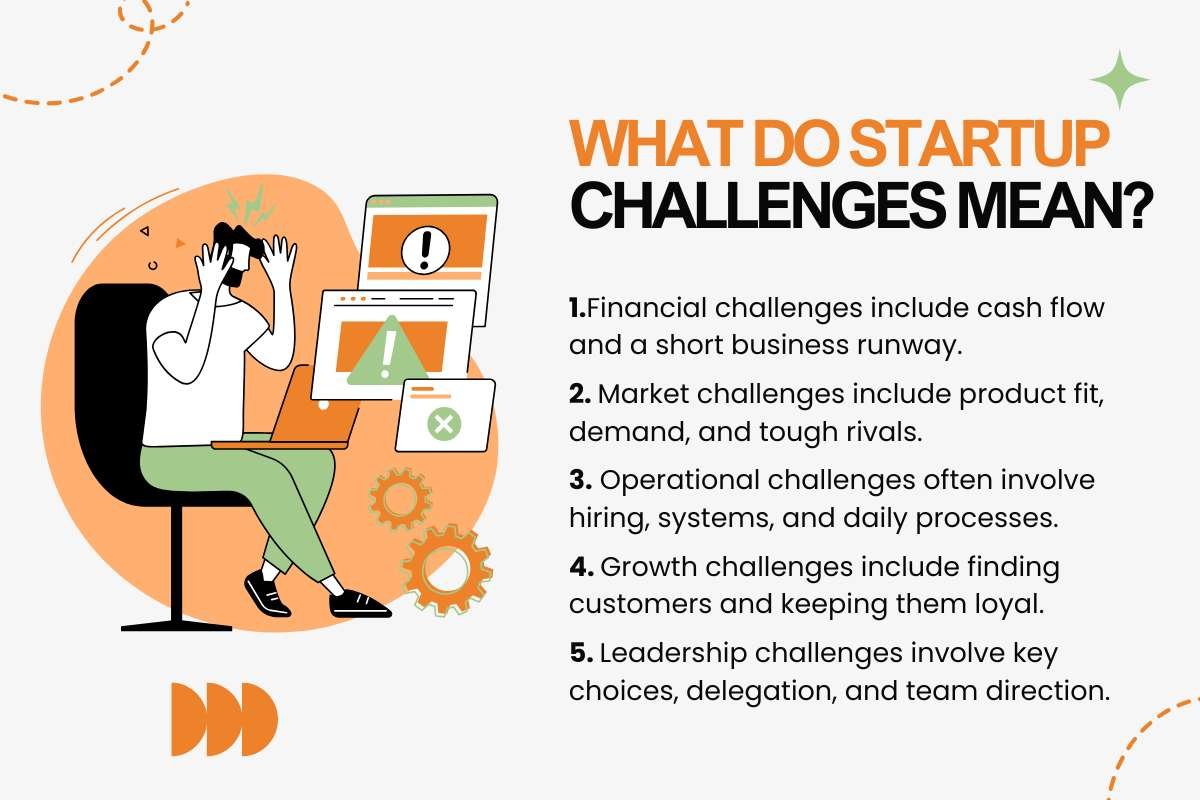
Startup challenges are problems founders face while building a business. These problems can arise during launch, daily work, or growth.
There are five types of challenges that startups may face. These are financial, market-related, operational, growth-related, and leadership-related.
- Financial challenges include cash flow and a short business runway.
- Market challenges include product fit, demand, and tough rivals.
- Operational challenges often involve hiring, systems, and daily processes.
- Growth challenges include finding customers and keeping them loyal.
- Leadership challenges involve key choices, delegation, and team direction.
The impact of these startup challenges depends on the business stage. Early startups often focus on survival, fit, and steady sales. Scaling startups face process gaps, larger teams, and faster growth.
All the challenges your startup may face come as a mix of these five types. Let’s talk about them.
1. Managing Cash Flow and Limited Resources
Cash flow can decide how long a startup stays in business. Founders must track revenue, expenses, burn rate, and runway. Strong sales can still leave a business short on cash.
Late customer payments can create gaps between income and costs. I suggest tracking monthly burn, fixed costs, and receivables. Also, check how many months your cash can support.
This helps founders spot risks before cash runs too low. It also supports better choices about hiring, tools, and growth.
2. Finding Product-Market Fit

A strong idea can still miss a real customer need. Founders must prove people will pay for the solution. Start with customer interviews, then test a simple MVP. Use feedback to improve the product through small changes.
Ask four key questions before you scale the business.
#1: Who has this problem?
#2: How often does it happen?
#3: What do they use now?
#4: Would they pay more?
Quibi shows how poor market fit can sink a startup. The company spent heavily but failed to gain lasting demand. Validate demand first, then invest more in growth.
3. Building the Right Team
Hiring gets harder when a startup grows beyond founder-led work. Early employees must match both skills and business stages. Founders should hire for gaps, not just shared backgrounds.
In 2026, 72% of employers struggle to fill roles globally. Clear roles can stop small teams from wasting time. Unneeded hires can also raise costs before growth feels stable.
As teams grow, founders must stop owning every choice. Delegation helps leaders reduce bottlenecks and build stronger teams. This makes hiring a key skill for women startup founders too.
4. Getting Customers without Burning Cash

Winning customers gets harder when large brands already hold trust. Startups can use content, referrals, partnerships, and online communities. Paid ads can help, but costs can rise fast.
Customer acquisition cost shows what each new customer costs. Compare CAC with customer lifetime value before raising ad spend.
For example, test referrals before buying costly search ads. Track leads, sales, cost, and repeat orders each month. Then scale channels that bring steady sales at low cost.
This approach helps founders grow without burning cash too fast.
5. Handling Competition and Changing Markets
Competitors can copy features, cut prices, or win customers faster. Founders should watch customer needs instead of rival moves alone. A clear niche can help a startup stand out. Strong service, speed, quality, and trust can also set it apart. Women founders need not copy old leadership models.
Their market insight can shape a stronger business edge. Keep testing what customers value as markets change fast. Then adjust your offer before demand starts to shift. This makes market awareness part of daily startup work.
6. Making Decisions While Scaling

Scaling brings more people, customers, tasks, and choices each day.
Founders cannot make every choice as teams grow larger.
I use three groups to sort decisions with less stress. Mark each choice as urgent, important, or easy to reverse. Set basic KPIs to track progress without adding complex systems. Delegate work when others can handle it well.
Learn to say no when a task lacks clear value. This shift turns startup leadership into shared decision-making. It also helps women founders lead with greater clarity.
A Practical Startup Challenge Checklist
Use this quick check to spot weak areas early. I would review these points every month with my team.
| Area | Ask yourself |
|---|---|
| Cash | How many months of runway remain? |
| Customers | What share of customers return or renew? |
| Product | What proof shows customers need this product? |
| Team | Which tasks still depend only on the founder? |
| Marketing | Which channel brings customers at a fair cost? |
| Competition | Why should customers choose this startup today? |
| Growth | Which process could fail if demand doubles? |
These questions can expose startup challenges before they grow. They also help founders focus on the next best action.
Conclusion:
Building a company takes more than a strong business idea. Founders need financial discipline to keep their firms healthy. They also need customer insight to guide product choices. Strong teams can share work and support steady growth.
Adaptable leadership helps founders respond when needs change. For women in leadership roles, growth brings new choices and duties. Each stage calls for clear thinking and steady action. Do not try to fix all startup challenges at once. Find your biggest challenge today and solve that one first.
FAQs
1. What are the biggest challenges faced by startups?
Startups often struggle with cash flow, product-market fit, and hiring. They may also face customer growth and scaling issues. Each challenge can slow growth when founders ignore it.
2. What is the biggest challenge for a new startup?
The biggest challenge depends on the startup’s current stage. Early founders often need to prove real customer demand. They must also manage limited cash and other resources.
3. How can women entrepreneurs overcome startup challenges?
Women entrepreneurs can build strong business and finance skills. They should test demand before spending heavily on growth. Mentors and strategic networks can also support better decisions. Clear delegation helps founders manage growing teams with less strain.
4. How can startups manage challenges while scaling?
Startups need clear processes, useful KPIs, and strong delegation. Founders should track cash flow and review costs often. They should also hire before growth creates major team gaps. These steps help teams handle growth without losing control.