


Tigers roam, lion sleeps, rhinos rest, and monkeys chatter in the largest forest in India. The forest is home to big and small. Not only do animals dwell in them, but also the adivasis who have called it their home since the beginning of time. Forests are the soul of our country and the heart of our planet, considered sacred or perhaps holy.
According to the GFRA data 2025, India ranks 9th globally in total forest area. Our country has over 7.15 lakh sq. km of forested area. So, if it makes you wonder which is the largest forest in India. Let’s find out!
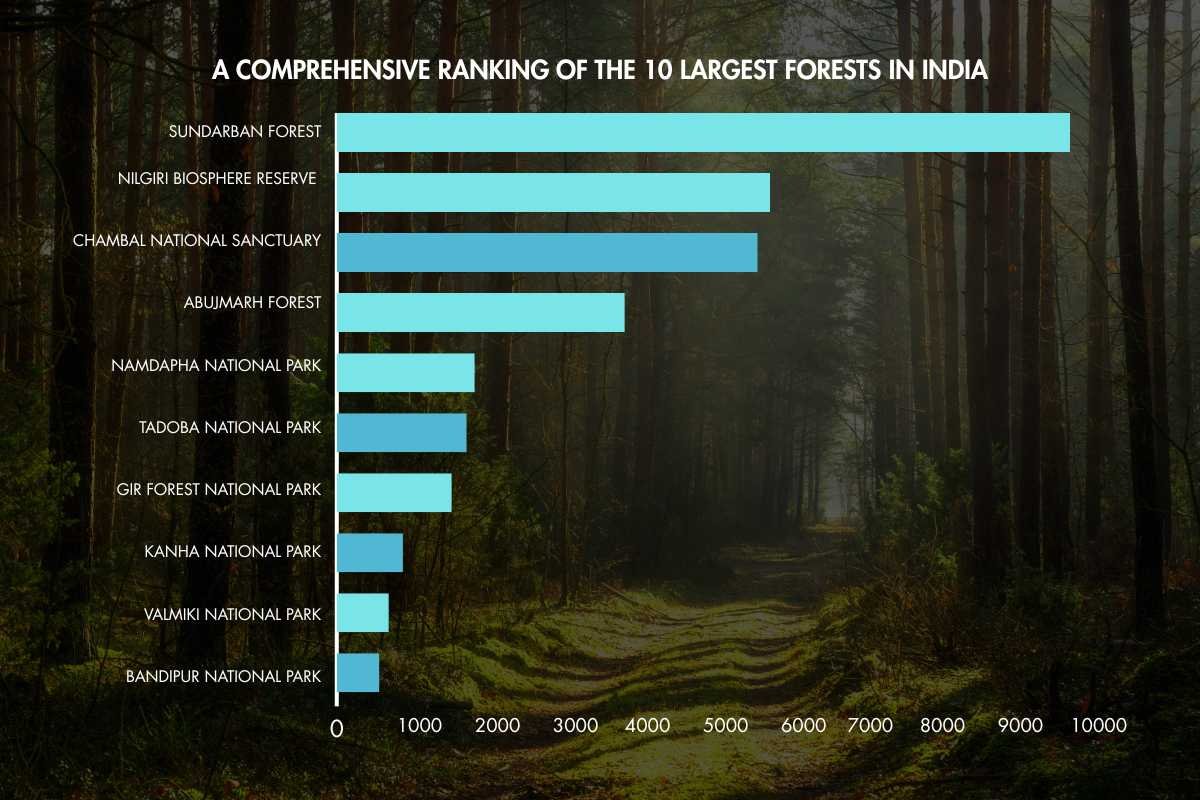
A Comprehensive Ranking of the 10 Largest Forests in India
Here is a list of forests in India ranked by their size. India measures forests by two main factors: Forest Area and Recorded Forest Area (RFA). In this blog, we will take a look at all types of forests, whether it is a national park or a biosphere, and find out the 10 largest ones.
We will use these standards to rank our 10 largest forests. Here’s who they are:
1. Sundarban Forest
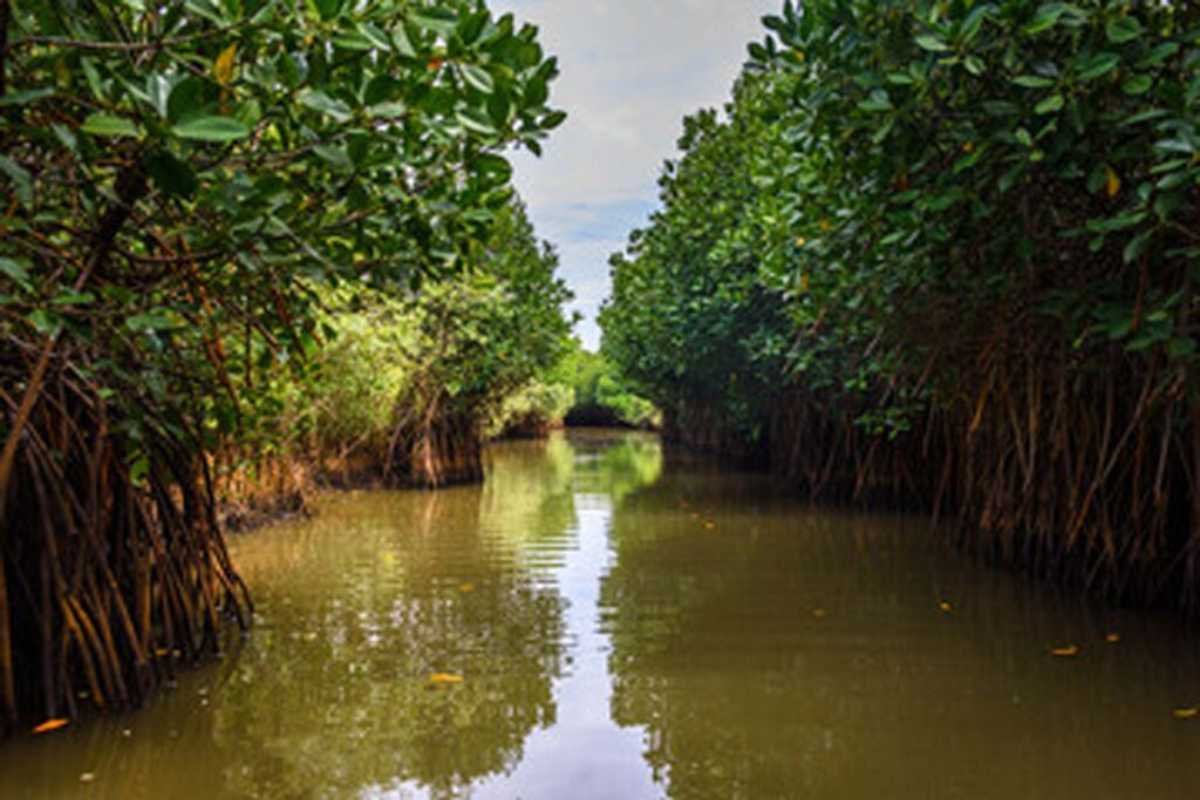
- Area: 10,000 sq. km (India’s portion is 4000 sq. km)
- State: West Bengal & Bangladesh
Sundarban is much more than the largest forest in India; it is also the world’s biggest contiguous mangrove forest. The Sundarbans Forest is a vital coastal barrier. This vast mangrove area lies in the lower Ganges-Brahmaputra Delta of India and Bangladesh. It spans about 10,000 square kilometres. The forest protects people inland from powerful cyclones and floods.
It is home to many wild creatures, including the unique Bengal tiger and various birds. People rely on this ecosystem for its diverse marine life and natural protection. UNESCO recognises its global importance.
2. Nilgiri Biosphere Reserve
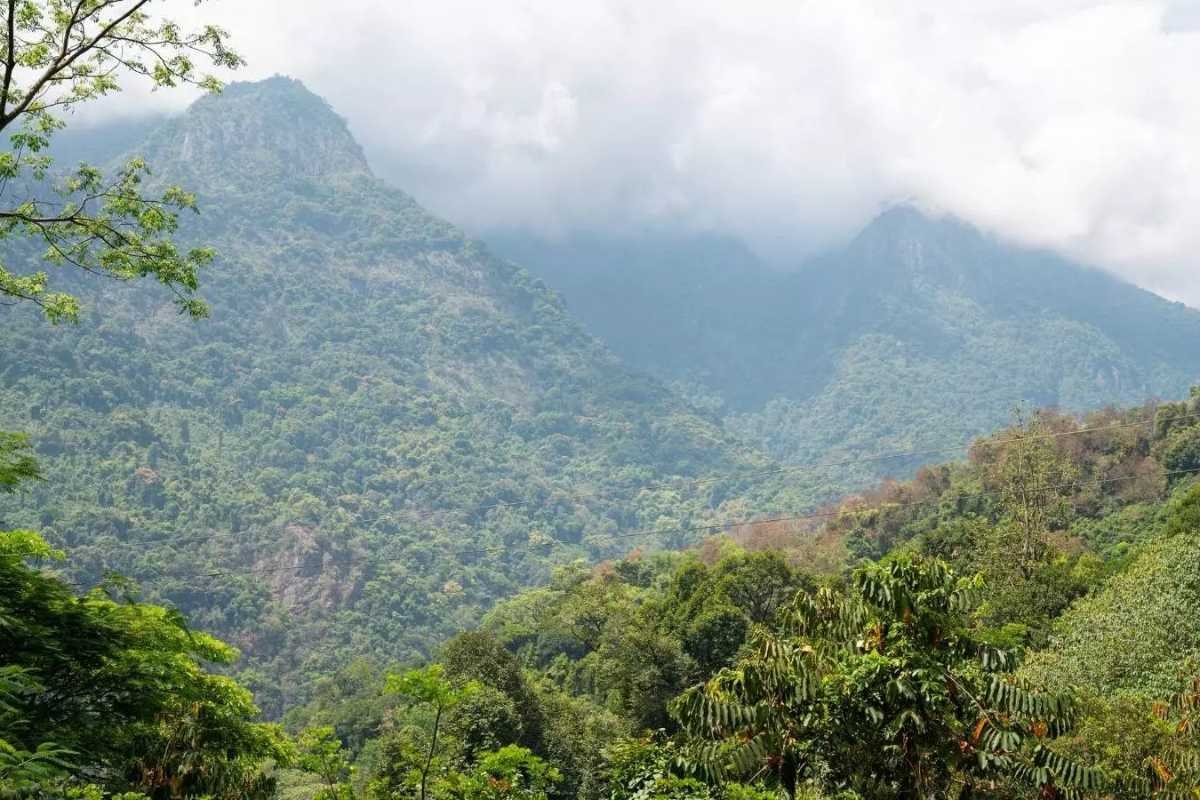
- Area: 5,520 sq. km
- State: Tamil Nadu, Karnataka, Kerala
The Nilgiri Biosphere Reserve is the largest biosphere in India under government protection. It is a vital protected area across Tamil Nadu, Karnataka, and Kerala. It was India’s first reserve designated as a UNESCO World Heritage Site in 1986. Covering over 5,500 square kilometres, it protects an incredible variety of life.
The reserve is home to many plant species found nowhere else. It provides a crucial habitat for large animals such as tigers and Asian elephants. The local Toda, Kota, and Irula tribes live here. The reserve promotes conservation and sustainable living for people and wildlife.
3. Chambal National Sanctuary
- Area: 5,400 sq. km
- State: Madhya Pradesh, Rajasthan, Uttar Pradesh
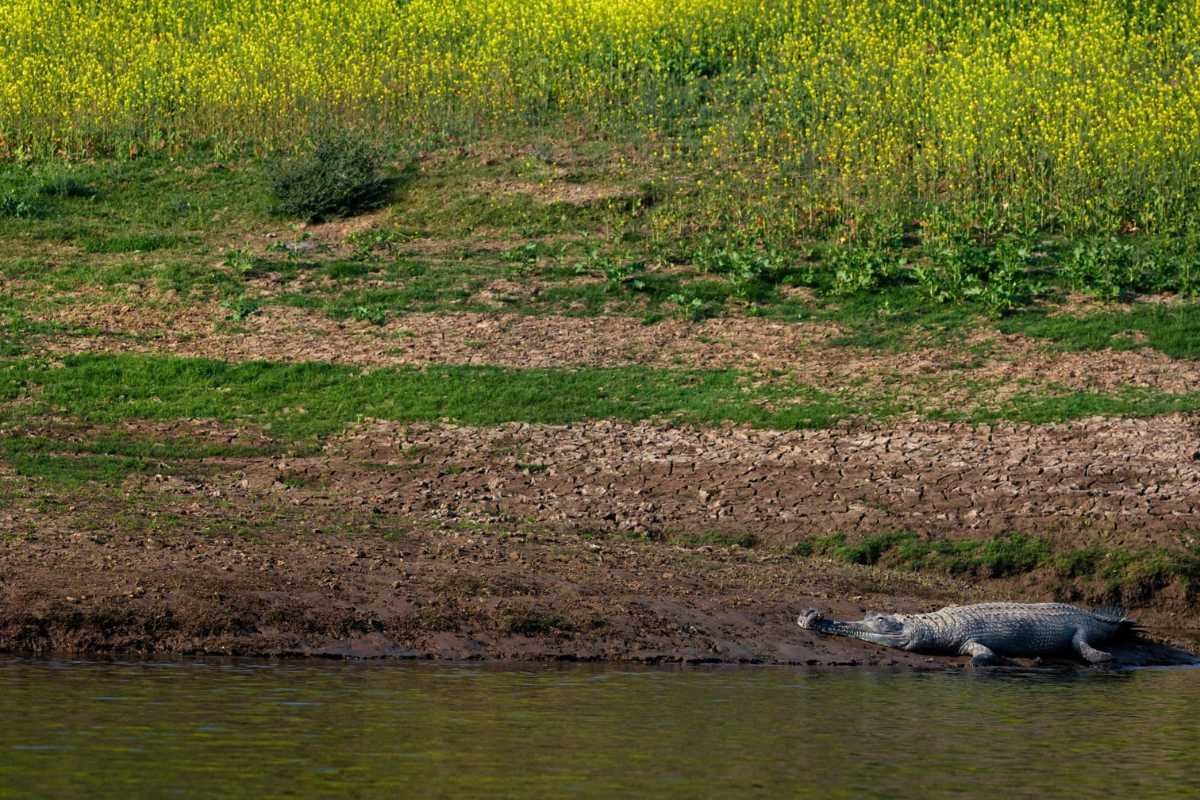
There was a time when it was home to the infamous dacoit, Phoolan Devi. Chambal has become a major ecosystem today. The National Chambal Sanctuary protects a long, crucial stretch of the Chambal River. This reserve covers about 5,400 square kilometres across Rajasthan, Madhya Pradesh, and Uttar Pradesh. It gives a safe home to many rare animals. The critically endangered gharial, an unusually long-snouted crocodile, lives here.
People work hard on captive breeding programs to save the gharial. The sanctuary also helps protect the endangered Ganges river dolphin and over 320 bird species. This clean river ecosystem is vital for India’s wildlife.
4. Abujmarh forest
- Area: 4000 sq. km
- State: Chhattisgarh
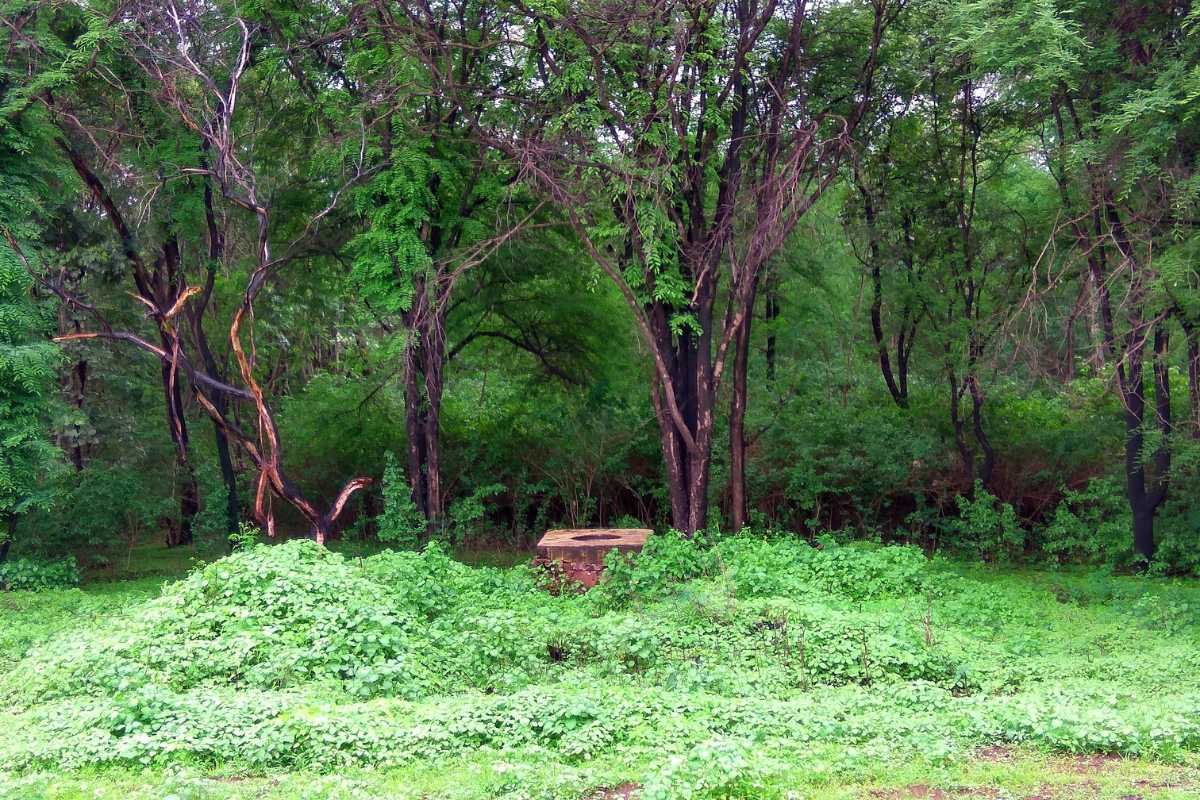
The Abujmarh Forest is a large, isolated woodland in southern Chhattisgarh. This rugged area covers about 4,000 square kilometres with dense trees and deep valleys. It is home to several indigenous tribes, including the Abujhmarhia people. Heavy monsoon rains and a lack of roads make many of their villages difficult to reach for half the year.
The forest is rich in wildlife, and people proposed turning it into a biosphere reserve. Despite its isolation and administrative challenges, it remains a vital and unique part of the country’s biodiversity and ecosystem.
5. Namdapha National Park
- Area: 1,985 sq. km
- State: Arunachal Pradesh
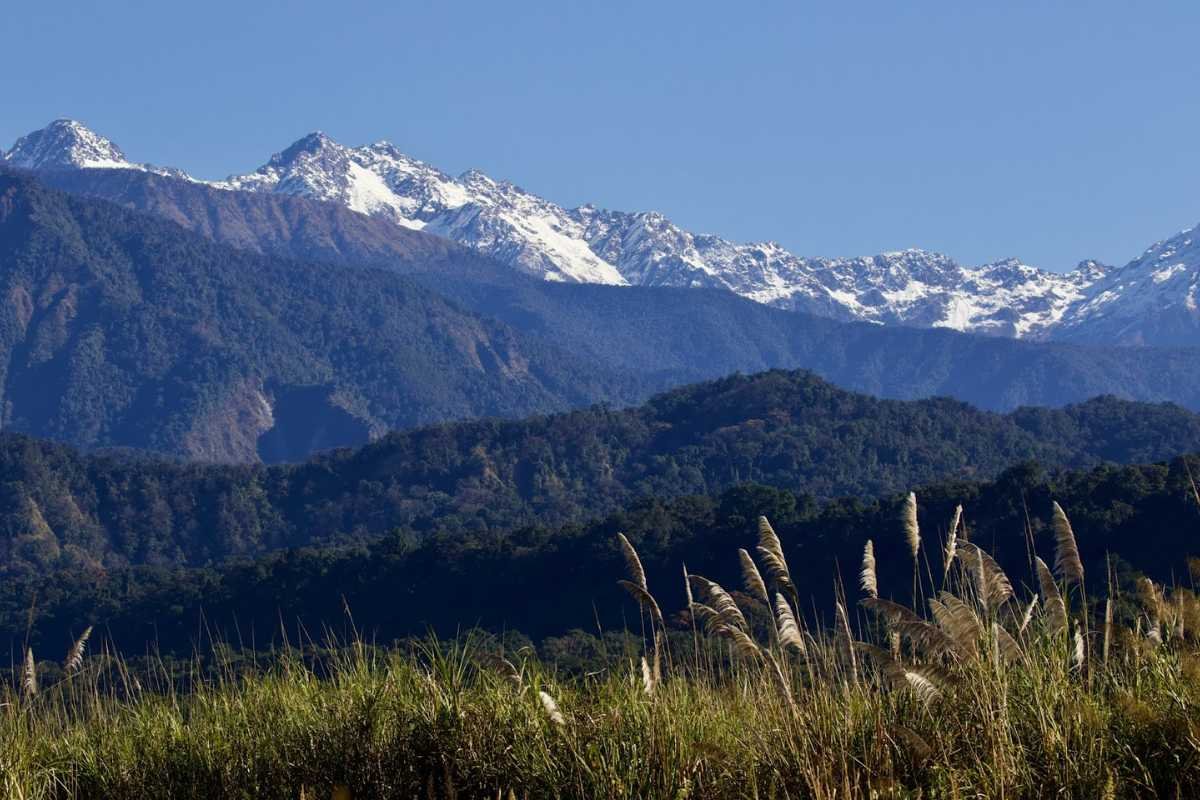
The Namdapha National Park is a rich haven of life near the India-Myanmar border. This vast area covers nearly 2,000 square kilometres, with land rising steeply from low valleys to high mountains. It holds India’s northernmost rainforests. As the largest forest in India’s seven sisters, it is also a central figure for the country’s ecosystem.
Only four cat species inhabit this park: tigers, leopards, snow leopards, and clouded leopards. People visit this beautiful Eastern Himalayan hotspot to see rare animals such as the Hoolock gibbon and enjoy challenging trekking. It is a vital protected area for conservation.
6. Tadoba National Park
- Area: 1,727 sq. km
- State: Maharashtra
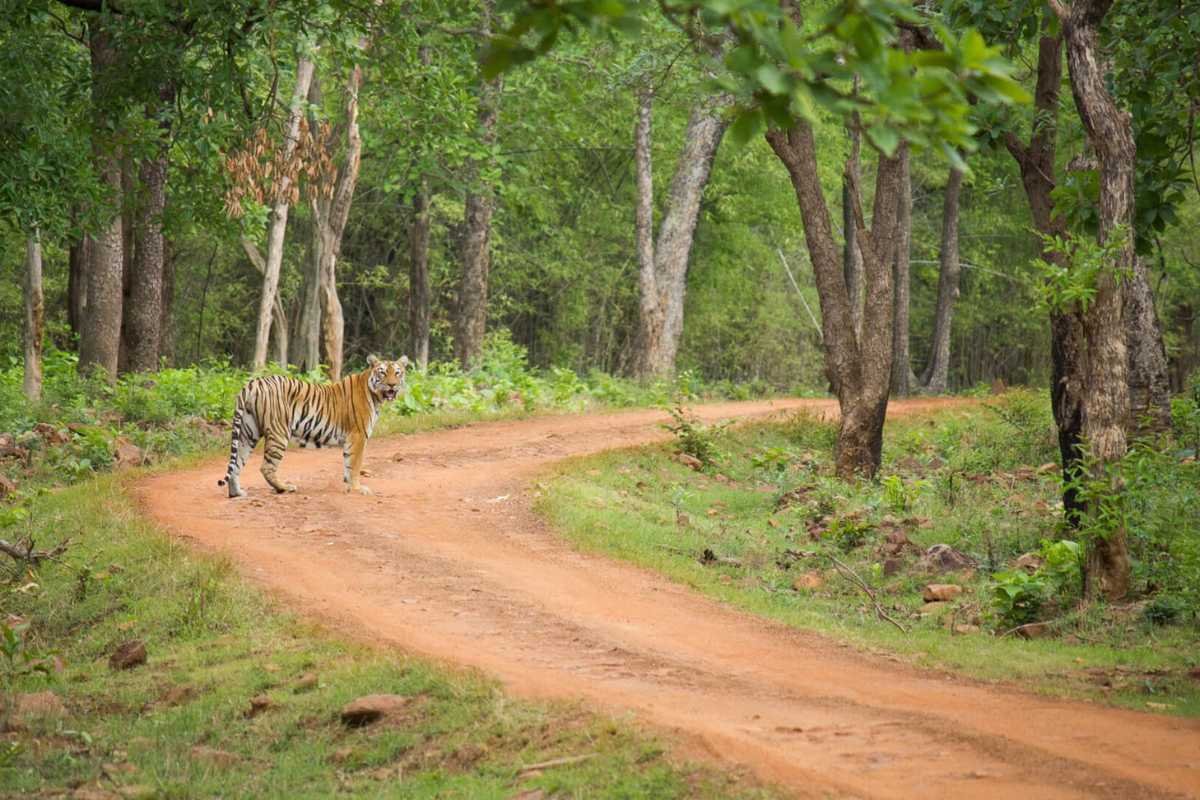
It is the oldest and largest tiger reserve in Maharashtra, with 66 to 88 tigers in the reserve. The Tadoba National Park is a top destination for seeing Bengal tigers in Maharashtra. This reserve, near Chandrapur, covers a large area of dry deciduous forests and scenic lakes. It protects a healthy population of Bengal tigers, leopards, sloth bears, and gaur.
The park also provides a home for many birds and marsh crocodiles in its wetlands. People often visit to take jeep safaris and experience the forest’s beauty and majesty. The park plays a crucial role in safeguarding these animals.
7. Gir Forest National Park
- Area: 1,412 sq. km
- State: Gujarat
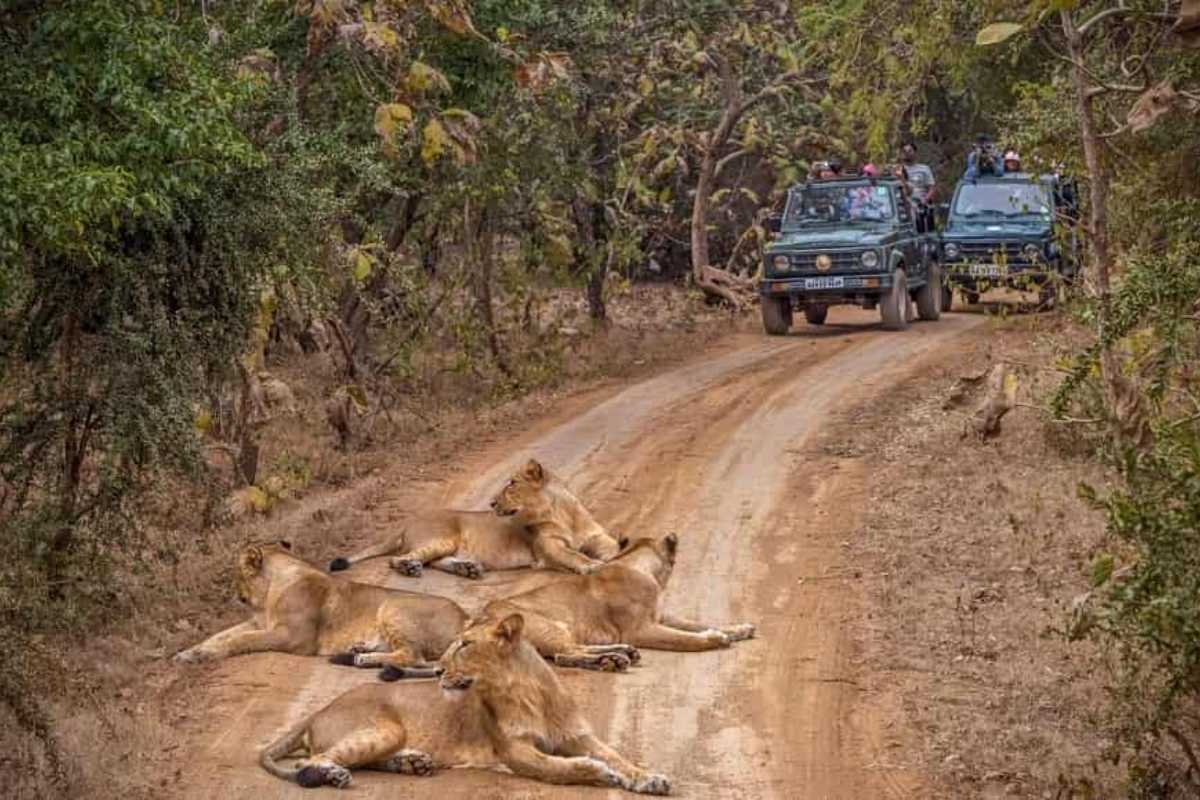
The Gir Forest National Park is the last home for the magnificent Asiatic lion. This special place is in Gujarat and covers over 1,400 square kilometres. If not for the people who worked hard to save the Asiatic lion from extinction, we would have lost a magnificent species. But through hard work, we have successfully grown their numbers to ~700+. The forest features beautiful dry deciduous trees and scrubland.
Besides lions, it is home to leopards, many deer species, and over 300 bird species. Visitors can take safaris to experience this biodiversity hotspot and see the lions in their natural habitat.
8. Kanha National Park
- Area: 940 sq. km
- State: Madhya Pradesh
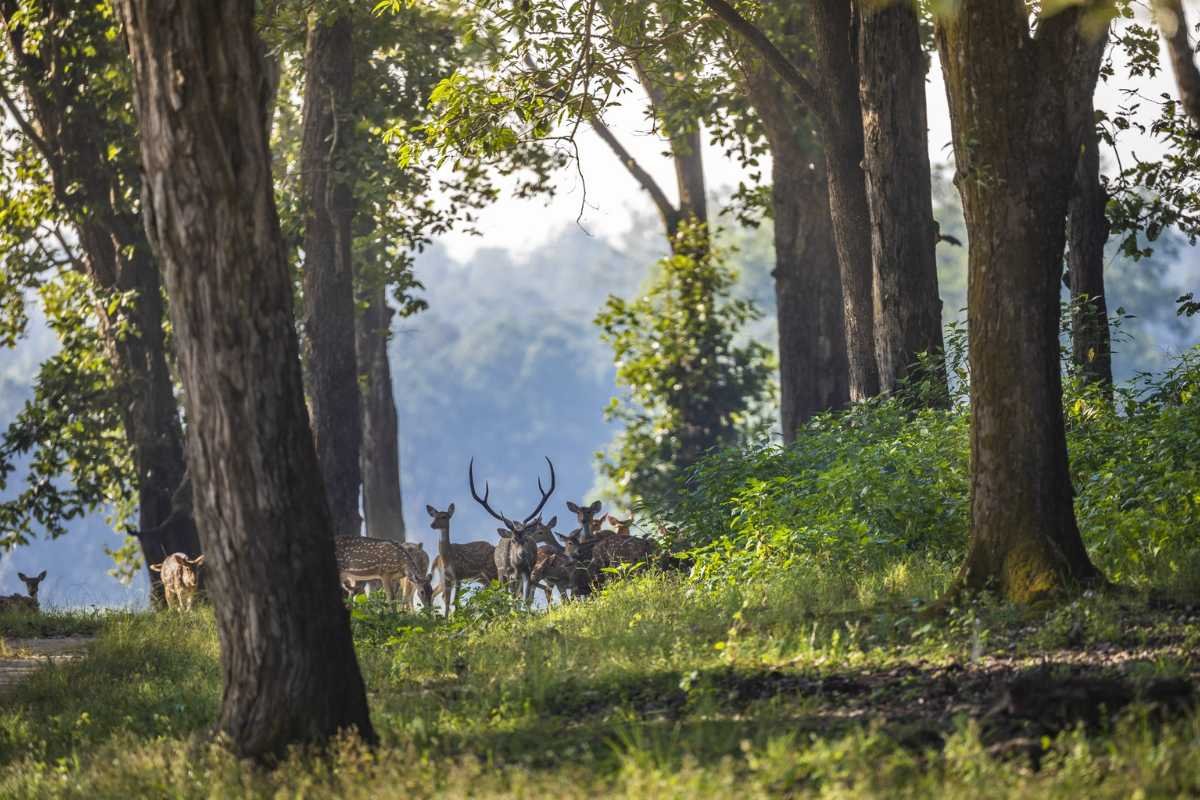
This is the jungle that inspired ‘The Jungle Book.’ The Kanha National Park is a successful conservation story in the Maikal hills of central India. The national park is part of a large tiger reserve that covers nearly 2,000 square kilometres of beautiful sal forests and open meadows. It is one of the best places to see the great Bengal Tiger and other large animals such as leopards and gaur.
The park successfully brought back the endangered barasingha (swamp deer) population. Visitors can explore the park on safaris to experience this rich tropical forest. The management protects this vital habitat for all its inhabitants.
9. Valmiki National Park
- Area: ~900 sq. km
- State: Bihar
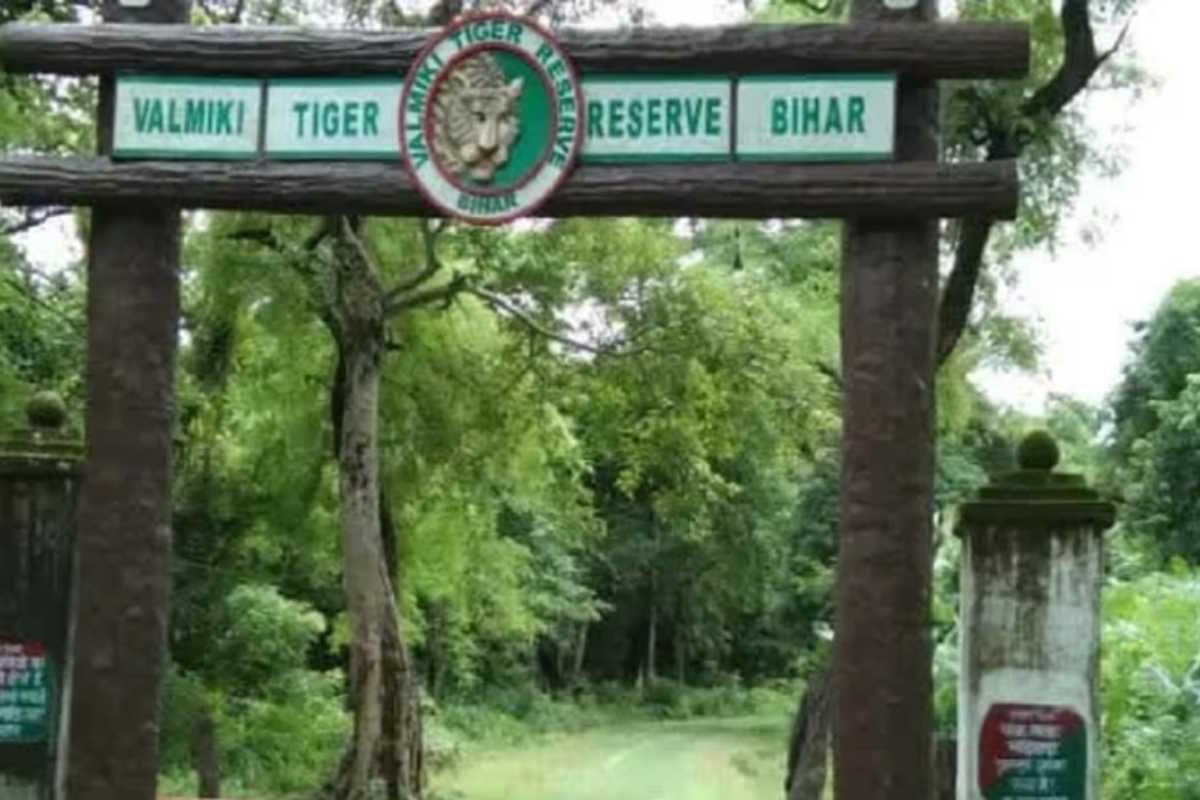
The Valmiki National Park is Bihar’s largest forest in India and a crucial tiger reserve. It sits in the Sivalik Hills along the India-Nepal border, right next to Nepal’s Chitwan National Park. The reserve covers nearly 900 square kilometres of sal forests, grasslands, and swamps. People have worked hard to protect the Bengal tiger here, and the population is growing.
This area also provides a home for elephants, rhinos, leopards, and many types of deer. The park’s location near the Gandak River makes it rich in biodiversity and also a prime location for boat safari trips.
10. Bandipur National Park
- Area: 872 sq. km
- State: Karnataka
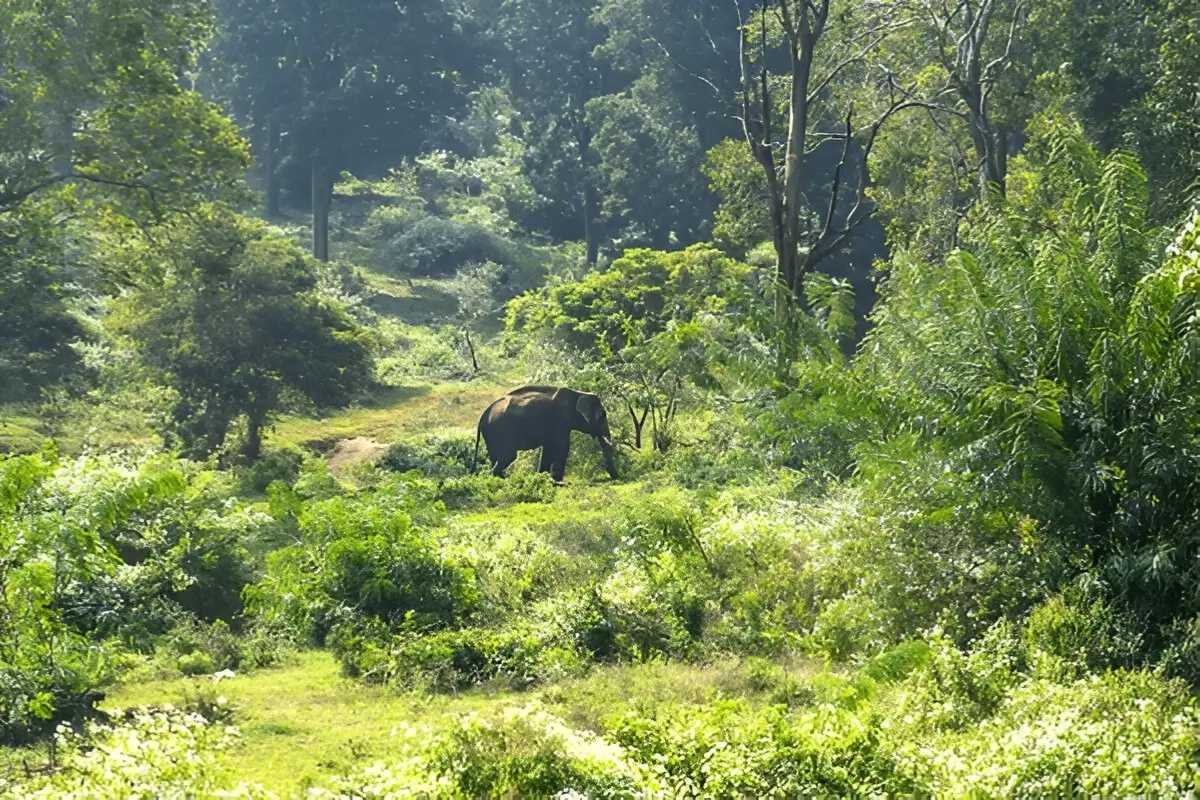
The Bandipur National Park protects India’s important wildlife, where the Deccan Plateau meets the Western Ghats. The national park is part of the Nilgiri Biosphere, along with two more parks. This core area covers 872 square kilometres. It is one of the country’s most vital tiger reserves, with a large population of the magnificent Bengal tiger.
The park also protects the largest group of Asian elephants in South India, along with leopards and gaur. Bandipur joins three other parks, creating a massive, safe space for animals. Visitors can enjoy safaris to see these creatures, but traffic rules help keep the wildlife safe.
Why India’s Forests Matter? Carbon Storage, Biodiversity, and Indigenous Roots
As mentioned above, India ranks 9th globally in terms of total forest area. According to that report, it is also the 5th largest carbon sink globally. The forests in India consumed over 150 Mt of CO₂ per year between 2021 and 2025.
The largest forest in India is home to many species, allowing the protection and research of endangered species. India’s 7.15 lakh sq. km forest area sustains 1,300+ mammals, 1,200 birds, 6,000 fungi, and thousands of insects, including tigers (3,682 in 2022), elephants, and rhinos.
Thanks to these forested areas, we were able to bring back species, such as Bengal Tigers and Ghariyal, which were on the brink of extinction.
And beyond preservation, Indian forests are also ancestral homes to tribal folks. Every forest in India has a tribe that holds it sacred.
Why the Vast Western Ghats Still Don’t Qualify as the Largest Forest in India?
Do you know Western Ghats is 160,000 sq. km in size? The Ghats start in Gujarat and end in Tamil Nadu, surpassing six states. Then why wasn’t it number one? Why isn’t the Western Ghats India’s largest forest?
Western Ghats are a hotspot of biodiversity. It is said there are still undiscovered species of animals and plants that dwell in the Ghats. It is beautiful, green, luscious, and almost sacred. But it isn’t a forest. It is a high montane forest ecosystem. The place is also the 8th hottest hotspot of biodiversity globally.
Think of it this way, the Western Ghats isn’t one big forest that covers six states, it is many smaller forests coming under a single umbrella.
Also Read:
Conclusion:
And that is all you must know about the largest forest in India. The role of all the forests mentioned in the blog cannot be undermined. They are preserver and protectors of endangered species, they are home to Indian biodiversity, and they are sacred to the tribes that dwell in them.
Our goal must be to protect these protectors and preserve these preservers. If we don’t protect the largest forest in India, there will be no India in the near future. Our planet is the green and blue dot; if we don’t protect the green, we won’t have a blue either. Our future, our planet, and our future all depend on these ecosystems and the creatures that dwell in them.
FAQs
1. What famous animal lives in the Sundarbans?
It is home to the world’s largest population of Bengal tigers. These tigers have adapted to live in the unique mangrove environment. It also protects crocodiles and many birds.
2. What is the main purpose of the Chambal Sanctuary?
It protects a 425 km stretch of the clean Chambal River. Its primary role is to save the critically endangered gharial, a long-snouted crocodile.
3. What rare plants and animals does the reserve protect?
It protects over 3,500 species of flowering plants, with many found only here. The largest forest in India is also home to tigers, elephants, and leopards.