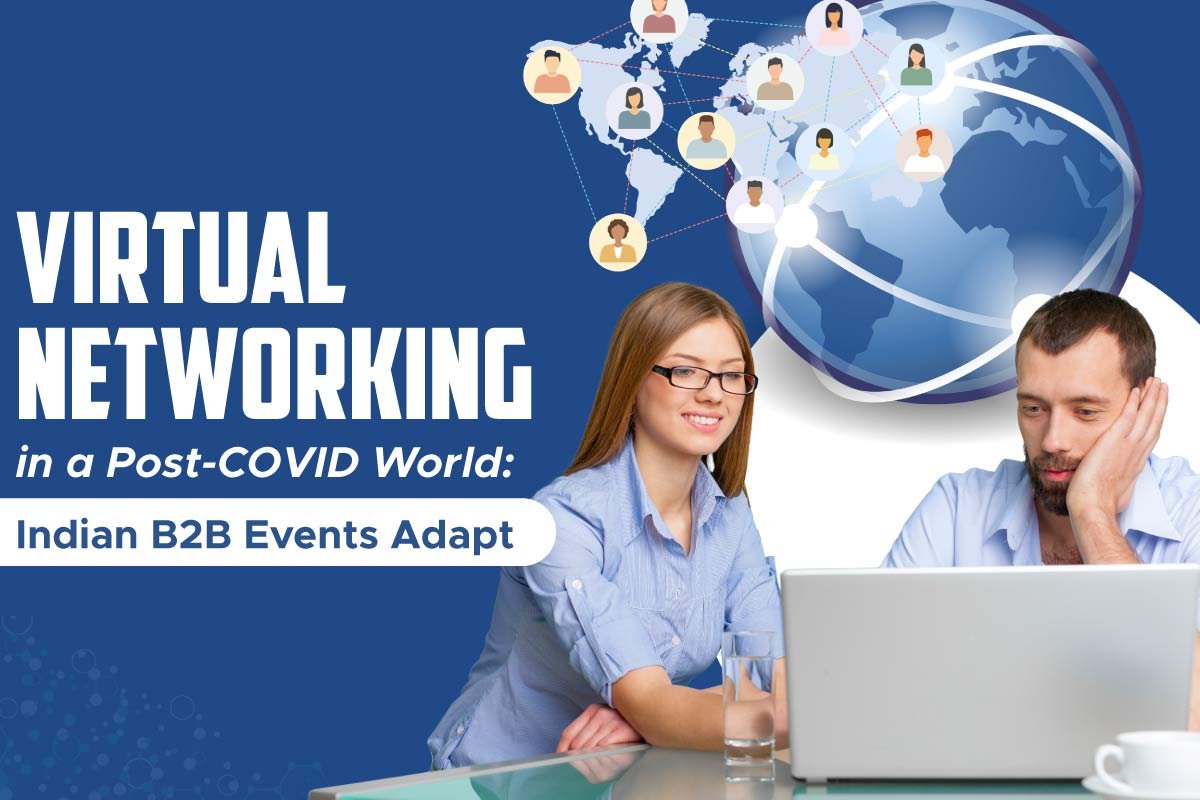


The COVID-19 pandemic fundamentally reshaped the global event ecosystem, accelerating the digital transformation of how professionals connect, collaborate, and conduct business. For India’s B2B event industry, a sector long defined by in-person exhibitions, conferences, and trade fairs, this period marked a historic inflection point. The rise of virtual and hybrid networking platforms not only preserved business continuity amid physical restrictions but also redefined the possibilities of reach, engagement, and ROI.
As the world transitions into a post-COVID era, the conversation is no longer about returning to “normal.” Instead, it is about reinventing networking through digital-first strategies that complement, rather than replace, physical interactions. Indian B2B events are now at the forefront of this transformation, blending technology, personalization, and analytics to create immersive, scalable, and inclusive experiences.
The Shift from Physical to Phygital
Before 2020, India’s B2B events industry valued at over USD 7 billion relied predominantly on physical exhibitions and trade fairs. The pandemic forced an overnight pivot to virtual platforms, giving rise to digital expos, online product demos, and AI-enabled matchmaking. What began as a survival response soon evolved into a strategic advantage.
Today, hybrid or “phygital” events dominate the landscape, merging physical presence with virtual accessibility. This dual format offers an unprecedented blend of scale and intimacy—enabling participants from across geographies to engage seamlessly while still preserving the personal connection that in-person meetings provide. Indian organizers such as CII, FICCI, and Nasscom have successfully adopted hybrid frameworks, expanding their international audience base while significantly reducing logistical costs.
Technology as the New Trade Floor
-.jpg)
In the post-COVID era, technology is no longer a backend facilitator it is the core of the event experience. Virtual networking platforms now integrate tools that simulate the serendipity of face-to-face encounters. AI-powered matchmaking connects attendees based on shared interests, industry segments, or business objectives, while AR/VR product demonstrations allow exhibitors to showcase complex machinery or prototypes virtually.
The use of data analytics and engagement heatmaps helps organizers track interaction levels and personalize experiences in real time. Event apps, chatbots, and interactive dashboards ensure that every click, connection, or content engagement is measurable. The shift towards data-driven networking has redefined how event success is measured from footfall to digital engagement metrics such as dwell time, lead quality, and content resonance.
Democratizing Access and Participation
Perhaps the most profound impact of virtual networking is its democratizing effect. Traditional Indian B2B events often favored large enterprises with substantial travel and marketing budgets. Virtual formats have leveled the playing field, enabling startups, SMEs, and regional businesses to participate on equal footing.
By eliminating geographical and financial barriers, digital events have expanded the inclusion quotient of India’s B2B landscape. Professionals from Tier-2 and Tier-3 cities can now engage directly with global buyers, suppliers, and thought leaders without incurring prohibitive travel or accommodation costs. This inclusivity aligns with India’s broader vision of digital empowerment and equitable economic participation.
Humanizing Digital Interactions

Yet, technology alone cannot replicate the authenticity of human connection. The key lesson Indian organizers have learned is that virtual networking must be designed around human behavior, not just digital architecture. Successful platforms use behavioral insights to recreate informal interactions such as virtual coffee lounges, one-on-one video meetups, and gamified networking zones.
Moreover, the integration of AI-based sentiment analysis allows moderators to gauge audience mood and adjust engagement strategies dynamically. By combining emotional intelligence with data intelligence, Indian event planners are transforming digital engagement into human-centered connection the true essence of networking.
Monetizing Virtual Value
For event organizers, monetization remains a critical challenge in virtual settings. However, innovative sponsorship models and digital advertising formats are now creating viable revenue streams. Virtual booths, branded content zones, and sponsored matchmaking sessions provide measurable ROI for partners.
Moreover, hybrid formats enable dual monetization through both on-ground and online participation fees. The ability to archive sessions and offer on-demand access has also created a new post-event economy, where engagement continues long after the closing ceremony. For Indian organizers, this means higher lifecycle value per event and more sustainable business models in the long term.
Challenges in the Transition
While the benefits are undeniable, the transition to virtual networking is not without hurdles. Many Indian B2B organizers continue to grapple with digital fatigue, inconsistent internet infrastructure, and the need for advanced platform training. Additionally, the loss of spontaneous deal-making a hallmark of physical expos remains a concern.
To overcome these challenges, organizations are increasingly adopting a “Digital Twin” strategy creating simultaneous virtual replicas of physical events. This approach preserves the immediacy of in-person interactions while ensuring global accessibility and continuity.
The Future: Intelligent, Immersive, and Integrated
As the Indian B2B events ecosystem matures, the future lies in intelligent and immersive networking. The integration of AI, blockchain, and metaverse technologies promises to elevate event participation to new dimensions. Smart contracts may soon automate sponsorship deals and lead validation, while 3D virtual venues could simulate entire exhibition halls.
Indian event technology startups are already pioneering solutions that blend local relevance with global scalability, positioning the country as a digital innovation hub in the global event-tech space. The strategic imperative for B2B organizers is clear: evolve from event management to experience orchestration.
Turning Adaptation into Advantage
Much like GDPR transformed compliance into competitive strength, virtual networking can become a strategic differentiator for Indian B2B events. Those who invest in technology, audience insight, and design-thinking will lead the next phase of growth where networking transcends physical boundaries and becomes a continuous, data-enriched dialogue.
Indian B2B events industry has not just survived the pandemic it has redefined itself. By embracing hybridization, humanization, and digital intelligence, it is setting the global standard for how professional communities connect in a post-COVID world.
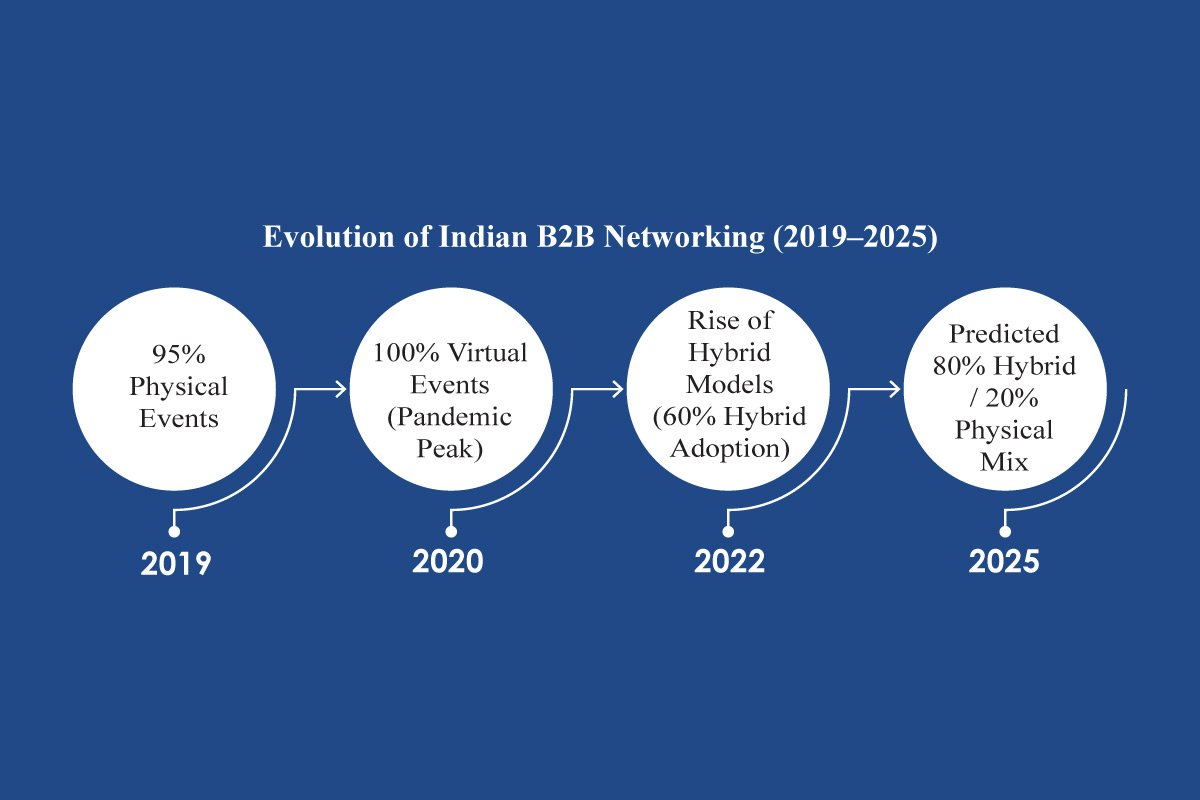
| Evolution of Indian B2B Networking (2019–2025) |
| 2019: 95% Physical Events |
| 2020: 100% Virtual Events (Pandemic Peak) |
| 2022: Rise of Hybrid Models (60% Hybrid Adoption) |
| 2025: Predicted 80% Hybrid / 20% Physical Mix |