
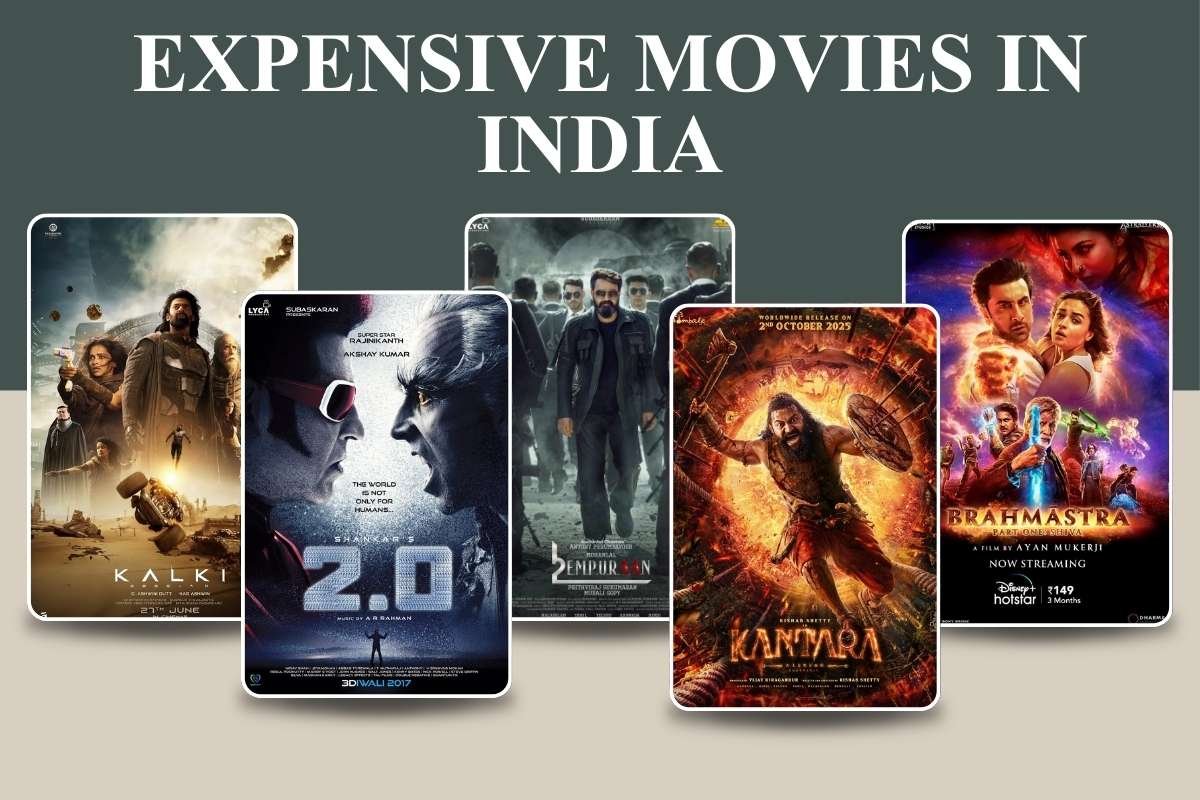



Indian cinema has grown into a global industry, now beginning to compete seriously with Hollywood in scale, ambition, and reach. While it may not be fully shoulder-to-shoulder yet, the gap is clearly narrowing. Recent collaborations signal this shift, with major Hollywood studios joining hands on Indian projects involving global names and ambitious storytelling. High-profile partnerships around films like Ramayana, projects backed by international studios with talents such as Rahman and Hans Zimmer, Atlee’s global-facing productions, Allu Arjun’s upcoming ventures, and large-scale narratives rooted in cities like Varanasi show how Indian films are entering a new phase. This momentum has pushed budgets higher and expectations even further, making expensive movies in India a growing point of interest not just domestically, but across global film markets.
What truly powers this growth is the audience. Indian moviegoers are intensely loyal, emotionally invested, and fiercely protective of their stars and films. Fans celebrate releases like festivals, turning opening weekends into cultural events. Even those who dismiss cinema as mere entertainment still line up for big releases, proving that films are central to everyday life. Cinema here is not a side interest. It reflects language, tradition, ambition, and identity across regions, from Hindi and Telugu to Tamil, Malayalam, and Kannada industries.
This diversity fuels scale. Each regional industry brings its own stars, storytelling styles, and devoted fan bases, pushing budgets higher to meet rising expectations. From large-scale action spectacles to visually rich mythological tales, expensive movies in India show how far producers are willing to go to deliver impact, reach, and lasting recall. In this article, we break down the top 25 expensive movies in India by category, budget, and worldwide performance, and explain what drives these massive investments.
Record-Breaking Budgets Globally
Big-budget Indian films now rank among the most expensive productions ever made, with Telugu and Hindi titles often matching or exceeding Hollywood mid-tier blockbusters in scale. Kalki 2898 AD leads many lists at around 600 crore, its sci-fi vision and ensemble cast placing it ahead of several Avatar sequels when viewed through production demands. RRR follows at nearly 550 crore, delivering large-scale battle sequences that earned global awards and drew packed theaters worldwide.
These films are planned from the outset for audiences beyond India. Producers commit heavy budgets with overseas returns in mind, converting crore investments into strong-dollar earnings that rival those of DC and Marvel releases. Brahmastra used its 410 crore budget to launch a VFX-driven superhero universe, while Tamil cinema’s 2.0, made at 500 crore, delivered spectacle that attracted IMAX audiences overseas. Baahubali 2 and KGF Chapter 2 also ranked among global big-budget films by blending regional roots with broad action appeal.
This shift signals a broader change in intent. Indian films now balance cultural identity with global reach, recovering massive investments while strengthening the country’s growing presence in worldwide cinema discussions.
The 25 Most Expensive Movies in India That Changed How Big Films Are Made
This list deliberately begins with regional cinema. For years, Bollywood showed little urgency in recognizing the creative or commercial strength of other Indian film industries, noticing them only after the numbers became impossible to ignore. Telugu cinema expanded that comfort zone by delivering scale, ambition, and box-office dominance so overwhelming that acknowledgment was no longer optional. When films started outgrossing Hindi releases nationwide, the conversation quietly shifted from dismissal to applause.
I. Telugu Cinema-Tollywood

Long before “pan-India” became a buzzword, Telugu filmmakers were already betting big on scale and ambition. Baahubali: The Beginning, directed by S. S. Rajamouli, marked a turning point by showcasing how regional stories could achieve national and international success. Its reach across Indian languages and overseas markets laid the groundwork for what is now known as the pan-India movement.
| Rank | Title | Year | Budget (₹ Cr) | WW Gross (₹ Cr) |
| 1 | Kalki 2898 AD | 2024 | 600 | 1,100+ |
| 2 | RRR | 2022 | 550 | 1,300+ |
| 3 | Pushpa 2: The Rule | 2024 | 400-500 | 1,500+ |
| 4 | Game Changer | 2025 | 350-500 | 180+ |
| 5 | Salaar: Part 1 – Ceasefire | 2023 | 350-400 | 700+ |
1. Kalki 2898 AD
- Director: Nag Ashwin
- Star Cast: Prabhas, Amitabh Bachchan, Kamal Haasan, Deepika Padukone
- Production House: Vyjayanthi Movies
- Budget: ₹600 crore
- Worldwide Gross: ₹1,100+ crore
Nag Ashwin delivered one of Indian cinema’s most ambitious visions by blending mythology with dystopian science fiction on an unprecedented scale. Prabhas plays Bhairava, a morally grey warrior navigating a broken future where gods still influence human destiny. The narrative revolves around Deepika Padukone’s mysterious pregnancy, guarded by Amitabh Bachchan’s Ashwatthama, while Kamal Haasan’s Supreme Yaskin rules with chilling authority. Vyjayanthi Movies committed record-breaking resources to bring this world to life, employing international VFX houses to create ruined megacities, flying vehicles, divine weapons, and large-scale battle sequences that rival those of global sci-fi productions. Filmed across India and international locations, the project carried enormous logistical demands. Massive pre-release hype, driven by the cast and concept, translated into packed theaters. Despite its layered storytelling, the film’s spectacle and ambition made it a defining moment for Telugu cinema’s global reach.
2. RRR
- Director: S.S. Rajamouli
- Star Cast: N.T. Rama Rao Jr., Ram Charan, Alia Bhatt, Ajay Devgn
- Production House: DVV Entertainment
- Budget: ₹550 crore
- Worldwide Gross: ₹1,300+ crore
S.S. Rajamouli reimagined history through a fictional friendship between revolutionaries Komaram Bheem and Alluri Sitarama Raju, played by NTR and Ram Charan with explosive intensity. The film’s scale was built through a mix of practical effects. It controlled visual enhancements, including real animal action, elaborate rescue sequences, and large sets such as custom-built bridges and colonial compounds. DVV Entertainment invested heavily in production design and international schedules, pushing costs upward to meet Rajamouli’s exacting standards. Songs, choreography, and emotionally charged action sequences resonated across cultures, while the Oscar-winning “Naatu Naatu” pushed the film into mainstream global consciousness. RRR became one of the most visible examples of expensive Indian movies, translating cultural storytelling into worldwide success.
3. Pushpa 2: The Rule
- Director: Sukumar
- Star Cast: Allu Arjun, Rashmika Mandanna, Fahadh Faasil
- Production House: Mythri Movie Makers
- Budget: ₹400–500 crore
- Worldwide Gross: ₹1,500+ crore
Sukumar scaled up the Pushpa universe by turning Allu Arjun’s smuggler into a dominant force locked in an escalating battle of power and ego. The sequel expanded its canvas with wider pan-India shoots, elaborate forest environments, and more stylized action choreography. Mythri Movie Makers increased spending significantly to support the film’s rustic realism while maintaining mass appeal. Allu Arjun’s transformed physicality, signature mannerisms, and dialogue delivery became central to the film’s pull, while Fahadh Faasil’s restrained menace intensified the conflict. Rashmika Mandanna added continuity and emotional grounding. Aggressive promotions, dubbed releases, and overseas screenings fueled record openings, making the film a benchmark for sequel-driven growth.
4. Game Changer
- Director: S. Shankar
- Star Cast: Ram Charan, Kiara Advani, SJ Suryah, Jayaram
- Production House: Sri Venkateswara Creations
- Budget: ₹350–500 crore
- Worldwide Gross: ₹180+ crore
Shankar returned to political storytelling with a glossy, high-stakes drama centered on an idealistic IAS officer confronting entrenched corruption. Ram Charan carried the film with controlled intensity, supported by large-scale rally scenes, stylized action blocks, and Shankar’s trademark visual grandeur. Production delays and extensive post-production work pushed costs significantly higher, but Sri Venkateswara Creations stayed committed to the scale. Kiara Advani added glamour and emotional presence, while the film’s themes echoed familiar beats from Shankar’s earlier work. Despite heavy expectations and wide release, the film failed to translate scale into sustained footfalls, exposing how even expensive movies in India can falter when spectacle outweighs narrative engagement.
5. Salaar: Part 1 – Ceasefire
- Director: Prashanth Neel
- Star Cast: Prabhas, Prithviraj Sukumaran, Shruti Haasan
- Production House: Hombale Films
- Budget: ₹350–400 crore
- Worldwide Gross: ₹700+ crore
Prashanth Neel crafted a dark, violence-driven saga centered on loyalty, power, and survival within a lawless kingdom. Prabhas plays Deva, whose once unbreakable friendship with Prithviraj Sukumaran’s Devaraj abruptly turns hostile, setting up a violent clash of power with the true reason left for the next chapter. Hombale Films invested heavily in grounded action, constructing massive fortress sets and staging extended fight sequences with minimal visual polish, favoring physical impact instead. Shoots across Hyderabad, Karnataka, and Europe added scale, while Shruti Haasan provided emotional contrast amid the brutality. Strong openings in South India and steady performance in Hindi markets ensured recovery, setting up anticipation for the sequel and confirming the film’s place among high-stakes productions.
II. Tamil Cinema-Kollywood

Tamil cinema pairs technical ambition with fiercely loyal fandoms, especially around icons like Rajinikanth and Vijay. Big-budget films here often mix experimentation with mass appeal, investing heavily in VFX, action design, and genre storytelling. Strong fan support and repeat viewership play a key role in sustaining rising production costs.
| Rank | Title | Year | Budget (₹ Cr) | WW Gross (₹ Cr) |
| 6 | 2.0 | 2018 | 400-600 | 800+ |
| 7 | The Greatest of All Time (GOAT) | 2024 | 380-400 | 500+ |
| 8 | Coolie | 2025 | 350-400 | 550+ |
| 9 | Kanguva | 2024 | 300-350 | 100+ |
| 10 | Leo | 2023 | 300 | 620+ |
6. 2.0
- Director: S. Shankar
- Star Cast: Rajinikanth, Akshay Kumar, Amy Jackson
- Production House: Lyca Productions
- Budget: ₹400–600 crore
- Worldwide Gross: ₹800+ crore
S. Shankar expanded the Robot universe into a massive sci-fi spectacle, casting Rajinikanth once again as Dr. Vaseegaran while introducing Akshay Kumar as Pakshirajan, a tragic antagonist commanding swarms of mobile phones turned lethal drones. Lyca Productions committed extraordinary resources to the film, investing in motion-capture suits, advanced CGI pipelines, and long-term collaboration with global VFX houses to animate millions of digital elements. Years of post-production went into perfecting feather physics, large-scale destruction, and robot reconstructions. Rajinikanth’s unmatched fan following turned the film into an event release, with celebrations breaking out across theaters regardless of the reviews. Shot across India and overseas, the film relied heavily on spectacle and star worship to sustain its momentum, demonstrating how fan-driven pull can support massive budgets.
7. The Greatest of All Time
- Director: Venkat Prabhu
- Star Cast: Vijay, Prashanth, Prabhu Deva, Sneha
- Production House: AGS Entertainment
- Budget: ₹380–400 crore
- Worldwide Gross: ₹500+ crore
Venkat Prabhu’s The Greatest of All Time casts Vijay in dual roles as MS Gandhi, a former Special Anti-Terrorist Squad agent drawn back into action when buried secrets from his past resurface, forcing him to confront old threats and protect his family and team. The production leaned heavily on action choreography, high-stakes set pieces, and digital de-ageing effects to differentiate Vijay’s two personas. However, its narrative structure is grounded in a classic action-thriller framework rather than science fiction. Early chatter on social platforms linked the film loosely to Hollywood’s Gemini Man due to the dual role and clone-like imagery. Still, the official story focuses on Gandhi’s internal and external battles rather than a literal clone chase. Despite mixed critical response, the film’s profile underscores how expensive movies in India continue to blend star appeal with commercial scale.
8. Coolie
- Director: Lokesh Kanagaraj
- Star Cast: Rajinikanth, Nagarjuna, Soubin Shahir, Upendra, Sathyaraj, Shruthi Haasan, Aamir Khan(cameo appearance)
- Production House: Sun Pictures
- Budget: ₹350–400 crore
- Worldwide Gross: ₹550+ crores
Lokesh Kanagaraj collaborated with Rajinikanth on a gritty action drama set in a port-based underworld revolving around gold smuggling and power struggles. Sun Pictures invested heavily in large industrial sets, practical explosions, and tightly choreographed action blocks, aiming for a grounded yet grand presentation. The casting of Rajinikanth alongside pan-India stars added scale and broader reach. Rajini’s fandom remains a force that goes beyond generations, ensuring strong openings across genres. With expectations high due to Lokesh’s track record and the actor’s legacy, the film carries the weight of delivering intensity without relying solely on nostalgia.
9. Kanguva
- Director: Siruthai Siva
- Star Cast: Suriya, Bobby Deol, Disha Patani
- Production House: Studio Green
- Budget: ₹300–350 crore
- Worldwide Gross: ₹100+ crore
This period action epic aimed high, casting Suriya as a warrior navigating myth-inspired conflicts across expansive historical settings. Studio Green invested heavily in elaborate armor, large battlefield sequences, and VFX-enhanced environments, shooting across multiple countries to increase visual scale. Bobby Deol’s antagonist role and Disha Patani’s presence were designed to broaden appeal. Despite its ambition, the film failed to connect with audiences, facing weak word of mouth and underwhelming theatrical performance. The mismatch between scale and storytelling exposed the risks involved in mounting large productions without narrative clarity, making Kanguva a costly misstep rather than a breakthrough.
10. Leo
- Director: Lokesh Kanagaraj
- Star Cast: Vijay, Sanjay Dutt, Trisha, Arjun Sarja
- Production House: Seven Screen Studio
- Budget: ₹300 crore
- Worldwide Gross: ₹620+ crore
Lokesh Kanagaraj presented Vijay as a subdued family man whose violent past resurfaces under pressure, a narrative inspired by the Hollywood film A History of Violence. Anchored in emotional restraint and sudden bursts of brutality, the film focused on character tension as much as action. The production prioritized practical stunts, extended fight sequences, and grounded choreography over heavy visual effects. Seven Screen Studio allocated significant resources to execution, marketing, and strategic festival release timing. Vijay’s fandom responded with overwhelming enthusiasm, driving repeat viewings and celebratory screenings, proving that disciplined storytelling and star loyalty can still deliver strong returns within expensive movies in India without relying on excess spectacle.
III. Malayalam Cinema-Mollywood

Malayalam cinema spends big with restraint. Its high-budget films are usually driven by writing strength, franchise growth, or legacy stars rather than pure spectacle. Larger investments are often aimed at expanding the industry’s reach beyond Kerala while preserving its grounded storytelling style.
| Rank | Title | Year | Budget (₹ Cr) | WW Gross (₹ Cr) |
| 11 | L2: Empuraan | 2025 | 150-175 | 265-270 |
| 12 | Barroz: Guardian of Treasures | 2024 | 100-110 | 15-17 |
| 13 | Marakkar: Lion of the Arabian Sea | 2021 | 95-100 | 48-50 |
| 14 | The Goat Life | 2024 | 82 | 150+ |
| 15 | Malaikottai Vaaliban | 2024 | 150-200 | 80+ |
11. L2: Empuraan
- Director: Prithviraj Sukumaran
- Star Cast: Mohanlal, Prithviraj Sukumaran, Manju Warrier
- Production House: Aashirvad Cinemas, Lyca Productions
- Budget: ₹150–175 crore
- Worldwide Gross: ₹265-270+ crore
Prithviraj Sukumaran returned to the director’s chair for this sequel to Lucifer, expanding the universe around Mohanlal’s enigmatic Khureshi Ab’raam into an international crime saga. The film widened its scope significantly, moving beyond Kerala into global territories with overseas shoots, slick action choreography, and a sprawling cast that crossed language boundaries. Aashirvad Cinemas increased spending to support larger set pieces, stylized confrontations, and a darker political undercurrent. Mohanlal’s screen presence remained the film’s core strength, with his fanbase turning releases into high-energy events. While the film carried heavy expectations due to its predecessor, it delivered steady returns, reinforcing the draw of franchise-driven storytelling at scale.
12. Barroz: Guardian of Treasures
- Director: Mohanlal
- Star Cast: Mohanlal, Maya Rao West
- Production House: Aashirvad Cinemas
- Budget: ₹100-110 crore
- Worldwide Gross: ₹15-17 crore
Mohanlal’s directorial debut promised a grand fantasy adventure built on mythic treasure lore, but it failed to connect with audiences or critics alike, becoming a box-office disaster. The story follows Barroz, a centuries-old spirit bound to protect a hidden fortune, blending folklore with visual spectacle that aimed to appeal to family viewers and children. Aashirvad Cinemas invested heavily in visual effects, set design, and 3D production, but weak execution and uneven narrative coherence undermined expectations. Critics described sprawling visuals and ambitious set pieces. Yet, the film struggled to sustain momentum beyond its initial holiday opening, proving that scale alone cannot carry even the most high-profile projects.
13. Marakkar: Lion of the Arabian Sea
- Director: Priyadarshan
- Star Cast: Mohanlal, Suniel Shetty, Arjun Sarja, Keerthy Suresh
- Production House: Aashirvad Cinemas
- Budget: ₹95–100 crore
- Worldwide Gross: ₹48-50
Priyadarshan’s lavish historical epic aimed to recreate the naval battles and legacy of Kunjali Marakkar IV, with large sets, period costumes, and extensive visual effects. Despite technically stunning sequences and momentary grandeur, the film became a commercial disappointment, receiving mixed reviews and failing to deliver the engagement expected from such a costly venture. While its visual design and cinematography garnered praise, its narrative pacing and emotional investment were widely seen as weaker elements, limiting its overall box-office impact. The film’s performance highlighted that even well-funded historical dramas can struggle when audience connection is uneven, underscoring the inherent risks of ambitious, expensive movies in India.
14. The Goat Life
- Director: Blessy
- Star Cast: Prithviraj Sukumaran
- Production House: Visual Romance
- Budget: ₹82 crore
- Worldwide Gross: ₹150+ crore
Blessy’s adaptation of Benyamin’s acclaimed novel became a remarkable case study in patience and perseverance, with principal photography spanning multiple phases that took several years to complete due to pandemic interruptions and the challenges of shooting in the desert. The film follows the harrowing journey of a migrant worker pushed into extreme survival conditions, with Prithviraj delivering a physically and emotionally immersive performance. Extensive location work in the deserts of Jordan and Algeria demanded logistical precision and long shooting schedules over four years. Despite a relatively modest budget, the movie emerged as a strong performer, leveraging its emotional core and technical craft to become one of Malayalam cinema’s rare global successes, demonstrating that deeply human storytelling can thrive alongside the highest-profile, most expensive movies in India.
15. Malaikottai Vaaliban
- Director: Lijo Jose Pellissery
- Star Cast: Mohanlal, Kathir
- Production House: John & Mary Creative
- Budget: ₹150–200 crore
- Worldwide Gross: ₹80+ crore
Lijo Jose Pellissery crafted a stylized revenge drama that reimagined Mohanlal as a mythical wrestler navigating betrayal and brutality within a grim, ritualistic world. The production leaned heavily into raw aesthetics, building detailed period sets and investing in physically demanding stunt work that emphasized realism over polish. John & Mary Creative allocated substantial funds to choreography, sound design, and a powerful background score that heightened the film’s operatic tone. Mohanlal’s physical transformation and restrained performance drew curiosity and strong initial turnout from devoted fans. Though the film divided audiences due to its unconventional narrative style, it recovered much of its cost through loyal viewership and critical interest.
IV. Kannada Cinema-Sandalwood

Kannada cinema’s rise is built on cultural rootedness and mass-driven action. Films drawing from folklore, mythology, and raw power narratives have crossed regional boundaries with confidence. Focused spending on scale, music, and character has helped Kannada films deliver impact well beyond their home market.
| Rank | Title | Year | Budget (₹ Cr) | WW Gross (₹ Cr) |
| 16 | Kantara: Chapter 1 | 2026 | 125 | 900 |
| 17 | Kabzaa | 2023 | 120 | 34-50 |
| 18 | K.G.F: Chapter 2 | 2022 | 100 | 1,200+ |
| 19 | Vikrant Rona | 2022 | 95 | 150-210 |
| 20 | Martin | 2024 | 80-150 | 27+ |
16. Kantara: Chapter 1
- Director: Rishab Shetty
- Star Cast: Rishab Shetty, Achyuth Kumar
- Production House: Hombale Films
- Budget: ₹125 crore
- Worldwide Gross: ₹900 crore
Rishab Shetty expanded the spiritual universe of Kantara by pushing deeper into the mythological and ritualistic roots of Bhoota Kola, elevating intimate folklore into a large-scale cinematic spectacle. The prequel widens its canvas with divine confrontations, symbolic battles, and heightened emotional stakes between man and deity. Hombale Films increased investment to support expansive sets, VFX-enhanced gods, and wider shooting locations that reflect the film’s national reach. Shetty’s dual portrayal, balancing human vulnerability with divine fury, anchors the narrative. Intense anticipation from fans of the original and cultural resonance beyond Karnataka turned the project into one of the most closely watched Kannada productions in recent years.
17. Kabzaa
- Director: R. Chandru
- Star Cast: Upendra, Shiva Rajkumar, Kiccha Sudeep, Shriya Saran
- Production House: R. Chandru Productions
- Budget: ₹120 crore
- Worldwide Gross: ₹34–50 crore
R. Chandru attempted to mount a sprawling gangster saga set across decades, charting the rise of an underworld figure amid power struggles and violent rivalries. The production leaned heavily on scale, recreating 1970s aesthetics through retro sets, stylized gunfights, and dramatic confrontations between major Kannada stars. The presence of Upendra, Shiva Rajkumar, and Kiccha Sudeep created expectations of mass-driven conflict and fan-driven openings. However, narrative overload and uneven execution diluted momentum. Despite an initial surge in Karnataka, the film failed to sustain its collections elsewhere, highlighting that scale alone cannot guarantee returns for expensive movies in India.
18. KGF: Chapter 2
- Director: Prashanth Neel
- Star Cast: Yash, Sanjay Dutt, Raveena Tandon, Srinidhi Shetty
- Production House: Hombale Films
- Budget: ₹100 crore
- Worldwide Gross: ₹1,200+ crore
Prashanth Neel escalated Rocky Bhai’s journey into a global power struggle, unleashing relentless action across gold mines, political corridors, and international battlegrounds. Hombale Films backed the sequel with practical explosions, larger battle choreography, and extensive dubbed releases that ensured reach across language markets. Yash’s commanding screen presence and carefully cultivated persona turned every dialogue and gesture into a crowd moment. Sanjay Dutt’s imposing antagonist added menace, while the film’s aggressive pacing kept audiences hooked. The response was unprecedented, with theaters erupting in fan celebrations, confirming Kannada cinema’s ability to dominate box offices on a massive scale.
19. Vikrant Rona
- Director: Anup Bhandari
- Star Cast: Sudeep, Neha Shetty, Nirup Bhandari
- Production House: Shalini Arts
- Budget: ₹95 crore
- Worldwide Gross: ₹150-210 crore
Anup Bhandari blended mystery and fantasy by casting Sudeep as a brooding cop unraveling murders on a rain-soaked island filled with secrets. The film invested heavily in 3D presentation, atmospheric lighting, and visual effects to enhance its eerie tone. Shalini Artss took a calculated risk by prioritizing immersive technology alongside star power, aiming to appeal to audiences beyond traditional action fans. Sudeep’s loyal fanbase ensured strong openings, while urban viewers connected with the film’s visual ambition. The project recovered comfortably, showing how genre-driven storytelling can coexist with scale.
20. Martin
- Director: A.P. Arjun
- Star Cast: Dhruva Sarja, Vaibhavi Shandilya
- Production House: Uday K. Mehta Films
- Budget: ₹-80150 crore
- Worldwide Gross: ₹27+ crore
A.P. Arjun mounted a globe-spanning action thriller with Dhruva Sarja in dual roles, portraying both an elite military officer and a ruthless operative operating across borders. Uday K. Mehta Films invested heavily in large-scale action sequences, international locations, and a rare multilingual release across 13 languages. Arjun Sarja’s involvement as writer added narrative heft, while Ravi Basrur’s score amplified the film’s intensity. Despite strong technical execution and Dhruva’s physical commitment, the film struggled to convert scale into sustained footfalls. Stiff competition and pacing issues limited its theatrical run, underscoring the financial risks attached to ambitious productions.
V. Hindi Cinema-Bollywood

Hindi cinema remains India’s most internationally visible industry, powered by star value, legacy studios, and wide distribution. Its biggest budgets center on marquee actors, franchise worlds, and event releases built for mass appeal. While slower to adopt scale-led storytelling, recent films show a clear push toward high-concept action and globally oriented production values.
| Rank | Title | Year | Budget (₹ Cr) | WW Gross (₹ Cr) |
| 21 | Brahmastra: Part One – Shiva | 2022 | 375-420 | 431 |
| 22 | Thugs of Hindostan | 2018 | 310-325 | 327 |
| 23 | Pathaan | 2023 | 250 | 1,050+ |
| 24 | Dhurandhar | 2025 | 250 | 1200+ |
| 25 | Singham Again | 2024 | 350-375 | 362 |
21. Brahmastra: Part One – Shiva
- Director: Ayan Mukerji
- Star Cast: Ranbir Kapoor, Alia Bhatt, Amitabh Bachchan, Nagarjuna, Mouni Roy, Shah Rukh Khan (cameo)
- Production House: Dharma Productions, Star Studios
- Budget: ₹375–420 crore
- Worldwide Gross: ₹431 crore
This film launched an ambitious superhero universe rooted in Indian mythology, with Ranbir Kapoor playing Shiva, a young man discovering his fire-wielding powers amid ancient astras and secret societies. Ayan Mukerji spent nearly a decade shaping the project, pouring resources into VFX-heavy storytelling where every flame, weapon, and astral creature was digitally built by global effects teams. Costs climbed far beyond initial plans as technology evolved during production. Karan Johar’s backing ensured a premium ensemble, including a buzz-generating cameo by Shah Rukh Khan. While opinions were divided on pacing, audiences embraced the music, romance, and visual scale. Among expensive movies in India, Brahmastra stands out as a rare attempt to fuse mythology with franchise-driven spectacle.
22. Thugs of Hindostan
- Director: Vijay Krishna Acharya
- Star Cast: Aamir Khan, Amitabh Bachchan, Fatima Sana Shaikh, Katrina Kaif
- Production House: Yash Raj Films
- Budget: ₹310–325 crore
- Worldwide Gross: ₹327 crore
Set in 18th-century India, this period action epic follows a rogue thief who joins a rebel group fighting British forces. The film went all in on scale, rebuilding massive ships, forts, and battle sequences using custom sets and overseas locations, particularly in Thailand. Yash Raj Films banked on Aamir Khan’s commitment to detail, which stretched schedules and pushed expenses higher through elaborate costumes, props, and reshoots. Amitabh Bachchan added weight as the moral center of the story. Despite criticism for weak writing, spectacle, and star appeal, the film recovered much of its cost, reinforcing the point that expensive movies in India can still draw crowds on scale alone.
23. Pathaan
- Director: Siddharth Anand
- Star Cast: Shah Rukh Khan, Deepika Padukone, John Abraham
- Production House: Yash Raj Films
- Budget: ₹250 crore
- Worldwide Gross: ₹1,050+ crore
Shah Rukh Khan’s return as a rogue spy turned this slick action thriller into a cultural event. Shot across multiple countries, the film leaned on real stunts, large-scale action set pieces, and glossy production values tied to YRF’s expanding spy universe. Smart marketing spending amplified the comeback narrative, while chart-topping songs and tight action kept repeat audiences coming back. John Abraham’s menacing antagonist and Deepika Padukone’s role added balance to the spectacle. Pathaan became proof that the right mix of timing, fandom, and execution can deliver massive profits.
24. Dhurandhar
Director: Adhitya Dhar
- Star Cast: Ranveer Singh, Akshaye Khanna, Arjun Rampal, R. Madhavan, Sanjay Dutt, Sara Arjun
- Production House: B62 Studios
- Budget: ₹250 crore
- Worldwide Gross: ₹1200 crore
Sunny Deol returned in full force with this high-voltage action drama that leaned into raw power, revenge, and mass appeal. Anil Sharma staged large action blocks packed with explosions, chase sequences, and dialogue-driven hero moments aimed squarely at Deol’s loyal audience. The budget focused on practical effects and wide-scale shoots across India rather than stylized gloss. While it did not reach the heights of bigger franchise films, it delivered solid returns, showing that expensive movies in India can still succeed on nostalgia when backed by conviction and star loyalty.
25. Singham Again
- Director: Rohit Shetty
- Star Cast: Ajay Devgn, Kareena Kapoor Khan, Deepika Padukone, Akshay Kumar, Ranveer Singh
- Production House: Reliance Entertainment, Jio Studios
- Budget: ₹350–375 crore
- Worldwide Gross: ₹362 crore
Rohit Shetty expanded his cop universe with a multi-star spectacle built around gravity-defying stunts and explosive set pieces. Ajay Devgn reprised his role as Bajirao Singham, supported by appearances from other franchise heroes, turning the film into a festival-style event. Massive shoots, vehicle destruction, and complex safety rigs drove costs upward. Backed by Reliance and Jio, the film leaned heavily on fan service and repeat viewing. Despite mixed reactions to its length and crowded cast, it performed strongly, underlining how franchise loyalty continues to sustain expensive movies in India.
Upcoming Mega-Budget Films
→ Varanasi
Directed by S. S. Rajamouli, Varanasi is shaping up as one of Indian cinema’s most ambitious adventures. Featuring Mahesh Babu, Priyanka Chopra, and Prithviraj Sukumaran, the film blends mythology, sci-fi, and high-stakes action, reportedly drawing inspiration from the Ramayana and incorporating time-travel elements that expand its narrative scope. Rajamouli’s craft of visual scale and narrative sweep has made this one of the most anticipated releases, expected to roll out globally and on large-format screens with jaw-dropping visuals.
→ Ramayana-Part 1
Ramayana is being positioned as one of Indian cinema’s most monumental projects, with reports suggesting a massive multi-part release around Diwali 2026 and 2027. Directed by Nitesh Tiwari and featuring actors like Ranbir Kapoor, Sai Pallavi, and Yash in iconic mythological roles, the film aims to retell the epic with grand visuals, cutting-edge effects, and a worldwide release strategy. With its colossal scope, it’s being discussed as a cultural and commercial landmark.
→ Kalki 2
Following the success of Kalki 2898 AD, Kalki 2 is reported to expand on the mytho-futuristic world, deepening the narrative conflict between divine avatars and catastrophic futures. Retaining lead stars like Prabhas and Amitabh Bachchan, the sequel promises mind-blowing action, emotionally charged arcs, and a continuation of the high-stakes universe built in the first film.
→ King
Directed by Siddharth Anand and headlined by Shah Rukh Khan, King marks a significant return for the superstar with a sprawling ensemble cast including Deepika Padukone and others. Positioned as a high-impact action thriller, King is expected to lean into globe-spanning sequences, layered character stakes, and marquee set pieces designed to pull in a broad theatrical audience.
→ Dhurandhar 2
The sequel to the successful spy thriller Dhurandhar has already secured a central theatrical slot on Eid 2026, with multi-language releases planned to maximize reach. Led by Ranveer Singh, the film’s teaser has sparked intense fan excitement thanks to high-octane action, deeper narrative arcs, and expanded world-building. Its early OTT rights deal underscores strong industry confidence in its box office potential.
What Makes a Movie Expensive?
Star power accounts for the largest share of modern film budgets, often 20–30% of upfront costs. Prabhas reportedly earned between 100 and 200 crore for Kalki 2898 AD, while Allu Arjun’s deal for Pushpa 2 reached similar levels, driven by their ability to guarantee massive openings. Entire salary structures are built around such leads, with ensemble casts and technicians adding tens of crores more.
Visual effects form the next significant expense. In films like Brahmastra and 2.0, VFX can absorb 50–60% of the budget, as thousands of artists create digital environments from the ground up. The grand kingdoms of Baahubali and the futuristic battles of Kalki 2898 AD required years of work across international studios. Physical sets add further strain, with Thugs of Hindostan famously rebuilding 18th-century ships and forts at enormous cost.
Marketing completes the picture. Pan-India promotions, overseas campaigns, IMAX formats, and streaming partnerships now account for 10–20% of spending, while post-pandemic logistics and safety measures continue to push total expenditures higher.
VFX Revolution in Indian Cinema
Indian films now drive some of the heaviest VFX workloads globally, often outpacing Hollywood counterparts in artist count and shot volume. Kalki 2898 AD engaged over 5,000 artists across India, Europe, and the US to build its dystopian worlds, far exceeding the roughly 2,000 artists used for similar epic scales in mid-tier Western blockbusters. Titles like RRR and Brahmastra relied heavily on domestic studios for extensive crowd simulations, fire effects, and destruction work that stands comparison with Marvel-level output. This shift powers expensive movies in India, where VFX now absorbs 50-70% of budgets and enables immersive worlds for major 2026 releases like Ramayana.
Local talent hubs in Hyderabad and Mumbai deliver high-end results at scale, routinely handling 10,000+ shots per film compared to Hollywood’s more fragmented outsourcing model. Baahubali’s digital armies laid the foundation, evolving into Kalki’s seamless god-tech fusion that held up even on IMAX screens. As tools mature, these spends increasingly translate into authentic spectacle without complete reliance on the West.
Star Power vs. Story ROI
Top stars now consume 20-40% of budgets upfront, creating salary pressure that directly tests return potential in expensive movies in India. Allu Arjun reportedly earned around ₹300 crore across the Pushpa franchise, justified by its 1,500+ crore global haul, while Prabhas commands ₹100-200 crore per large-scale outing like Kalki. RRR showed how the model can work, doubling its ₹550 crore investment through Rajamouli’s direction and the combined pull of NTR and Ram Charan.
Failures like Adipurush underline the risk when narrative weight collapses under star-driven expectations, struggling to break even on a ₹500 crore spend despite Prabhas’s presence. In contrast, Pathaan converted ₹250 crore into ₹1,050 crore through tight execution and Shah Rukh Khan’s comeback momentum. For 2026, projects like King and Ramayana lean toward ensemble balance to avoid bloat, projecting 2-3x returns if storytelling lands amid rising actor fees.
Future of Big-Budget India
AI-led workflows are expected to cut VFX costs by 15-20% by 2027, allowing producers such as Vyjayanthi Movies to reallocate budgets toward large practical sets for upcoming Kalki installments. Ramayana’s multi-part vision targets $1 billion in global box office, combining IMAX presentation with pan-India casting to chase the scale once reserved for Avatar. Pan-language releases and early streaming deals will further stabilize risk as Telugu-Hindi crossovers grow stronger.
Expect sharper story focus over unchecked excess, with Rajamouli’s Varanasi testing the ₹1,000+ crore frontier. Overseas markets are projected to rise from 20% to 40% of total grosses.

Conclusion
Indian cinema’s rise has been driven by confidence, loyal audiences, and filmmakers willing to think beyond language and geography. Regional industries reshaped the national conversation by proving that scale works only when matched with execution. Bigger budgets brought bigger risks, but they also forced sharper thinking about craft, reach, and sustainability.
What separates this phase from earlier eras is intent. Visual effects are now planned at scale, stars are weighed against story value, and global markets are part of the blueprint from day one. Wins and failures alike have pushed producers toward smarter decisions rather than louder spectacle.
As tools improve and filmmakers become more transparent about what actually works, expensive movies in India are moving into a more grounded phase, where ambition supports the story rather than overpowering it. The coming years will be shaped less by headline budgets and more by how smartly those investments translate on screen.