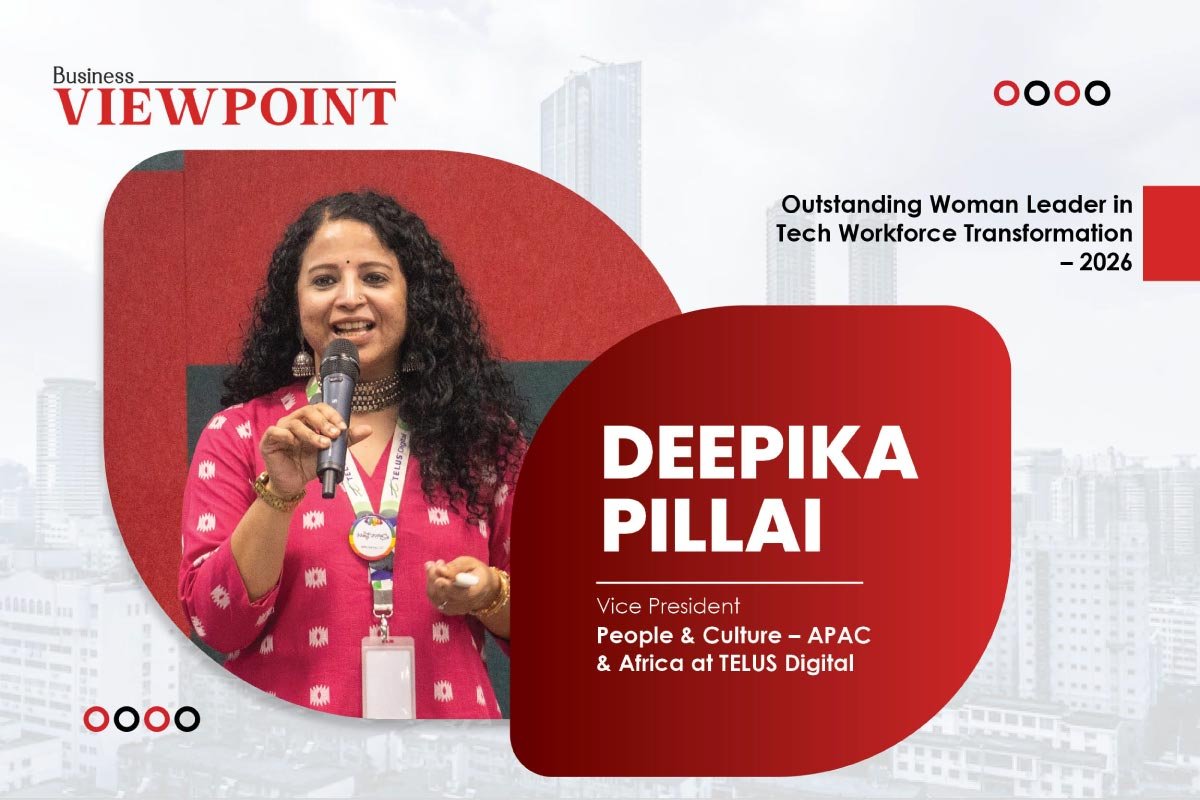


What does leadership look like when AI is reshaping work, careers, and the workplace itself? Deepika Pillai, Vice President, People & Culture – APAC & Africa at TELUS Digital, believes the answer lies in keeping people at the centre.
From workforce transformation and AI-enabled HR to women’s leadership and the future of careers, her approach combines technology with human judgment, trust, and adaptability, proving that the future of work is not just about smarter technology, but better leadership.
Transformation starts with people, not technology
Workforce transformation is often framed as a technology challenge. But For Deepika Pillai, the harder question is not whether people can learn a new tool; it is whether the organisation has changed how work gets done.
The biggest misconception is that transformation is mainly about technology or training. Digital tools and new skills matter, but lasting change depends on how people experience it and whether roles, processes, and incentives grow with it.
When teams return to familiar workflows, the issue is rarely a skills gap. Often, new systems are layered onto old processes without rethinking how work flows, making adoption another task rather than a better way of working.
Organisations that make transformation work involve frontline employees early. They do not simply ask people to accept change; they invite them to help shape it.
It may take longer, but it creates something a rollout alone cannot: ownership.
Transformation is not a technology project. Technology may open the door, but people decide whether the organisation walks through it.

When leadership meant saying, “I don’t know”
The toughest assumption Deepika Pillai had to unlearn was that effective leaders must have all the answers.
Early in her career, she believed leadership meant being the most informed person in the room, driving decisions, projecting certainty, and always providing direction. Over time, she realised that in a fast-changing environment, no leader can hold every answer, and teams do not need them to. They need a leader who creates the space for the right answers to emerge.
Today, Deepika spends more time asking questions than giving answers. She provides context and direction, then empowers those closest to the problem to make the call. She has also stopped chasing perfect consensus, recognising that timely decisions, explained transparently with clear rationale, build more trust than prolonged deliberation.
Her view of culture evolved, too. Culture is not a set of values on a wall or a measure of tenure. It lives in everyday behaviours, the quality of conversations, the psychological safety people experience, and whether leaders act consistently on what they say they believe.
Most importantly, she learned that vulnerability is not weakness. Saying, “I don’t have the answer yet, but we’ll figure it out together,” can build more trust than certainty for its own sake.
To Deepika, leadership is now less about authority and control, and more about influence, creating an environment where people feel confident enough to discover the answers together.
Where global standards meet local realities
As Deepika leads People & Culture across APAC and Africa, she sees global consistency and local relevance as complementary. The key is knowing where each belongs.
Some principles must remain globally consistent, not for uniformity, but to protect people and the organisation. These include anti-discrimination, data protection, financial controls, code of conduct, core values, career progression, and performance management principles.
Other areas need local ownership. Compensation and benefits must reflect cost of living, tax structures, and market competitiveness. Flexible work must consider infrastructure, cultural norms, and family structures. Talent management, including retention, promotion timelines, and local skills availability, must reflect each market’s conditions.
The discipline lies in knowing which decisions belong where. With clear boundaries, organisations can achieve both global consistency and local relevance.
Leading when the map keeps changing
The leadership capability that will separate future-ready organisations from those that struggle to adapt, according to Deepika, is the ability to move through uncertainty without manufacturing certainty.
At TELUS Digital, leaders operate where AI disruption, global delivery complexity, and shifting client expectations meet. Waiting for perfect information is rarely an option. Leaders must read emerging signals, make informed decisions, communicate openly, and keep their teams moving even when the path ahead is still taking shape.
That calls for adaptive thinking as much as business acumen, the ability to acknowledge what is unknown while staying decisive about what is known.
The strongest leaders are not those who always know what comes next. They are those who make uncertainty easier for others to navigate. With clarity, transparency, and confidence, they create resilient, high-performing teams that can keep moving even when the map is still being drawn.
Keeping leadership human in the age of AI
AI should strengthen leadership, not replace it. Deepika Pillai sees its value in HR not as automation for its own sake, but in giving leaders better information, greater visibility, and more time for meaningful conversations.
When AI surfaces attrition risks, skill gaps, or equity trends, leaders can act earlier and with greater confidence. By handling routine administrative work, it also gives managers more time to coach, mentor, and connect with their teams.
Used well, AI becomes a thinking partner, bringing context and evidence while the leader makes the final call.
The risk comes when judgment is handed to algorithms. Hiring, performance ratings, attrition decisions, and sensitive employee conversations require empathy, nuance, and accountability. Conversations around mental health, career growth, and inclusion must remain human.
The future of leadership is not human versus AI. It is human empowered by AI.
AI as a co-pilot for better people decisions
AI has become a valuable part of Deepika Pillai’s everyday work, not because it replaces decision-making, but because it helps her make better, more informed decisions. At TELUS Digital India, she primarily uses Fuel iX, the company’s in-house AI-powered people experience platform, to support leaders, team members, and HR teams.
Deepika Pillai sees AI as a co-pilot that simplifies routine work, surfaces relevant insights at the right time, and creates more space for conversations, coaching, and meaningful employee experiences.
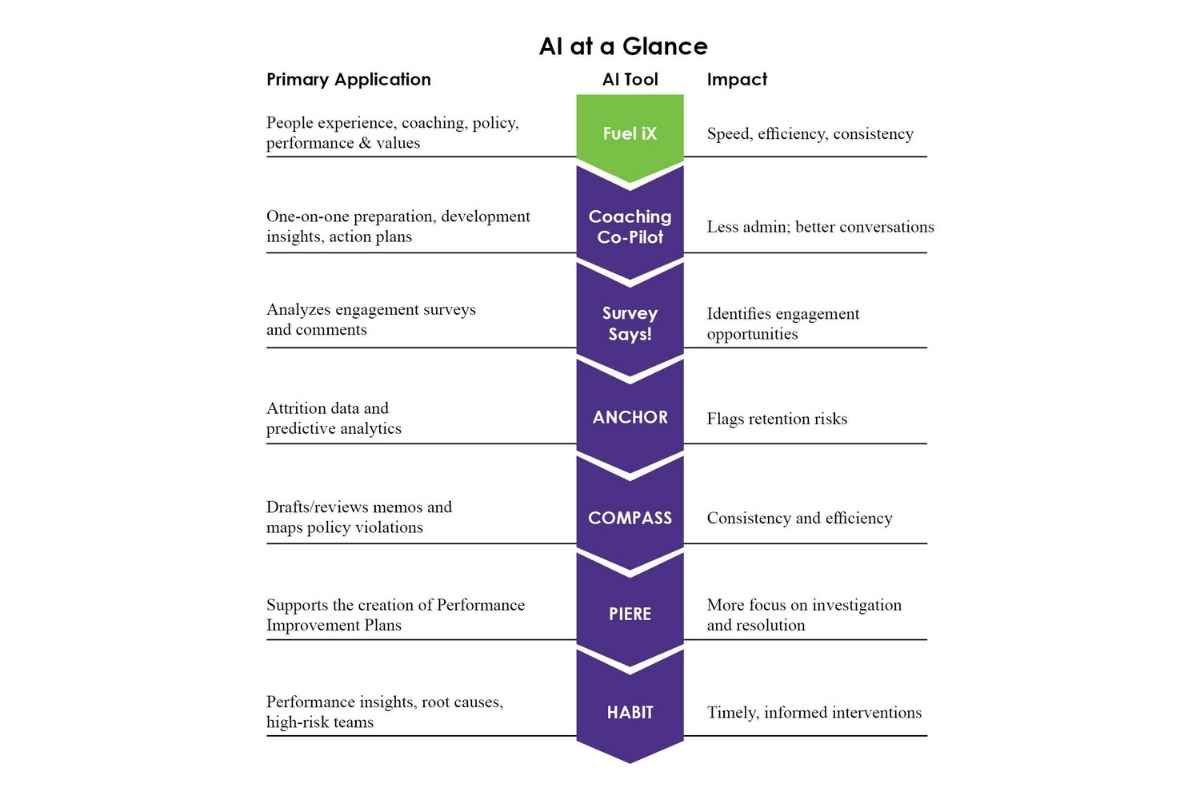
AI at a glance
| AI Tool | Primary Application | Impact |
| Fuel iX | People experience, coaching, policy, performance & values | Speed, efficiency, consistency |
| Coaching Co-Pilot | One-on-one preparation, development insights, action plans | Less admin; better conversations |
| Survey Says! | Analyzes engagement surveys and comments | Identifies engagement opportunities |
| ANCHOR | Attrition data and predictive analytics | Flags retention risks |
| COMPASS | Drafts/reviews memos and maps policy violations | Consistency and efficiency |
| PIERE | Supports the creation of Performance Improvement Plans | More focus on investigation and resolution |
| HABIT | Performance insights, root causes, high-risk teams | Timely, informed interventions |
Turning routine work into better conversations
One of the most useful capabilities within Fuel iX is its coaching co-pilot. It helps leaders prepare for one-on-one discussions by bringing together relevant context from previous interactions, highlighting important development areas, and making it easier to capture key takeaways and action plans afterward.
Fuel iX also supports policy creation and performance and values management. These AI-enabled capabilities accelerate tasks that traditionally require considerable time while maintaining consistency and alignment across the organisation. Whether drafting a policy or supporting managers through structured performance conversations, AI helps leaders work more efficiently without losing the human element that remains central to HR.
The real value is giving leaders back time
For Deepika Pillai, the greatest value of AI goes beyond speed, efficiency, and consistency. It gives leaders something incredibly valuable: time.
Time to coach. Time to mentor. Time to listen. Time to build stronger relationships with people.
Technology, in her view, should never replace empathy; it should create more opportunities for it. AI is therefore not a substitute for leadership, but an enabler, helping leaders work with greater clarity, confidence, and purpose.
When employee voice became a business driver
Challenge | a changing workforce
The shift from operational HR to strategic leadership changed how Deepika Pillai viewed HR as a business partner influencing growth, decision-making, workforce planning, employee development, and employee experience.
Post-COVID, hybrid work, changing expectations around well-being and flexibility, and growth through acquisitions made traditional employee listening insufficient. Annual surveys offered snapshots, but the need was to identify concerns earlier and turn employee voice into visible action.
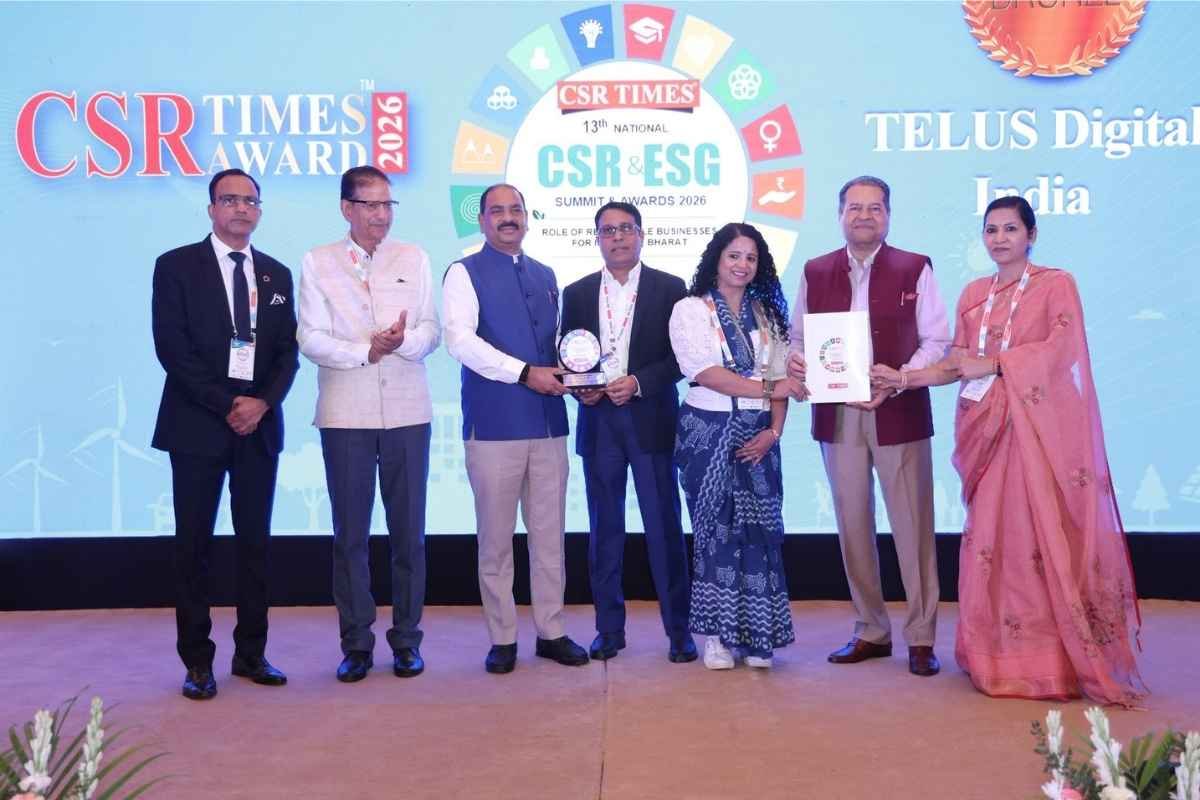
Action | making listening continuous
- Combined pulse surveys, lifecycle feedback, manager connects, skip-level interactions, town halls, and direct conversations.
- Strengthened action-planning governance and introduced “You Said, We Did.”
- Launched an Employee Assistance Program and insurance help desk.
- Expanded health and wellness initiatives, career growth opportunities, and the Connects framework.
- Used FueliX to analyse qualitative feedback, identify emerging trends, and support faster, data-led decisions.
- Scaled training capabilities nearly 10x.
- Increased Udemy Business Pro licences by 60%
Outcome | measurable impact
- Annualised attrition reduced voluntary by 4.42%
- Improved employee engagement by 3%
- Participation: 93%
- Promotion success rate went up by 3%
- Post promotion attrition reduced by 1.1%
The bigger change
Employee feedback is now more closely connected to visible action, strengthening trust and reinforcing that employee voices matter.
The result: HR has changed from primarily a support function into a strategic partner shaping both people and business outcomes.
Beyond titles: building careers around capability
According to Deepika Pillai, the future workplace needs to rethink career progression through a capability-portfolio model, rather than traditional hierarchy.
At TELUS Digital, team members across 50+ countries work in roles reshaped by AI. Title-based progression cannot keep pace. People need to grow laterally, build cross-functional capabilities, and move across domains.
Her vision is a visible, living capability portfolio accessible to team members, managers, and the internal talent marketplace. Lateral growth should be recognised as high-potential behaviour.
Deepika Pillai’s approach shows that the future of work will require organisations to combine AI-driven efficiency with human judgment, trust, and adaptability.
Building a pipeline, not just a presence
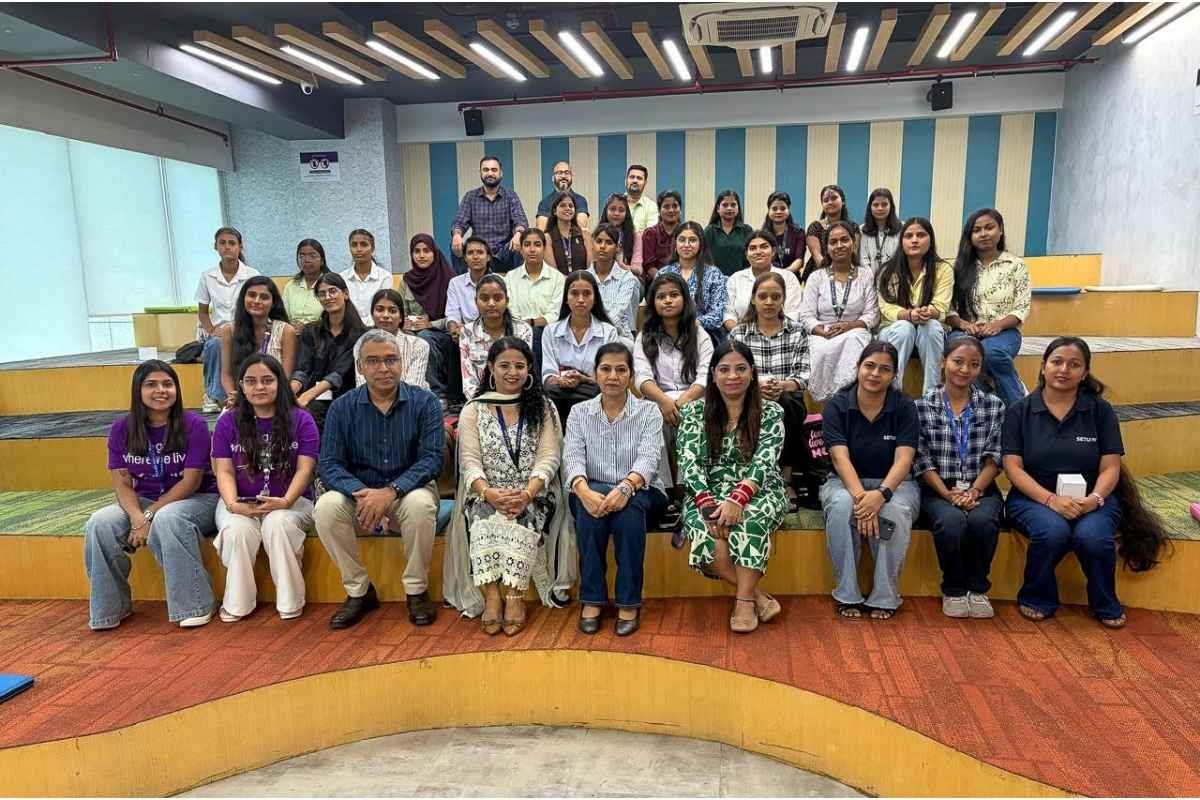
At TELUS Digital, women’s advancement is a continuous journey, focused on helping women build careers, take on greater responsibility, and progress into leadership.
Connections | building community
Connections, the global Women’s Network, supports 4,000+ team members across 10 countries through networking, professional development, recognition, and community involvement. Women in the Spotlight and Herizone further support confidence, networks, and personal and professional growth.
Step-up | creating career movement
The Step-Up programme supports internal mobility based on aspirations and capabilities. Team members have moved from customer support into HR, Learning & Development, Quality, and other functions, showing that career opportunities can already exist within the organisation.
Sponsorship | opening doors
Leadership sponsorship and fair, unbiased promotion processes are essential. Leaders must advocate for women’s growth and provide challenging opportunities. Strong allies and sponsors can accelerate leadership journeys.
Flexibility | keeping careers moving
Family and caregiving breaks should not become barriers to growth. Fair opportunities on return and flexibility help people balance professional and personal responsibilities.
The goal
Recognise women for capability and potential, provide access to the right opportunities, and ensure progression on merit.
The aim is bigger than bringing women into the workforce; it is building a strong, sustainable pipeline of women leaders.
Shakti award: a special perspective on India’s next generation of women leaders
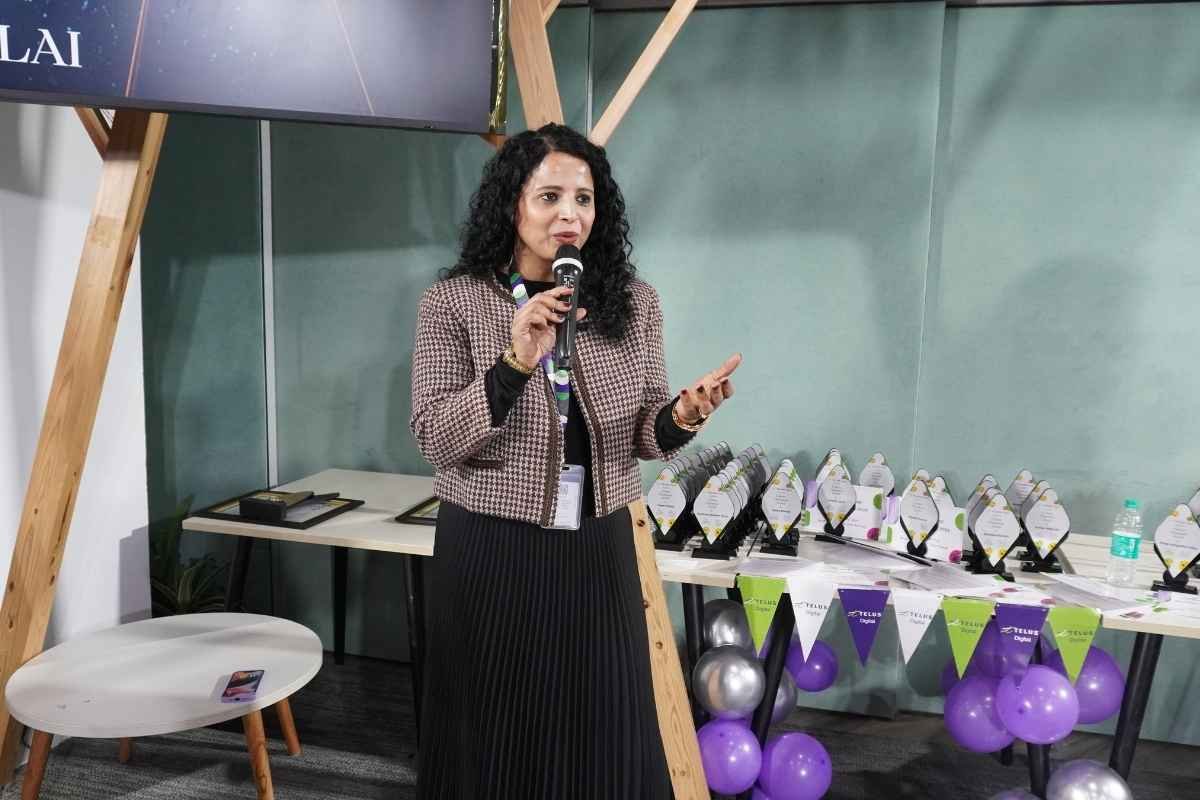
The talent is there. The pipeline needs to keep moving.
India does not have a shortage of women entering technology. At the entry and early-career stages, more women are building strong careers and taking on more complex roles. The challenge appears later, when they move toward senior engineer, lead, and first-management positions, and becomes even more visible higher up the leadership ladder.
Deepika Pillai concludes this is less a talent problem and more a sponsorship problem.
Mentorship can offer guidance, feedback, and encouragement. Sponsorship is different. It means having a senior leader willing to put your name forward for a promotion, a critical assignment, or a leadership opportunity.
That matters because visibility and informal networks often carry more weight as careers progress. Without access to those networks or someone senior advocating for them, women can be overlooked even when their performance and potential are strong.
When a career break should not define a career
The Indian context adds another layer. Women often continue to carry a larger share of family and caregiving responsibilities, which can make the path to leadership more difficult at certain stages. Career breaks for motherhood or caregiving can also affect progression long after someone returns.
But a career break is a pause in employment, not a pause in someone’s ability to lead.
Structured re-entry pathways can help women rebuild confidence, refresh skills where needed, and reconnect with the workplace without having to start from scratch.
Making the path to leadership clearer
Promotion and leadership decisions also need to be more transparent. Performance, impact, and leadership potential should be visible and assessed through structured processes, rather than being shaped too heavily by informal relationships or familiarity.
There is a cultural shift to make here too. Ambition and assertiveness should not be judged differently because they come from a woman. Women should be able to show confidence, ambition, and leadership without those qualities being viewed through a different lens.
Everyone has a role to play
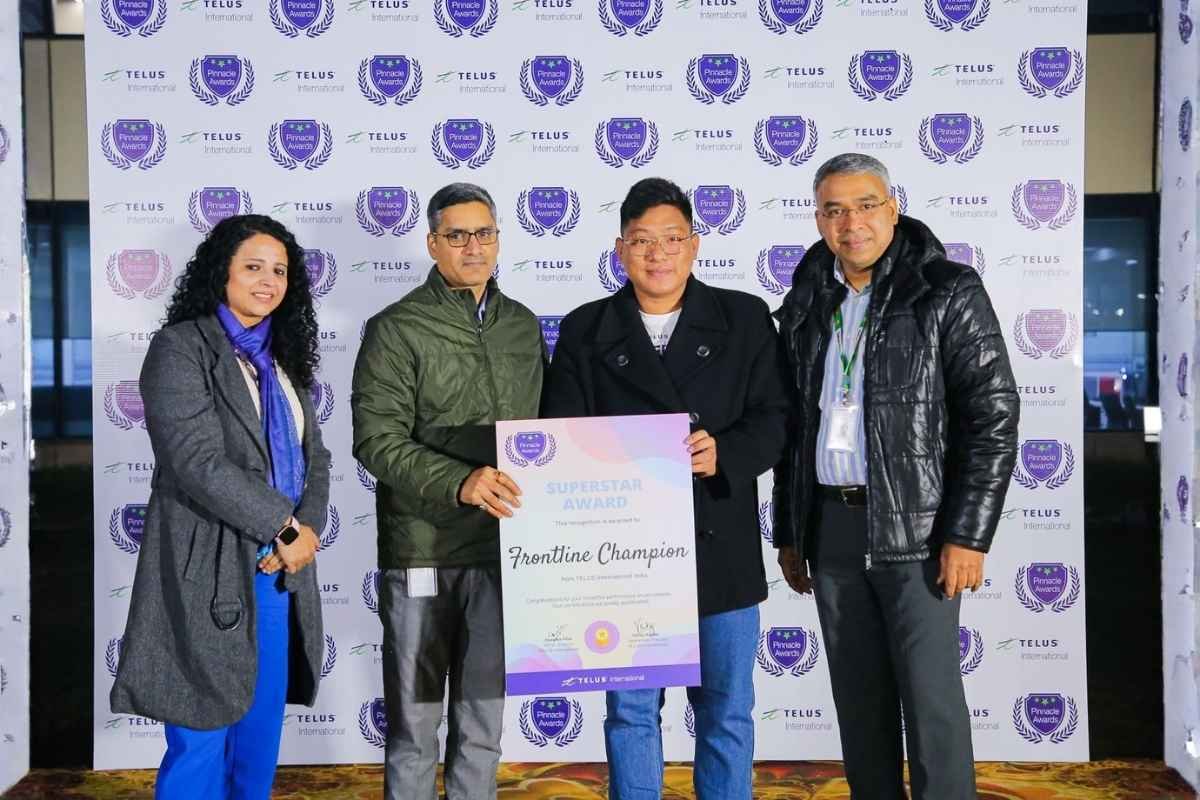
This cannot sit with women alone. Senior leaders, particularly men who hold many of today’s decision-making positions, have an important role as sponsors.
The questions are simple:
Who am I preparing for the next level?
Whose work am I making visible?
Whose name am I putting forward when an opportunity arises?
Turning India’s female talent into leadership
As India’s technology ecosystem grows beyond traditional hubs and reaches deeper into Tier-2 and Tier-3 cities, there is a real opportunity to build a more diverse workforce.
But bringing women into technology is only the beginning. They also need a clear path to grow, lead, and make decisions.
To Deepika Pillai, that means combining structural and cultural change: stronger sponsorship, transparent promotion processes, meaningful career re-entry pathways, and a workplace where ambition is recognised equally.
The talent is already there. The real responsibility is to make sure the pipeline does not narrow because the systems around it fail to support women at the next stage of their careers.
Move beyond simply hiring women. Develop them. Sponsor them. Advance them. That is how India builds stronger leaders, stronger organisations, and a stronger technology ecosystem.
Your distinctiveness is your strategic advantage
“In an AI-driven world, your distinctiveness is your most strategic asset. AI will absorb the structured, the predictable, and the algorithmically readable dimensions of corporate work. What it cannot replicate is your capacity to lead across differences, make consequential decisions in ambiguity, build trust where it is fragile, and hold complexity without forcing false resolution.”