

Agriculture is moving beyond one-size-fits-all farming. Precision farming helps farmers manage fields based on differences in soil, moisture, crop health, and yield instead of treating every part of a field the same way.
The approach combines tools such as GPS, satellite imagery, sensors, farm machinery, drones, and software. Used properly, these tools can help farmers apply water, fertilizer, seed, and crop protection products more accurately while reducing wasted time and inputs.
So, how does precision farming work, and what does it offer farmers? Let’s see.
What is Precision Farming?
It is a way of managing crops using information about specific parts of a farm. Instead of applying the same amount of seed, fertilizer, or water everywhere, farmers can adjust applications according to field conditions.
For example, a soil map may show that one part of a field needs more nutrients while another needs less. A variable-rate machine can then change the amount applied as it moves across the field.
This approach can make farm decisions more targeted. It does not mean every farm needs expensive equipment. Farmers can start with tools that solve a specific problem, such as soil moisture monitoring, GPS guidance, or satellite-based crop monitoring.
What Are the Main Components of Precision Farming?
Several technologies work together to support more accurate farm management.
1. GPS and GIS
GPS helps tractors and other farm equipment follow accurate paths across a field. Geographic Information Systems (GIS) can then turn location data into maps showing soil conditions, crop performance, yield, and other field differences.
This helps farmers see where problems occur instead of relying only on observations from the edge of a field.
2. Variable Rate Technology
Variable Rate Technology (VRT) allows farm machinery to change application rates as conditions change across a field. It can be used for inputs such as seed, fertilizer, and crop protection products.
A digital field map can guide the equipment so that areas with different needs receive different treatment.
3. Remote Sensing
Satellite images, drones, and other sensors can provide information about crop and soil conditions without requiring farmers to inspect every part of a field manually.
These tools can help identify changes in crop growth, moisture, or stress. Farmers can then inspect problem areas and respond before an issue affects a larger part of the crop.
4. Artificial Intelligence and Data Tools
Modern farm software can process large amounts of information from sensors, machines, weather data, and field records. Some systems can identify patterns that may be difficult to spot manually.
The useful part is not the technology itself. It is the ability to turn field data into a practical decision, such as where to inspect a crop or when to adjust irrigation.
5. Auto-Steer and Machine Automation
Auto-steering uses positioning systems to help machinery follow accurate paths. This can reduce overlap during planting, spraying, tilling, and harvesting.
Less overlap can save fuel, time, and inputs while helping equipment cover fields more consistently.
6. Data Collection and Analytics
Farm equipment and sensors can collect information on yield, soil moisture, machinery use, weather, and other conditions.
Keeping these records over several seasons can help farmers compare results and make better decisions about planting, fertilizer, irrigation, and machinery use.
How Does Precision Farming Improve Farm Efficiency?
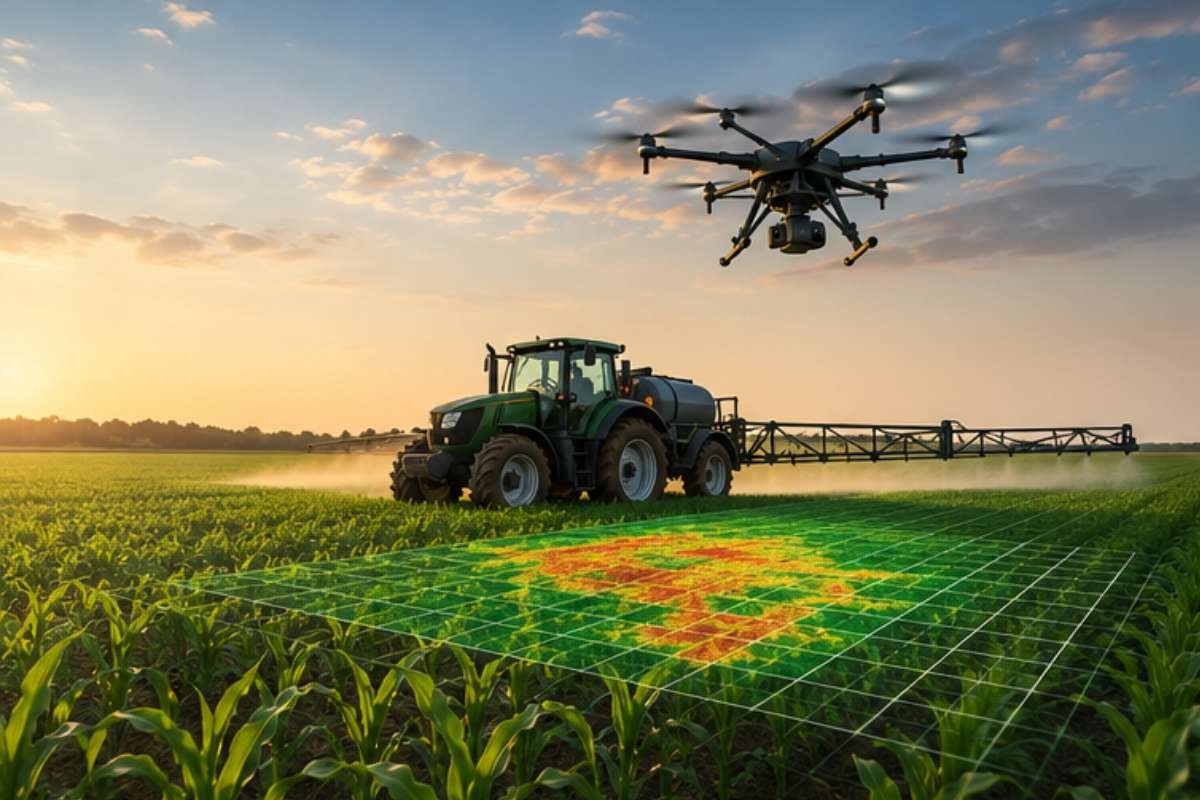
The main value of precision farming is better use of limited resources. Farmers can target inputs more closely instead of applying them uniformly across an entire field.
Recent U.S. data from AEM shows the potential scale of these improvements. Its updated research reports a 5% increase in crop production, 8% reduction in fertilizer use, 9% reduction in herbicide use, 5% reduction in water use, and 7% reduction in fuel use under current levels of precision technology adoption.
| Metric | Reported improvement |
| Crop production | +5% |
| Fertilizer use | -8% |
| Herbicide use | -9% |
| Water use | -5% |
| Fuel use | -7% |
How Does Precision Farming Support Sustainable Agriculture?
Sustainability depends partly on using resources more carefully. Precision farming can support this by helping farmers apply water, fertilizer, fuel, and crop protection products where they are needed.
- Reduced input waste: Targeted applications can reduce unnecessary fertilizer and crop protection use.
- Better water management: Soil moisture sensors and precision irrigation systems can help farmers avoid applying more water than crops need.
- Lower fuel use: Accurate machine paths can reduce unnecessary passes across a field.
- Better soil management: More controlled input application can reduce excess nutrients and help protect soil and nearby water resources.
The goal is to produce crops more efficiently while making better use of land, water, energy, and farm inputs.
What Are the Main Advantages of Precision Farming?
It can offer several practical benefits when the technology matches the farm’s needs.
| Benefit | How it helps |
| Better resource use | Applies water, fertilizer, seed, and crop protection products more precisely |
| Higher productivity | Helps farmers manage crop and field differences more effectively |
| Lower input costs | Reduces waste and unnecessary applications |
| Less fuel use | Reduces overlap and unnecessary machinery passes |
| Faster field monitoring | Helps farmers identify areas that need attention |
| Better farm records | Creates data that can support decisions across growing seasons |
The biggest gains often come when several tools work together. For example, satellite monitoring may identify a problem area, soil data can help explain it, and targeted equipment can apply the required treatment.
What Are the Challenges of Precision Farming?
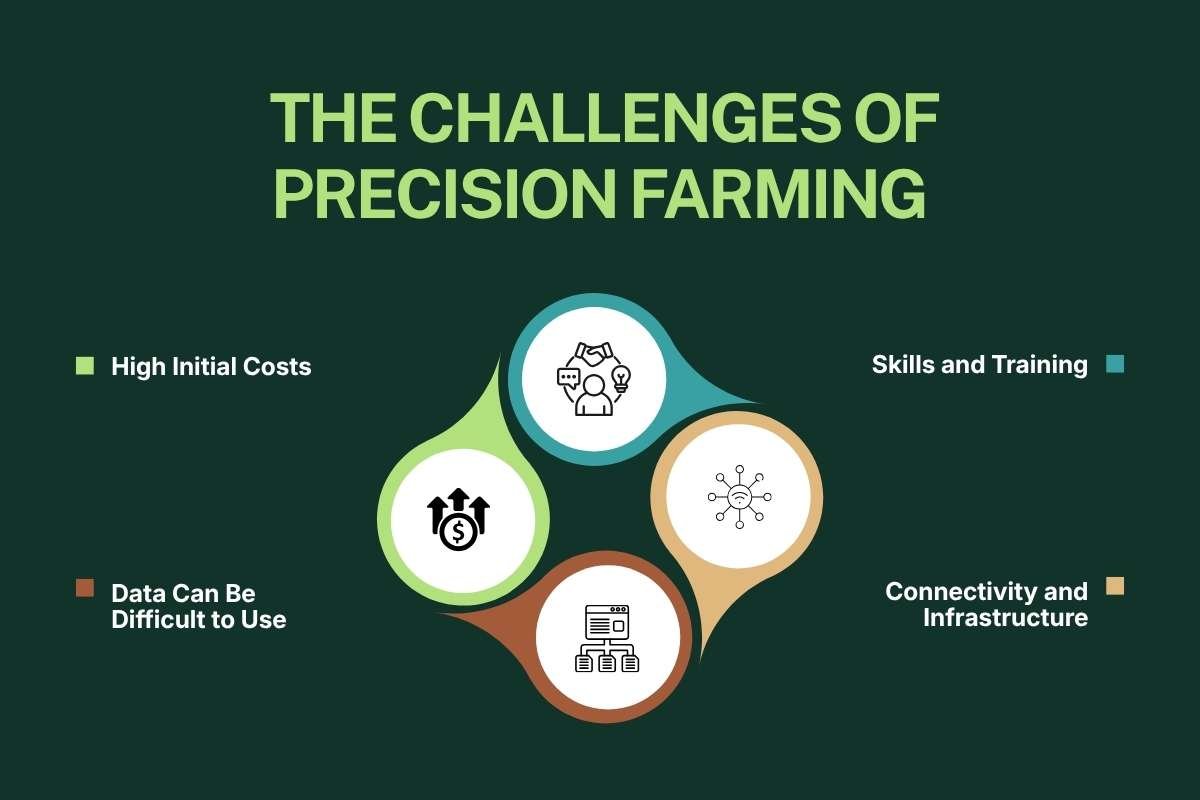
Technology can solve some farming problems, but adopting it also creates new challenges.
1. High Initial Costs
GPS equipment, sensors, drones, variable-rate machinery, and specialized software can require significant investment. This can be difficult for small farms with limited capital.
Shared equipment and Custom Hiring Centres can help reduce the need for every farmer to purchase expensive machinery individually.
2. Data Can Be Difficult to Use
Collecting data is easier than turning it into a useful farm decision. Farmers may need training, reliable software, and local technical support to understand what the information means.
A simple system that answers one important farm question can be more useful than a complicated platform that produces large amounts of data without clear actions.
3. Skills and Training
Modern equipment requires operators who understand both the machinery and the farming task. Training is therefore an important part of adoption.
India’s agricultural mechanization programme includes demonstrations, training, testing, and capacity building alongside equipment support.
4. Connectivity and Infrastructure
Some digital farming tools depend on reliable connectivity, electricity, equipment servicing, and data access. These requirements can be harder to meet in remote farming regions.
This is why local support, shared machinery, and field-level training can matter as much as the technology itself.
How is Precision Farming Changing Agriculture in India?
India is expanding its use of farm machinery, drones, sensors, remote sensing, and other digital tools while focusing on making these technologies more accessible to farmers.
The Union Budget 2026–27 allocated ₹1,32,561 crore to the Department of Agriculture & Farmers Welfare, up from ₹1,27,290.16 crore in the 2025–26 Budget Estimate. The allocation covers the department’s wider agricultural programmes.
Farm mechanization is supported through the Sub-Mission on Agricultural Mechanization (SMAM) under the broader Rashtriya Krishi Vikas Yojana framework. The programme provides financial assistance for machinery, Custom Hiring Centres, Farm Machinery Banks, training, demonstrations, and advanced equipment, including precision agriculture tools and drones.
ICAR is also developing precision agriculture technologies through its Network Program on Precision Agriculture (ICAR-NePPA). The programme brings together 16 ICAR research institutes and covers areas such as crop and soil monitoring, precision irrigation, nutrient management, protected cultivation, sensors, drones, satellite platforms, and digital farm decision tools.
More than 4.54 lakh farmers have participated in related agri-drone demonstrations and field interventions.
What Does the Future of Precision Farming Look Like?
The next phase of precision farming will likely focus less on individual gadgets and more on how different tools work together.
Better sensors can provide more detailed field information. Improved machinery can respond to that information during planting, spraying, irrigation, and harvesting. Satellite data and farm records can also help farmers compare field conditions over several seasons.
India’s current research programme already points in this direction, with work spanning sensors, drones, satellite platforms, precision irrigation, nutrient management, protected cultivation, and digital decision support.
For farmers, the practical question is not whether to adopt every new technology. It is which tool can solve a real problem at an affordable cost and produce information that can improve the next farm decision.
What Should Farmers Consider Before Adopting Precision Farming?
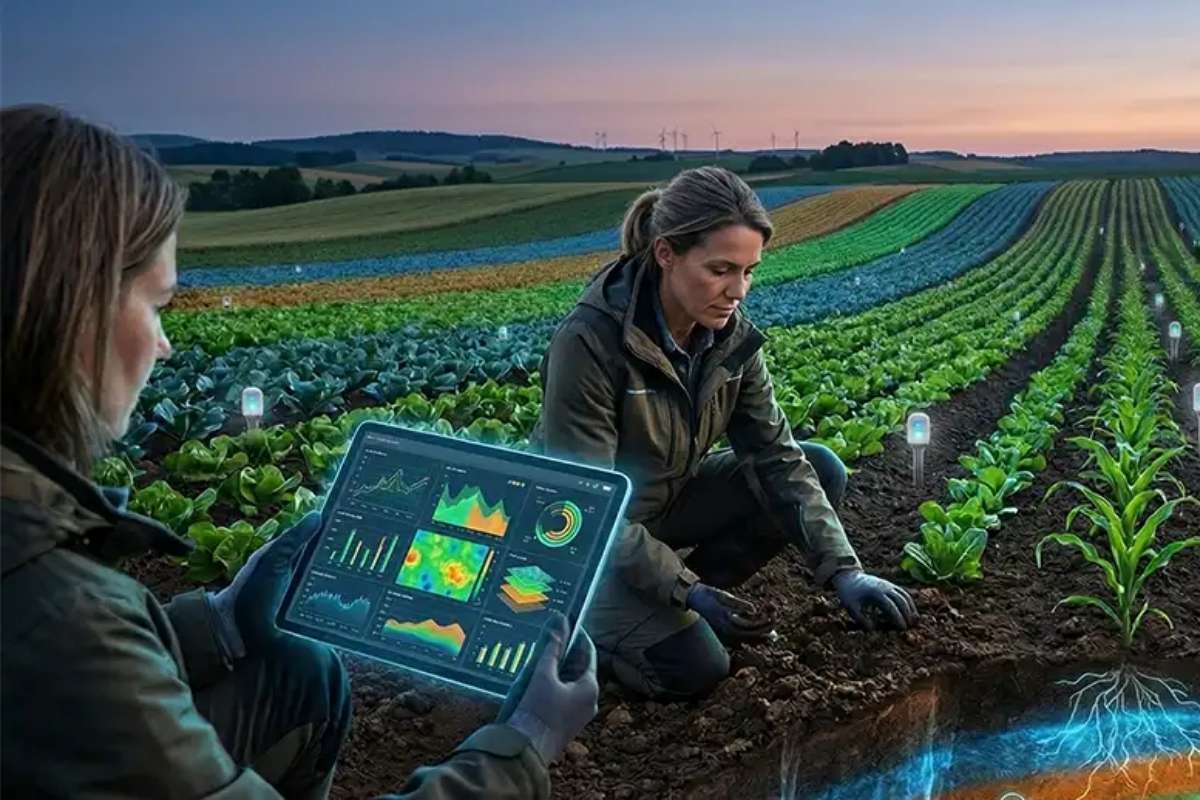
Before investing in new equipment, farmers can ask a few practical questions:
- What problem needs to be solved?
Start with water waste, fertilizer costs, labour shortages, or crop monitoring rather than buying technology without a clear purpose. - Can the equipment be shared or rented?
Custom Hiring Centres and other shared models can reduce the upfront cost. - Is training available?
Check whether the supplier, local agriculture department, or training centre provides support. - Can the data be used easily?
Choose systems that turn measurements into clear farm decisions. - Will the technology work locally?
Soil, crop type, farm size, connectivity, and climate all affect results. - Can the investment be measured?
Track input use, labour, fuel, yield, and costs before and after adoption.
A small, measurable improvement can be a better starting point than a large technology investment with no clear return.
Conclusion
Precision farming is changing how farmers make decisions about crops, water, fertilizer, machinery, and field management. Its value comes from using the right information at the right time rather than applying the same approach across every part of a farm.
The path forward is about choosing technology that solves a real farm problem, delivers measurable value, and supports more efficient use of land, water, labour, and other resources.
Frequently Asked Questions
1. Is precision agriculture suitable for small farms?
Yes. Small farms can use tools such as soil testing, satellite monitoring, precision irrigation, and shared machinery services without owning every piece of equipment.
2. Does precision farming reduce fertilizer use?
Yes. Precision tools can improve fertilizer placement and reduce waste; an AEM study estimates an 8% reduction in fertilizer use at current adoption levels.
3. How does precision agriculture help with water management?
Soil sensors, field data, and precision irrigation help farmers apply water where and when crops need it, reducing unnecessary use.
4. What role do drones play in precision farming?
Drones can capture field images, monitor crops, and support mapping and targeted spraying.
5. Can precision farming reduce farm labour needs?
Yes, some tools automate repetitive tasks and make field operations more efficient, although the impact varies by farm and technology.