

Key Takeaways
- Hyundai plans to invest $15.5 billion in India over seven years.
- Local production and supply chain growth could create opportunities for Indian auto suppliers.
- New investments will support electric mobility, workforce training, and exports to emerging markets.
Hyundai Motor Group Chairman Chung Eui-sun met Indian Prime Minister Narendra Modi in New Delhi on October 13 to discuss the Hyundai Motor Group investment in India and the development of the country’s mobility industry. The company announced plans to invest $15.5 billion, or about 20 trillion Korean won, in India over the next seven years, starting in 2026.
Why the Hyundai Motor Group Investment in India Is Expanding?
Hyundai plans to use the investment to build factories, expand research and development (R&D), strengthen local parts supply chains, and develop future technologies. The group also plans to set up an investment subsidiary in India to invest in local companies and startups. The Hyundai Motor Group investment in India is designed to strengthen domestic manufacturing, expand research capabilities, and support the development of future mobility technologies.
India’s vehicle market is a key factor behind the investment. The country sold 5.51 million vehicles in 2025, ranking third globally after China, with 34.39 million sales, and the United States, with 16.67 million.
Passenger car sales in India reached 4.57 million units in 2025. They are expected to rise by about 15% to 5.25 million units in 2026. India’s population of 1.47 billion and its economic growth outlook also support demand. In September, the Organisation for Economic Co-operation and Development forecast India’s economic growth at 7.1%.
Import duties are another factor behind Hyundai’s focus on local production. India charges tariffs of 70% to 110% on fully assembled imported vehicles. Manufacturing within the country can help automakers manage costs and compete on price.
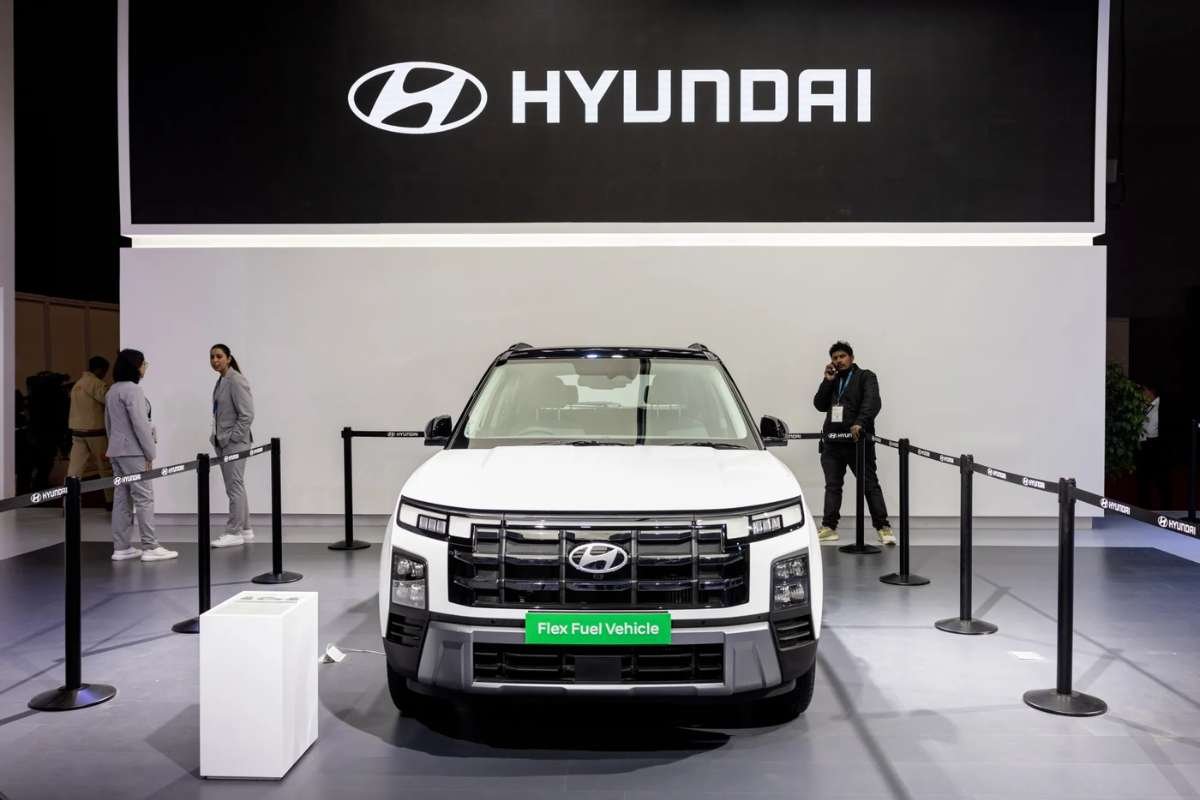
Hyundai Motor Group currently operates four production facilities in India: Hyundai’s Chennai Plant 1 and Plant 2, Hyundai’s Pune plant, and Kia’s Anantapur plant. In 2025, Hyundai sold 571,878 vehicles in India, while Kia sold 280,286.
The group also plans to use India as an export base. It aims to supply markets in regions such as the Middle East and Africa, where vehicle demand is growing. Local manufacturing will serve Indian buyers while supporting exports to other emerging markets.
Hyundai Motor Group Investment in India: Production and EV Plans
The $15.5 billion investment will support new manufacturing facilities, expanded R&D operations, a stronger local supplier network, and future vehicle technologies. Hyundai plans to expand its R&D presence in India, hire skilled workers, and develop vehicles suited to local customer needs.
The Hyundai Motor Group investment in India will also support electric mobility, local supplier development, and vehicle technologies tailored to Indian customers.
The group is also pursuing business opportunities beyond conventional car manufacturing. Hyundai has completed a prototype of an electric three-wheeler developed with Indian two-wheeler maker TVS Motor. It aims to bring the vehicle to market by the end of 2027.
Other areas under consideration include vehicle financing, electric vehicle charging infrastructure, and vehicle recycling. The planned investment subsidiary will help identify investment opportunities and manage investments in Indian companies and startups.
Workforce development is another part of the group’s plans. Hyundai Motor India intends to establish and operate a vocational school in Chennai. The school is expected to train around 13,000 people each year in vehicle production, maintenance, smart factories, and industrial safety.
Hyundai Motor Group’s local social contribution funding also reflects its long presence in India. Hyundai Motor, Kia, Hyundai Mobis, and other group affiliates contributed about $110 million to social initiatives in India between 2016 and 2025.
The Hyundai Motor Group investment in India builds on the company’s entry into the country in 1996 and marks its next phase of growth in manufacturing, technology development, supply chains, and exports. The company says it has reached an annual production capacity of 1.4 million vehicles through its operations, including the Pune plant. Its next phase of investment will focus on local manufacturing, technology development, supply chains, and exports.