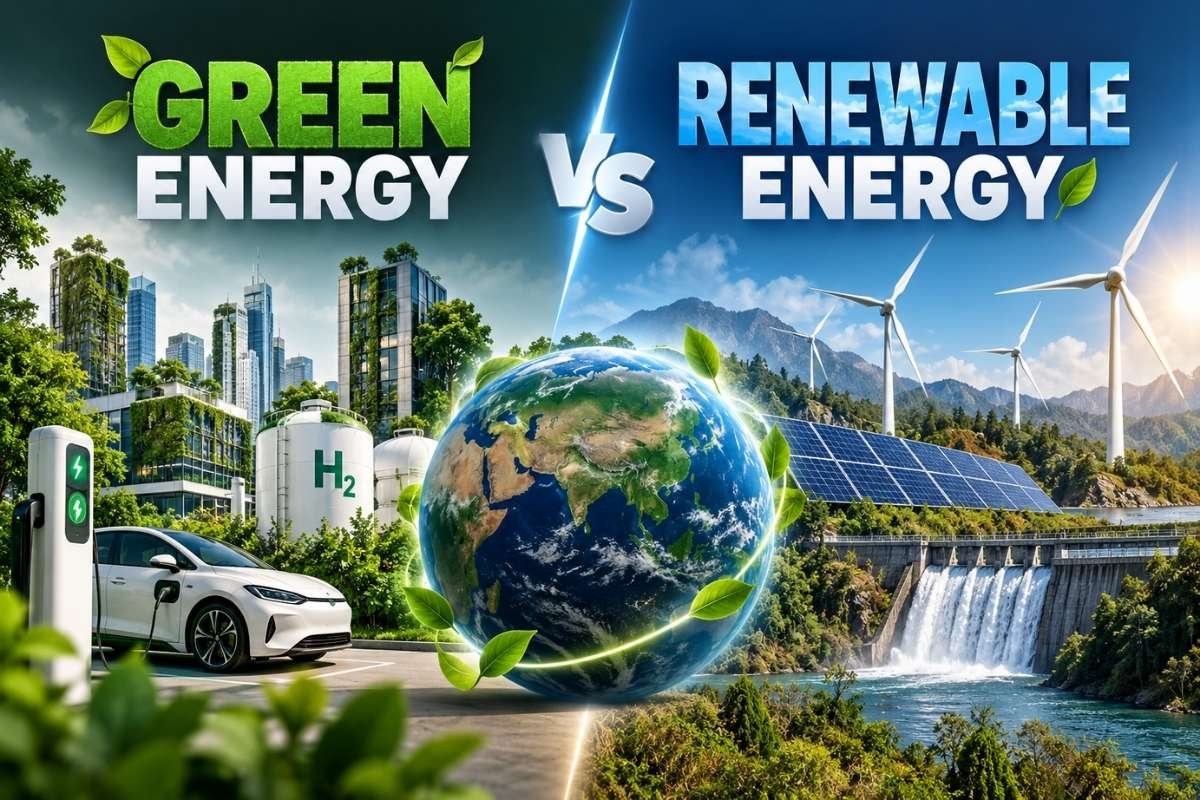
Should your business choose renewable power or green energy solutions? The answer starts with understanding green energy vs renewable energy. Renewable energy comes from sources that nature replenishes. Green energy focuses on lower environmental harm across energy use. The terms overlap, yet their impact can differ.
India’s growing clean-energy market creates new opportunities for entrepreneurs. However, technology choice, lifecycle impact, and project costs still matter. This guide compares both terms, their environmental effects, and business implications for Indian companies and investors.
What is renewable energy?
Renewable energy comes from sources that nature replenishes on a human time scale. Solar, wind, hydropower, geothermal heat, and biomass are common examples. These sources support both electricity generation and renewable fuels. Solar panels convert sunlight into power, while bioenergy can produce heat or fuel. The source and the conversion technology remain separate concepts.
A renewable source does not guarantee low impact in every project. Hydropower can affect rivers, fish, and nearby land. Biomass can raise concerns about land use and supply chains. Life cycle studies help assess these effects across a project’s full span.
This distinction matters when comparing green energy vs renewable energy. Because renewable status alone does not prove low environmental impact.
What is green energy?
Green energy refers to energy with relatively low environmental harm. The term often covers renewable sources, but its meaning varies across institutions and policy rules. Solar and wind power may fit this idea, yet their full impact needs review. Making panels and turbines requires raw materials, energy, and industrial processes.
Lifecycle assessment (LCA) tracks these impacts from extraction through manufacturing, use, and disposal. This approach gives a fuller view than operating emissions alone. A green label also does not promise zero pollution or ecological harm. Businesses should support green claims with clear methods and credible evidence. That matters when comparing technologies, suppliers, and sustainability goals.
For Indian businesses, this distinction matters when choosing technology and making sustainability claims. A project may use renewable power yet still need a closer review of its land use, materials, and waste.
The ISO 14040 framework supports this approach by assessing environmental impacts across a product’s life cycle, from raw materials to disposal.
Green energy vs renewable energy: key differences
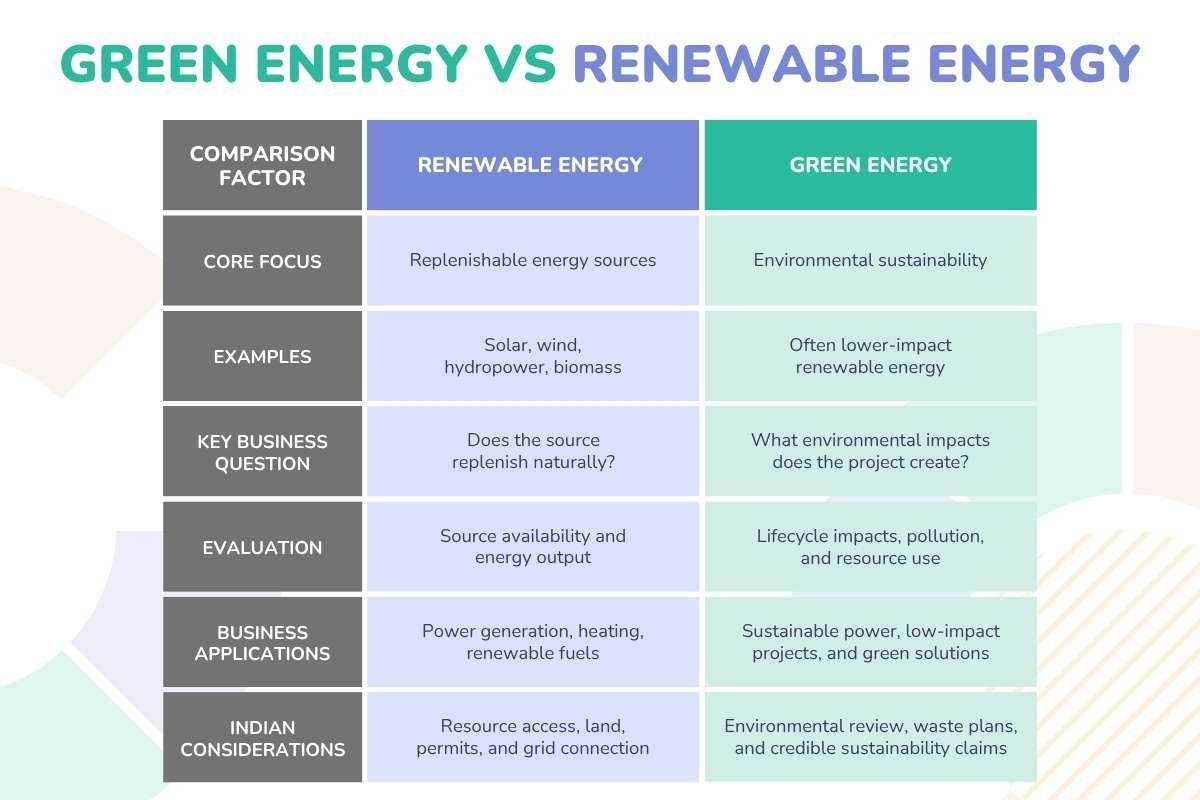
The key difference lies in what each term measures. Renewable energy focuses on the source and its ability to replenish. Green energy focuses on environmental impact and sustainability. These ideas overlap, but they do not always match.
| Comparison factor | Renewable energy | Green energy |
| Core focus | Replenishable energy sources | Environmental sustainability |
| Examples | Solar, wind, hydropower, biomass | Often lower-impact renewable energy |
| Key business question | Does the source replenish naturally? | What environmental impacts does the project create? |
| Evaluation | Source availability and energy output | Lifecycle impacts, pollution, and resource use |
| Business applications | Power generation, heating, renewable fuels | Sustainable power, low-impact projects, and green solutions |
| Indian considerations | Resource access, land, permits, and grid connection | Environmental review, waste plans, and credible sustainability claims |
The International Energy Agency recognises solar, wind, biofuels, geothermal, and hydropower as renewable sources. However, their environmental effects depend on project design and local conditions.
Consider a solar project in Rajasthan. Its energy source qualifies as renewable. Yet land use, panel manufacturing, water needs, and end-of-life waste still require review. For entrepreneurs, the right choice depends on more than the renewable label. It requires a clear view of the project’s environmental and commercial goals.
Does the difference matter for green energy businesses?
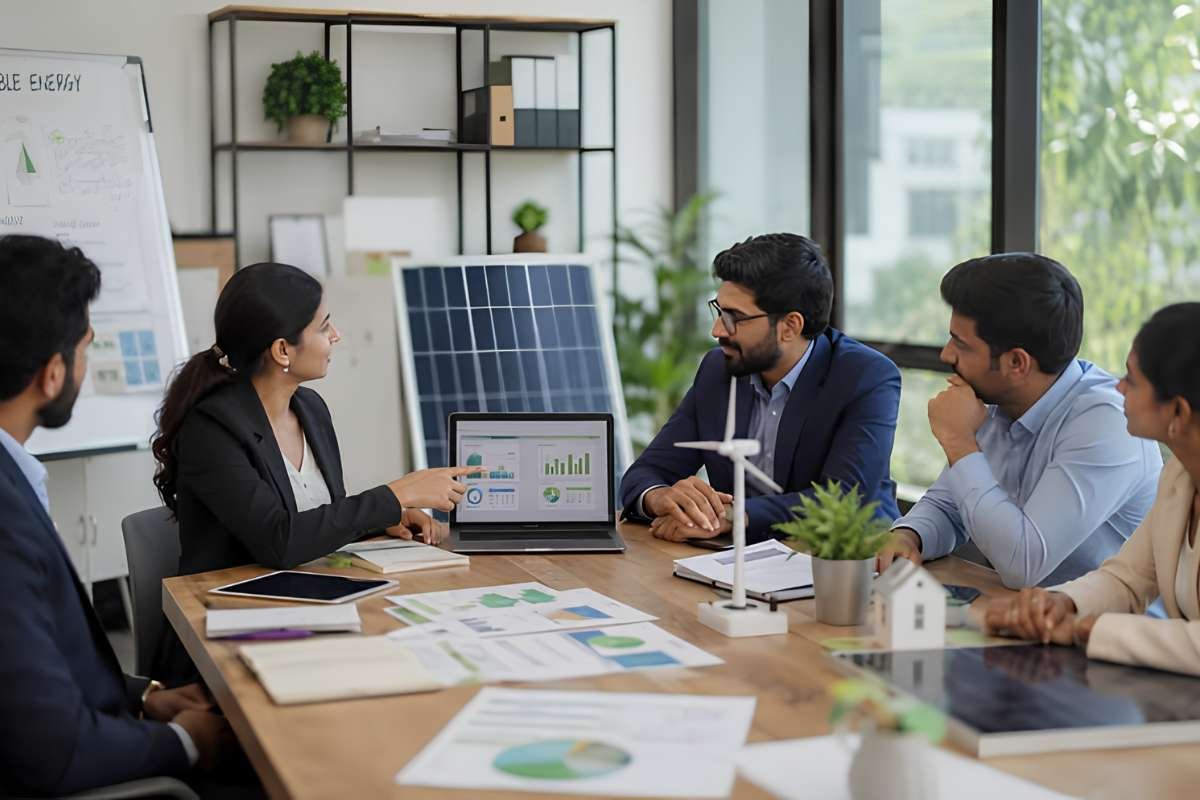
Yes. The distinction can shape technology choice, customer claims, and project costs. A solar EPC business earns through design, installation, and project delivery. An operations and maintenance provider earns through upkeep and recurring service contracts. Energy efficiency consultants help clients cut waste without owning power assets. Battery storage and energy management providers may earn through monitoring, system control, and optimisation. Biomass and waste-to-energy projects need close checks on feedstock, emissions, and permits. These models show that renewable energy businesses extend beyond power generation.
Green energy solutions and technology can support both asset-owning and service-led ventures. Capital needs, operating risk, customer demand, and revenue visibility vary across models.
Entrepreneurs exploring Green business models that scale should assess technical feasibility and environmental permissions before investing. Those planning implementation can review how to start a green energy business for the next steps.
Green energy vs renewable energy: which energy category offers business opportunities in India?
India’s energy market offers room for both renewable power and green solutions. The right model depends on capital, skills, project time, and customer demand. Solar EPC needs technical skills, equipment access, and project delivery capacity. Energy audits and efficiency consulting may suit professionals with strong technical knowledge. Battery upkeep, storage services, and monitoring software offer other paths.
Recycling energy equipment adds a need for safe handling and material recovery. Investment in green energy business requires careful review of capital needs, permissions, and revenue timelines. Meanwhile, low-investment green business ideas may suit entrepreneurs who prefer service-based work.
For smaller participants, green energy business ideas for small investors may include monitoring tools, maintenance partnerships, or specialist services.
India’s storage plans also create demand for supporting services. The Ministry of Power projects major battery storage needs through 2031–32, highlighting the role of grid integration and storage infrastructure.
The opportunity depends on the entrepreneur’s skills, target market, and risk capacity, not on one energy category alone.
Green energy vs renewable energy: environmental impact, regulation, and business risk
A green label does not remove a project’s legal or environmental duties. Land use, water needs, waste, and grid access can shape project costs. The right approvals depend on the activity, location, capacity, and authority. An EPC service provider may face different duties than a power plant owner. Business registration also differs from project development approval.
Before investing, entrepreneurs should check the specific rules for their model. Government incentives for green businesses also deserve a close look when assessing funding and policy support.
For example, India’s PARIVESH portal supports environmental clearance applications and monitoring, while MNRE publishes technology-specific guidelines and requirements.
Due diligence helps businesses match their model with the right legal and operational duties.
Conclusion:
The difference between green energy vs renewable energy matters when businesses choose technology, assess risks, and plan investments. Renewable energy describes a source that replenishes naturally.
Green energy focuses on environmental sustainability, though definitions vary by context. Entrepreneurs should review technology, environmental impact, customer demand, capital needs, and compliance before choosing a model. No single category suits every business.
India’s growing clean-energy market offers opportunities across power, services, and technology. Green energy business opportunities in India connect these insights with practical business ideas. So make sure you take a round look at it all.
FAQs
1. Is all renewable energy considered green energy?
Not always. Renewable projects can still create land, water, biodiversity, and waste impacts, depending on their design and location.
2. Which is better for a green energy business in India?
The right choice depends on capital, expertise, customer demand, technology, and regulatory needs. Entrepreneurs should compare each model before investing.
3. Can a small investor start a renewable energy business?
Yes, some service-led models may require less capital than owning power assets. Green energy business ideas for small investors still require due diligence and clear revenue plans.
4. What is the difference between green energy and renewable energy?
Renewable energy focuses on naturally replenished sources, while green energy focuses on environmental sustainability. Green energy vs renewable energy depends on the source, impact, and assessment method.
5. How do green energy businesses measure environmental impact?
Businesses can use lifecycle assessment, emissions accounting, resource use, and project-specific metrics. No single measure captures every sustainability impact.