


For Indian companies, energy is no longer just another utility cost. It can shape margins, risk, growth, and market access. As power demand grows, businesses face new pressure on cost and supply. Buyers also want businesses to show clear steps on climate and waste.
The benefits of green energy for businesses now go beyond ESG goals. Clean power can help firms manage costs and cut energy risk. It can also support stronger supply chains and buyer trust.
Green energy does not always mean adding solar panels onsite. A business can build its own plant or buy renewable power. The right path depends on its load, site, cash, and power needs.
So, what does green power add to the bottom line? This article looks at the commercial benefits, from cost control and resilience to compliance and long-term growth.
Green energy is becoming a business strategy, not an ESG add-on
For many businesses, green energy now sits close to core business plans. Energy use can affect costs, output, and daily business risk. That risk looks different across sectors and business sizes. A steel plant may need steady power for heavy loads. A small office may face far lower energy exposure.
Companies can now choose from several paths to cleaner power. They can add on-site renewable generation at their own site. They can also use open-access renewable power from another project. Some companies may choose renewable electricity contracts or other supply options.
The right route depends on location, load, capital, and local rules. The IEA also finds that procurement choices can change costs and system value.
This is why green energy is becoming a business strategy. In many cases, firms can gain more by first cutting energy waste. They can then pair those savings with smart renewable power procurement.
Did you know these 7 key benefits of green energy for businesses?
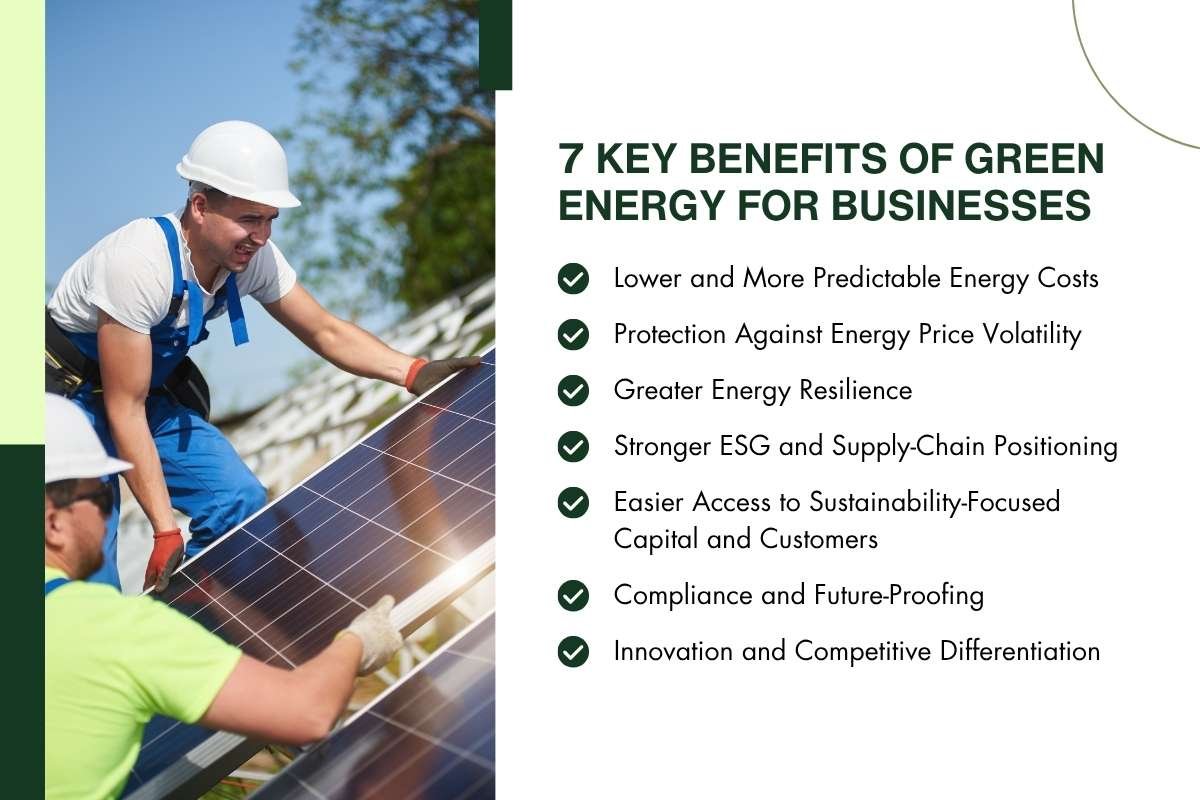
The value of clean power goes well beyond lower emissions. For many firms, it can change how they manage cost, risk, and growth. The benefits of green energy for businesses become clearer when we look at daily business needs.
1. Lower and more predictable energy costs
Renewable power can cut a business’s need for grid power. It can also make future power costs easier to plan. These are two different gains, and both matter.
A factory with high power use needs cost control. It also needs a clear view of future costs. Solar or wind can offer that view through planned power rates. Yet savings still depend on tariffs, plant size, finance, and use.
So, the benefits of green energy for businesses need a cost check first. A business should compare its current tariff with the full project cost.
2. Protection against energy price volatility
Power costs can shift with fuel prices, tariffs, and market rules. Most businesses cannot control these changes on their own.
Long-term renewable contracts can add more price certainty. That can help businesses plan budgets and protect operating margins. The gain may come from lower risk, not just lower bills.
This matters most when power forms a large part of costs. A small rate shift can affect the margin on every unit sold.
3. Greater energy resilience
Energy resilience means keeping key work running during power stress. Energy independence means relying less on outside power sources. These ideas overlap, but they do not mean the same thing.
Solar, batteries, and smart controls can support key loads. This can help cold stores, data centres, plants, hospitals, and warehouses.
Still, solar alone cannot promise steady power at all times. Solar output changes with weather, time, and site limits. Businesses may need storage and backup systems for critical loads.
4. Stronger ESG and supply-chain positioning
Green power can also improve the quality of a business’s ESG data. For large listed businesses, this matters more as reporting rules grow.
SEBI’s BRSR Core tracks Scope 1 and Scope 2 emissions. It also uses emissions intensity as a key metric.
This can matter across global supply chains too. Large buyers may ask suppliers for better data on emissions and energy use. Green power can then support a business’s case during vendor reviews.
That does not make green energy an instant brand win. The real gain comes from clear data and proof.
5. Easier access to sustainability-focused capital and customers
Banks, funds, and large buyers now track more than sales and profit. They may also review climate risk and ESG data.
That does not mean green power guarantees new funding. It can, however, make a business’s energy and emissions data easier to track.
The RBI has also highlighted the need for stronger green finance systems. Its work links climate risk with financial risk and capital flows.
For businesses, this creates a useful link between energy choices and capital plans.
6. Compliance and future-proofing
India’s ESG rules do not apply in the same way to every company. Some duties depend on listing status, size, and market value.
For example, SEBI requires BRSR filings from the top 1,000 listed firms.
Other companies may face buyer demands or their own climate goals. Some may also prepare for future rules before they become binding.
This makes future-proofing a business choice, not just a compliance task. Early action can give firms more time to test new power models.
7. Innovation and competitive differentiation
The benefits of green energy for businesses can extend into daily operations. Businesses can pair clean power with smart meters and energy tools.
They can also use batteries, AI-based energy control, and electrification. These tools can help businesses track waste and tune power use.
That changes the role of renewable power. It becomes part of a wider operating system for green energy business solutions and technology.
For some businesses, that wider system may create more value than solar alone. The real edge can come from using clean power to run better.
Which businesses gain the most from green energy?
Not every business gets the same value from clean power. The benefits of green energy depend on how businesses use energy.
| Business type | Likely benefit | Suitable adoption model |
| Manufacturing | Lower power costs and better cost control | Open access, on-site solar |
| Steel, cement, chemicals | Lower exposure to high power demand | Open access, renewable contracts |
| Food processing, textiles | Lower bills and better cost planning | Solar, energy efficiency |
| Hotels, retail, offices | Lower recurring power costs | Rooftop solar, renewable procurement |
| Data centres, telecom | Power resilience and clean power supply | Renewable contracts, storage |
| MSMEs | Lower energy use without high upfront cost | Efficiency, leasing, third-party models |
Energy-intensive businesses can gain the most from each unit saved. A small drop in power cost can affect plant margins.
Commercial businesses often have steady daily power needs. That can make rooftop solar useful at the right site. Warehouses and hotels may also have large roof areas.
Technology businesses face a different need: reliable power. Data centres need high uptime and a growing power supply. MSMEs can take a lighter route through efficiency upgrades or renewable procurement.
So, the benefits of green energy for businesses depend on fit, not size alone. A well-chosen model can matter more than a large solar plant.
Green energy benefits vs. the cost of adoption
Green power can lower costs, but adoption still needs careful planning. Upfront capital can pose a hurdle for many Indian companies. Financing costs and payback time can also change the business case.
Rooftops may lack enough space for the needed solar capacity. Solar output can also vary with weather and time. Storage may add more cost when businesses need steady power. Grid links, state rules, and open-access rules can also affect returns.
That makes state and sector context important for every project. A factory may face a very different tariff than an office. Its load may also change across shifts, seasons, and peak hours.
Before choosing a model, businesses should check six key factors:
- Electricity use and daily load patterns
- Tariff structure and peak power charges
- Available space and site limits
- Contract term and power needs
- Financing cost and payback period
- Expected renewable power output
The right question is not, “Is green energy cheaper?” Instead, ask: “Which green-energy model gives this business the best risk-adjusted value?”
How Indian businesses can measure the business value of green energy?
The benefits of green energy for businesses need clear numbers, not broad claims. A project should show value through both energy and finance metrics.
Start with cost per unit and annual energy savings. Then track the renewable-energy share across total power use. Scope 2 emissions can show changes linked to purchased electricity.
Finance teams should also track the payback period and internal rate of return. Energy intensity can show how much power each unit of output needs. Power interruption exposure can help track resilience gains. Carbon reduction per rupee invested adds one more useful measure.
The key lies in comparing the full picture. Compare each project with current electricity costs and other capital uses. Do not judge value from carbon cuts alone.
A project may cut emissions yet offer weak financial value. Another may deliver modest carbon cuts but stronger cost and risk gains. That is why both finance and energy data should guide the choice.
Where green energy fit into India’s broader business opportunity?
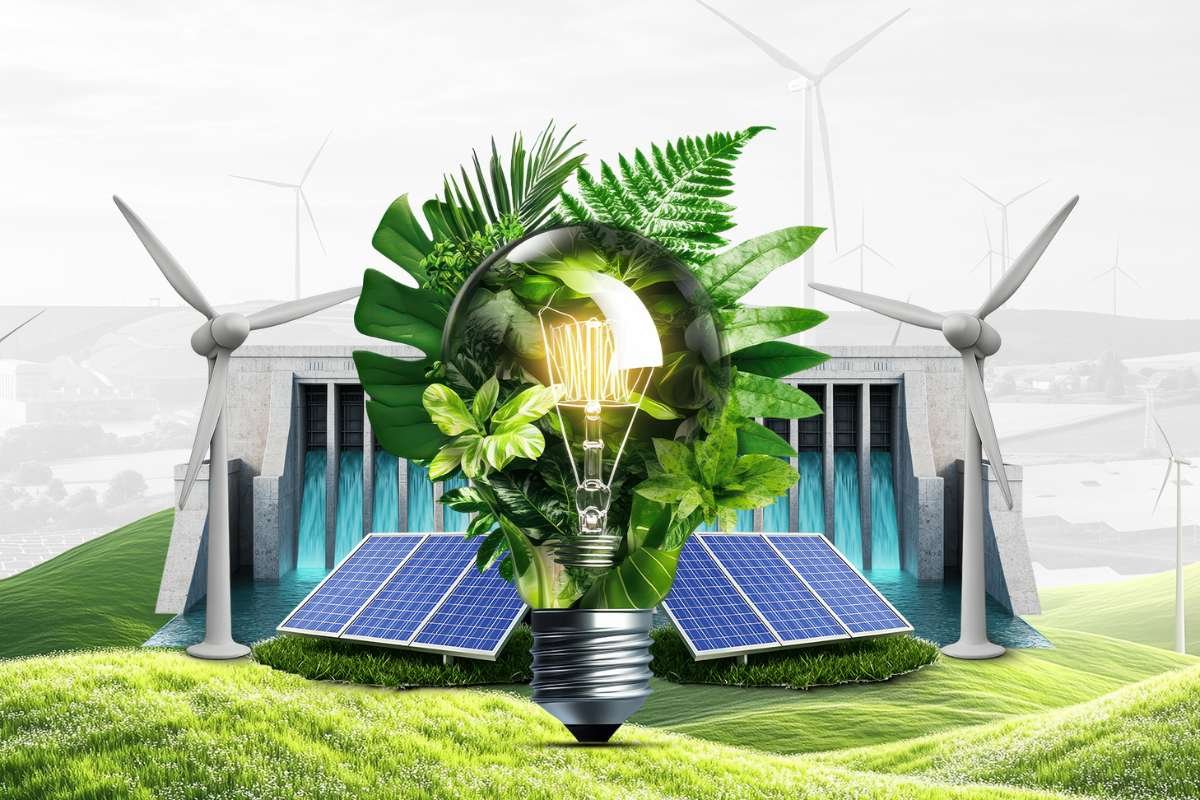
As more Indian companies adopt clean power, demand grows beyond power plants. Each new project needs firms that can plan, build, track, finance, and maintain it.
That creates a wider ecosystem around corporate energy use. Energy audits can help map waste and find savings. Solar EPC firms can build new capacity. Consultants can guide power choices and contracts. Energy tools can track use and cut waste.
Storage can help manage changing power supply and peak loads. EV charging can support firms as transport shifts toward electric power. Procurement advisors can help buyers choose suitable renewable contracts. O&M teams can then keep these assets running well.
This link matters for India’s wider green business market. How to start a green energy business shows where such demand can create room for new ventures. The shift starts with power needs, but its impact can spread across the full energy chain.
Conclusion:
Green energy opportunities have moved well beyond an environmental-only conversation. For Indian companies, it can shape cost visibility, risk control, and business resilience. It can also strengthen supply-chain positioning and sustainability performance. New energy tools can further support better operations and fresh ways to manage power.
The benefits of green energy for businesses depend on the model chosen. No single route works for every company. Before investing, businesses should assess power use, tariffs, capital costs, site limits, and regulatory rules.
The goal should be clear: choose clean power where it adds business value. As India expands its renewable power base, smart energy strategy will become a bigger part of competitive business planning.
Frequently asked questions:
1. What are the main benefits of green energy for businesses?
The main benefits include better cost management, stronger energy resilience, lower emissions, improved ESG positioning, and long-term competitiveness.
2. Can green energy reduce business operating costs?
Yes, but savings depend on electricity tariffs, energy use, financing costs, system size, and the adoption model.
3. Is green energy suitable for small businesses?
Yes, MSMEs can consider energy efficiency, rooftop solar, third-party procurement, or service-based models based on their needs.
4. How does green energy help businesses meet ESG goals?
Green energy can lower emissions and support Scope 2 accounting, but it forms only one part of a wider ESG strategy.
5. What is the best green energy option for a business?
There is no universal option, so businesses should compare rooftop solar, renewable procurement, open-access power, storage, and efficiency based on their needs.