


Water infrastructure has traditionally been built around scale, permanence, and established delivery models. Yet the demands facing modern industries and communities are changing faster than those models can accommodate. Data centers require water infrastructure at unprecedented speed. Mining and rare earth projects need reliable systems in locations where conventional utilities may not exist. Industrial users are competing with public-sector demands for finite water resources. Meanwhile, water scarcity, regulatory pressures, and the need for sustainable resource recovery are reshaping how infrastructure must be conceived.
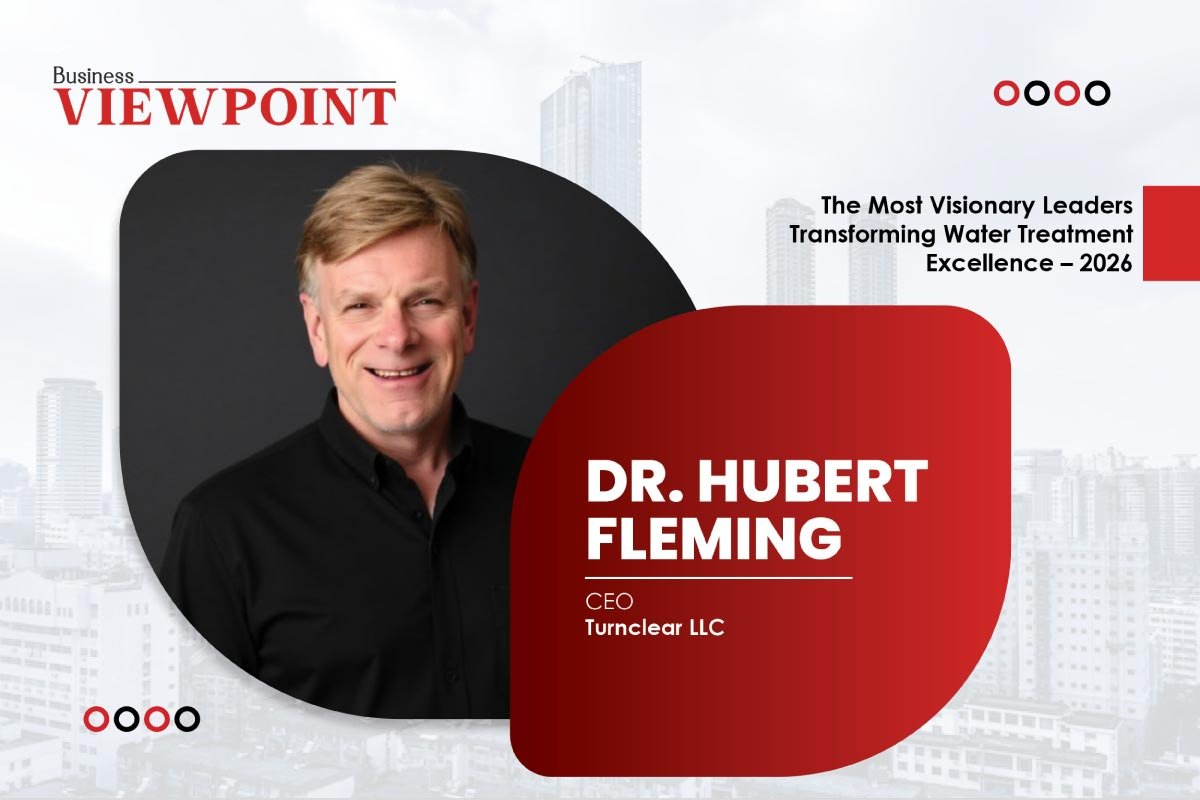
At the intersection of these challenges stands Dr. Hubert Fleming, CEO of TurnClear LLC, with a philosophy grounded in a simple but consequential idea: water infrastructure should not merely be viewed as a cost of doing business. When approached differently, it can become an enabler of growth, a source of resource recovery, and a platform for technological innovation.
From diversification to a $400 million high-tech business
Dr. Hubert Fleming’s career was not shaped by a single defining turning point, but by a series of experiences that challenged him to step into unfamiliar territory. The first was leading the Alcoa Separations Division during his first corporate position at Alcoa. At the time, Alcoa needed to diversify its product line, and he was given lead responsibility for developing, implementing, and executing the strategy.
He took an aggressive approach to diversification, expanding Alcoa into non-aluminum products through Alcoa Separations and moving into water treatment and associated advanced materials. The company made significant investments in manufacturing plants, engineering teams, and R&D for new products.
The outcome was the development of a $400 million+ high-tech business with much better profitability than Alcoa’s core products. The experience also taught him that he could learn skills he did not previously possess and that he could become very good at new areas of expertise.
Challenging the conventional economics of water
Hubert sees major opportunity in today’s water infrastructure market. His focus is on projects with real economic and sustainability value that remain stalled simply because conventional models can’t make them work. TurnClear is designed around identifying and advancing precisely these opportunities.
In some cases, the value comes from creating water for reuse. In others, it lies in recovering valuable components from wastewater and returning them to productive use. Elsewhere, the challenge is speed. A project may be economically viable, but its development can remain constrained because conventional water or wastewater infrastructure cannot be delivered quickly enough. Data centers and rare earth mining operations illustrate this challenge particularly well. Their growth can be limited not by demand, technology, or investment, but by the availability of suitable water infrastructure.
Dr. Hubert Fleming’s approach therefore begins with a different question. Instead of asking how an organization can fit a project into an existing water infrastructure model, TurnClear considers how water infrastructure itself can be redesigned to unlock the project. That shift transforms water from a supporting utility into a strategic enabler.
The shift toward decentralized water infrastructure
The future of water and wastewater infrastructure, both in the US and globally, will be decentralized. Hubert believes that centralized urban utility models are outdated. Relying on large, centralized systems for water and power slows both population and industrial growth.
Developing viable decentralized water infrastructure requires a multi-pronged approach. First, technical innovation and advanced engineering are necessary to design and build effective treatment systems. Additionally, agile manufacturing is needed to deliver fit-for-purpose equipment, alongside creative financing to make projects financially feasible.
TurnClear takes a holistic view of all these components to deliver solutions for both the immediate and long term. For short-term needs, they rely on an existing and expanding mobile fleet of containerized treatment systems. For long-term operations, they provide standardized, fixed-in-place designs. These systems are designed for applications including power plants, industrial manufacturing sites, small and medium-sized communities, remote communities, and similar settings.

Integrating finance, technology, and project delivery
Dr. Hubert Fleming’s understanding of infrastructure economics extends beyond the initial capital investment. TurnClear integrates capital and financing with project development and delivery, allowing the company to price water on a lifecycle basis rather than simply evaluating the upfront cost of construction. That distinction creates room for a different kind of decision-making.
When projects are evaluated over their full operating life, technologies that may appear expensive at the outset can become economically compelling because of their ability to reduce ongoing operational costs. TurnClear can therefore design projects around long-term performance rather than short-term capital constraints. He also applies an integrated project-delivery philosophy, bringing design, operations, and commissioning closer together. Rather than treating construction, commissioning, and operational handover as disconnected stages, the model seeks to create a more seamless delivery process.
The result is intended to be greater efficiency, reduced friction, and infrastructure that is designed with its eventual operation already in mind.
Practical innovation in action
For Hubert, innovation is not about adopting technology simply because it is new. Every project represents a balance between risk and cost. A new technology must demonstrate meaningful value while keeping risk manageable. Yet his lifecycle-costing philosophy gives TurnClear an advantage that conventional project structures may not offer.
Traditional delivery models often expect a new technology to achieve a one- to two-year payback. He believes such expectations can prevent worthwhile innovations from being implemented because meaningful improvements frequently require more time to demonstrate their full value. TurnClear’s model looks further ahead. If a technology creates sufficient value across a 20-year-plus contract, it can make economic sense even when its payback period does not meet conventional short-term expectations.
This approach effectively expands the time horizon for innovation. It allows Hubert and his team to consider technology not merely as an expense requiring immediate recovery, but as a strategic investment in long-term infrastructure performance.
Strategic partnerships, expertise, and selective ownership
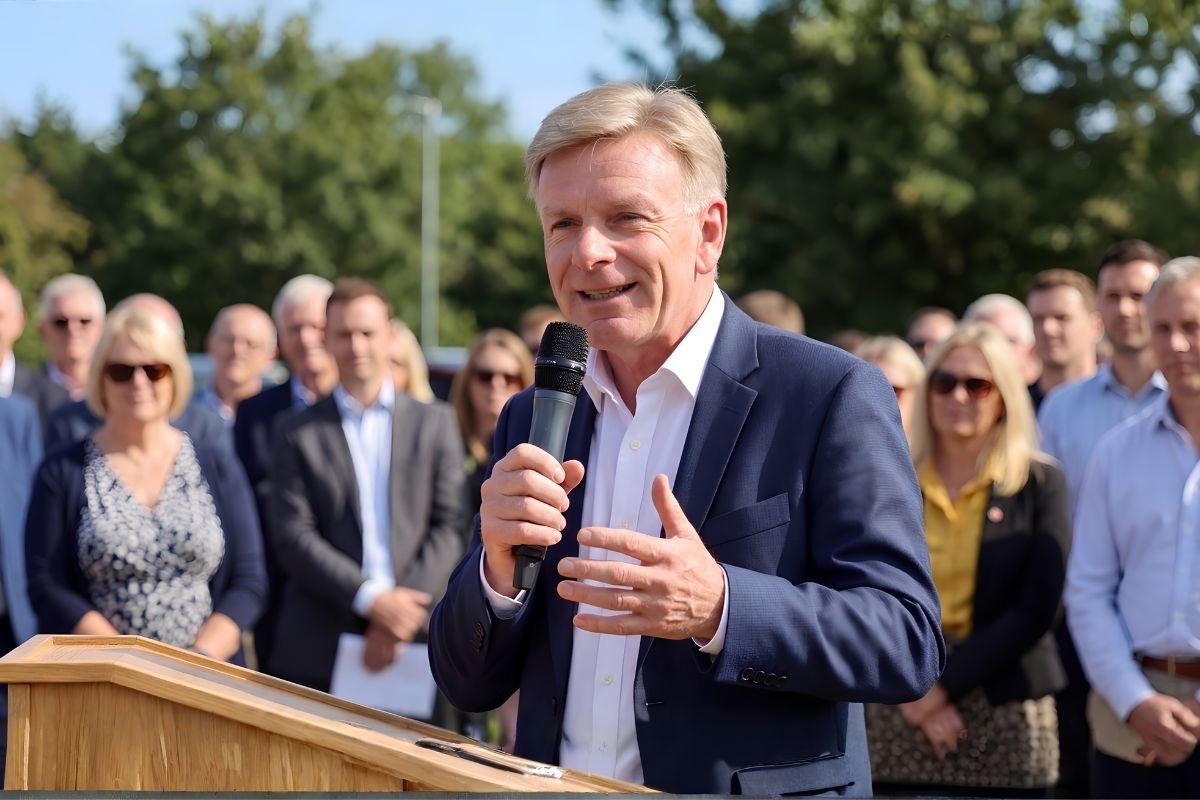
Dr. Hubert Fleming does not view water infrastructure as an industry that can be transformed by one organization operating in isolation. Holistic water-service delivery requires capabilities across engineering, construction, permitting, project delivery, and operations. TurnClear therefore actively develops partnerships with best-in-class firms across these disciplines.
At the same time, he recognizes that partnership is not always the most effective route. Where a capability is strategically critical, particularly in relation to key technologies, ownership can provide greater control over the critical path. TurnClear has already used acquisition as part of this strategy.
This balance between collaboration and ownership reflects his broader leadership approach: remain open to external expertise while retaining control over capabilities that are essential to long-term differentiation.
AI as an infrastructure accelerator
AI is becoming an integral part of TurnClear’s operations, helping streamline engineering, contracts, financial planning, and asset management while reducing costs and manual effort.
AI tools you use:
- AI Engineering & Automation Solutions
- Used across engineering, contract management, financial modeling, and asset operations.
Primary use cases:
- Water System Engineering: Standardizing system design and reducing engineering manhours.
- Contracts & Financial Models: Quickly modifying, customizing, and finalizing contracts and financial models.
- Asset Management: Managing assets with fewer personnel and supporting preventive maintenance programs.
- Operations: Identifying opportunities for proactive maintenance and reducing ongoing operational requirements.
Key benefits:
- Lower engineering and operational costs
- Reduced engineering and construction timelines
- Fewer engineering manhours
- Greater customization and standardization
- Leaner asset management
- More proactive maintenance
Impact on decision-making:
- Faster
- More Efficient
- More Proactive
- Cost-Conscious
AI enables TurnClear to make faster engineering and financial decisions, optimize asset management, anticipate maintenance needs, and improve operational efficiency with fewer resources.
When industrial water meets public need
One of the most significant developments Dr. Hubert Fleming sees across the water sector is the growing intersection between industrial and public-sector water requirements. Historically, industrial water strategy could often be developed with limited consideration of competition for public water resources. That environment is changing. As water availability becomes constrained, industrial projects must consider their relationship with public-sector demand for both water supply and wastewater disposal.
Data centers provide a clear illustration. Securing access to public water supplies or obtaining permission to discharge wastewater into publicly owned treatment systems can become a critical element of project development. This means industrial water designers can no longer think only about the facility itself. They must consider the wider community, the availability of public resources, and the infrastructure pressures their projects may create. He believes the future will require projects to work around, rather than compete directly with, public water needs wherever possible.
That evolution places greater responsibility on water infrastructure leaders to design systems that are technically effective while remaining socially and environmentally compatible.
Leadership without bureaucratic drag
Dr. Hubert Fleming’s leadership philosophy is centered on defining clear objectives, putting capable people in charge, supporting them, and giving them the freedom to make decisions. He believes that empowering people creates an active culture of productivity and success.
He also emphasizes minimizing bureaucracy and avoiding unnecessary organizational layers. By giving key people the authority to make their own decisions, he believes organizations can foster greater productivity while allowing capable individuals to take ownership of their responsibilities.
A vision for the water infrastructure of the future
TurnClear continues to innovate with the goal of being recognized as a front-runner in innovation and project delivery. Its enduring legacy will be built through successful projects across data centers, mining, specialty chemicals, and other industries, along with positive engagement with the public sector.
The success code by Dr. Hubert Fleming
It’s important for leaders in the water industry not to simply continue water industry traditions. In other words, learn from other industries and apply those principles to the water industry. Take the best concepts from completely different industries or market vectors and apply them to the water industry. There are so many lessons, but perhaps a key one is to keep one’s eye on the objective. It’s a long career, full of twists, turns, obstacles, temptations, and distractions. It’s critical to maintain focus, maintain a path toward the key objectives. Don’t get sidetracked, but focus and maintain that focus. Be patient, show progress.