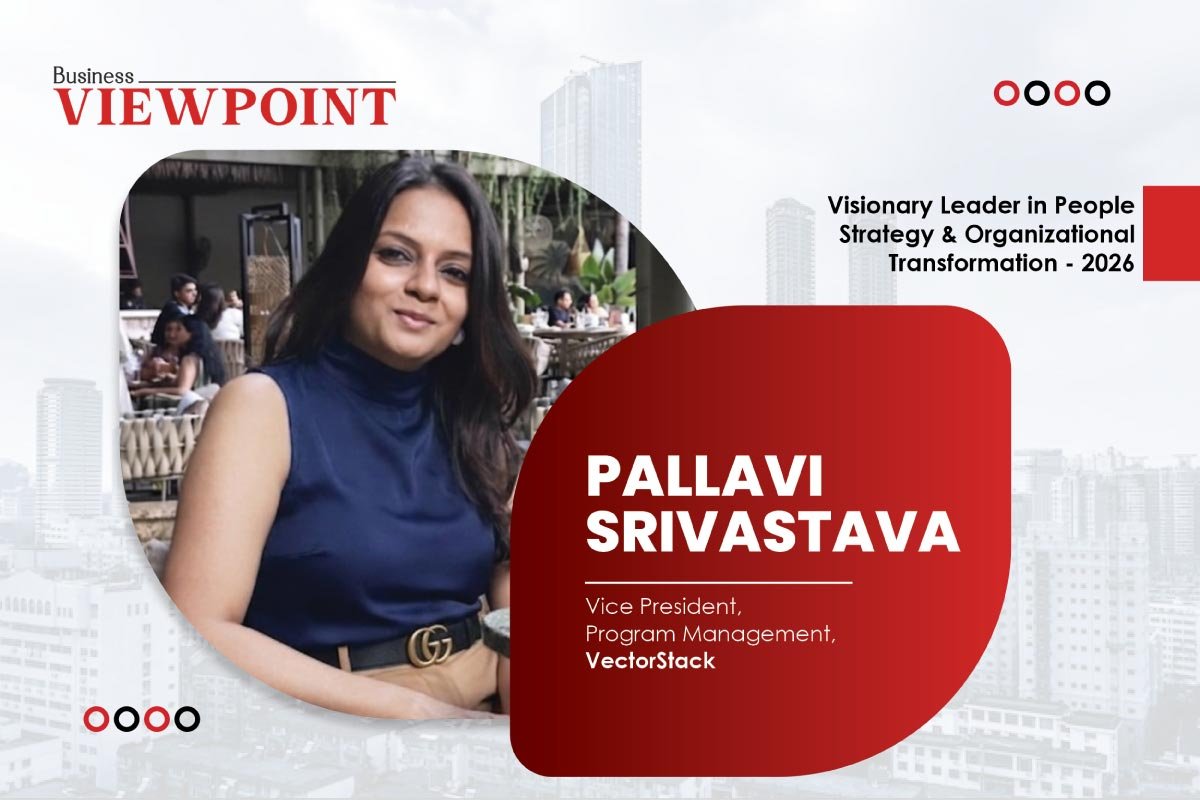

Transformation is often measured by what an organization implements, but Pallavi Srivastava looks beyond implementation to ask what an organization becomes through change. Her distinctive contribution lies in shifting transformation from a technical or project-driven exercise into a human capability built through trust, purpose, adaptability, and shared ownership. Over 18 years across global technology and financial environments, she has led complex enterprise initiatives while challenging the assumption that stronger governance must always mean more structure. Her evolution toward adaptive governance and “minimum viable governance” reflects a leadership philosophy that gives organizations enough structure to protect strategic intent and compliance without limiting agility or innovation.
By connecting C-suite strategy with frontline execution, strengthening cross-functional collaboration, and creating psychologically safe environments where people can surface risks and embrace new ways of working, she has elevated program leadership into a strategic force for sustainable value creation. As Vice President, Program Management at VectorStack, Pallavi Srivastava brings this people-centered perspective to a business landscape increasingly shaped by AI and digital transformation, advocating for a future where technology accelerates progress while empathy, human judgment, and collective purpose remain at the heart of meaningful change.

Organizational Transformation as a Human Capability
Organizational change is frequently treated as a structural or technical rollout, whether it involves deploying a new system, enforcing a process, or mandating a framework. However, Pallavi Srivastava believes the deeper misunderstanding lies in viewing transformation as a project with a defined end date rather than as an evolving human capability.
Across her 18 years in global organizations, orchestrating enterprise initiatives ranging from banking governance to digital platforms, she has learned that transformation does not fail because of poor architecture alone, but because of a silent human disconnect. When people feel that change is happening to them rather than with them, adoption can stall.
Her approach therefore flips this narrative by treating every program roadmap as a psychological contract. Rather than focusing solely on stage gates and status reports, she prioritizes empathy-led governance that aligns individual purpose with organizational vision. For her, transformation succeeds when organizations build psychologically safe spaces where teams feel empowered to articulate risks, unlearn old habits, and co-create solutions.
Program Management as a Strategic Lever
Program management, in her view, is not mere administrative bookkeeping; it is the nervous system of an enterprise. While execution keeps the gears turning, strategic program leadership aligns those gears with executive vision and market strategy.
Throughout Pallavi Srivastava’s career, whether establishing PMO frameworks at Standard Chartered Bank or steering cross-functional initiatives across global regions, she has elevated Program Management from operational tracking into a strategic lever through three core pillars:
- Strategic Storytelling Over Status Reporting: Translating complex RAID logs and milestone trackers into clear narrative insights that enable C-suite decision-making.
- Cross-Functional Coalition Building: Breaking down functional silos between IT, compliance, operations, and business units to build unified ownership.
- Outcome-Oriented Value Realization: Shifting success metrics from “On Time, On Budget” to “Value Delivered, Adoption Sustained, and Business Impact Realized.”
By positioning the PMO as a trusted strategic advisor, she believes delivery frameworks can be transformed into catalysts for cultural and commercial acceleration.
The Leadership Lesson of Unlearning
Earlier in Pallavi Srivastava’s career, she strongly believed in rigid, standardized processes. The assumption was straightforward: if governance was sufficiently comprehensive, successful execution would naturally follow. Years of managing complex transformations across global environments challenged that assumption.
She came to recognize that overly rigid frameworks can encourage compliance-seeking behaviour rather than genuine innovation. In response, she adopted what she calls adaptive governance and the principle of “minimum viable governance.” The idea is not to eliminate structure. Rather, governance should be strong enough to protect compliance, risk, and strategic intent while remaining light enough to preserve agility and initiative.
It is a distinction that captures Pallavi Srivastava’s broader philosophy. Systems should create clarity for people, not constrain them unnecessarily.
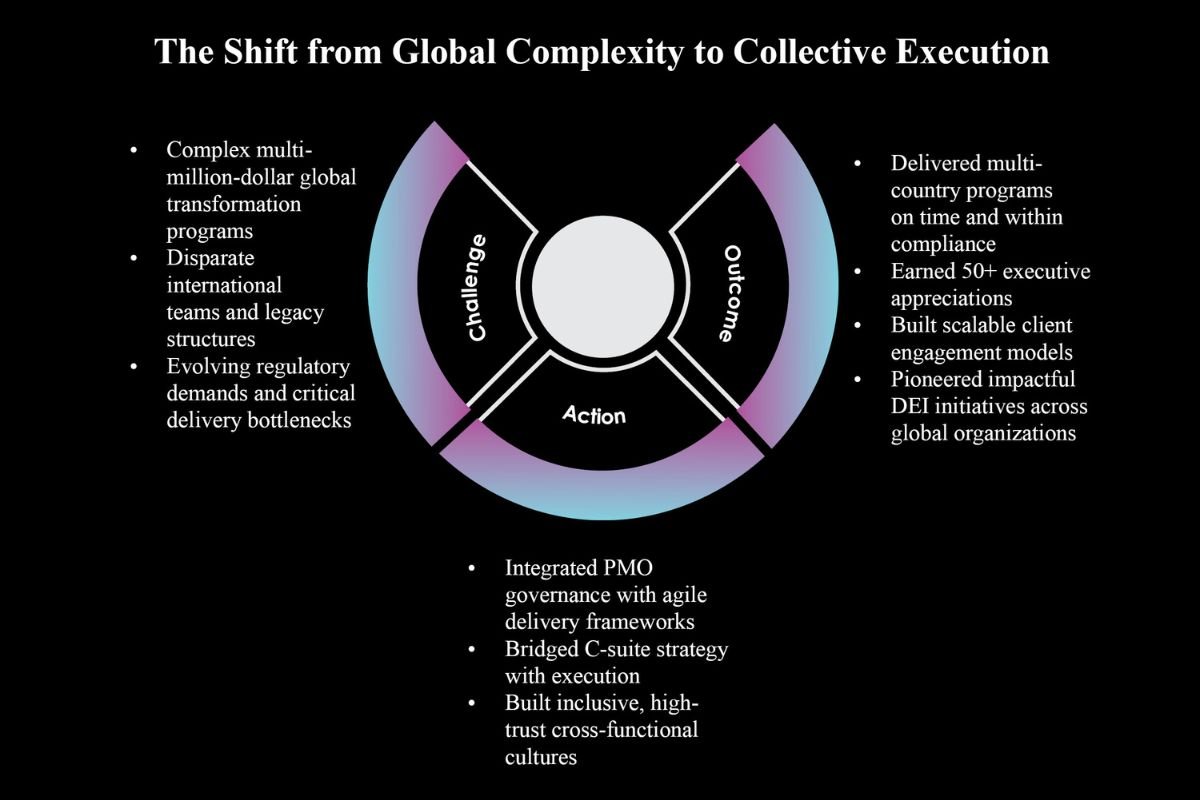
The Shift from Global Complexity to Collective Execution
From navigating global delivery bottlenecks to building integrated, high-trust transformation ecosystems, this journey turned complexity into measurable impact.
Challenge
- Complex multi-million-dollar global transformation programs
- Disparate international teams and legacy structures
- Evolving regulatory demands and critical delivery bottlenecks
Action
- Integrated PMO governance with agile delivery frameworks
- Bridged C-suite strategy with execution
- Built inclusive, high-trust cross-functional cultures
Outcome
- Delivered multi-country programs on time and within compliance
- Earned 50+ executive appreciations
- Built scalable client engagement models
- Pioneered impactful DEI initiatives across global organizations
Making People Part of the Transformation
During rapid transformation, organizations can lose employees in several ways, but Pallavi Srivastava believes the most vulnerable point lies at the intersection of communication and decision-making. Leaders may communicate what is happening and when it will happen, yet fail to explain why the change matters or how it affects individuals. When strategic decisions happen behind closed doors, ambiguity fills the resulting information gap. Fatigue, uncertainty, and skepticism can follow.
Her response is to build transparent, two-way feedback architecture.
- Cascaded Intent: Ensuring strategic objectives are translated into clear, actionable context for frontline teams.
- Democratized Feedback Loops: Establishing real-time channels where operational pain points can be escalated without friction.
- Continuous Capability Uplift: Pairing transformation demands with dedicated learning journeys so employees never feel left behind by technological shifts.
This approach is particularly important when organizations must introduce new skills, methodologies, or ways of working. She advocates radical transparency with compassionate accountability. Teams should understand business realities without being overwhelmed by them, while new capabilities should be positioned as personal career capital rather than merely organizational mandates. Even difficult decisions, she believes, can be communicated with clarity and dignity.
Compassionate Accountability in Difficult Decisions
Balancing business realities with human needs requires what Pallavi Srivastava describes as “radical transparency paired with compassionate accountability.” She believes leaders should neither shield teams from difficult business realities nor expose them to unnecessary uncertainty. Instead, they must provide context and create pathways for adaptation.
- Framing Skill Evolution as Personal Capital: Positioning new methodologies, such as Scaled Agile or AI integration, not as organizational requirements, but as career-defining skills for the individual.
- Architecting Transition Safety Nets: Providing structured training, mentorship, and grace periods for teams to adapt to new workflows.
- Leading with Integrity in Tough Decisions: When shifts require hard trade-offs, delivering decisions with respect, clarity, and absolute dignity for everyone involved.
Compassionate leadership does not mean avoiding difficult decisions. It means making them responsibly.
Measuring the Human Side of Transformation
For Pallavi, while project metrics measure output, human signals measure outcome and durability. Beyond timelines and budgets, she tracks four key signals:
- Unprompted Adoption Rate: She looks at whether teams are actively utilizing new systems and practices when no one is watching.
- Psychological Safety & Escalation Velocity: She assesses how quickly risks and bad news are surfaced. High-trust cultures tend to report issues early, while low-trust cultures may hide them until they reach a crisis point.
- Cross-Functional Collaboration Index: She measures the reduction in functional friction and the time required to reach alignment across disparate teams.
- Employee Energy & Talent Retention: She tracks the retention rates of key performers during and after the transformation.
These measures reflect her belief that the true test of transformation is not whether a project ended, but whether the organization became stronger because of it.
One Team Beyond Departmental Boundaries
Pallavi believes high-performing cross-functional teams require a shared identity that supersedes departmental agendas. Her starting point is a single North Star that enables every function to see how its contribution connects to the broader organizational objective.
She also focuses on translating value across functional languages. Technology may discuss architecture, business may focus on revenue, and compliance may prioritize risk. Successful collaboration requires someone capable of connecting these perspectives. Pallavi’s role is to act as the translator, bridging vocabulary gaps so all functions feel heard. Shared accountability completes the model. When KPIs encourage teams to succeed collectively rather than protect individual departmental interests, blame-shifting gives way to joint ownership.
For Pallavi, cross-functional leadership is less about managing differences and more about finding the purpose that makes those differences work together.
The Human Capabilities AI Cannot Replace
Pallavi sees AI as a powerful accelerator, but not as a substitute for human leadership. She believes organizations must deliberately preserve empathy, ethical judgment, contextual intuition, creative vision, and wisdom.
AI can process historical information, identify patterns, and generate analytical insights. Humans remain responsible for determining values, navigating moral ambiguity, interpreting emotional context, and imagining possibilities that may not exist within historical data. For her, the future of leadership is therefore not about competing with AI. It is about becoming more distinctly human where human judgment matters most.
AI-Powered Leadership: Turning Data into Strategic Action
AI is integrated across reporting, risk analysis, resource planning, and executive communication to make decision-making faster, sharper, and more strategic.
AI Tools You Use
- ChatGPT Enterprise
- Microsoft Copilot
- PMO AI Analytics Dashboards
- Claude
- Google Gemini
Primary Use Cases
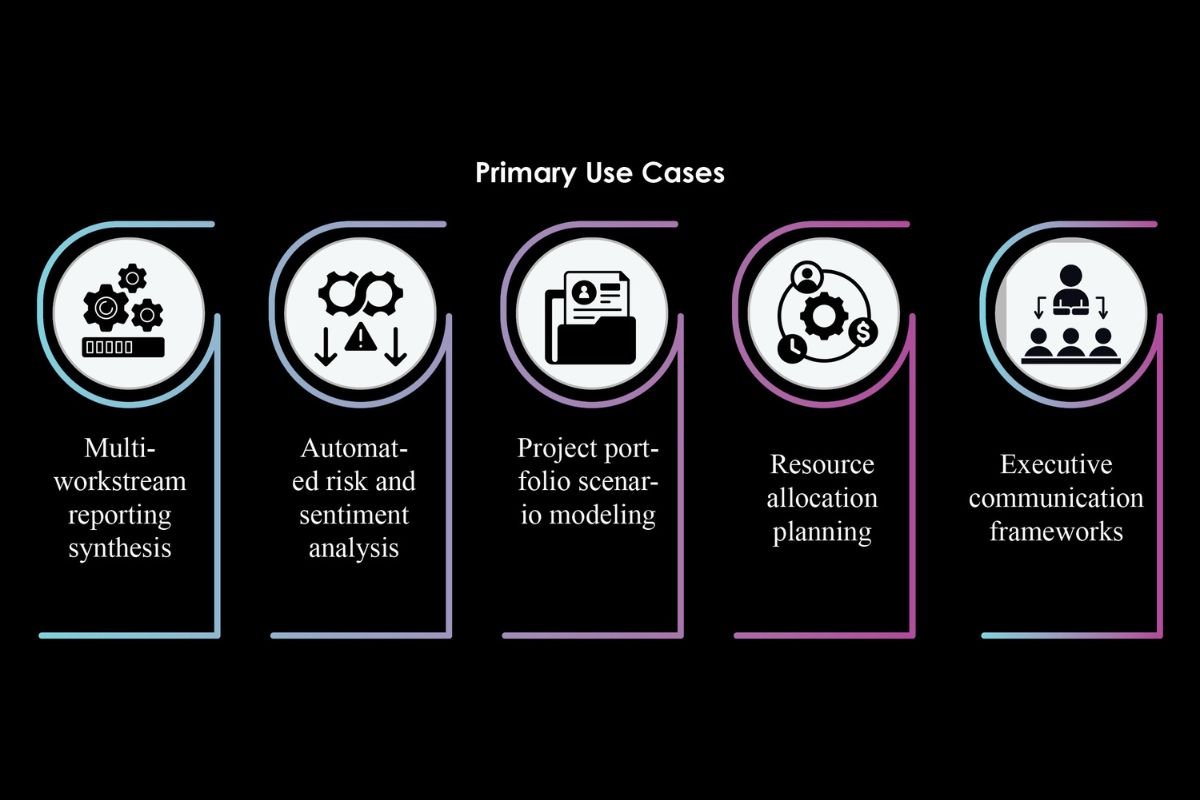
- Multi-workstream reporting synthesis
- Automated risk and sentiment analysis
- Project portfolio scenario modeling
- Resource allocation planning
- Executive communication frameworks
Key Benefits
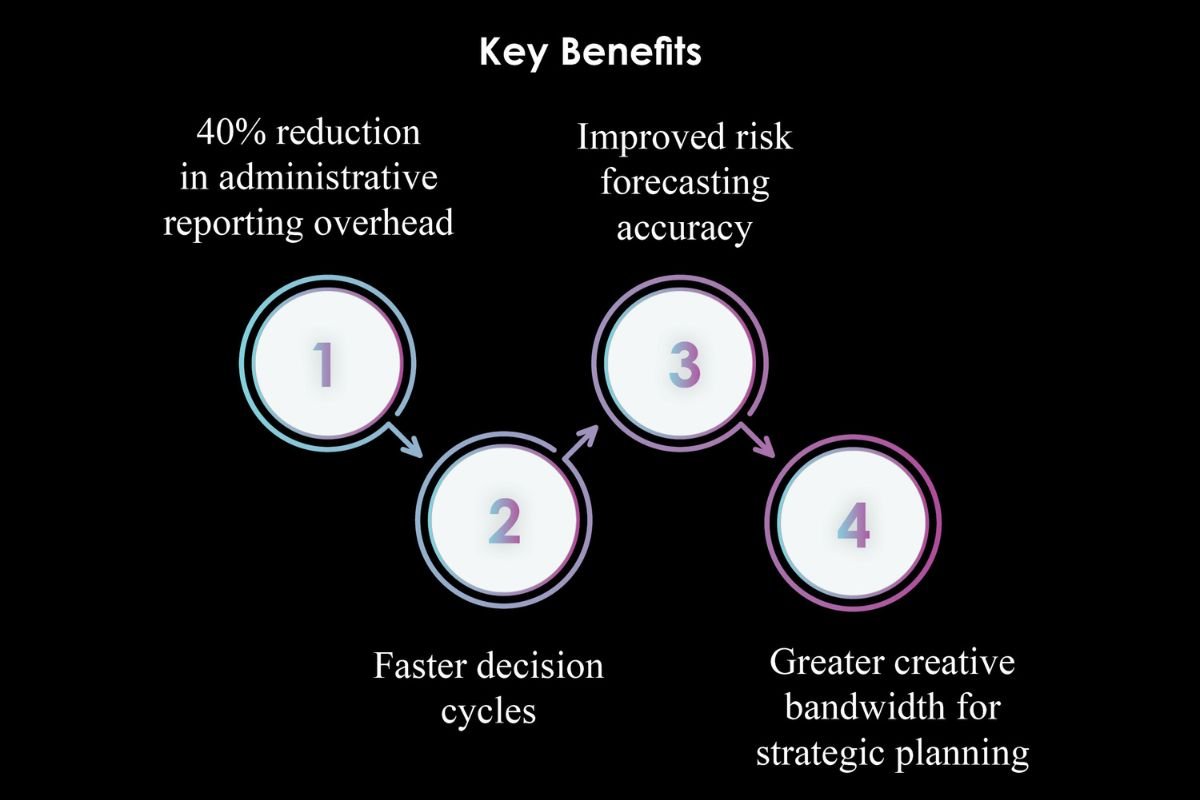
- 40% reduction in administrative reporting overhead
- Faster decision cycles
- Improved risk forecasting accuracy
- Greater creative bandwidth for strategic planning
Impact on Decision-Making
Speed & Precision: Converts raw project data into actionable executive insights in real time, enabling leaders to spend less time gathering data and more time driving strategic execution.
Three Horizons for VectorStack’s Next Phase of Growth
Looking toward the future, Pallavi sees significant opportunity for VectorStack to expand through strategic ecosystems. She identifies three areas with particular potential. The first is AI-driven PMO and analytics alliances, which could bring predictive risk, resource, and delivery forecasting into governance models.
The second is collaboration with academic and leadership institutions, including IITs and international business schools, to develop executive education around human-AI synergy and change management. The third is DEI and capability-building partnerships, particularly with global women-in-technology and leadership networks. Her vision extends beyond commercial expansion. She sees partnerships as vehicles for strengthening organizational capability, developing leaders, and creating more inclusive pathways into decision-making.
The Success Code by Pallavi Srivastava
“Leadership is the art of empowering human potential through structured clarity and authentic empathy.”
Throughout my 18-year journey across global technology and financial landscapes, my guiding compass has been simple: Systems drive order, but people drive outcomes. True impact happens when you combine uncompromising governance standards with deep, compassionate leadership. Build frameworks that give people clarity, build environments that give them safety, and empower them with trust. When you lift others and align them with a shared vision, extraordinary transformation naturally follows.
Bharat 2.0 Conclave – Shakti Edition
The Courage to Lead Differently: A Perspective on Authentic Leadership by Pallavi Srivastava
Turning Barriers into Leadership Advantage
Early in Pallavi Srivastava’s career, being heard often came with an unspoken expectation to adopt traditional, command-and-control leadership styles. Rather than allowing that expectation to define her approach, she recognized that her greatest strength lay in authentic leadership.
She built her style around inclusive influence, analytical rigor, and active listening. Where others might see organizational friction, Pallavi focuses on building alignment and stronger coalitions. Her ability to combine structured PMO execution with emotional intelligence became a defining strength. Her work in advancing gender diversity alongside her corporate responsibilities further reinforced her belief that inclusive environments do not simply feel better; they perform better.
Moving Women from Participation to Authority
For Pallavi, meaningful leadership by women is ultimately about ownership of economic and strategic decisions. She believes India’s next phase of progress requires a shift from women’s participation to women’s authority.
That shift requires more than mentorship. Women need sponsors who advocate for them during critical promotion decisions and portfolio assignments. They also need sustainable professional ecosystems that support them through life transitions such as motherhood and caregiving without derailing their leadership progression.
Pallavi also believes leadership benchmarks must evolve. Collaborative, empathetic, and communicative leadership should be recognized as strengths capable of driving sustainable business outcomes.
Expanding the Room for Those Who Follow
Pallavi views being part of the Bharat 2.0 Conclave: Shakti Edition as both a privilege and a call to action. She sees it as a collective of women leaders who are not only navigating the future of Indian enterprise but actively shaping it.
Her message to fellow women leaders is clear: ambition should not be reduced to fit existing spaces. Instead, women should use their voices, build enduring coalitions, and create greater opportunities for those who follow.
For Pallavi, authentic leadership goes beyond individual achievement. It is about leading with purpose and capability while making the path wider for the next generation.