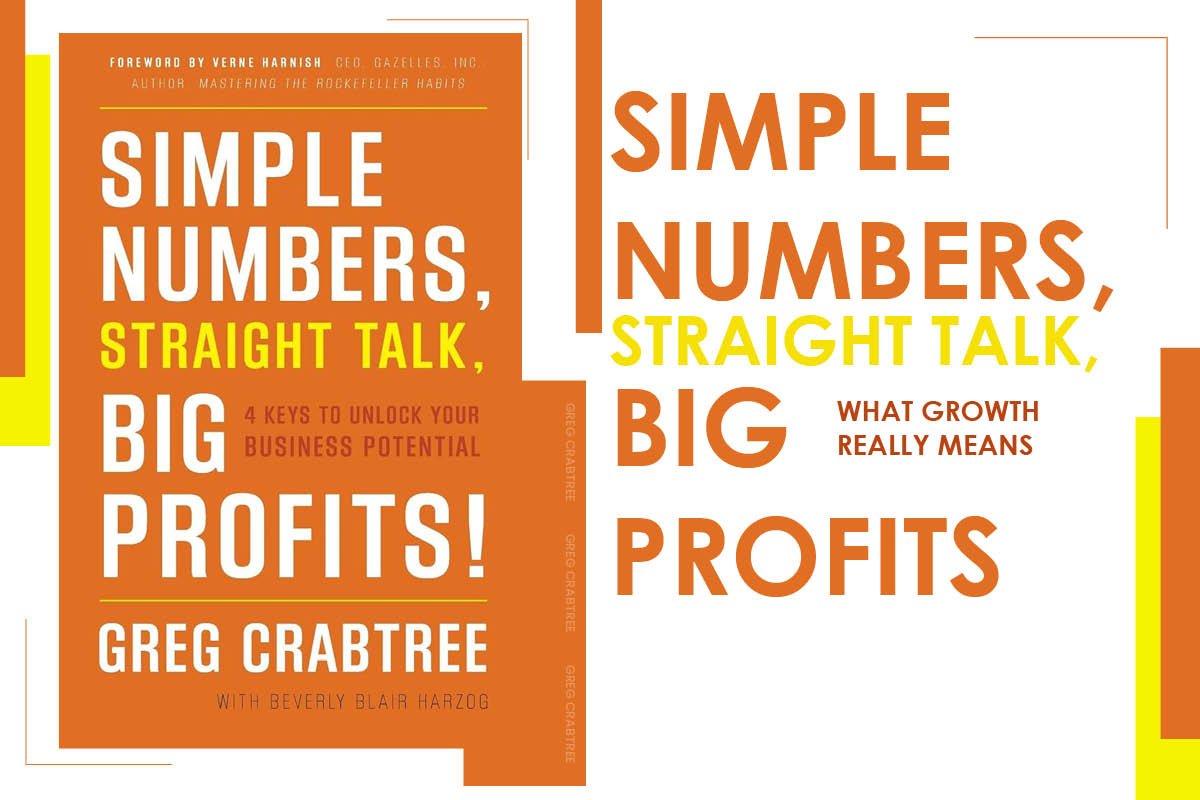



“Growth does not equal profit.” A Book That Counts What You Avoid.
Some books motivate you, some simplify ideas, and some quietly point at the numbers you prefer to ignore. Simple Numbers, Straight Talk, Big Profits – by Greg Crabtree! belongs to that last kind. It does not rely on grand promises or complex language. Instead, it presents a clear look at the financial truth behind running a business. The book asks you to face what your numbers are actually saying, even when it feels uncomfortable. It replaces guesswork with clarity and forces attention on what truly matters.
Purpose of the book:
It aims to correct the belief that growth defines success by placing profit at the center. It helps business owners understand financial data without confusion. It builds a sense of discipline and accountability through clear metrics. It encourages decisions based on facts rather than assumptions.
Author Perspective and Insight
Greg Crabtree presents his ideas through years of advising entrepreneurs on financial performance.
Author Profile:

- Primary Voice: Greg Crabtree
- Background: Financial consultant and business advisor
- Key Expertise: Profitability analysis for small and mid-sized businesses
- Core Strength: Identifying recurring financial mistakes
His perspective comes from direct work with businesses that struggle despite steady revenue. He writes with clarity shaped by repeated financial patterns, keeping the tone firm and practical. His credibility comes from real situations where poor understanding leads to weak decisions, and he turns complex data into clear, useful insights.
Inside the Book (Core Content Overview)
At its core, Simple Numbers, Straight Talk, Big Profits! reduces financial management into a set of clear and measurable ideas that business owners can apply without confusion. It places profitability, labor efficiency, and owner compensation at the center of business performance.
The book treats profit as a planned result rather than something left after expenses are paid.
It identifies labor as the highest cost and insists it must stay within defined limits tied to revenue. Another key idea is paying the owner a fair market salary so the numbers reflect the true condition of the business. These principles are supported by practical benchmarks, including a ten percent profit target as a standard for stability.
The focus remains on clarity, disciplined decisions, and rejecting vague growth assumptions. As the book states, “If you cannot measure it, you cannot manage it.”
The Sections that Matter Most
The book brings attention to a few sections that hold practical importance for business owners trying to understand their numbers clearly. These parts move beyond general advice and focus on specific financial habits that affect long-term stability.
Key Sections:
- Labor Efficiency: This section explains how excessive staffing can quietly reduce profit even when revenue appears healthy. It introduces clear limits that help evaluate hiring decisions with discipline.
- Owner Compensation: It questions the idea of paying oneself less to support the business. It shows how this approach hides the true financial condition and creates misleading results.
- Profit Benchmarks: It sets a defined profit target, giving readers a clear standard to measure performance.
Together, these sections establish a structured way to assess financial health through consistent and measurable indicators.
Philosophies that Shape the Book

The book rests on the belief that financial understanding should be simple for every business owner. It removes the idea that numbers need expert interpretation and encourages direct engagement with financial data, making clarity a responsibility.
Core Philosophies:
- Clarity is treated as essential, with financial concepts explained in a way that supports everyday decisions without confusion.
- Discipline is presented as a requirement, where consistent and measured actions guide outcomes instead of reactive choices.
- Honesty plays a central role, asking the reader to accept the actual condition of the business and address weak financial habits without avoidance.
These principles encourage decisions based on awareness, consistency, and careful judgment.
A Balanced Look at the Book
Every practical guide carries both clarity and limitation. This book follows the same pattern, offering strong direction while leaving certain gaps.
What Works Well:
- Clear frameworks make financial ideas easy to understand and apply in real situations.
- The focus stays on actionable insights, avoiding unnecessary theory or abstraction.
- Real business examples add credibility and make the concepts feel grounded.
- The language remains direct, reducing confusion and keeping the message precise.
Where It Falls Short:
- The discussion gives limited attention to external factors such as market competition or industry shifts.
- Some benchmarks feel rigid and may not suit every type of business.
- The tone can appear strict for readers who prefer flexibility in decision-making.
The strength of the book lies in its practical clarity and structured thinking. Its limitations appear in its narrow focus, which may require readers to adapt the ideas based on their specific context.
Practical Use in Daily Business Decisions
The ideas presented in Simple Numbers, Straight Talk, Big Profits! hold strong relevance for business owners handling daily financial decisions. The principles can be applied immediately in areas such as pricing, hiring, and profit planning without requiring complex systems.
“Practical Application:
The frameworks rely on consistency and clear thinking rather than advanced tools, making them suitable for small businesses with limited resources. They encourage regular evaluation of financial data, helping owners stay aware of their actual position.”
The emphasis on clarity allows readers to interpret numbers with confidence and act with purpose. As the book states, “You get what you measure.” This insight reflects its real value, guiding decisions that have a direct impact on profitability and long-term stability.
Core Lessons that Stay With You
The book presents its lessons with clarity, challenging common assumptions about how business owners view money and performance.
- Profit must be defined in advance and treated as a planned outcome rather than an afterthought.
- Revenue does not represent success on its own, as growth without control can weaken financial stability.
- Labor costs require strict attention, since excessive hiring can quietly reduce profitability.
- Owner compensation should reflect market value to present a true picture of business performance.
- Hiring decisions must follow clear financial limits instead of instinct or short-term pressure.
- Simple financial reporting improves understanding and supports better daily decisions.
- Clear numbers allow more precise judgment, reducing confusion in financial planning.
These lessons shape a mindset where every decision reflects clarity and financial responsibility.
How Easy the Book Is to Read
The way a book is written often shapes how well its ideas are understood, and this one keeps that experience clear and focused.
How It Feels:
The writing stays clear and structured, keeping attention on understanding rather than expression. It avoids elaborate language and presents ideas in a direct manner that supports practical learning. The tone remains professional and instructional, with consistent clarity across sections. It does not rely on storytelling or emotional appeal, which keeps the content precise and focused.
Who It Suits:
Readers who prefer concise and practical guidance will find the style easy to follow. Those with basic financial knowledge can grasp the ideas without much difficulty. Complete beginners may need time to absorb certain concepts, especially those related to financial metrics.
Overall, the writing remains consistent in its clarity and purpose, making it suitable for readers who value straightforward and practical guidance.
Voices of the Readers

Positive feedback often centers on how the book removes confusion and presents numbers in a way that feels manageable.

If you are starting up your own business, then you have to read this book. It is essential reading to understand the basic economics and finance of your business! – Frank Kelly
This book is solid! So thankful to be at a point in my career where I can put this information to great use. – Ted Clouser
The book is consistently appreciated for offering clear guidance and simplifying complex ideas.
A Concluding View

Simple Numbers, Straight Talk, Big Profits! presents a focused approach to business finance, keeping attention on the numbers that truly matter. It delivers clear and practical guidance that demands consistency and honest evaluation. The ideas may feel strict, yet they offer a reliable path toward financial stability. For business owners willing to apply disciplined thinking, the book stands as a valuable and practical resource.