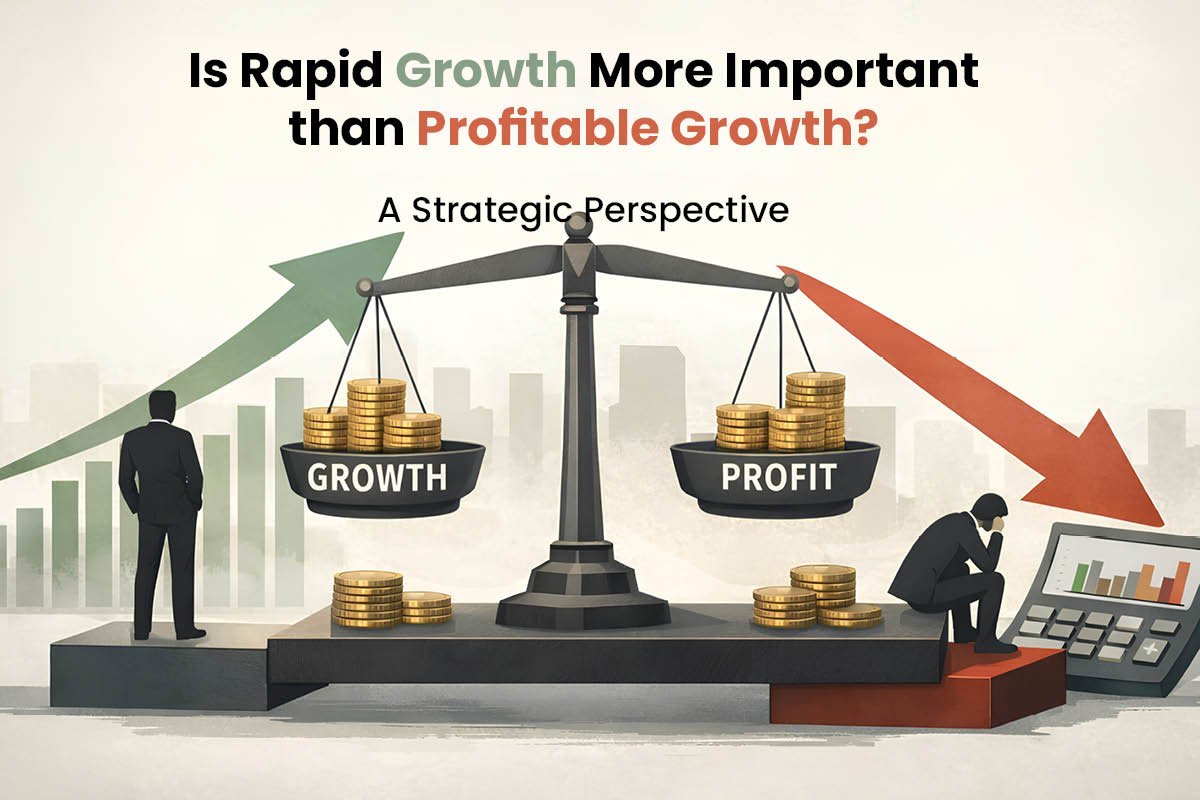



Picture two companies entering the same market. One gains customers at remarkable speed, spends heavily, and reports steady losses. The other grows at a measured pace, keeps costs under control, and earns solid profits each quarter. Is rapid growth more important than profitable growth?
This question matters because founders, investors, and business leaders often face intense pressure to expand quickly. Yet growth and profitability work best together. The right balance depends on a company’s stage, its industry, and the goals it hopes to achieve over the long term.
Two Different Paths to Business Success
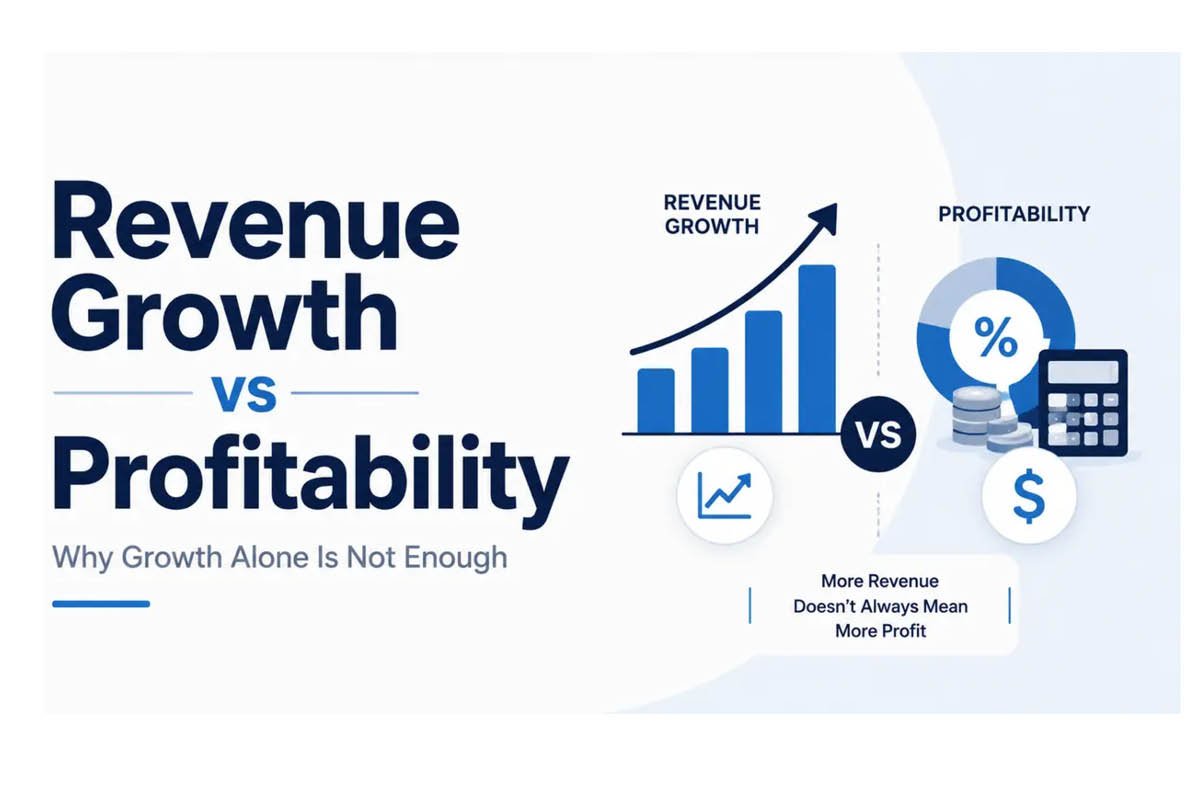
Before comparing their advantages, it helps to understand what rapid growth and profitable growth actually mean in practice.
Rapid Growth:
This path centers on expanding revenue, attracting more customers, increasing market share, or entering new regions. Companies often invest heavily in hiring, marketing, technology, or acquisitions to gain momentum. Short-term losses are accepted because leaders expect larger returns once they reach greater scale.
Profitable Growth:
This path focuses on increasing revenue while protecting healthy profit margins. Expansion happens at a pace the business can comfortably finance through its own earnings. Careful spending, efficient operations, and steady financial discipline create a stable base for future progress.
The Key Difference:
Growth measures how large a business becomes. Profitability measures its financial health. Lasting success usually comes through managing both with care instead of treating either one as the only priority.
The Business Case for Rapid Growth
Rapid growth can create opportunities that slower expansion may miss, especially in highly competitive markets.
- Reason 1: First Mover Advantage
Expanding quickly helps a company capture market share before competitors establish a strong position. An early lead can make it harder for rivals to win customers later. - Reason 2: Investor Confidence
A rapidly growing customer base often attracts investors. Strong growth can increase company valuations because investors expect greater earning potential in the future. - Reason 3: Scale Creates Value
Businesses built on network effects become more valuable as more people join. Reaching scale early can improve customer experience and create a stronger competitive position.
In Practice:
Amazon accepted thin profits for years while entering new markets. After reaching a significant scale, Amazon Web Services became a major source of profit. Uber expanded across countries to secure market presence before improving financial performance. Netflix invested heavily in global content and subscriber growth before achieving consistent profits in many markets.
Fast growth creates opportunity, though it also creates pressure if operations fail to keep pace.
The Hidden Costs of Growing Too Fast
Rapid growth can create excitement, but it also brings serious risks when a business expands faster than it can manage.
Watch for these Signals
- Operating costs rise faster than revenue.
- Cash flow becomes harder to manage as spending increases.
- Customer experience suffers because products or services cannot keep up with demand.
- Hiring accelerates, making it difficult to maintain quality and company culture.
- Internal systems struggle under greater workloads.
- Investor expectations continue rising, leaving little room for slower performance.
What Happened in the Real World:
Peloton expanded aggressively during the pandemic. Later, excess inventory, supply chain problems, and weaker demand created costly challenges. WeWork became another well-known example. Its quick scaling outpaced a sustainable business model, resulting in major financial setbacks.
Key Insight: Fast growth without operational readiness often creates expensive problems that take years to fix.
Why Profitable Growth Creates Long-Term Stability?
Many businesses choose profitable growth because steady progress often creates a stronger business over time.
- Pillar 1: Financial Strength
Healthy cash flow and consistent profits help companies manage daily operations with confidence. They also provide greater resilience during economic downturns when sales or demand become less predictable. - Pillar 2: Strategic Freedom
Businesses that rely less on outside funding have greater flexibility to invest in technology, enter new markets, or pursue new opportunities when the timing is right. - Pillar 3: Lasting Customer Value
Reliable earnings support continuous improvements in products and customer service, helping companies build stronger customer relationships.
In Practice:
Apple combines healthy profits with disciplined expansion, giving it the flexibility to invest heavily in innovation. Costco has built loyal customers through steady expansion supported by consistent profits. Mailchimp grew for many years without venture capital and became highly profitable before its acquisition.
Recent market conditions have encouraged investors to reward businesses that combine sustainable profits with steady growth.
Matching the Strategy to the Business
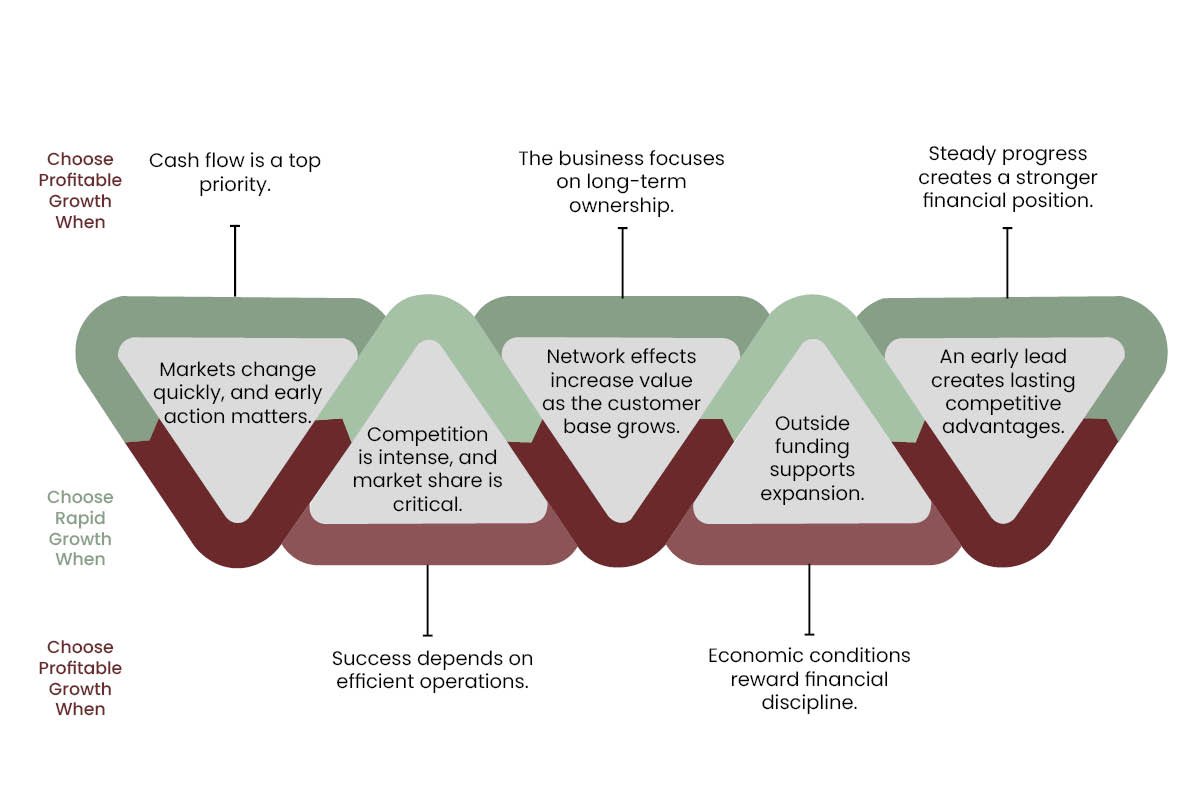
The better question is not which strategy always wins. The real question is which approach matches the business.
| Choose Rapid Growth When | Choose Profitable Growth When |
| Markets change quickly, and early action matters. | Cash flow is a top priority. |
| Competition is intense, and market share is critical. | Success depends on efficient operations. |
| Network effects increase value as the customer base grows. | The business focuses on long-term ownership. |
| Outside funding supports expansion. | Economic conditions reward financial discipline. |
| An early lead creates lasting competitive advantages. | Steady progress creates a stronger financial position. |
A well-known idea discussed in the Harvard Business Review is that companies should choose a growth rate that matches their financial resources, available talent, internal systems, company culture, and operational capacity, rather than pursuing speed without clear limits.
The Final Verdict
Is rapid growth more important than profitable growth? The answer depends on how well the chosen strategy matches the company’s situation. Rapid growth creates opportunities, while profitable growth builds resilience. The strongest businesses know when to accelerate, when to slow down, and when to balance both priorities. Success comes through making decisions that the business can sustain over time.
Hotseat Question: If you were leading a business today, would you sacrifice short-term profits for swift expansion, or would you build profits first and grow at a measured pace?