

Key Points:
- Qatar halted LNG production after military strikes, with Iran’s Hormuz blockade further threatening global energy supply.
- India sources 20% of its LNG from Qatar, risking industrial disruptions and higher energy costs if the halt continues.
- India’s fuel stocks are currently stable, but prolonged conflict may force a costly shift to alternative energy sources.
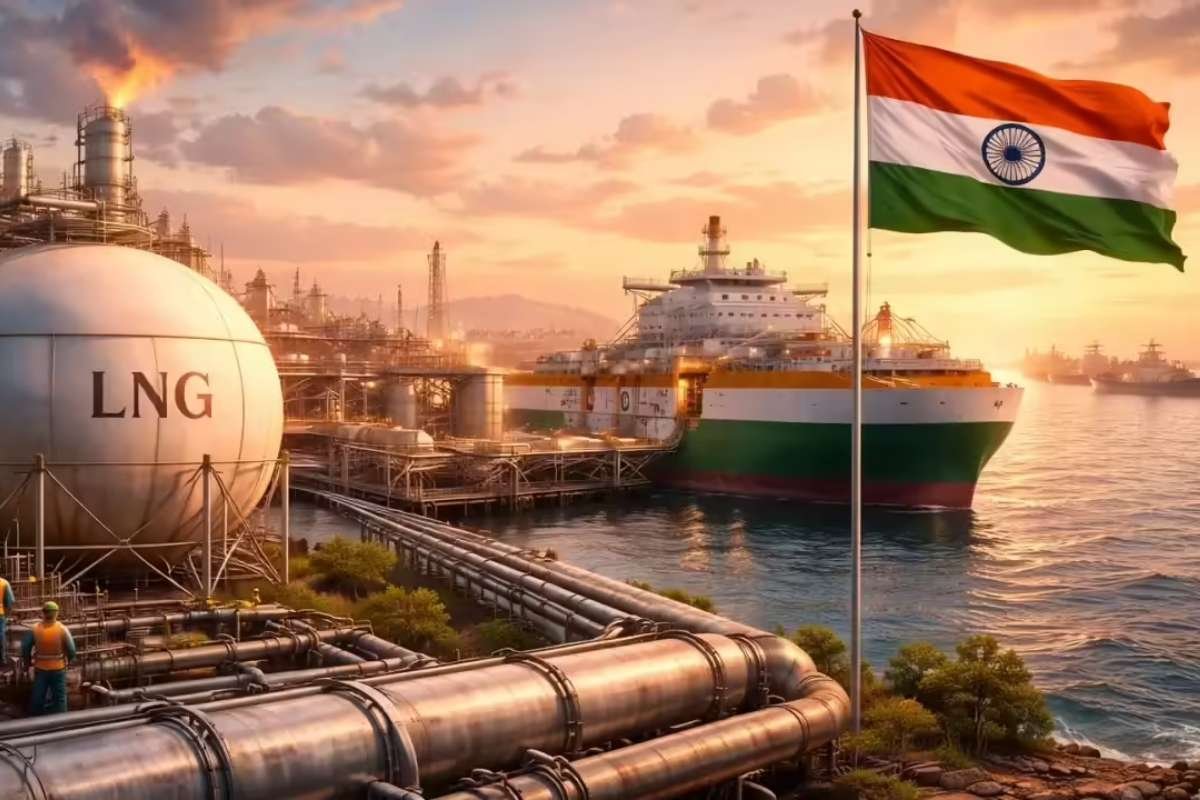
India may face tighter natural gas supplies after QatarEnergy halted liquefied natural gas production following attacks on its facilities, raising concerns about disruptions to imports as tensions in the Middle East threaten key energy shipping routes.
Qatar Halts LNG Sparks Supply Concerns For India
QatarEnergy, Qatar’s state-run energy company, announced Tuesday that it has ceased production of liquefied natural gas and related products after military strikes targeted operating facilities in the country.
The halt comes amid escalating conflict in the Middle East and after Iran blocked the Strait of Hormuz, a critical maritime route for global energy shipments. The disruption has heightened concerns about energy security for major importers, including India.
India relies heavily on imported natural gas to meet domestic demand. About half of the country’s gas needs come from international markets, making supply disruptions particularly significant for industry and power generation.
Qatar Halts LNG remains one of India’s largest suppliers of liquefied natural gas, raising the risk of supply constraints if production stoppages continue.
Experts Warn Of Industrial Impact And Higher Costs
Energy economist Dr. Kirit Parekh warned that India may need to cut gas consumption, particularly in industries that rely on the fuel as a key input.
“India imports 50% of its gas needs from the international market,” Parekh said. “About 40% of this LNG is purchased from Qatar Halts LNG, which means roughly 20% of India’s total LNG imports come from the country.”
Parekh said industries dependent on gas may face operational challenges if supplies tighten. “India will have to reduce gas consumption, especially in industry, and reduce gas use in the power sector,” he said.
He added that alternative options exist but come at a higher cost. “In this situation, we could increase the use of coal for power generation, but this would be more expensive,” Parekh said.
Petroleum companies that use natural gas to produce hydrogen may also need to adjust operations. According to Parekh, electricity could serve as an alternative method for hydrogen production, although it may require operational changes.
Government Says Fuel Stocks Sufficient For Now
India’s government said it is monitoring the situation closely but maintains that the country currently has sufficient fuel reserves to manage short-term disruptions.
Petroleum and Natural Gas Minister Hardeep Singh Puri said inventories of crude oil and refined products remain adequate despite uncertainty in global energy markets.
“The country is well stocked with crude oil and inventories of key petroleum products, including petrol, diesel and aviation turbine fuel to deal with short-term disruptions arising from the Middle East,” Puri said.
The ministry has also established a 24-hour control room to track supply levels and stock positions of petroleum products across India.
Officials say the monitoring system will help ensure stable distribution if international supply routes remain disrupted.
India has attempted to diversify its energy imports in recent years, increasing purchases from countries including Russia to reduce dependence on any single supplier. However, experts say the Middle East remains a crucial source for both crude oil and liquefied natural gas.
If the conflict continues to disrupt production or shipping routes, analysts say India may need to rely more heavily on alternative fuels or seek additional LNG supplies from other global producers.
Also Read: Biogas Energy: A Sustainable Power Source for the Future