



Key Points:
- Indian rupee falls to a record low of ₹90.42/$ amid foreign outflows and U.S. tariffs.
- Speculative bets push hedging costs higher, with forward premiums jumping.
- Further weakness likely, with projections toward ₹90.70–₹91.00.
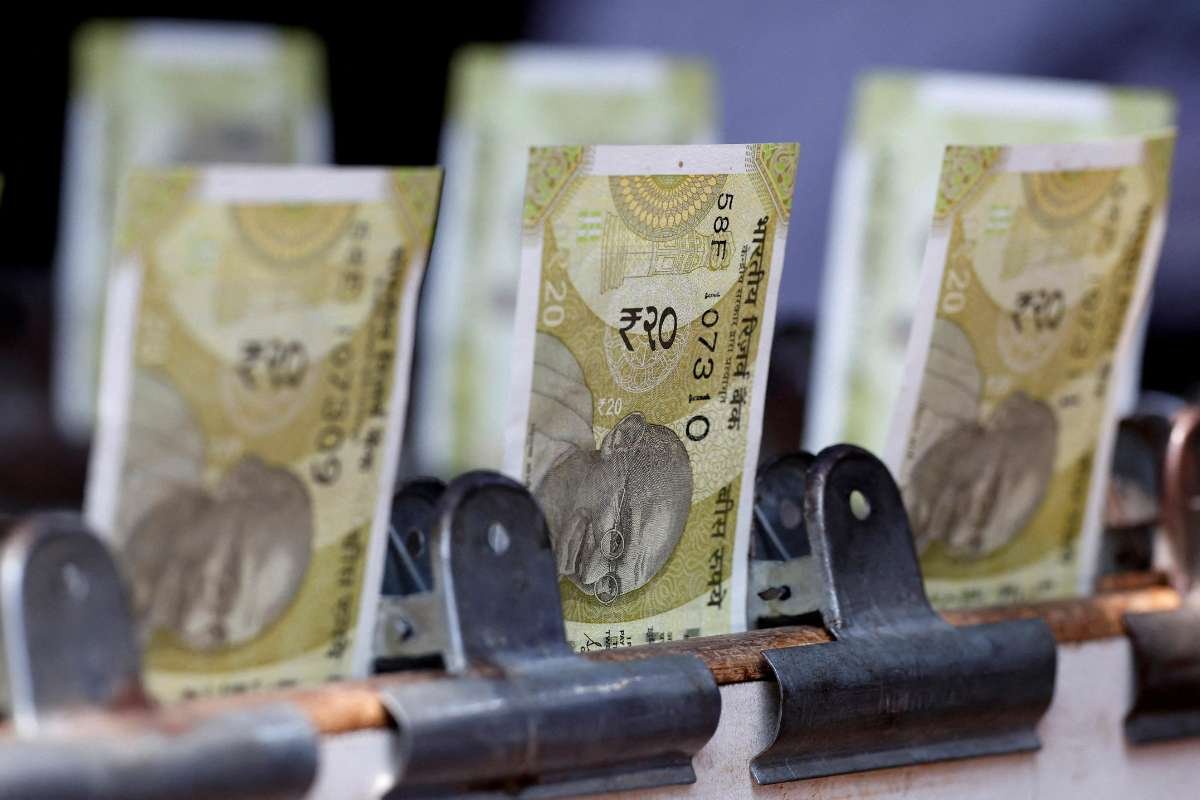
The Indian rupee falls to a record low of 90.42 per dollar Thursday, driven by foreign investor outflows and a weakening bias after breaching the key 90 level, while forward premiums surge.
Investors Pull Out, Rupee Slides Past 90
The Indian rupee falls more than five percent against the dollar year-to-date, eclipses its previous all-time low of 90.29 hit Wednesday. U.S. tariffs of up to 50 percent on Indian goods and weak inflows from foreign direct investment and offshore borrowing weigh on the currency.
“Pressure on the rupee isn’t easing,” said Amit Pabari, managing director at CR Forex. “The pair could drift toward the 90.70–91.00 zone in the near term.”
Asian currencies broadly retreat while the dollar index remains steady at 98.98 following weaker U.S. labor market data, which had raised hopes of a U.S. rate cut later this month.
Speculative Bets Drive Forward Premiums Higher
Traders say the breach of the 90 mark has triggered speculative bets against the rupee, pushing hedging costs higher. The one-month dollar-rupee forward premium rises 24 paisa, while the one-year forward implied yield jumps 18 basis points to 2.64 percent, the highest since January.
Bankers note that importer hedging, arbitrage between onshore and non-deliverable forward (NDF) markets, and cutting of received positions contributed to the surge. “The momentum is largely fueled by speculative activity and defensive hedging by importers,” said a Mumbai-based currency trader who declined to be named.
Analysts Warn Pressure on Currency Could Continue
Economic analysts say the rupee’s weakness is likely to persist amid ongoing trade and investment headwinds. The combination of U.S. tariffs, reduced foreign investment, and robust dollar demand maintains downward pressure.
“Investors should expect continued volatility,” said Shreya Mehta, senior economist at ICICI Securities. “Policy measures may provide short-term relief, but structural pressures on the rupee remain.”
Market watchers say businesses with dollar-denominated exposures could face rising costs, while importers may accelerate hedging strategies to mitigate losses. The Reserve Bank of India has not yet intervened following the latest slide, even as the Indian rupee falls to new record lows.
The Indian rupee falls amid broader challenges for India’s external sector and equity markets, as foreign investors reassess exposure amid global uncertainty and domestic economic pressures.
Visit Business Viewpoint Magazine For The Most Recent Information.