

Key Takeaways
- India proposes CAFE III norms, stricter fuel norms to reduce emissions across vehicles
- Targets tighten to 3.3273 litres per 100 km by 2031-32
- New rules recognise ethanol and biofuels for emission benefits
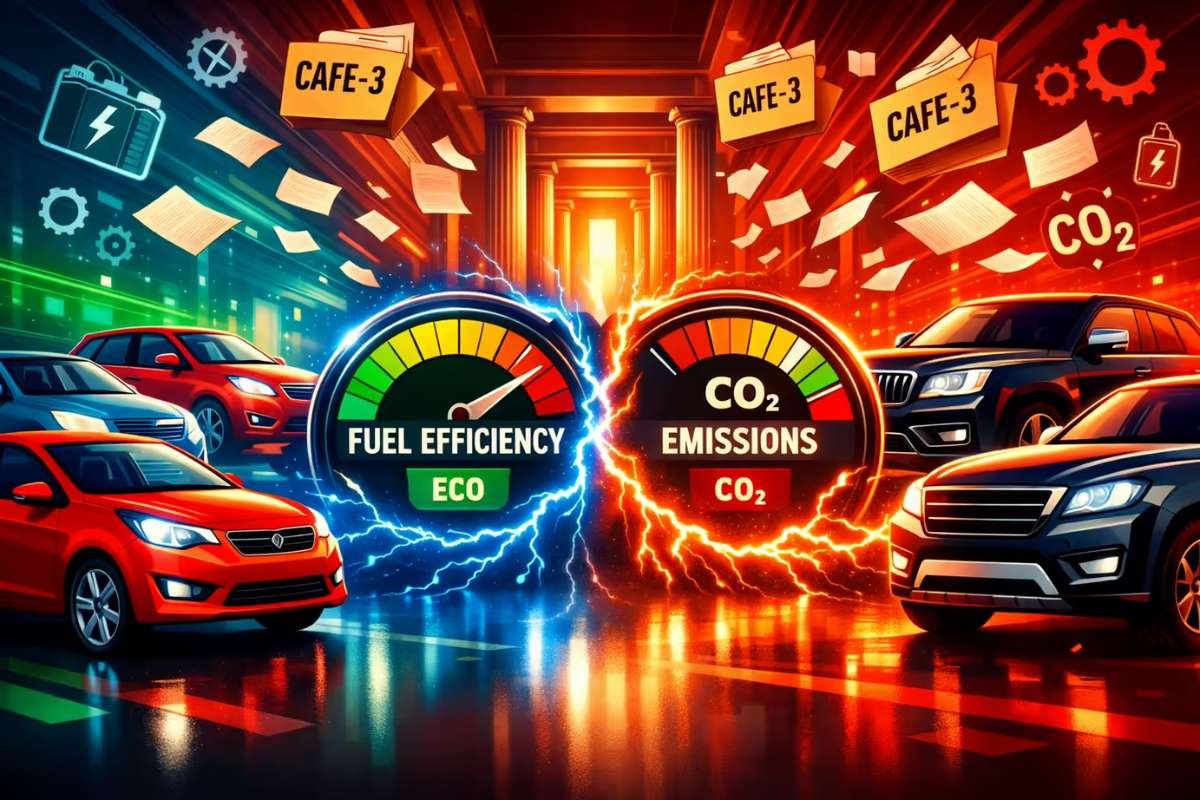
India has released draft Corporate Average Fuel Economy 2027 norms, marking the next phase in fuel efficiency standards for passenger vehicles. The proposed CAFE III norms will replace the current CAFE II framework, which is set to conclude on March 31, 2027. The Ministry of Power has invited suggestions from stakeholders, with the consultation window open until August 6, 2026.
Fuel Efficiency Targets Tighten Over The Defined Timeline
The proposed norms will apply to M1 category passenger vehicles manufactured or imported for sale between 2027-28 and 2031-32. This category includes vehicles with up to 8 seats in addition to the driver. The compliance framework is structured into 2 phases, beginning with a 3-year block followed by a 2-year period.
Fuel consumption targets under the draft norms are set to gradually tighten over the implementation period. The targets are proposed to decline from 3.996 litres per 100 km, equivalent to 94.76 gCO per km in 2027-28, to 3.3273 litres per 100 km, or 78.90 gCO per km by 2031-32. This reflects a steady reduction in permissible emissions over 5 years.
The phased approach is designed to provide vehicle manufacturers with a predictable regulatory pathway. It enables original equipment manufacturers to align product development cycles with evolving efficiency requirements. The gradual tightening also allows companies to plan investments in fuel-efficient technologies and vehicle design improvements.
The draft norms will be published on the websites of the Ministry of Power and the Bureau of Energy Efficiency. Stakeholders, including manufacturers and industry participants, have been invited to submit feedback through official channels before the deadline.
Carbon Neutral Fuels And Technology Credits Included
A notable feature of the proposed CAFE III norms is the recognition of carbon neutrality for specific fuels. Ethanol, biofuel, and compressed biogas will be considered for emission reductions under the compliance framework. This marks the first inclusion of such provisions in fuel efficiency standards.
For current ethanol usage levels, an 8% carbon neutrality factor will be applied. For compressed biogas and biofuel, emission reductions will depend on the prevailing blending levels. These adjustments will be factored into the assessment of tailpipe carbon dioxide emissions.
Manufacturers will also have access to compliance benefits linked to fuel-saving technologies. Companies can claim up to 9 gCO per km in total benefits, with a cap of 1 gCO per km for each approved technology. These incentives are structured to encourage the adoption of efficiency-enhancing innovations across vehicle models.
The introduction of technology credits provides an additional mechanism for manufacturers to meet regulatory targets. It supports the integration of systems that improve fuel consumption without altering core vehicle architecture.
For Indian entrepreneurs and business owners operating in the automotive and mobility sectors, the draft norms signal a clear direction for future product development. The emphasis on fuel efficiency, alternative fuels, and measurable emission reductions highlights the importance of innovation and operational alignment with evolving standards.
The structured timeline, defined targets, and inclusion of multiple compliance pathways create a framework that combines regulatory clarity with flexibility. As the consultation process progresses, industry feedback is expected to shape the final version of the norms before implementation in 2027.
Visit Business Viewpoint magazine for the latest business and technology insights.