



Global trade faces big risks today. Fast shipping and smart tools keep companies safe. This blog breaks down the true importance of supply chain management. Good planning helps small brands save a lot of cash. It also keeps your buyers very happy. You can better absorb sudden trade shocks and recover faster. Read the full post to learn more now.
For a long time, ships moved goods with ease across wide seas. Cheap labour and open borders made the whole world one big shop. Yet, this smooth global path now faces very hard times. We are seeing fresh blockages in key channels, such as the Strait of Hormuz, today. New taxes and cold political ties also force companies to change plans.
These shifts show why old ways of moving cargo do not work. Our trade systems now need a whole new way to run. This is where the core importance of supply chain management comes in. A strong setup protects your firm when deep global crises strike. Let us look at why this work is so vital.
The Growing Importance of Supply Chains in a Global and Digital Economy
Now, we must look at how our global market changes. Today, online shopping is growing very fast and is changing how we buy. People now want their goods to arrive on the same day. At the same time, we face major shifts in world politics. These hard blocks make shipping goods a very tough task.
These rising risks explain the deep importance of supply chain management. Old trade routes cannot keep up with these new rules. Smart companies now build strong paths that can adapt to shocks. We must focus on speed, clear views, and safe choices.
To win today, you must turn to the digital world. The OECD highlights how global value chains connect our open markets. Further, a report by the European Parliament warns of trade risks. We can beat these blocks if we build a smart path.
Using cloud tools lets you see your stock in real time. Also, smart AI systems can predict major shifts in the market. In fact, a study in Science Letters shows how digital tools help. They let you spot shipping delays before they even happen.
Moving away from paperwork also helps our green earth. The World Economic Forum shows how digital trade cuts carbon waste. It helps small companies track their goods with great ease. Thus, a digital path brings both safety and clear views. Use these smart tools to reduce risk for your company today.
Why Supply Chain Management Matters for Startups and SMEs?
Small businesses often think that supply chain work is only for bigger ones. They believe that only massive organisations need to track their cargo. This is a very big mistake that ruins many young brands. The importance of supply chain management is equal for all businesses, regardless of their size.
To grow, you must keep your stock at the right levels. If you buy too much, you lock up your cash. If you buy too little, you face bad stock shortages. Smart planning helps you predict exactly what your buyers will need. It also helps you build deep trust with your key suppliers. This makes sure that your brand can scale up with ease.
Let’s look at how this choice changes your daily runs.
| No SCM Strategy | Smart SCM Strategy |
| Cash is tied up in slow-moving stock | Cash flows freely to buy new tools |
| Empty shelves make buyers walk away | Fresh goods arrive right on time |
| High shipping fees eat all the gains | Bulk rates keep your costs very low |
If you plan well, you keep your cash safe and free. You also make sure your buyers stay happy and come back. This shows why the importance of supply chain management matters for small brands. Good planning gives you the strength to fight against big organisations.
The 5 Key Reasons Why Supply Chain Management is Important
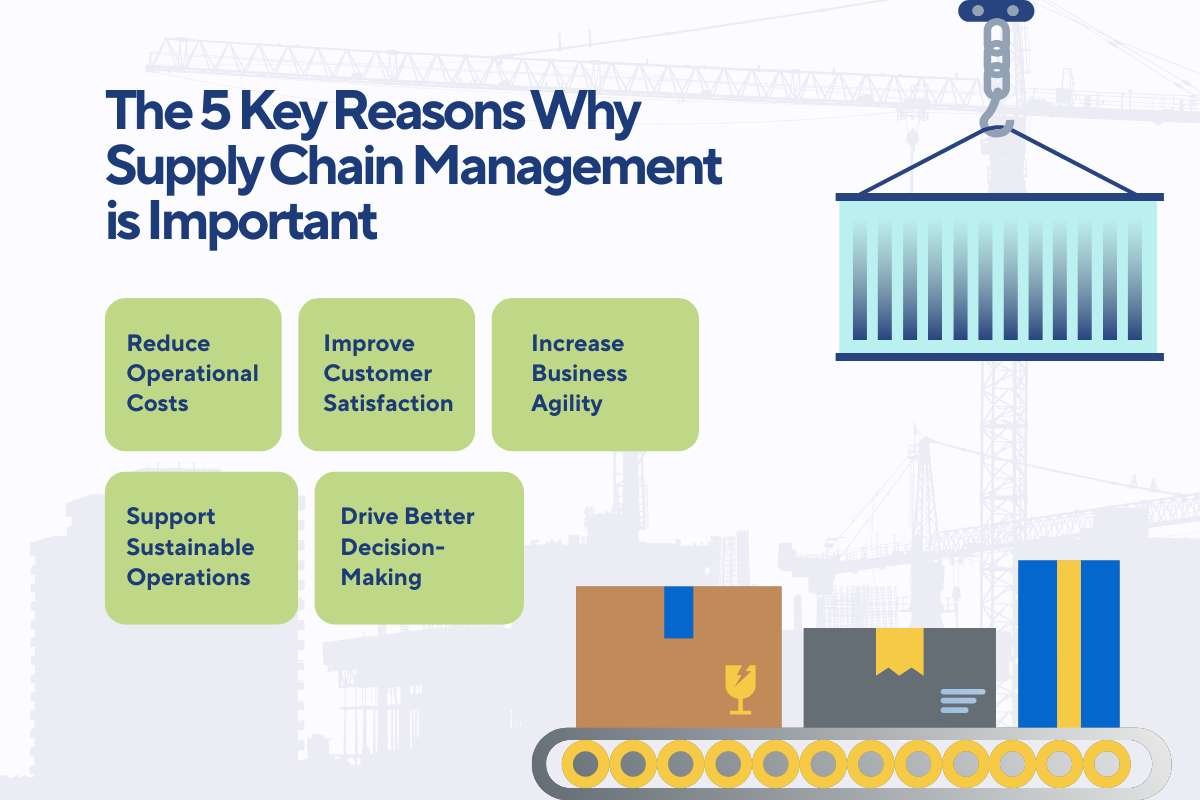
When we dive deep, we find real proof of how this work boosts a firm. The Council of Supply Chain Management Professionals shows how good planning keeps companies strong. Let us break down the main reasons why this work is so vital.
1. Reduce Operational Costs
First, you can cut down on high fees by planning your routes well. This happens when you group your cargo to get cheap bulk rates. Second, you stop paying for extra storage space in big warehouses. You do this by keeping only the stock you need right now. Third, you get better deals when you buy goods in large lots. Good planning keeps your cash free and lowers your total cost of work.
2. Improve Customer Satisfaction
Buyers want their orders to arrive fast and without any errors. You can make this happen by tracking your stock with real-time tools. This stops you from showing items that are out of stock. At the same time, it keeps your shipping times very quick and smooth. Sharing tracking links also gives your buyers peace of mind while they wait.
3. Increase Business Agility
The team at MIT Sloan highlights how a strong path keeps you safe. When a bad storm hits, you must find new sellers fast. A flexible setup lets you switch to backup routes in just hours. This keeps your goods moving even during a sudden spike in demand. You do not get stuck when the global market changes overnight.
4. Support Sustainable Operations
Today, both buyers and laws force businesses to act in a green way. You can cut down on waste by using paths that are very short. This drops your fuel use and shrinks your total carbon footprint. It also helps you track where your raw goods come from. When you buy ethically, you build a brand that people can trust.
5. Drive Better Decision-Making
You cannot run a modern business on just wild guesses or old data. Smart ERP software links all your sales data in one single place. These digital tools show you exactly when to buy more raw parts. Also, smart AI tools can spot slow trends before they hurt you. This clear view lets you make smart moves that save you cash.
Supply Chain Management Roles Across a Business
Many people think shipping is just a one-man job done in a back room. In truth, it takes a whole team of experts to keep goods moving. These groups must work as one unit to avoid big delays and costly mistakes.
First, the demand planner studies market trends to guess what buyers will want. They pass these numbers to the procurement team, who buy the raw parts.
Next, the supplier relationship manager works to get the best deals on these parts. The inventory planner then decides exactly how much stock to keep on hand.
Once the goods arrive, the warehouse manager finds a safe spot for them. The logistics manager then picks the fastest routes to ship the final goods. All through this path, the supply chain analyst uses data to find bottlenecks.
Finally, the operations manager oversees the whole flow to keep costs very low.
Demand Planner ──> Procurement ──> Inventory Planner ──> Logistics Manager
If one link in this chain breaks, the whole system drops in speed. When these teams share data, they protect the business from sudden market shifts. This unity shows the true importance of supply chain management in daily business operations.
Business Impact of Effective Supply Chain Management
CEOs no longer view the supply chain as a basic backroom task. Today, leaders treat this work as a core path to build value. It plays a major role in driving growth and keeping companies safe.
So, to understand the growing importance of supply chain management, just look at any budding organisation.
First of all, a strong path directly boosts your total margins and cash flow. Accenture shows that mature chains make businesses 23% more profitable. Second, this setup protects you when sudden global trade shocks strike. McKinsey notes that big delays can wipe out half of your yearly gains. By building a flexible path, you shield your brand from these drops.
Modern CEOs now pay up to 17% more to secure their supply routes. They know that a safe path is a key shield against risk.
Finally, this work gives you a strong edge over your rivals. You can scale up your business fast and meet new buyer needs. When you link your stock data, you make smart choices with ease. This strategic focus turns a shipping cost into a source of real strength.
Real-World Examples of Why Supply Chain Management Matters

To see the real value of this work, we can look at some top global brands. These case studies prove how smart planning drives massive business success.
1. Amazon
The brand faced high costs and slow speeds as its online store grew. They could not ship goods fast enough to please their Prime buyers.
- SCM Strategy: They built automated local hubs and used AI to place stock close to buyers.
- Business Outcome: This smart setup keeps delivery times short and drops shipping fees.
Source: https://business.amazon.in/en/discover-more/blog/supply-chain-management-process
2. Apple
The company had to launch new devices globally without facing any parts shortages. They needed a way to build millions of phones without any delays.
- SCM Strategy: They locked in raw parts early and cut down the number of their active suppliers.
- Business Outcome: This focused plan lets them launch major products with reduced stock delays.
Source: https://www.apple.com/in/supply-chain/
3. Walmart
The store had to keep its store shelves full while keeping prices very low. They faced huge storage costs when they held too much stock in backrooms.
- SCM Strategy: They used real-time AI tools and digital twins to track store demand and move goods.
- Business Outcome: This smart tech cut down on extra stock and saved them millions.
| Brand | Key SCM Tool | Main Result |
| Amazon | Local Hubs | Quick shipping times |
| Apple | Focused Sourcing | Smooth product launches |
| Walmart | Real-time AI | Low costs for shoppers |
As these companies show, a strong path for your goods is a core competitive tool. It turns a basic shipping task into a source of business growth.
Conclusion:
Smart planning affects every single group inside your modern company today. It connects your sales team directly with your factory workers. This vital work is no longer just about moving heavy boxes. Instead, it forms a key shield that helps your business win.
This reality reminds us of the importance of supply chain management for enduring growth. Businesses that invest in digital tools will see the most growth. They build strong paths that put the buyer first every day. This smart focus keeps them safe when global trade routes are blocked.
Looking ahead, we know how the market will continue to shift. New AI tools and smart robots will shape the future of work. Keeping your path flexible is the best way to stay strong. Use these smart steps to lead your company to success.
To Read More on SCM: Supply Chain Management Essentials to Stop Your Operations From Breaking
People Also Ask
1. Why is supply chain management important for businesses?
This work cuts your daily costs and makes your shipping routes run fast. By keeping your shelves full, you keep your buyers happy and loyal. This strong path protects your cash flow and helps your firm grow safely.
What are the five main functions of supply chain management?
First, you plan your stock levels and source raw parts from safe sellers. Next, you run your production line and handle the final shipping logistics. Lastly, you manage the return of any broken or extra goods from buyers.
How does supply chain management reduce business costs?
You can cut big fees by using smart software to predict buyer demand. This stops you from holding too much stock in your active warehouses. It also lets you group cargo to get the cheapest bulk shipping rates.