


The Visionary behind the Mahabharata-Inspired Management Movement
Ancient wisdom, rooted in timeless philosophies and ethical principles, offers profound insights that can elevate modern HR leadership. While today’s workplaces are driven by technology and data, the essence of human management — empathy, integrity, purpose, and balance-remains unchanged. Drawing from ancient texts like the Mahabharata, Bhagavad Gita, or Arthashastra, HR leaders can find valuable guidance on decision-making, emotional intelligence, and value-based leadership.
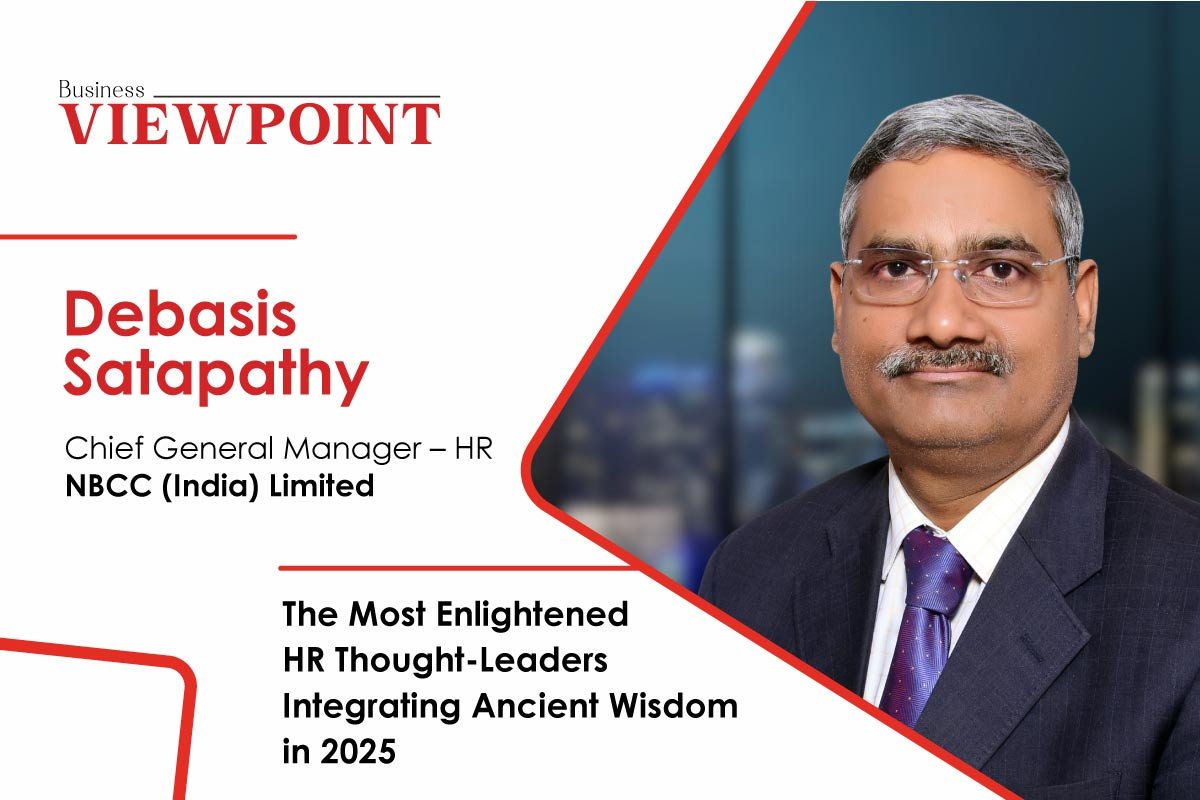
Debasis Satapathy serves as Chief General Manager – HR at NBCC (India) Limited, headquartered in New Delhi, India. With more than two decades of experience in human resources and leadership, he is widely recognized for pioneering the integration of ancient Indian wisdom, particularly from the epic Mahabharata, into modern organizational management practices. His work spans academia (including premier institutions such as IITs and IIMs), industry, and executive education, and his unique framework connects classical management concepts with contemporary HR systems.

| The Intersection of Tradition & Transformation |
| Philosophical Foundation: Mahabharata & Bhagavad Gita |
| Academic Influence: IITs, IIMs, Corporate Boardrooms |
| Core Message: Ancient ethos for modern ethics |
| Key Insight: Leadership – Inner balance and Ethical clarity |
| Symbolism: Arjuna’s dilemma – The modern professional’s conflict |
When Ancient Ethos Meets Modern Leadership?
Integrating ancient Indian wisdom into contemporary HR practices represents an effort to reconnect modern management thought with its humanistic and ethical roots. In his teaching and advisory work, Satapathy emphasises that the Mahabharata offers profound insights into leadership, decision-making, motivation, and conflict resolution topics that remain central to today’s organisational realities.
Debasis Satapathy explains that the dialogue between Krishna and Arjuna in the epic can be understood as a metaphor for leadership coaching, emotional intelligence, and decision-making in the face of moral and situational conflict. Arjuna’s hesitation reflects the inner dilemmas of modern professionals, while Krishna’s counsel illustrates clarity of purpose (svadharma) and the importance of detachment from immediate outcomes, principles vital to effective and ethical leadership.
Ancient Insights for Modern Human Resource Practice
In practice, Debasis Satapathy argues that while modern HR often focuses on systems and metrics, Indian wisdom reminds leaders that self-awareness and inner balance are the starting points of effective people management. By contextualising these timeless insights within contemporary workforce challenges, Satapathy contends that organisations can move beyond merely adopting Western frameworks to cultivating an indigenous, values-driven approach to leadership, one that nurtures trust, resilience, and purpose.
At NBCC (India) Limited, where he serves as Chief General Manager – HR, this philosophy finds practical expression. Under his leadership, NBCC has embraced the integration of ancient Indian wisdom into its human resource strategies, fostering a culture grounded in ethics, collaboration, and long-term vision qualities that mirror the organisation’s commitment to nation-building and sustainable growth.
Nurturing Humanity with Fairness and Inclusion
According to Satapathy, human resources truly serve as the heartbeat of any organization, sustaining culture, nurturing talent, and ensuring that organizational growth is both ethical and inclusive. At NBCC, he articulates that the HR philosophy is grounded in the belief that business excellence and human compassion are not opposing goals but complementary forces.
He describes how NBCC views every HR policy not merely as an administrative framework, but as an instrument for creating trust, fairness, and dignity at work. The organization invests deeply in learning and well-being. Through continuous capacity-building, mentoring, and mental health initiatives, NBCC seeks to ensure that employees feel valued not just for their performance but for their potential.
Satapathy also emphasizes an approach rooted in Indian ethos: work is viewed as a form of seva (service), and leadership as kartavya (duty). This perspective infuses compassion into processes and fairness into decision-making. Ultimately, he asserts, the true test of an HR system lies in its ability to balance business imperatives with human values.
Finding Leadership in the Mahabharata
In an era where leadership models are often defined by Western frameworks and corporate metrics, Debasis Satapathy sought inspiration from a more timeless source, the Mahabharata. His fascination with the ancient epic began with a deep desire to explore the human and ethical side of leadership. He recognized that while modern management theories often focus on systems and strategy, the Mahabharata delves into the emotional, psychological, and moral dilemmas that leaders often encounter.
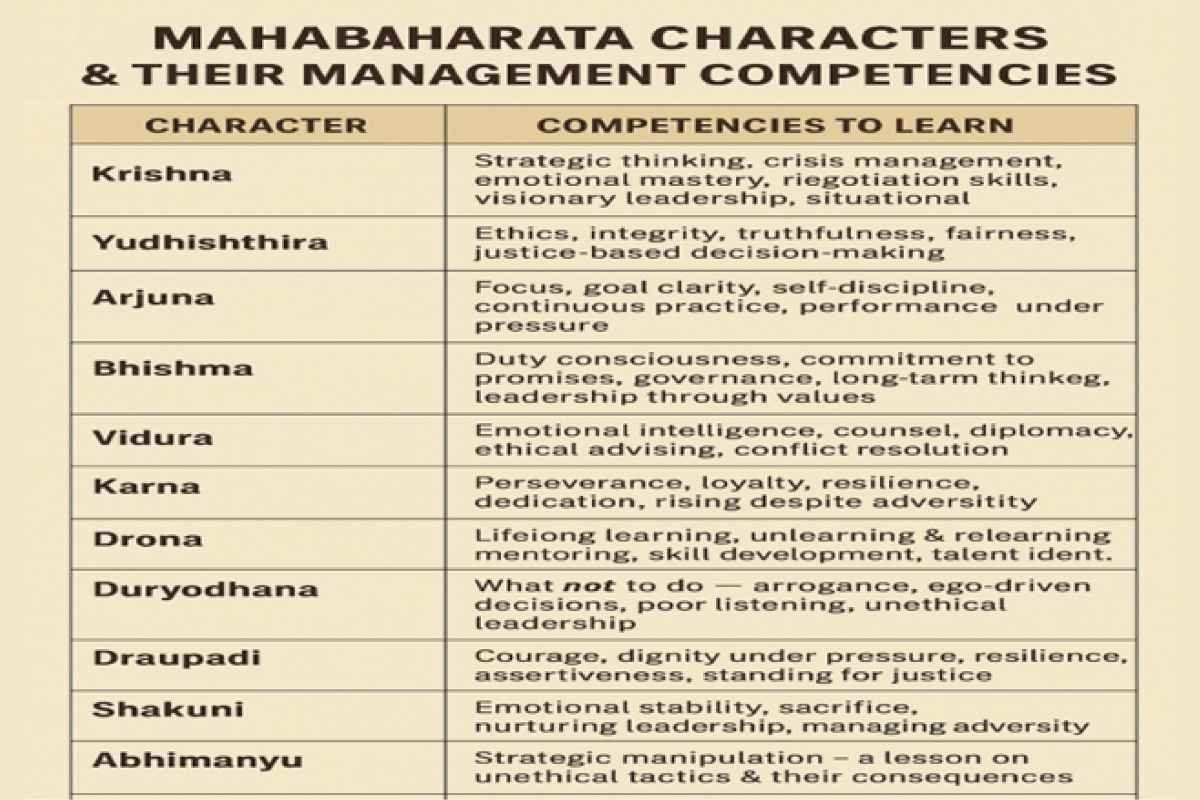
Each character, Krishna, Arjuna, Bhishma, and Duryodhana, represents a leadership archetype, offering lessons on power, duty, and consequence. Integrating these lessons into modern management education allows leaders to become not only effective but also deeply ethical. For Satapathy, the epic serves as a reminder that leadership begins with mastering the self before leading others.
Charting a Journey of Integration and Influence – Scriptures to Strategy
Satapathy’s journey from studying ancient Indian scriptures to teaching their management relevance in IITs, IIMs, and corporate boardrooms began with a profound personal interest in India’s philosophical heritage. As he delved into texts like the Mahabharata and the Bhagavad Gita, he discovered their relevance to leadership, ethics, and human behaviour in today’s context.
He began drawing parallels between the dilemmas faced by epic characters and those encountered by contemporary leaders, linking dharma with ethical decision-making and karma yoga with purposeful performance. Over time, his passion evolved into a mission: integrating the Indian Knowledge System (IKS) into management education to nurture leaders who balance competence with compassion and strategy with self-awareness.
Indian Knowledge Systems Transforming Education
“The integration of IKS into the curricula of IITs and IIMs marks a transformative shift in management education.”
Debasis Satapathy
Satapathy is of the opinion that leadership education should transcend tools and techniques and instead be guided toward a comprehensive model that is rooted in ethics, mindfulness, and purpose.
When students engage with ancient texts like the Mahabharata or Bhagavad Gita, they learn to balance results with relationships, profit with purpose, and competition with compassion. This framework fosters leaders guided not only by intellect but also by integrity and empathy, qualities essential for building humane, high-performing organizations.
Guiding the Next Generation of HR Leaders
In a decade where algorithms often overshadow empathy, Debasis Satapathy champions a different kind of leadership, one rooted in purpose, ethics, and ancient wisdom. Drawing from the Mahabharata, he inspires future HR professionals to blend tradition with innovation and lead with both heart and intellect.
- Lead with Purpose: True leadership begins with understanding people, not managing them.
- Old Roots, New Wings: Balance modern tools with timeless wisdom from Indian philosophy.
- The Mahabharata Mindset: Like Arjuna guided by Krishna, lead with values, justice, and clarity.
- People before Process: Let technology serve people, not replace human connection.
- Wisdom & Innovation: Infuse every decision with empathy, vision, and ethics.
- Scholar & Storyteller: His acclaimed work on Mahabharata-inspired management has redefined HR thinking.
- Voice of Insight: Through talks and writings, Satapathy continues to light the path for tomorrow’s HR trailblazers.
Modern Minds Reflecting on Ancient Lessons
From his extensive teaching experience, Satapathy observes that students and executives respond with curiosity, reflection, and admiration when exposed to the management wisdom of the Mahabharata. Initially sceptical, participants soon recognize striking parallels between epic narratives and other challenges.
Through lessons on Arjuna’s self-doubt, Krishna’s counsel, or Yudhishthira’s moral resolve, students and executives gain fresh perspectives on leadership, ethics, and self-management. Executives especially value how these teachings enhance emotional intelligence, teamwork, and decision-making. The timelessness of these principles underscores that leadership, at its core, is a journey of self-mastery and ethical courage.
Themes from the Indian Knowledge System Curriculum
At IITs, IIMs, and other premier institutions, Satapathy teaches management concepts through the lens of the Indian Knowledge System connecting timeless insights from the Mahabharata to modern organisational realities.
His sessions encompass:
- Autocratic vs. visionary leadership
- Ethical decision-making and strategic thinking
- Character-based lessons on resilience, commitment, and integrity
- Learning, unlearning, and relearning for adaptability
- The art of negotiation, mentoring, and emotional intelligence
- Micro-management versus empowerment in leadership
By blending classical wisdom with contemporary theory, his courses equip students with analytical depth, ethical clarity, and human insight, enabling them to lead with both intellect and empathy.
A Legacy of Enlightened Leadership
Integrating the Indian Knowledge System Into Modern Management
In 2025, Debasis Satapathy stands as one of India’s most enlightened HR thought leaders—a rare visionary who has mastered the art of blending the timeless wisdom of the Indian Knowledge System (IKS) with the complex realities of contemporary corporate leadership. At a time when organizations are searching for purpose, culture, and human-centered excellence, Debasis brings a transformative approach rooted not in management theory alone, but in the spiritual, ethical, and strategic brilliance of India’s ancient texts.
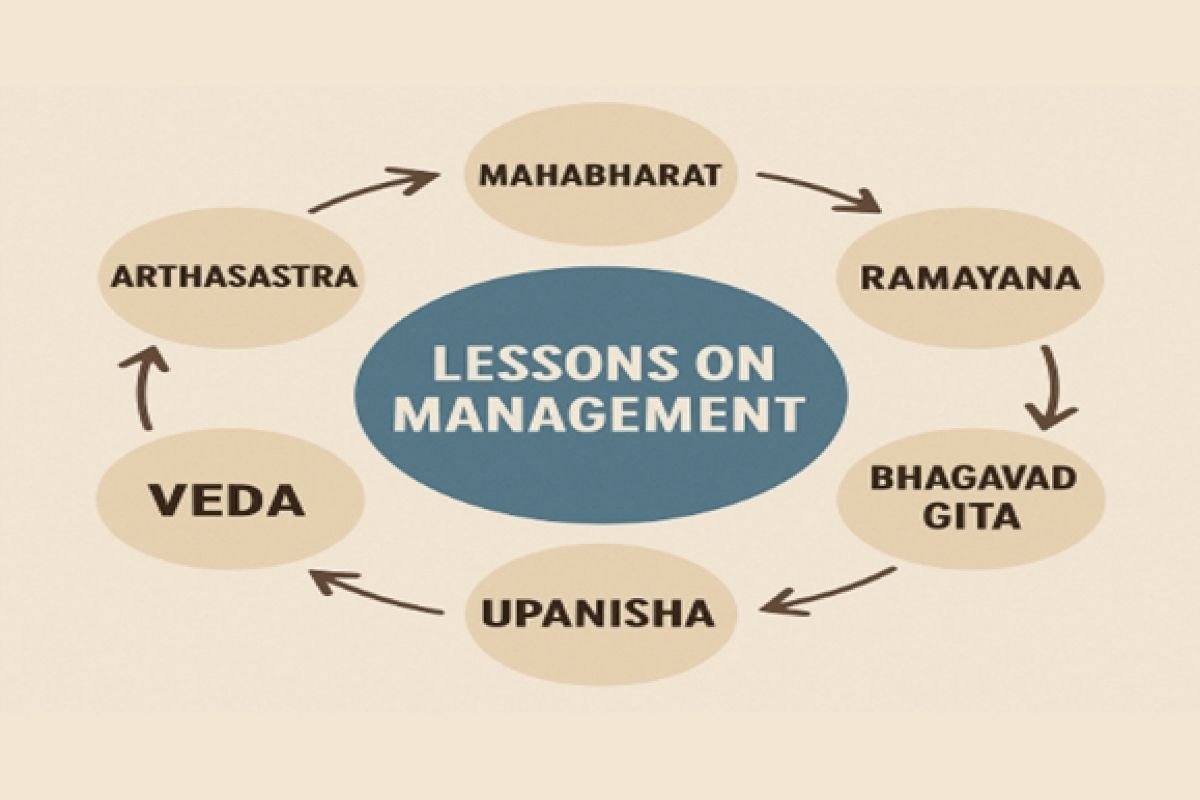
Drawing extensively from the Mahabharata, Ramayana, Bhagavad Gita, Arthashastra, the Vedas, Vedanta, and the Upanishads, he redefines leadership as a journey of mindfulness, emotional mastery, and ethical clarity. From Krishna’s strategic foresight to Rama’s principled leadership, from Chanakya’s statecraft to the Upanishadic quest for self-awareness, Debasis translates centuries of wisdom into practical frameworks for HR, governance, leadership development, and organizational transformation.
Leadership Rooted in Dharma and Human Understanding
Debasis Satapathy believes that true leadership begins with inner alignment—the dharmic balance of intent, action, and impact. His work emphasizes that organizational excellence is not merely the result of performance metrics or economic indicators, but emerges from deeper values:
- From the Mahabharata – clarity in decision-making, conflict resolution, emotional intelligence, and enlightened strategic thinking.
- From the Ramayana – character-centric leadership, integrity, and the power of leading by example.
- From the Bhagavad Gita: detachment, duty, resilience, and purpose-driven action.
- From the Arthashastra – governance, policy, risk management, and pragmatic leadership.
- From the Vedas and Upanishads – self-awareness, consciousness, unity of purpose, and the development of inner strength.
- From Vedanta – clarity of thought, wisdom-based leadership, and transcendence of ego.
In Debasis Satapathy’s philosophy, these teachings are not ancient relics—they are living tools that shape how leaders think, decide, collaborate, and transform organizations.