
Key Points:
- Accenture AI use is required for leadership promotions
- Mass reskilling in generative AI
- Partnerships with major AI firms
Accenture AI requires associate directors and senior managers to regularly use internal AI tools to qualify for leadership promotions, the company confirms, as it accelerates a global strategy to embed artificial intelligence across operations.
Accenture has told senior employees that consistent use of its internal artificial intelligence tools will now influence promotion decisions for leadership roles, according to a report confirmed by the company.
An Accenture spokesperson confirmed that guidance was shared in an internal email to associate directors and senior managers. The message stated that “regular adoption” of AI tools would be required to progress into leadership positions.
“Use of our key tools will be a visible input to talent discussions,” the email said, according to the Financial Times.
Company Links AI Use To Career Advancement
The policy underscores how central AI has become to Accenture’s corporate strategy. The company says it aims to position itself as an AI-enabled organization for both clients and employees.
“Our strategy is to be the reinvention partner of choice for our clients and to be the most client-focused, AI-enabled, great place to work,” the spokesperson said. “That requires the adoption of the latest tools and technologies to serve our clients most effectively.”
The requirement does not apply uniformly across the company. The Financial Times reported that staff in 12 European countries are not affected. Employees working in Accenture’s division that handles U.S. government contracts are also excluded, where regulatory and contractual limits often restrict the use of certain technologies.
Accenture AI employs about 780,000 people worldwide, making it one of the largest consulting and technology services firms globally.
Reskilling Drive Expands As AI Strategy Deepens
The promotion requirement builds on a broader workforce overhaul centered on AI skills. In September, Accenture said employees who could not reskill in AI-related areas would eventually face layoffs.
On an earnings call last year, Chief Executive Officer Julie Sweet said all employees would be expected to “retrain and retool” at scale. “Our No. 1 strategy is upskilling, given the skills we need,” Sweet said.
Sweet said about 550,000 employees have already been trained in the fundamentals of generative AI. That represents more than two-thirds of the company’s global workforce.
Where reskilling is not viable, the company will exit roles and hire for new capabilities instead, Sweet said.
In interviews, Sweet has argued that Accenture’s early and aggressive investment in AI is beginning to deliver results, even as many clients struggle to move from pilot projects to full deployment.
“Every CEO, board, and C-suite recognizes that advanced AI is critical to the future,” she said, adding that many organizations are still “not yet AI ready.”
Partnerships Expand Access To Generative AI Tools
Accenture AI has supported its strategy through partnerships with leading AI companies.
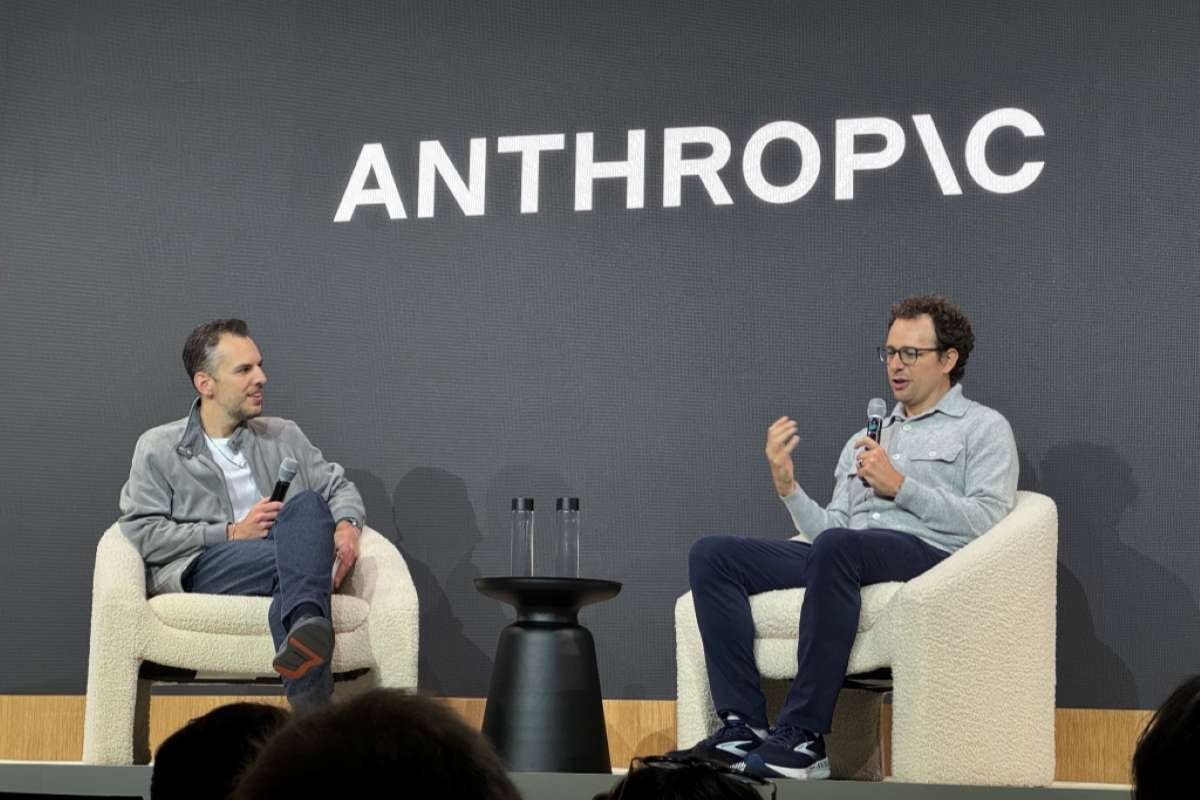
In December, the firm expanded its relationship with OpenAI, giving tens of thousands of employees access to ChatGPT Enterprise. The company has also partnered with Anthropic to train 30,000 staff on Claude AI tools, including Claude Code for software development.
Separately, Accenture teamed up with Palantir to provide AI training to more than 2,000 employees using Palantir’s platforms.
The company says embedding AI into daily workflows is essential to maintaining competitiveness in consulting, technology services, and digital transformation sectors where clients increasingly demand AI-driven solutions.
By linking promotions to AI adoption, Accenture signals that proficiency with artificial intelligence tools is no longer optional for senior leaders but a core requirement for advancement within the firm.
Explore Business Viewpoint Magazine for the most up-to-date insights.