
Why Do Good Startup Ideas Fail?
Imagine spending six months building an app, only to learn that your customers would rather do the same task on WhatsApp. That is an expensive lesson. Founders often fall in love with their ideas, but excitement does not prove demand. Small tests can reveal what people actually need before time and money run out. Lean startup methodology helps Indian innovators test, build, measure, and improve ideas using real customer feedback.
What Is Lean Startup Methodology, and Why Does It Matter?
A lean startup tests ideas early with real customers before spending heavily on a finished product. This replaces guesses with useful customer evidence.
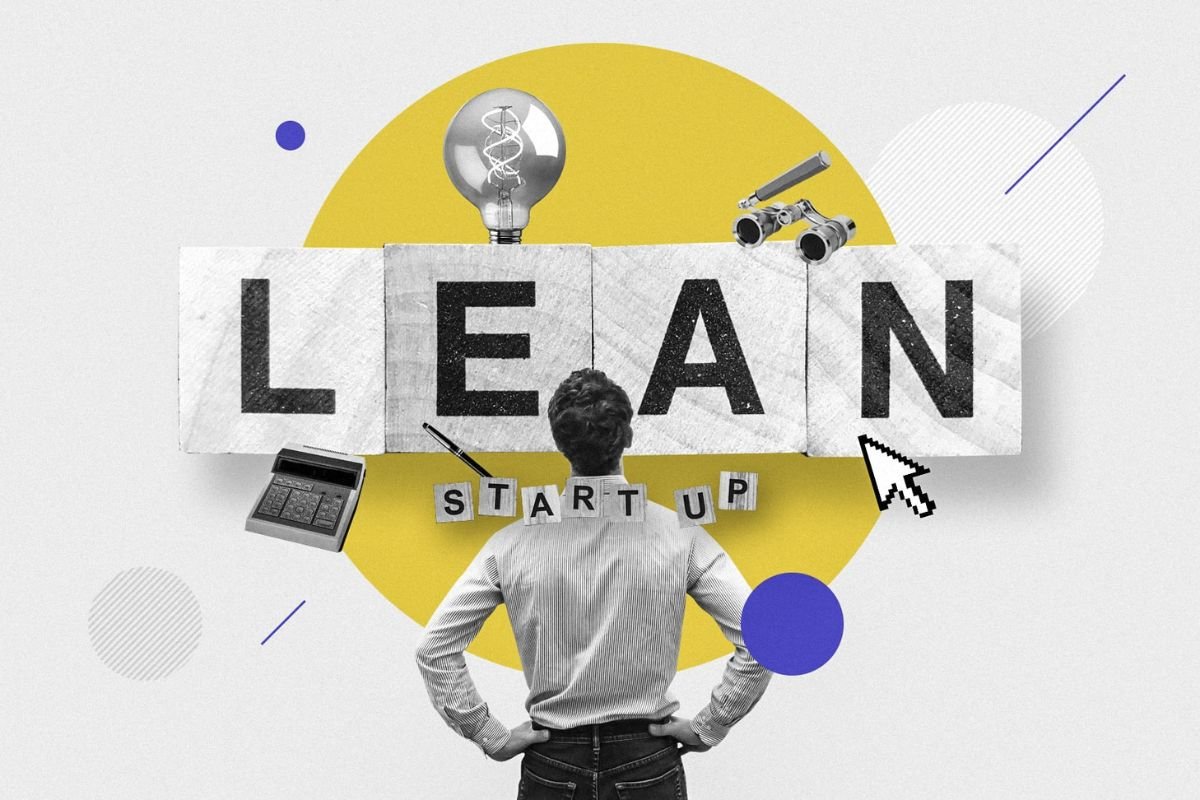
It was popularised by Eric Ries in his 2011 book, The Lean Startup. It follows three actions: build a basic version, measure customer responses, and learn from results. For example, a homemade snack founder could sell a small batch through local stores before setting up a factory. Taste, price, and repeat orders guide the next step. The goal is not cheapness, but avoiding a product people do not want; such choices reflect the core principles of lean startup.
How Is Lean Startup Methodology Different From Traditional Business Planning?

Traditional product management follows fixed plans, set features, and long timelines. This works when customer needs are clear. But Indian startups face tight budgets and varied markets. Lean startup methodology helps teams test assumptions before committing too much.
A fintech product designed for metro users may not suit small shop owners. Payment habits, trust, language, and internet access differ. This can mean:
- Building unwanted features.
- Mistaking opinions for demand.
- Getting feedback only after launch.
- Spending before testing.
Traditional plans still help with budgets, compliance, and long-term goals. However, they may struggle when customer needs are uncertain. This is where the difference between a fixed business plan and an experiment-led approach becomes important. The latter allows founders to test assumptions and adjust their plans as they learn.
How Does the Build-Measure-Learn Feedback Loop Work?
The Build-Measure-Learn loop helps founders turn ideas into small tests and use the results to make better decisions. It has three stages:
1. Build: Create the simplest version of a product that can test one key assumption.
2. Measure: Track what customers actually do, such as purchases, repeat visits, and product use.
3. Learn: Study the results and decide whether to improve the product, change direction, or continue.
Consider a founder launching a tiffin subscription service. Under lean startup methodology, they could offer a limited weekly menu, track paid orders and repeat bookings, then identify popular meals, prices, and delivery times.
The loop repeats as the business improves. Founders should test one main assumption at a time. Otherwise, they may struggle to understand what caused the results. The Build-Measure-Learn loop is one of the first stages in the lean startup process. These startup stages help founders test ideas, measure customer responses, and improve a product based on what they learn.
How Do Validated Learning and MVPs Help Test a Business Idea?

Validated learning means using real customer behaviour and experiment results to check whether a business assumption is correct. For example, 100 people may say they like an idea, but that does not mean they will pay for it.
Lean startup methodology uses this learning to help founders test ideas before investing heavily. One way to do this is through a Minimum Viable Product (MVP), the simplest version of a product that tests an important customer need.
An MVP is not a broken product or a rushed version full of errors. It simply leaves out features that are not needed for the first test.
Read More: Business Plan Examples for Startups Most Investors Wish They Saw Earlier
| Business idea | Possible MVP |
| Food delivery service | Small menu with limited delivery areas |
| Online learning platform | One paid course |
| Clothing brand | Limited product collection |
| Inventory software | Basic stock tracking feature |
Founders can use different models to choose how to test assumptions and organize experiments.
Inc42’s 2024 Annual Investor Survey found that 61% of surveyed startup investors identified products not meeting market needs as a key reason for startup failures. The survey covered 75+ respondents, allowed multiple answers, and does not represent a measured failure rate.
How Can Indian Founders Apply This Methodology?
Indian founders must test ideas because needs vary by region and customer. Lean startup methodology helps them adapt.
- Price: Test what customers pay.
- Location: Start in one city.
- Language: Check that people understand the product.
- Distribution: Test how customers prefer to buy and use it.
A digital service for small retailers could first be tested with shop owners in Pune. The 80/20 rule helps founders focus on activities that create early value.
In November 2026, India had over 2.62 lakh DPIIT-recognised startups, nearly half in Tier-II and Tier-III cities. Testing beyond metros matters.
What Common Mistakes Should Founders Avoid?
Many startups struggle because they build before understanding customer needs. Lean startup methodology helps founders avoid this by testing assumptions early. However, poor execution can still waste time and money.
| Common mistake | What founders should do instead |
| Building too many features | Test the main customer need first |
| Treating compliments as demand | Look for paid orders and repeat use |
| Choosing vanity metrics | Track activation and retention |
| Ignoring negative feedback | Ask why customers stopped using the product |
| Changing direction too quickly | Gather enough evidence before deciding |
| Refusing to change direction | Review assumptions regularly |
CB Insights’ March 2026 analysis found poor product-market fit among the reasons cited by 43% of 385 VC-backed startups with identifiable failure reasons. The sample is global, not an estimate of Indian startup failures.
Studying the lessons from Indian startups that failed can help founders recognise warning signs, question weak assumptions, and avoid repeating mistakes that have hurt other businesses.
When Should Founders Pivot or Persevere? Lessons from Indian Unicorns

Founders should persevere when customers keep using and paying for a product. They should pivot when evidence shows that the current approach is not solving the right problem. One poor sales week is not enough reason to change direction.
Lean startup methodology encourages founders to make this decision using customer behaviour, not guesswork.
| What you observe | Possible next step |
| Customers return and pay | Improve and continue |
| Customers like the idea but do not pay | Test pricing or demand |
| Customers use only one feature | Focus on that feature |
| Customers do not see the need | Revisit the problem |
Indian startups also offer useful lessons in adapting to customer needs. These startup examples show how businesses can adjust their offerings as markets change. Founders can also learn from the experiences of Indian Unicorn founders [Lean lessons from top Indian Unicorn founders | Supporting] who have built businesses around real customer problems.
Conclusion: Test First, Build Smarter
A good business does not begin with a perfect product. It begins with a problem worth solving and the willingness to listen. Lean startup methodology gives founders a way to test one assumption, learn from the result, and improve their next decision.
Start small, stay curious, and build around what customers actually need. This is the foundation of a successful Lean Startup approach.
FAQs
1. What is the main goal of lean startup methodology?
To test business ideas early, learn from customers, and build products that solve real problems.
2. What are the three stages of the Build-Measure-Learn loop?
Build a product, measure customer responses, and learn from the results to decide what happens next.
3. Is an MVP the same as a prototype?
No. An MVP tests a business assumption with customers, while a prototype mainly shows how a product could work.
4. Can small businesses use this approach?
Yes. Small businesses can test demand, pricing, and customer preferences without investing in a full product.
5. When should a startup pivot?
When repeated tests show that its main assumptions are not supported by customer behaviour.