


Women now play a key role in India’s work and business growth. In 2025, women made up 34.6% of the rural labour force. Their share of the urban labour force stood at 22.2% that year.
Women also hold a growing place in India’s MSME base. Over 3.42 crore female MSME registrations were recorded in July 2026. Yet business growth still needs funds, skills, and market access.
This makes government schemes useful for many women entrepreneurs. Such schemes can aid loans, skills, jobs, and business growth. This blog plans to cover key support areas and ways to choose.
Government schemes for women: what types of support are available?
The government offers a variety of help for women. Here are a few types of schemes women must know about:
- Finance and credit: Women can seek loans and credit support. Some programmes may also lower borrowing costs for eligible women.
- Entrepreneurship: Some schemes support new or growing women-led startups. They may help with finance, training, or business setup needs.
- Skills and employment: Training can help women gain job-ready skills. Some programmes also support vocational training and better work access.
- Market access: Some initiatives help women sell through public procurement. They can also help firms reach new buyers and markets.
- Self-employment: These programmes can support women seeking their own income. They may aid small firms, trades, or home-based work.
- Startup and innovation: Some programmes target new ideas and tech firms. Benefits and eligibility can differ across these government schemes. So, always check each scheme before you apply.
Key government schemes women entrepreneurs should know
Women can choose from several schemes based on their needs. Here are six options worth checking before you apply.
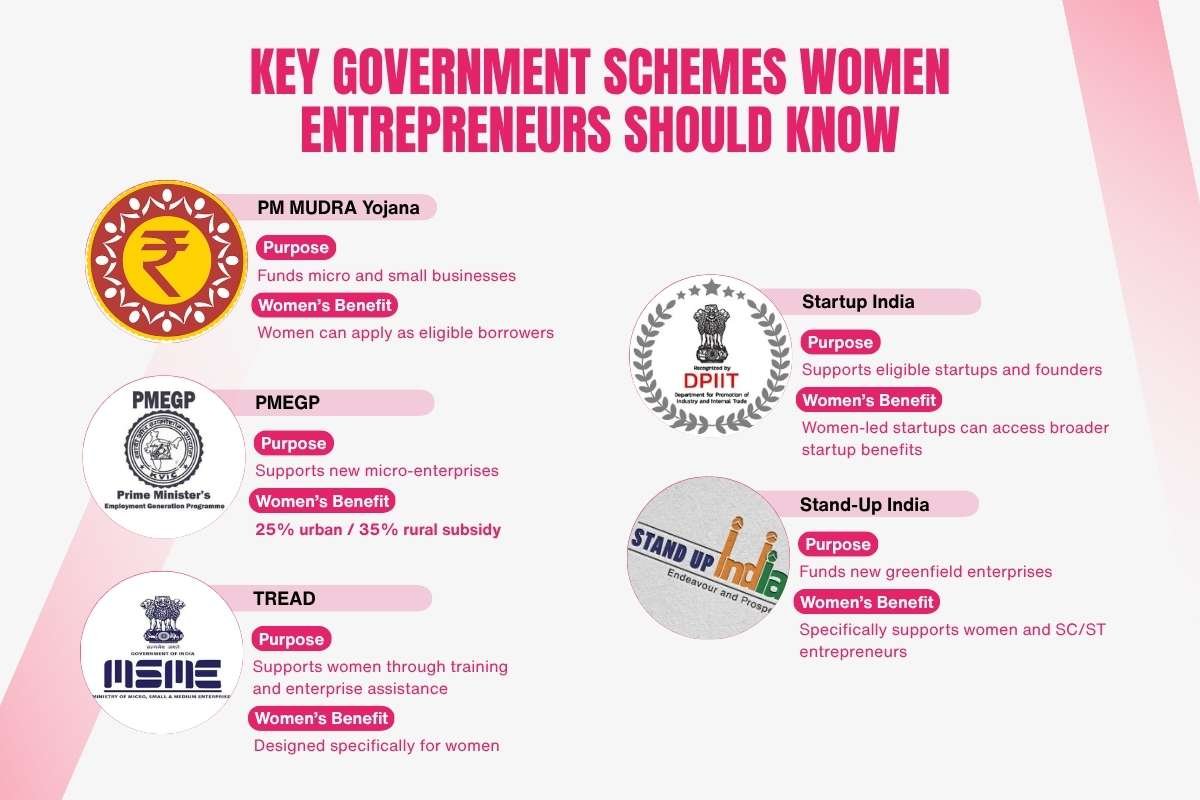
| Scheme | Purpose | Financial Support | Women’s Benefit | Key Condition |
| PM MUDRA Yojana | Funds micro and small businesses | Up to ₹20 lakh | Women can apply as eligible borrowers | Tarun Plus requires successful repayment of a previous Tarun loan |
| PMEGP | Supports new micro-enterprises | Project cost up to ₹50 lakh manufacturing and ₹20 lakh services | 25% urban / 35% rural subsidy | Only new projects qualify |
| TREAD | Supports women through training and enterprise assistance | Government grant can cover up to 30% of project cost | Designed specifically for women | Support works through eligible NGOs and lending agencies |
| Startup India | Supports eligible startups and founders | Funding access, not a direct loan | Women-led startups can access broader startup benefits | DPIIT recognition is required for several benefits |
| Stand-Up India | Funds new greenfield enterprises | ₹10 lakh–₹1 crore | Specifically supports women and SC/ST entrepreneurs | Enterprise must be a new greenfield project |
1. Pradhan Mantri MUDRA Yojana:
This scheme supports micro businesses through loans. Women can use it to start or expand small firms. Loan amounts can reach ₹10 lakh under the scheme. Check your lender’s terms before choosing this route.
2. PMEGP:
This programme helps people set up new micro-enterprises. Women qualify for higher subsidy rates under its special category. The subsidy can reach 35% for rural projects.
Applicants must meet project and financing rules.
3. TREAD:
This programme supports women through training and enterprise aid. It works mainly through eligible NGOs and lending agencies. Women can gain training, advice, and market support. So, check whether a partner agency operates near you.
4. Startup India:
This helps eligible startups gain wider business support. Women founders can seek recognition, funding links, and market access. DPIIT recognition unlocks several startup benefits and procurement options. First, check whether your venture meets startup recognition rules.
5. Stand-Up India:
This scheme targets women starting new enterprises. It offers bank loans from ₹10 lakh to ₹1 crore. However, it supports only new, or greenfield, enterprises. Also check the scheme’s current operational status before applying.
6. State startup policies:
States can add support for women founders. Maharashtra, for example, lists several women-focused startup incentives. These can include funding, fee refunds, and incubation support. Always check your state policy for current eligibility rules.
How can women choose the right scheme?
The right scheme depends on your current business or career need. Start by asking what support you need right now.
- Starting a business? Look for startup and credit support first.
- Need working capital? Compare finance and loan-based programmes.
- Building skills? Check training and employment support options.
- Growing a business? Seek market access and enterprise support.
- Running a startup? Check innovation and startup programmes first.
- Seeking funding? Compare rules, documents, terms, and repayment needs.
Your stage also matters when you compare government schemes. Some schemes suit new firms, while others support growth. Rules, benefits, and application steps can change over time. Always verify details through official government portals before applying.
How to apply for government support?
Start by finding the government schemes that match your needs. Then, check the latest eligibility rules before you apply. Next, review every document listed on the official site. These may include ID, address proof, and bank details.
Business owners may need registration records or project reports. Some schemes may also ask for income-related documents. Apply through the listed portal, bank, department, or agency. Save your application number or acknowledgement for future checks. Track your status and check for new requests often.
If officials ask for more papers, respond without delay.
Common mistakes to avoid when choosing a government scheme
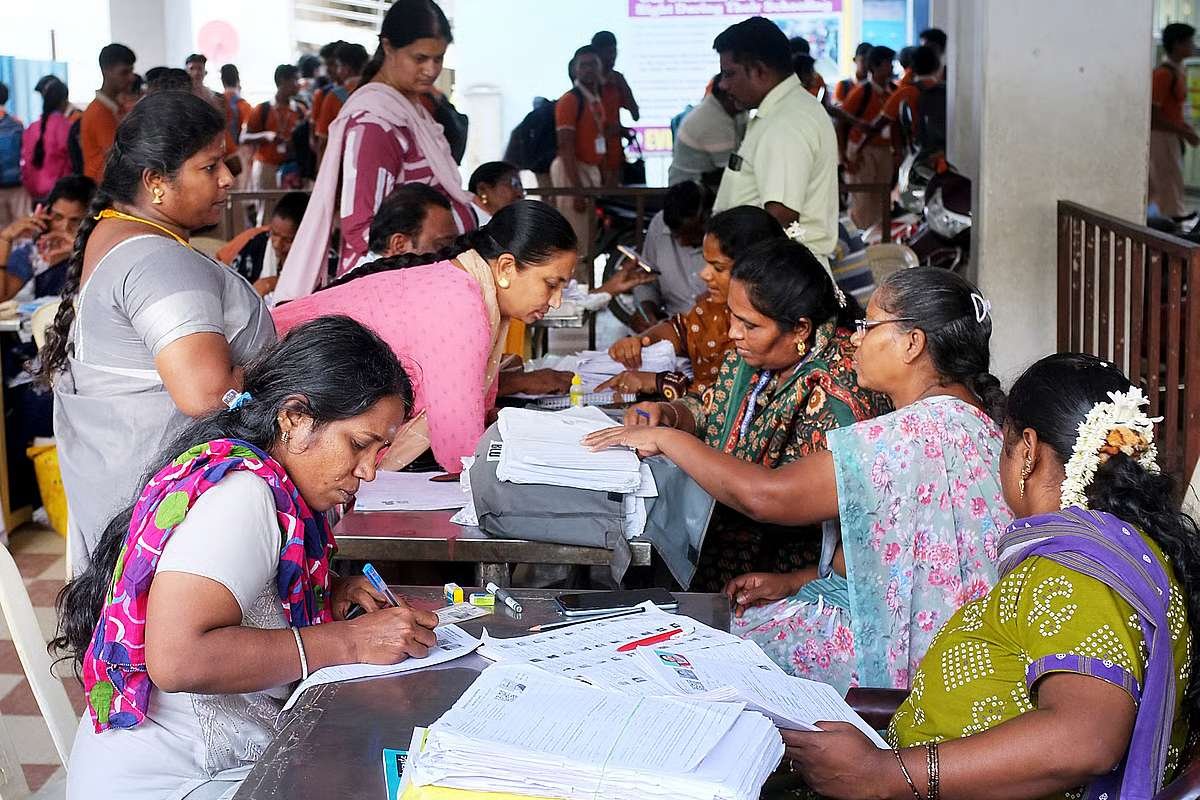
Many women lose time by skipping basic checks before applying. First, never choose a scheme without checking eligibility rules. Not every programme offers a direct cash grant either. Some provide loans, so check repayment terms with care.
Also, avoid old pages with outdated scheme details. Use official portals instead of agents or unknown websites. Submit each required document and keep clear business records.
Most importantly, match the support with your real business needs. A loan may hurt cash flow without a clear plan. So, compare the full terms before you apply.
Government schemes and women’s leadership
Economic strength can shape how women lead and make choices. Access to funds can help women start and grow firms. Skills can also build confidence in key business decisions. That support can help women move into business leadership.
Government schemes may support each stage of that journey. Some help women start, while others aid business growth. Others can support formal setup, skills, or market access. Still, schemes alone cannot remove every barrier women face.
Women in leadership also need networks, strong skills, and fair work systems. Together, these factors can strengthen independent business leadership.
Conclusion:
Women can find support for finance, skills, jobs, and business growth. The best option depends on your stage, needs, and goals. Your eligibility and funding needs also shape the right choice.
Start by listing what your business needs right now. Then compare government schemes and check their latest rules online. Always use official government websites before you submit forms. A smart choice can turn available support into real progress. Take the first step after checking the details that matter.
FAQs
1. What are government schemes for women?
They are public programmes that support women’s work and growth. They may offer loans, skills, jobs, training, or market support.
2. Which schemes can help women entrepreneurs?
The right option depends on your business and funding needs. Your location, business type, and eligibility also affect your choice.
3. How can women apply for these schemes?
Applications may be made through official portals, banks, or government offices. Some programmes may also use authorised partner institutions.
4. What documents are usually required?
Each programme sets its own document list and rules. Common papers include ID, address, bank, and income proof. Business owners may also need registration or project documents.
Sources:
- Women MSME Registration: https://ddnews.gov.in/en/over-3-07-crore-women-led-enterprises-registered-on-udyam-till-feb-2026-govt/
- Women Labour Force: https://www.pib.gov.in/PressReleasePage.aspx?PRID=2225845®=48&lang=2
- Women Urban Labour Force: https://www.pib.gov.in/PressReleasePage.aspx?PRID=2297093®=48&lang=2#:~:text=Urban%20workforce%20maintains,the%20preceding%20quarter.