



Women in business drive economic growth and launch successful companies. They bring new ideas to tech, retail, and finance. Yet, female leaders still face funding gaps and promotion bias. Equal pay, flexible work, and strong sponsorship help women reach top roles. Companies gain when female leaders hold real power. Read on to learn how female leaders shape the future.
Women in business drive today’s economy from every angle. We see them founding startups, leading major teams, investing capital, and designing the products we use every day. They also shape the market through their buying power. Still, even with female founders starting nearly half of all new businesses, massive funding gaps remain.
Long-standing barriers continue to hold careers back and slow overall progress. I want to walk you through these economic gains, look closely at the obstacles, and share practical ways we can drive equity across industries.
What Does it Mean to be a Woman in Business?
What does “women in business” mean in our world right now? We often use the term for founders, board members, and corporate leaders. We also mean investors, company owners, and top industry innovators. Yet the phrase covers far more than high-level decision makers. Women in business refers to women’s participation across the entire business ecosystem, from local shops to global corporations.
Women in business include:
- Entrepreneurs who start and scale companies
- Professionals who build careers across industries
- Executives who manage organizations
- Investors who allocate capital
- Business owners who employ others
- Innovators who create products and services
- Board members and industry decision-makers
Leadership is one part of women’s participation in business, but women in business is a much broader concept. Female founders and executives must lead top teams to change industries, but every role across the system shapes the modern economy. Equal access to capital and real opportunity at every level build a stronger market for everyone.
Why Women in Business Matter to the Economy?

Women participating across entrepreneurship, employment, investment, and business ownership contribute significantly to economic growth. We observe how diverse teams build better products for fresh audiences. McKinsey estimates gender equality adds seven hundred billion to India’s GDP. The World Bank reports rural female businesses employ over twenty million workers. ILO reports show gender-balanced workplace teams expand total profit margins vastly.
Women shape the economy across four key areas:
- Business creation: Women start and grow companies that solve real market needs.
- Job creation: Women-owned businesses employ millions of workers and sustain regional communities.
- Consumer markets: Women bring distinct insights to product development, customer research, and market expansion.
- Capital and innovation: Women investors and founders direct funds toward overlooked ideas and untapped space.
Women bring different experiences to product development, customer research, investment decisions, and workplace practices. Their work creates new jobs and opens untapped market spaces. We gain stronger economic stability when women participate fully across every layer of the market. This economic shift shapes future industries and builds lasting community wealth.
Where Women Are Shaping Business: 4 Sectors Women in Business Are Changing
Let’s look at some reasons women are making a lasting impression on business.
1. Entrepreneurship
Women-led ventures break traditional boundaries across tech, retail, and healthcare. For instance, Falguni Nayar built Nykaa into an e-commerce powerhouse, proving how female founders create sustainable, market-defining retail enterprises. Her journey also shows how women influence retail, employment, consumer behavior, and digital commerce through business ownership.
2. Corporate Leadership
Female executives continue securing high-impact positions. Women such as Roshni Nadar Malhotra demonstrate how women’s participation in business extends from professional careers into corporate strategy, technology, and large-scale business operations.
3. Startups and Innovation
Female founders transform early-stage startup technology. Consider Upasana Taku at MobiKwik, who built scalable digital financial channels that opened online payment access across regions. Her work connects fintech, entrepreneurship, digital access, consumer behavior, and innovation to solve everyday market needs.
4. Investing
Women investors influence which businesses receive capital and which ideas reach the market. More female fund managers redirect crucial capital flows today. Investors like Vani Kola at Kalaari Capital back transformative technologies and actively guide the next generation of diverse founders.
The 5 Challenges Women Still Face in Business
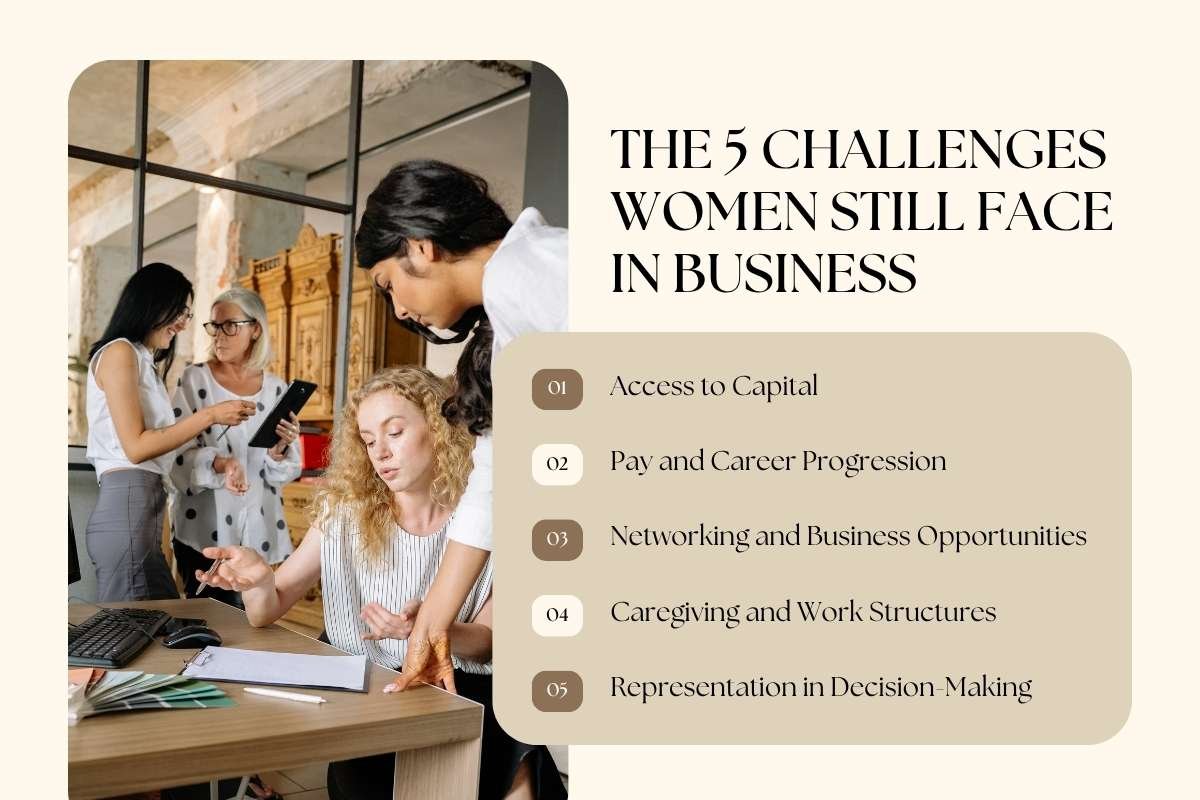
We observe distinct barriers depending on whether women launch companies or climb corporate ladders.
1. Access to Capital
For founders and business owners, funding access remains painfully low. Venture capitalists often view male founders as risk-takers and female founders as risks. This unfair bias starves women-led startups of essential growth capital.
2. Pay and Career Progression
For employees and professionals, double standards and persistent wage gaps slow down growth. Unconscious stereotypes label assertive female team members as difficult, while men receive praise for identical behavior, limiting fair promotions and salary advancement.
3. Networking and Business Opportunities
For entrepreneurs, investors, and professionals, exclusion from informal networks limits high-value deals. Without access to corporate decision-makers and key pitch opportunities, women face steep hurdles when scaling companies or finding partners.
4. Caregiving and Work Structures
For women across the workforce, unpaid domestic duties and rigid work hours limit career energy. The heavy burden of caregiving restricts late-night client work and spontaneous networking, forcing many skilled professionals out of full-time roles.
5. Representation in Decision-Making
For executives, investors, and board members, a lack of senior sponsors creates a glass ceiling. Without trusted advocates in boardroom seats, qualified women miss out on major executive openings and capital allocation decisions.
How Women Can Succeed in Business?
We must take strategic control over our individual professional paths. Here are practical actions that apply to both entrepreneurs and professionals aiming to grow their impact:
- Build Financial Skills: Understand cash flow, pricing, balance sheets, and profitability. Managing quarterly profit margins and knowing how capital moves builds the base for sound business decisions.
- Develop Industry Expertise: Sharpen high-value technical know-how and earn industry certifications. Building skills that create measurable business value expands your executive capabilities and operational authority.
- Build a Strong Network: Connect with founders, investors, executives, customers, and industry peers. Joining professional trade associations outside your current company creates fresh deal flow and partnership pathways.
- Seek Mentors and Sponsors: Find influential senior leaders and seasoned business owners who actively advocate for your growth. Having trusted guides helps both founders and professionals navigate complex markets and secure major promotions.
- Build Visible Authority: Speak at corporate panels and industry events. Publishing insights on emerging trends positions you as a trusted voice in your sector.
- Understand Business Opportunities: Learn about funding structures, market gaps, and emerging industries. Spotting new customer needs and expansion pathways allows you to scale ventures and capture new market share.
The Future of Women in Business

The future of women in business will span technology, venture capital, artificial intelligence, entrepreneurship, professional services, and emerging industries. Real economic growth happens as women participate fully across every layer of the modern market.
Looking ahead, women will shape the economy across multiple fronts:
- Starting companies: Female founders will launch ventures that solve emerging consumer and B2B problems.
- Building technology: Women will design, engineer, and deploy AI platforms and digital tools.
- Investing in businesses: Female fund managers will direct venture capital toward overlooked markets and diverse teams.
- Shaping consumer markets: Women will continue driving major purchasing decisions and guiding product strategies.
- Creating jobs: Female-owned enterprises will expand regional workforces and build community wealth.
- Influencing workplace practices: Professionals will champion flexible work models and equitable career pathways.
- Leading organizations: Women will direct major corporate strategy, securing equal authority in executive boardrooms to deliver lasting organizational value.
Female builders, investors, and executives will direct major investments, build global companies, and shape tomorrow’s digital economy.
Conclusion:
Women in business drive real economic progress and strengthen global industries. Yet basic workforce participation is not enough to fix old systemic barriers. Women need direct access to capital, senior executive sponsors, and real board authority.
Building equal power demands dedicated effort from both professionals and forward-thinking companies. Strategic support, fair access to capital, equal opportunities, and clear career paths remain essential to the future of women in business. Supporting women across every level of the market builds a stronger, more resilient global economy.
People Also Asked
1. What does women in business mean?
It refers to women leading, funding, or running enterprise operations. This encompasses female founders, board executives, institutional investors, and corporate managers driving commercial strategy.
2. Why are women important in business?
Female leaders expand total market reach, build diverse product lines, and boost profitability. Equal participation strengthens overall workforce productivity and accelerates long-term national GDP growth.
3. What challenges do women face in business?
Women face severe funding gaps, limited access to executive networks, and persistent promotion bias. Unpaid caregiving duties also limit career advancement opportunities.
4. How can women succeed in business?
Women build success by expanding financial literacy, earning strategic certifications, and joining trade groups. Finding senior executive sponsors helps secure high-visibility promotion paths.
5. How can businesses support women leaders?
Companies must establish transparent promotion criteria, conduct equal pay audits, and offer flexible work policies. Strategic executive sponsorship creates direct routes into top leadership positions.