


Key Takeaways
- Skyroot achieves orbit milestone, advancing private space sector growth
- Vikram 1 enables cost-efficient satellite launch capabilities
- Private participation expands opportunities in India’s space industry
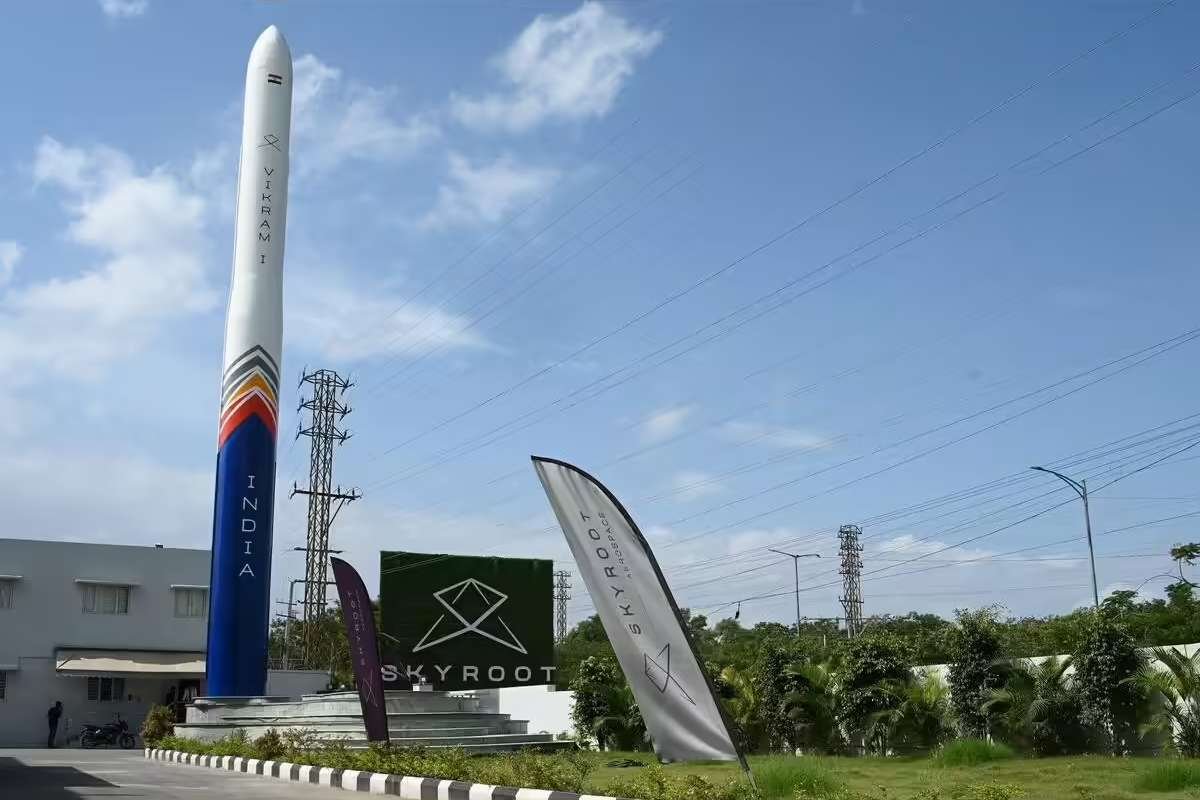
Skyroot Aerospace has successfully launched its Vikram 1 rocket into orbit, marking a significant milestone for India’s private space sector. The achievement represents one of the first instances of a privately developed Indian rocket reaching orbit, highlighting growing participation beyond traditional government-led programmes.
Private Sector Entry Expands India’s Space Capabilities
The Vikram 1 rocket is designed to deploy small satellites into orbit, targeting a growing segment of the global space market. With increasing demand for satellite-based services, launch vehicles focused on smaller payloads are gaining traction.
Founded in 2018, Skyroot Aerospace has focused on building cost-efficient launch solutions tailored for commercial satellite deployment. The Vikram 1 mission reflects the company’s ability to execute complex aerospace operations within a relatively short development cycle.
India’s space ecosystem has historically been driven by government agencies, but recent developments indicate a shift towards broader industry participation. The successful launch demonstrates the operational readiness of private companies to contribute to space missions.
The entry of private players into orbital launches is expected to increase competition within the sector. This could lead to improved pricing, faster innovation cycles, and expanded service offerings for satellite operators.
The Vikram 1 launch also aligns with rising global demand for satellite deployment across communication, navigation, and data services. As satellite usage grows, the need for reliable and efficient launch providers continues to increase.
Growth Opportunities And Market Expansion Ahead
The global space economy is expanding, with increasing investment in satellite infrastructure and related technologies. Companies like Skyroot Aerospace are positioning themselves to capture a share of this market by offering targeted launch solutions.
Following the successful mission, Skyroot Aerospace is expected to focus on scaling operations and preparing for future launches. Expanding production capacity and maintaining consistent launch schedules will be key to building long-term business viability.
The company’s progress reflects broader industry trends where private firms are developing specialised capabilities within the space value chain. This includes launch services, satellite manufacturing, and data-driven applications.
Support from national initiatives aimed at enabling private sector participation has contributed to the growth of such companies. Increased collaboration between industry stakeholders is expected to further strengthen capabilities in the sector.
However, the aerospace market remains highly competitive. Companies must maintain reliability, manage costs, and deliver consistent performance to secure long-term contracts. Execution precision and technological advancement will continue to play a critical role.
For Indian entrepreneurs and business owners, the success of Vikram 1 highlights emerging opportunities in advanced technology sectors. The expansion of private space activity can create demand across manufacturing, software, supply chain, and engineering services.
The achievement also reinforces India’s presence in the global space market, where private sector involvement is increasing. As more companies enter the ecosystem, the sector is expected to see higher levels of innovation and commercial activity.
Skyroot Aerospace’s entry into orbital launch capability represents a step forward in the evolution of India’s space industry. The company’s ability to execute this mission establishes a foundation for future growth and participation in a rapidly expanding global market.
Visit Business Viewpoint Magazine for the latest business and technology insights.